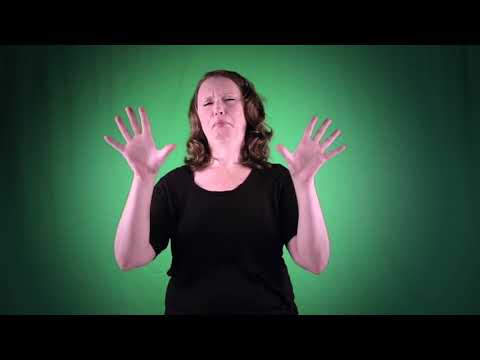
Definition: A color that is very bright or bold.
Sign for LOUD-COLOR in ASL
Practice Activities:
Cultural Context:
Practice Activities
To master the sign for LOUD-COLOR in ASL, learners can start by practicing in front of a mirror. Watching yourself sign helps you monitor your facial expressions and hand movements, which are both essential for conveying the intensity behind this descriptive term. Because colors in ASL rely heavily on non-manual signals when modifying their meaning, mirror work ensures that your expression matches the sign’s visual impact.
Recorded signing is another effective method for practicing the sign for LOUD-COLOR in ASL. Record yourself signing different color words with and without the modifier LOUD-COLOR. Reviewing these videos helps you catch subtle inconsistencies and track your progress. This is especially useful when you’re trying to perfect the transition from a standard color sign to a more expressive, intense version.
Using the sign in context is crucial for building fluency. Describe artwork, clothing, advertisements, or natural scenes using the sign for LOUD-COLOR in ASL. For instance, you might comment on a friend’s bright red jacket or a neon billboard you saw downtown. Signing in context reinforces vocabulary retention and helps you understand the practical use of the sign.
Advanced drills can include storytelling or visual description activities. Create short narratives that involve characters wearing bold, vibrant clothing or set in vividly colored environments. Incorporate the sign for LOUD-COLOR in ASL naturally into your storytelling. This challenges your expressive skills and deepens your comfort with using descriptive classifiers and modifiers in ASL.
SEO Cultural Context
Understanding the cultural context of the sign for LOUD-COLOR in ASL enhances both your fluency and respect for the Deaf community. In Deaf culture, visual language is deeply expressive, and adjectives like “loud” are used metaphorically to describe visual intensity. The term LOUD-COLOR doesn’t refer to sound but to how visually striking or vibrant something appears. This metaphor is a perfect example of how ASL adapts spoken language concepts into visual-spatial terms.
Deaf cultural norms emphasize clarity and visual impact, which is why signs like LOUD-COLOR are so expressive. A signer uses exaggerated facial expressions and expanded movements to convey the intensity of the color. This sign is often used in discussions about fashion, art, design, or anything where strong visual aesthetics are important.
There may be slight regional variations in how the sign for LOUD-COLOR in ASL is executed. Some signers may choose to use a combination of the sign for COLOR followed by an intensified facial expression or gestures to indicate “loudness.” Others may add a flicking or vibrant motion to the color sign itself. Understanding these regional differences and asking Deaf community members about their preferences is a respectful way to deepen your knowledge.
In real-life situations, you might use the sign for LOUD-COLOR in ASL when commenting on someone’s outfit, decorating choices, or even describing a sunset. It’s a culturally rich and expressive way to describe something that visually jumps out at you.
Extended Definition
The sign for LOUD-COLOR in ASL is a descriptive, compound expression. It typically involves signing a specific color (such as RED, YELLOW, or GREEN) and then modifying it with an exaggerated motion or facial expression that conveys intensity. Some signers may add a sign like “LOUD” in a metaphorical, visual way, often resembling the sign for NOISY or INTENSE but adapted to suit a visual context.
It’s important to remember that LOUD in this phrase does not relate to sound. Instead, it describes how visually striking a color is—how much it stands out or “pops.” This concept is deeply rooted in the visual nature of ASL and reflects the language’s unique way of representing sensory experiences.
Common errors include signing LOUD as if referring to sound, which can confuse the meaning. Beginners sometimes forget to use facial expressions or sign LOUD-COLOR too subtly, which reduces the impact of the description. Others may overuse the sign in inappropriate contexts, so it’s critical to understand when a color truly qualifies as “loud.”
Related signs include BRIGHT, BOLD, VIBRANT, and FLASHY. These signs may be used interchangeably or in conjunction with the sign for LOUD-COLOR in ASL, depending on the context and what exactly the signer wishes to express.
Tips for Beginners
For beginners learning the sign for LOUD-COLOR in ASL, it’s crucial to focus on expression. Unlike spoken language, ASL relies heavily on facial expressions and body language to convey intensity and emotion. When signing LOUD-COLOR, use wide eyes, raised eyebrows, and an expressive mouth shape to show that the color is striking or overwhelming.
One common mistake is to sign the color plainly without any visual emphasis. This makes the sign too neutral and fails to communicate the intended meaning. Another common error is to confuse the sign for LOUD-COLOR in ASL with the standard sign for LOUD (as in sound), which can lead to misunderstandings.
A helpful strategy is to watch videos of native ASL users describing colorful scenes or fashion. Pay close attention to how they modify color signs and use their faces to express intensity. Mimic these techniques until they become natural in your own signing.
Don’t be afraid to exaggerate a little when learning. The sign for LOUD-COLOR in ASL thrives on expressive energy. Over time, you’ll learn to adjust and fine-tune your expression to match the context appropriately.
Connections to Other Topics
The sign for LOUD-COLOR in ASL connects closely with the concept of classifiers. Classifiers in ASL allow signers to describe shapes, sizes, and intensity visually. When using LOUD-COLOR, you may use classifiers to show how a color spreads across clothing or an object, enhancing the vividness of your description.
Another related concept is the use of visual metaphors in ASL. Just as LOUD-COLOR represents a metaphorical use of the word “loud,” other metaphors in ASL describe visual, emotional, or abstract qualities. Understanding how ASL uses metaphor helps deepen your appreciation for signs like LOUD-COLOR.
Vocabulary themes such as ART, FASHION, and DESIGN often include the sign for LOUD-COLOR in ASL. When discussing these topics, you’ll frequently describe textures, patterns, and colors that require expressive, vivid signs.
The sign also connects with emotion-based vocabulary. Sometimes, a loud color is used to express a mood—like excitement or boldness. Signs like HAPPY, CONFIDENT, or PROUD might appear in the same conversation, showing how visual description and emotion often intertwine in ASL.
Lastly, LOUD-COLOR ties into the broader topic of visual storytelling. ASL users often describe scenes in great detail, and using LOUD-COLOR adds richness to a narrative. Whether you’re telling a story about a character’s appearance or a vivid memory, this sign enhances your descriptive power.
Lengthy Summary
The sign for LOUD-COLOR in ASL is a visually dynamic, metaphorical expression used to describe colors that are bright, bold, or attention-grabbing. It combines a basic color sign with intensified facial expressions and motion to emphasize visual impact. Unlike the spoken use of “loud” to describe sound, ASL uses it to capture the intensity of a visual experience, showcasing the language’s unique sensory adaptations.
Through consistent practice—using mirrors, video recordings, real-world context, and advanced storytelling—learners can build fluency and confidence in using this sign. Understanding the cultural context is equally important. Deaf culture places a high value on visual expressiveness, and signs like LOUD-COLOR highlight the artistry and metaphorical depth present in ASL communication.
New learners should be patient and mindful when learning the sign for LOUD-COLOR in ASL. Avoid common mistakes like downplaying facial expressions or confusing the concept with sound-based interpretations. Watch and emulate native signers to develop a natural, expressive style that matches the sign’s purpose.
This sign also opens the door to exploring related topics in the ASL lexicon, such as classifiers, metaphors, artistic vocabulary, emotional expression, and visual storytelling. Understanding how these concepts interconnect allows learners to use LOUD-COLOR in a way that feels authentic and grounded in ASL grammar and culture.
As you continue your ASL journey, make it a goal to use the sign for LOUD-COLOR in ASL in your daily conversations, storytelling, and visual descriptions. The more you practice, the more naturally it will come. Keep exploring, keep signing, and let your language shine as vividly as the colors you describe .
Extended Definition:
Synonyms: Vivid, Bright, Garish, Flamboyant, Radiant
Educational resources: Find related learning materials in our course bank!
Want more? Check out some of our popular learning activities on the homepage!
Need to look up a sign? Use our highly rated dictionary: https://aslinteractive.com/best-asl-dictionary/
Follow us on tiktok: https://www.tiktok.com/@aslinteractive. More social media links at the bottom of this page!
Long-tail Keywords: what is the sign for loud-color in ASL, how do you sign loud-color in ASL, ASL sign for loud-color
Categories:
tags: ASL color signs, loud color meaning in sign language, clothing-related ASL signs, ASL adjectives for colors, describing colors in American Sign Language
Tips for Beginners:
Connections to Other topics:
Summary:
Want more? Check out some of our popular learning activities!
ASL Interactive Resources
ASLInteractive YouTube Channel
Follow us on tiktok: @aslinteractive.com
Follow us on Instagram: aslinteractive
Facebook page: aslinteractive
Facebook group: aslinteractive
LInkedIn: ASL Interactive LLC
Twitter: @ASL_interactive
*Some information on this page is AI-generated. AI can make mistakes. Please check the information.


Responses