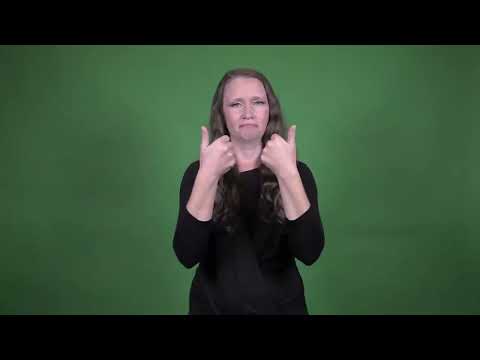
Sign for MORE CHALLENGE in ASL | ASL Dictionary

Definition: A greater level of difficulty.

Sign for MORE CHALLENGE in ASL

YouTube player

Practice Activities:

Cultural Context:

Practice Activities

To master the sign for MORE CHALLENGE in ASL, daily practice using multiple strategies will build both muscle memory and fluency. Start by signing in front of a mirror to check your handshape, facial expressions, and movement accuracy. This allows you to self-correct and develop consistent form.

Record yourself using the sign for MORE CHALLENGE in ASL in different sentences and scenarios. Watching your recordings will help you pinpoint any discrepancies and track your progress over time. Try signing full phrases like “I need more challenge” or “Give me more challenge, please” to embed the sign in meaningful context.

Engage in interactive drills with a study partner or tutor. Practice dialogues where one person requests a more difficult task, and the other responds. This helps reinforce the sign for MORE CHALLENGE in ASL alongside related vocabulary and conversation flow.

Advanced learners can incorporate speed drills, switching quickly between related signs like HARD, TRY, and IMPROVE. Another helpful tactic is to shadow fluent signers in video content and replicate their use of the sign for MORE CHALLENGE in ASL in real-time conversation.

SEO Cultural Context

Understanding the cultural background of the sign for MORE CHALLENGE in ASL deepens your grasp of its appropriate use. In Deaf culture, communication is expected to be clear, direct, and visually expressive. When someone uses this sign, they are communicating a desire for growth, stimulation, or a higher level of difficulty—often in an educational or social context.

In classrooms, Deaf or hard-of-hearing students may use the sign for MORE CHALLENGE in ASL to request enrichment or show enthusiasm for learning. This reflects a proactive, empowered approach to education that is highly respected in the community. The sign may also appear in workplace settings or during games and competitions when someone wants to raise the stakes.

Regional variations may occur, especially in the use of facial expressions or slight differences in movement intensity. In some areas, the sign may be accompanied by a raised eyebrow or a determined look to emphasize the seriousness of the request. Always observe local norms and adapt accordingly.

Deaf culture places a high value on self-advocacy and engagement. Using the sign for MORE CHALLENGE in ASL appropriately demonstrates confidence and initiative—traits that align well with cultural values. It also encourages dynamic, two-way communication, which is a cornerstone of respectful interaction in ASL.

Extended Definition

The sign for MORE CHALLENGE in ASL combines the concepts of MORE and CHALLENGE into a unified expression. The sign MORE typically involves tapping the fingertips of both flat, O-handshapes together. CHALLENGE is signed by placing both A-handshapes near the chest and then moving them forward and slightly apart, often accompanied by a serious or determined facial expression.

When combined, the sign for MORE CHALLENGE in ASL conveys the idea of wanting something that pushes one’s limits. It can be used in academic, professional, or recreational contexts and is well-suited for both formal and informal conversation. The speed and intensity of the movement can add nuance to the message.

Common errors include misplacing the handshapes or using weak non-manual signals. For example, signing MORE without clear tapping or CHALLENGE without forward motion can dilute the message. It’s also essential to avoid overly casual facial expressions, as these can contradict the intention of asking for something more demanding.

Some learners confuse CHALLENGE with DIFFICULT. While related, these signs differ in meaning. DIFFICULT implies something already hard, while CHALLENGE suggests a welcomed or requested difficulty. Therefore, when signing the phrase, make sure to express eagerness or readiness, not reluctance.

Tips for Beginners

For those new to the sign for MORE CHALLENGE in ASL, it’s important to build confidence through repetition and feedback. Start slowly, focusing first on the individual signs for MORE and CHALLENGE before combining them fluidly. Rehearse in front of a mirror until the movements feel natural and expressive.

Be mindful of your facial expressions. In ASL, non-manual markers carry emotional and grammatical meaning. A neutral or dull expression can make your message unclear. Beginners should practice pairing the sign for MORE CHALLENGE in ASL with a face that shows determination or enthusiasm.

Avoid rushing the movement, especially when you’re first learning. Hasty signing often leads to unclear handshapes and awkward transitions. Take your time and prioritize clarity over speed. Once you’re comfortable with the accuracy, gradually increase your pace.

Don’t hesitate to ask fluent signers for feedback. Whether in a classroom, online community, or Deaf event, most experienced signers are happy to help beginners improve. Use those opportunities to refine your technique and expand your vocabulary.

Connections to Other Topics

The sign for MORE CHALLENGE in ASL connects closely with several other key ASL concepts. One is the sign for IMPROVE, which often appears in academic or work-related conversations. IMPROVE involves a repeated upward movement of a flat hand on the forearm, symbolizing progress.

Another relevant sign is TRY. TRY uses T-handshapes that push forward from the chest, indicating effort or experimentation. Using TRY alongside the sign for MORE CHALLENGE in ASL can highlight a person’s proactive attitude toward difficulty.

The sign for HARD also relates conceptually. HARD uses bent V-handshapes that strike each other, emphasizing difficulty or complexity. While HARD can describe a situation, MORE CHALLENGE often reflects a personal desire to face that situation.

In motivational or goal-setting contexts, the sign for GOAL is also useful. GOAL involves pointing one index finger forward toward a destination point, representing an objective. Combining GOAL with the sign for MORE CHALLENGE in ASL can express ambitious personal or academic aims.

Finally, the sign for FINISH is helpful when discussing the outcome of a challenge. It involves a quick outward flick of both open hands. Signing FINISH after completing a task and then requesting MORE CHALLENGE shows readiness for the next level of difficulty.

Lengthy Summary

Mastering the sign for MORE CHALLENGE in ASL opens the door to richer interactions in educational, social, and professional settings. This sign empowers learners and community members to voice their desire for growth and deeper engagement. By understanding both the individual components—MORE and CHALLENGE—and how they combine, you gain access to a powerful concept in ASL.

Culturally, the sign for MORE CHALLENGE in ASL aligns with Deaf values of empowerment, participation, and clarity in communication. Whether used by a student eager for a harder assignment or an athlete ready for a tougher opponent, this sign conveys purpose and drive. By practicing regularly with mirrors, recordings, and interactive drills, learners can build fluency and confidence.

Beginners should focus on accurate handshapes, expressive facial cues, and smooth transitions between signs. Avoiding common mistakes, such as unclear movement or mismatched facial expressions, will help ensure your signing is understood and respected. Connecting this sign to others like TRY, IMPROVE, and GOAL helps deepen your vocabulary and conversation skills.

The sign for MORE CHALLENGE in ASL is more than a vocabulary word—it’s an invitation to keep striving, to push limits, and to embrace what’s next. Keep practicing, keep asking questions, and keep signing. The more you challenge yourself, the more fluent and confident you will become .

Extended Definition:

Synonyms: Sorry, I need further clarification. Could you please provide context or rephrase “more steel”?

Educational resources: Find related learning materials in our course bank!

Want more? Check out some of our popular learning activities on the homepage!

Need to look up a sign? Use our highly rated dictionary: https://aslinteractive.com/best-asl-dictionary/

Follow us on tiktok: https://www.tiktok.com/@aslinteractive. More social media links at the bottom of this page!

Long-tail Keywords: what is the sign for more challenge in ASL, how do you sign more challenge in ASL, ASL sign for more challenge

Categories:

tags: challenge signs in ASL, ASL advanced vocabulary, American Sign Language difficulty levels, themed ASL categories, ASL vocabulary practice

Tips for Beginners:

Connections to Other topics:

Summary:

Want more? Check out some of our popular learning activities!

ASL Interactive Resources

ASLInteractive YouTube Channel

Follow us on tiktok: @aslinteractive.com

Follow us on Instagram: aslinteractive

Facebook page: aslinteractive

Facebook group: aslinteractive

LInkedIn: ASL Interactive LLC

Twitter: @ASL_interactive

*Some information on this page is AI-generated. AI can make mistakes. Please check the information.


Responses