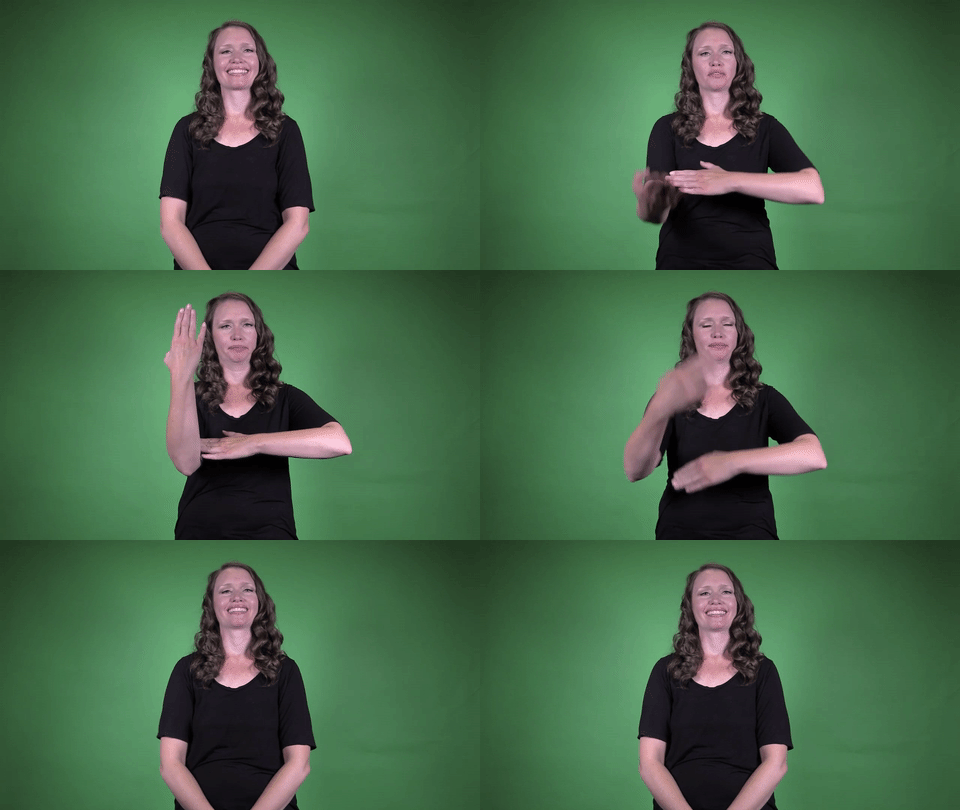
Definition: The early part of the day.
Sign for MORNING in ASL
Practice Activities:
Cultural Context:
Practice Activities
Practicing the sign for MORNING in ASL can be both fun and effective when using a variety of techniques. Start by using a mirror to observe your handshape and movement. The key motion involves your dominant hand rising upward from the inner elbow of your non-dominant arm, mimicking the sun rising over the horizon. Watching yourself helps ensure accuracy and builds muscle memory.
Recording yourself signing can also help you see how closely your sign matches a fluent signer’s version. Compare your video with reliable ASL sources or instructors. This visual feedback builds awareness of speed, fluidity, and facial expressions—an essential component of the sign for MORNING in ASL.
Once you’re comfortable with the basic form, try integrating the sign into full sentences. Practice saying things like “Good morning” or “Every morning I drink coffee.” Using the sign in context helps reinforce its meaning and improves your fluency.
For advanced learners, try speed drills or ASL storytelling. Incorporate the sign for MORNING in ASL into a signed narrative about your daily routine. This kind of practice improves recall, transitions between signs, and expressive clarity.
If possible, join a Deaf coffee chat or virtual ASL meetup. Real-time communication gives you the chance to use the sign for MORNING in ASL in a natural environment. Immersive experiences like these reinforce vocabulary while teaching cultural nuances.
SEO Cultural Context
The sign for MORNING in ASL holds cultural importance in Deaf communities as part of daily greetings and routine expressions. It is commonly used in phrases such as “Good morning,” an everyday courteous expression that fosters connection in both social and educational settings. Signing “Good morning” is a warm way to start conversations and show respect.
In Deaf culture, non-manual signals such as facial expressions carry significant weight. When using the sign for MORNING in ASL, a soft smile or cheerful expression adds emotional tone to your message. Signing without facial expression can seem flat or even disinterested, so always be mindful of your affect.
Regional variations exist. While the core movement remains consistent—dominant hand rising from the non-dominant arm’s inner elbow—some signers may adjust the speed or arc slightly. These differences are natural and accepted within the broader context of ASL use.
Morning routines and time references are frequent topics in Deaf culture, especially in educational or communal environments. Knowing how to confidently use the sign for MORNING in ASL helps learners participate in these conversations. Whether attending a morning class or arriving at a breakfast gathering, this sign is an essential part of your ASL vocabulary.
Extended Definition
The sign for MORNING in ASL visually represents the sun rising over the horizon. To produce the sign, place your non-dominant arm horizontally in front of your body, palm down. Then take your dominant hand, palm facing you, and bring it up from beneath the crook of your non-dominant elbow. The motion is smooth and upward, reflecting the idea of sunrise.
This sign is part of a set of time-of-day signs, including AFTERNOON, NIGHT, and NOON. Each of these signs uses the same non-dominant arm as a base, with variations in the dominant hand’s position to indicate the time of day. Understanding this system helps learners remember and distinguish between these related concepts.
One common error is rotating the dominant hand incorrectly or moving it too quickly. The motion should be deliberate and gentle, not abrupt. Another mistake is placing the dominant hand too far from the elbow or too close to the wrist. Precision matters in the sign for MORNING in ASL because it distinguishes the sign from similar ones like NOON.
Learners should also avoid overextending the elbow or making the movement too theatrical. ASL values clarity and efficiency—the rising hand should simulate the sun but not exaggerate the motion. Keep your wrist relaxed, and let the arm float naturally upward.
Tips for Beginners
If you’re just starting out, the sign for MORNING in ASL is a great vocabulary word to learn early in your journey. It’s frequently used and helps you build a foundation for discussing daily routines. Don’t worry if your first attempts feel awkward—fluency comes with repetition and confidence.
One helpful tip is to practice in front of a mirror while watching your elbow placement. Many beginners misjudge where the dominant hand should rise from. Aim for the inner elbow crease of your non-dominant arm. This location anchors the sign and gives it meaning.
Facial expressions are vital. When signing MORNING, a gentle, welcoming look enhances the message. Beginners often struggle to incorporate facial expressions, but think of them as your ASL “tone of voice.” Smiling slightly or raising your eyebrows reflects the friendly mood of a morning greeting.
Try pairing the sign for MORNING in ASL with other basic signs like GOOD, TODAY, or WAKE-UP. This helps you form simple sentences and improves your grammatical understanding. The more you use the sign in natural combinations, the more automatic it will become.
Repetition is your best friend. Don’t just sign it once—build it into your daily routine. Say “Good morning” to yourself in the mirror, sign along with a video, or greet a friend each day using ASL. These small steps lead to lasting progress.
Connections to Other Topics
The sign for MORNING in ASL connects strongly with other time-related signs. For example, AFTERNOON uses a similar arm setup, but the dominant hand rests farther out, indicating the sun’s later position. NIGHT is signed with a downward motion, mimicking the sun setting. Learning all these signs together strengthens your temporal vocabulary in ASL.
Another related sign is SUN, which shares the concept of rising and warmth. Though SUN is signed differently, the imagery of the sun’s motion helps learners remember the physical logic behind the sign for MORNING in ASL. Understanding the metaphorical basis of signs builds deeper linguistic awareness.
The sign for WAKE-UP is also closely tied to MORNING. In many conversations, people describe their morning routine with signs like WAKE-UP, EAT, BRUSH-TEETH, and GO-TO-WORK. Learning these signs as a group allows you to describe a full day in ASL.
GOOD MORNING is a common phrase that combines two basic signs: GOOD and MORNING. This phrase is often used in greetings and is one of the first phrases taught in beginner ASL classes. Practicing this phrase improves your fluency and helps you participate in everyday interactions.
Lastly, the concept of TIME in ASL is essential for placing the sign for MORNING in ASL within proper grammar. ASL often uses time-topic-comment structure, meaning time signs like MORNING come first in a sentence. Understanding this structure is important for clear and correct communication.
Lengthy Summary
Mastering the sign for MORNING in ASL is an important step for any learner building foundational communication skills. This sign not only represents a simple time of day but also reflects the visual, metaphorical beauty of ASL. The rising motion of the dominant hand symbolizes the sun climbing over the horizon, making it one of the most intuitive and elegant signs in the language.
Practicing the sign for MORNING in ASL through daily routines, mirror work, and immersion helps solidify its form and usage. Whether you’re greeting a Deaf friend, signing along with a morning video, or describing your daily schedule, this sign is a tool you’ll use often. Incorporating it into full sentences and conversations strengthens your fluency and boosts your confidence.
Culturally, the sign for MORNING in ASL is more than just vocabulary. It’s a part of greetings, communal expressions, and daily interactions. Its use reflects respect and warmth—values held deeply in Deaf culture. Understanding the cultural nuances, including facial expression and regional variation, ensures respectful and meaningful communication.
Technically, the sign is part of a broader family of time-based gestures in ASL. By learning signs like AFTERNOON, NIGHT, and NOON, you create a mental map of the day in sign language. This helps with memory, comprehension, and expressive depth. The sign for MORNING in ASL is a key puzzle piece in this linguistic framework.
For beginners, patience and consistent practice are essential. Mistakes are normal and part of the learning process. Pay attention to hand placement, fluid motion, and facial expression. Use videos, interactive tools, or ASL classes to reinforce your learning. The more you sign, the more natural it becomes.
As you continue your ASL journey, let the sign for MORNING in ASL remind you of new beginnings. Each day brings a fresh opportunity to connect, express, and grow in your signing skills. Keep practicing, stay curious, and don’t be afraid to greet the world with your hands.
Extended Definition:
Synonyms: mosque, masjid, Islamic place of worship, Muslim prayer hall, Jami
Educational resources: Find related learning materials in our course bank!
Want more? Check out some of our popular learning activities on the homepage!
Need to look up a sign? Use our highly rated dictionary: https://aslinteractive.com/best-asl-dictionary/
Follow us on tiktok: https://www.tiktok.com/@aslinteractive. More social media links at the bottom of this page!
Long-tail Keywords: what is the sign for morning in ASL, how do you sign morning in ASL, ASL sign for morning
Categories:
tags: morning routine, ASL daily activities, time of day in ASL, morning greetings in ASL, ASL vocabulary for daily life
Tips for Beginners:
Connections to Other topics:
Summary:
Want more? Check out some of our popular learning activities!
ASL Interactive Resources
ASLInteractive YouTube Channel
Follow us on tiktok: @aslinteractive.com
Follow us on Instagram: aslinteractive
Facebook page: aslinteractive
Facebook group: aslinteractive
LInkedIn: ASL Interactive LLC
Twitter: @ASL_interactive
*Some information on this page is AI-generated. AI can make mistakes. Please check the information.


Responses