Sign for BUTTER in ASL | 🧈 ASL Dictionary

Definition: A dairy product made from churned cream.

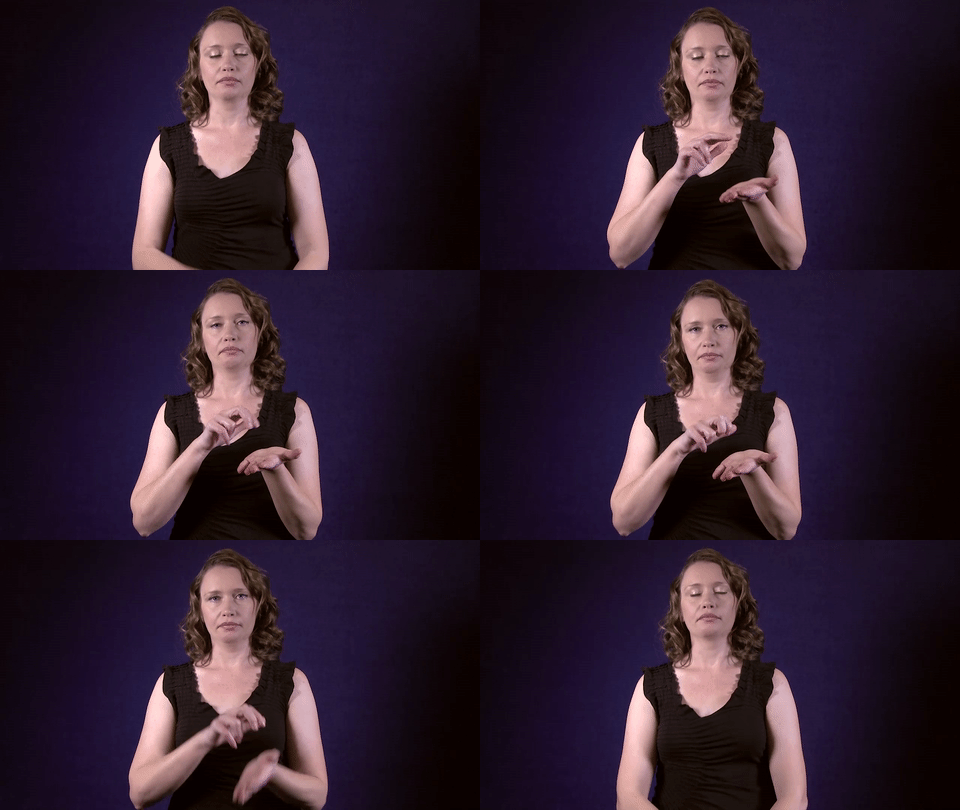
Sign for BUTTER in ASL

YouTube player

Practice Activities:

To start practicing the sign for BUTTER in ASL, begin by isolating the sign. Stand in front of a mirror and repeat the motion slowly ten times while focusing on clarity and movement. Use both hands correctly—the dominant hand acts like it’s spreading butter over the non-dominant palm. This helps train your muscle memory and visual understanding.

Next, add the sign for BUTTER in ASL to short sentence practice. Try signing phrases like “I need butter,” “Butter is soft,” or “Put butter on toast.” Practice these with facial expressions that match the tone of each sentence. Emphasizing expression helps communicate meaning clearly.

Create your own story involving a kitchen or a breakfast scene and use the sign for BUTTER in ASL within the story. Start with simple ideas like waking up, making toast, and spreading butter before heading to school or work. This technique builds fluency through contextual use and strengthens recall.

For partner work, one person can describe a meal while the other signs what ingredients are used, including butter. Take turns identifying when to use the sign in different recipes, such as during “making cookies,” “pancakes,” or “mashed potatoes.” This adds real-world context and supports vocabulary development.

Use flashcards with pictures of foods commonly made with or served with butter. When you see an item like popcorn, bread, or cooked vegetables, sign but then add the sign for BUTTER in ASL to practice in two-word combinations. This builds more natural sentence usage and helps with fluid signing.

Finally, watch short cooking videos with captions off, and try interpreting what you see using ASL. When you spot a moment with butter, be sure to include the sign for BUTTER in ASL as you narrate what’s happening. This boosts receptive and expressive skills together.

Cultural Context:

The sign for BUTTER in ASL holds more than just a literal meaning. In Deaf culture, food signs like butter are essential for everyday communication, especially when discussing meals, recipes, or shopping. Sharing meals and recipes is a common experience, and the ability to express ingredients clearly is vital for inclusion.

The sign for BUTTER in ASL reflects this cultural value of being precise with food terms. Butter often appears in casual conversations about breakfast foods, baking, and family traditions. Knowing how to express the sign for BUTTER in ASL helps in maintaining fluid conversations during such moments.

In Deaf households where ASL is the primary language, using accurate signs for specific ingredients like butter ensures clear communication during cooking and grocery planning. The sign for BUTTER in ASL is often one of the first food-related signs learned by young Deaf children, as it’s frequently encountered in daily life.

Because butter is used in so many dishes, from toast to mashed potatoes to cookies, the sign for BUTTER in ASL becomes part of a large vocabulary of culinary signs. When Deaf individuals share recipes or cooking videos in ASL, using the correct sign for BUTTER in ASL ensures clarity and understanding for all viewers.

In ASL storytelling and visual vernacular, food often plays a role in jokes, life experiences, and cultural references. The sign for BUTTER in ASL can even appear in humorous stories centered around family cooking mishaps or restaurant ordering experiences. These playful connections build bonds in both Deaf and signing communities.

The sign for BUTTER in ASL also underscores how visually descriptive ASL can be. The sign mimics the action of slicing butter, which immediately offers a visual clue to its meaning. This feature of ASL supports clear and intuitive understanding, particularly in settings like classrooms or cooking shows.

Deaf education also incorporates common food signs into early curriculum lessons to help children describe what they eat and enjoy. The sign for BUTTER in ASL contributes to vocabulary lists used in kindergarten and elementary-level ASL classes. Teachers and mentors often emphasize signs like butter, milk, and bread to support communication around meals.

When engaging with hearing allies or interpreters, understanding the sign for BUTTER in ASL is important for creating inclusive dining experiences. Whether attending family dinners, Deaf events, church potlucks, or food festivals, knowing food signs like BUTTER ensures that Deaf individuals participate fully and without barriers.

Signing butter isn’t just about identifying an ingredient. It’s about connecting with a culture where food

Extended Definition:

The sign for butter in ASL is a clear and expressive gesture used in American Sign Language to represent the dairy product known for its smooth texture and rich flavor. In ASL, the motion used to show butter visually mimics spreading or cutting through butter, which helps convey the meaning effectively without the need for spoken words. Knowing how to produce the sign for butter in ASL can be useful in everyday conversations about food, cooking, or grocery shopping.

To make the sign for butter in ASL, one typically places the non-dominant hand palm-up to act as a surface, while the dominant hand mimics a knife. The dominant hand taps or brushes against the non-dominant hand, much like you’d use a knife on a piece of toast. This visual metaphor helps signers and viewers understand the concept quickly through the action alone.

Understanding how to use the sign for butter in ASL also connects to learning other food-related signs, like bread, toast, or jam. Using these in combination can help enrich conversations about meals or nutrition. For students, families, or professionals in food service who are learning ASL, this sign can be very practical in real-world settings.

The sign for butter in ASL is also useful when teaching children about different foods in both spoken English and sign language. Incorporating food signs like butter into early education can help bridge communication gaps for both deaf and hearing children. Using signs in everyday tasks, such as cooking together, makes learning fun and memorable.

Butter is a common item in most kitchens, so the sign for butter in ASL is one that learners often pick up early. Along with other common ingredients, it’s often taught in beginner ASL courses and visual dictionaries. Its simplicity makes it approachable for new learners, but it also reinforces important ASL grammar when used in full sentences.

Adding the sign for butter in ASL to your vocabulary expands your ability to communicate full ideas clearly without relying on spoken language. It allows you to describe recipes, give dietary preferences, or make grocery lists seamlessly in ASL. Signers can adapt the context easily, whether discussing salted or unsalted butter, or dairy versus non-dairy options.

When using the sign for butter in ASL around native signers, it’s important to pair it with correct facial expressions and sentence structure. Grammar in ASL involves more than just hand signs; movement and expression play a major role in communicating meaning accurately. Practicing the sign for butter in ASL with these aspects improves flu

Synonyms: margarine, spread, ghee, clarified butter, dairy butter

Educational resources: Find related learning materials in our course bank!

Want more? Check out some of our popular learning activities on the homepage!

Need to look up a sign? Use our highly rated dictionary: https://aslinteractive.com/best-asl-dictionary/

Follow us on tiktok: https://www.tiktok.com/@aslinteractive. More social media links at the bottom of this page!

Long-tail Keywords: what is the sign for butter in asl, how do you sign butter in asl, asl sign for butter

Categories:

tags: Objects, Cooking, Food, Ingredients, Everyday Activities

Parameters

*Handshape*:

The handshape for the sign for BUTTER in ASL uses the dominant hand in a flat “H” or “U” handshape. The non-dominant hand is held palm-up in a flat “B” shape, representing a surface like toast or bread.

In the sign for BUTTER in ASL, the dominant “H” hand mimics the motion of spreading, brushing lightly across the non-dominant hand. The movement helps convey the idea of butter being applied to a surface .

*Palm Orientation*:

The palm orientation for the sign for BUTTER in ASL typically involves your non-dominant hand held flat, palm facing up, representing a surface like toast or bread. The dominant hand, shaped like the letter “H”, moves lightly across the fingers of the non-dominant hand as if spreading butter.

In the sign for BUTTER in ASL, the dominant hand’s palm remains sideways, with the fingertips lightly brushing the other hand. The motion emphasizes a smooth, spreading action, and both hands maintain a natural, relaxed posture throughout.

*Location*:

The location for the sign for BUTTER in ASL is typically in front of the body, just above waist level. The dominant hand moves across the non-dominant hand, which is held flat like a plate, mimicking the action of spreading butter.

During the sign for BUTTER in ASL, both hands remain relatively close to the torso, keeping the movement natural and easy to see. This central location helps maintain visual clarity during conversation.

*Movement*:

To perform the sign for BUTTER in ASL, hold your non-dominant hand flat, palm up, to represent a piece of bread. Then take your dominant hand in the shape of a bent “H” handshape (like two fingers together) and swipe it twice across the fingers of the flat hand, mimicking the motion of spreading butter.

This movement in the sign for BUTTER in ASL resembles spreading butter with a knife. Use a smooth and gentle motion across the flat hand, emphasizing the repeated movement to distinguish it from similar signs.

*Non-Manual Signals*:

When demonstrating the sign for BUTTER in ASL, facial expression should remain neutral or mildly attentive to reflect the everyday nature of the item. Slight eyebrow raise may be used if the sign is part of a question or clarification, such as asking if someone wants butter.

Proper non-manual signals help reinforce context without distracting from the clarity of the sign for BUTTER in ASL. Keep the mouth relaxed and minimize head movement unless emphasizing preference or quantity.

*Prosody, Dominant/Non-Dominant Hand*:

The sign for BUTTER in ASL uses both hands. The non-dominant hand is held in front of the body with the palm facing up, fingers extended and together—this represents a “plate.” The dominant hand uses an extended index and middle finger together, mimicking a knife spreading motion across the non-dominant hand.

This smooth, repeated flicking motion represents the action of spreading butter. The sign for BUTTER in ASL visually mimics the real-world action, making it a highly iconic and easy-to-remember sign.

Tips for Beginners:

When learning the sign for BUTTER in ASL, one of the most important things to focus on is handshape accuracy. The dominant hand uses the index and middle fingers together in a flat surface, like a “knife,” and it moves across the palm of the non-dominant hand, which acts like a piece of toast. Keep your movement smooth—think of gently spreading butter rather than sawing.

A common beginner mistake is stiff movement or incorrect orientation of the hands. Be sure your non-dominant hand stays relatively flat and angled slightly upward to mimic the idea of a slice of bread. The dominant “knife” hand should be facing downward as it glides across the surface. This visual metaphor helps reinforce the meaning of the sign for BUTTER in ASL.

Facial expressions also matter. Although this is a relatively neutral sign, maintaining relaxed and natural facial expressions increases the clarity of communication. It’s easy to overlook facial grammar when focusing hard on getting handshapes correct, but don’t let your face freeze up—keep your expression engaged.

Practice in front of a mirror and with fluent signers if possible. Watching yourself helps you spot awkward hand positions and correct them early. Repetition with feedback is one of the best paths to mastery of the sign for BUTTER in ASL.

Also, be mindful of signing space. This sign takes place just in front of the torso, not too high or too low. Signing too big or too close to the body can look unnatural, so aim to keep movements fluid and appropriately placed within your signing box.

Finally, watch videos of native signers. Seeing the sign for BUTTER in ASL performed naturally in context will boost your confidence and help connect language to real-life usage.

Connections to Other topics:

The sign for BUTTER in ASL connects closely to other food-related vocabulary, making it an essential part of everyday communication around meals, ingredients, or recipes. It shares handshape and movement similarities with signs like CHEESE, which also involves rubbing or sliding motions to symbolize texture or spread. These tactile signs help reinforce visual understanding in a rich way that mimics the actual use of butter in daily life.

This sign is useful in compound structures when signing phrases like PEANUT BUTTER or BUTTER BREAD. In such phrases, you’re combining distinctive concepts into one visual sentence, which allows for nuanced and specific communication. Signs like MARGARINE might require fingerspelling or might adopt a similar structure to butter, further emphasizing how foundational the sign for BUTTER in ASL is within the broader food lexicon.

ASL users often combine the sign for BUTTER with time-related or health-related signs. For example, one might use it with signs like BREAKFAST or HEALTHY to discuss dietary choices, such as avoiding too much butter in meals. The sign is therefore frequently used in conversations about nutrition, allergies, and food preferences, requiring signers to be comfortable integrating it into related topics.

There are physical similarities between the sign for BUTTER in ASL and signs for other spreads or dairy products, like CREAM or MAYO(FS), leading to informal adaptations or shared motions. Interpreters and advanced signers might adjust slight nuances to show the difference, depending on context. Understanding these subtle connections helps learners become more fluent and expressive.

The sign for BUTTER in ASL also opens the door to discussing cooking techniques or recipes. It could be signed alongside verbs like MELT, SPREAD, or COOK to describe a multi-step process visually. In this way, the sign supports storytelling and instructional contexts where actions unfold in sequence .

Summary:

The sign for BUTTER in ASL is a great example of how visual-spatial features are integrated into the language to represent real-world items. It mimics the motion of spreading butter with a knife, which emphasizes how iconic ASL can be.

To produce the sign for BUTTER in ASL, your non-dominant hand is held flat, palm facing up, representing a slice of bread. The dominant hand, using your index and middle fingers extended and slightly together, brushes across the non-dominant hand’s palm a couple of times.

This motion is similar to lightly spreading or scraping, evoking the sensory and physical action of using a butter knife. The movement is deliberate yet gentle, capturing the texture and typical method of using butter.

Some variations of the sign may include adding a slight wrist bounce to emphasize the smooth spreading motion. This adds a performative layer rooted in the physical experience of using butter in daily life.

The sign for BUTTER in ASL is different from signs for similar items like cheese or cream. Butter has a unique motion that differentiates it visually and semantically, important for clear communication.

In ASL linguistics, the sign for BUTTER reflects classifiers and conceptual mapping. The hand configurations resemble actual tools and objects used in real life—this is a powerful aspect of iconicity in sign language.

Iconicity plays a major role in ASL, especially in food-related signs. The connection between form and meaning enhances memory retention, especially among new learners and children.

The sign for BUTTER in ASL is typically used as a noun, such as in the sentence “I like butter on toast.” However, depending on context and facial expression, it can serve a descriptive or illustrative function too.

Facial expressions and contextual markers help clarify if you’re talking about taste, preference, or cooking methods involving butter. This makes ASL naturally suited for layered communication.

The sign for BUTTER in ASL is closely related in concept to signs like TOAST, BREAD, JAM, and KNIFE. Understanding these signs together helps build a semantic field of food preparation.

In Deaf culture, meal preparation and shared meals are rich in visual communication. The sign for BUTTER may come up in storytelling, recipes, or jokes about food preferences.

Humor involving butter in the Deaf community may also involve exaggerated miming or changes in speed and size of the sign for BUTTER in ASL to indicate large quantities or fondness for butter.

Signed stories might use repetition of the sign for BUTTER to convey indulgence or overuse, such as in a narrative about someone loving “too much butter” . These expressive uses enrich the cultural context.

The borrowing from visual-metaphoric space in ASL is prominent in the sign for BUTTER. It maps the action space of butter spreading with careful precision.

Grammatically, the sign for BUTTER in ASL behaves like other countable or substance nouns, requiring context to determine singularity or plurality. Classifiers can be used to add specificity.

Classifier constructions can show where the butter is spread, for example on corn or toast. Because ASL is spatially oriented, this adds detail that spoken English treats with prepositions.

In language acquisition research, the sign for BUTTER reveals how embodied actions aid in learning. Learners who are exposed to real-world items during learning often recall signs more effectively.

The tactility of the movement in the sign for BUTTER explains why kinesthetic learners often thrive in ASL environments. The sign invites memory-laden, motor-based reinforcement.

In bilingual environments, Deaf children learning ASL and English might link the sign for BUTTER with the phonological or orthographic form of the English word. This dual representation is important for literacy strategies.

From a morphosyntactic perspective, the sign for BUTTER can appear in noun-verb pairs or noun-adjective combinations. It enriches semantic construction when combined with signs describing taste or texture.

Texture-related descriptors, like SOFT or OILY, can modify or accompany the sign for BUTTER in ASL. This allows for detailed sensory communication in a visual format.

In applied linguistics, the sign is analyzed as part of broader categories in food lexicons. When teaching thematic vocabulary, teachers often group signs like BUTTER, MILK, CHEESE, and BREAD.

This grouping supports schema-building and aids in semantic priming. Learners internalize associations when signs are presented in coherent, relational clusters.

The sign for BUTTER in ASL can also be described using glossing practices, which helps abstract strategies for interpreting sign movements. Teachers and interpreters often note handshape, palm orientation, and movement path.

Interpreters rely on standard representations like the sign for BUTTER in ASL when translating cooking shows, menus, or casual conversations about eating preferences and dietary needs.

In DeafBlind ASL communication, the tactile representation of the sign for BUTTER emphasizes motion and location. The back-and-f

Want more? Check out some of our popular learning activities!

ASL Interactive Resources

ASLInteractive YouTube Channel

Follow us on tiktok: @aslinteractive.com

Follow us on Instagram: aslinteractive

Facebook page: aslinteractive

Facebook group: aslinteractive

LInkedIn: ASL Interactive LLC

Twitter: @ASL_interactive

*Some information on this page is AI-generated. AI can make mistakes. Please check the information.

Sign for BUTTER in ASL

Responses