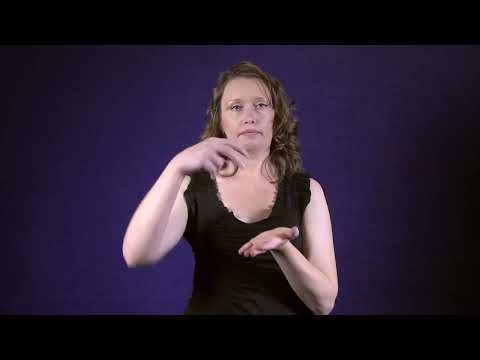
Sign for GET UP in ASL | ASL Dictionary

Definition: To rise from a lying or sitting position.

Sign for GET UP in ASL

YouTube player

Practice Activities:

To practice the sign for GET UP in ASL, begin by isolating the sign and repeating it multiple times in front of a mirror. Focus on the handshape, palm orientation, and movement. Use both slow and natural speeds to help muscle memory develop accurately.

Next, incorporate the sign into simple phrases. Practice full sentences such as “I get up at 7,” “Get up now,” and “They don’t want to get up.” Repeat each several times while matching the facial expressions that fit the context. Use a video recording of yourself to review your use of non-manual markers and fluency.

Create short role-play scenarios where the sign for GET UP in ASL is used logically. For example, act out waking someone up in the morning, a parent encouraging a child to get up for school, or a coach motivating players to get off the ground. Say the sentence aloud to match with your signing and check for timing and emphasis.

A great storytelling prompt would be to describe your morning routine. Include at what time you get up, what happens after, and how you feel. Try connecting related signs like WAKE UP, GET DRESSED, and EAT. Telling this as a story helps you remember the flow and gives the sign for GET UP in ASL useful context.

If working with a partner, take turns giving commands or acting out scenes. One person signs a sentence using GET UP and the other responds with an action or follow-up sign. Switch roles every 5 minutes to reinforce both receptive and expressive skills. Consider using flashcards with different times of day or daily actions to trigger spontaneous use of the sign for GET UP in ASL for added fluency.

Cultural Context:

In American Sign Language, the sign for get up in ASL is more than just a physical movement. It reflects how Deaf culture expresses actions related to daily life activities. The concept of getting up can mean waking up, standing up, or moving into action, depending on the context.

When using the sign for get up in ASL, it can show different emotions or urgency. For example, in informal settings, it might be playful or casual. In more serious situations, the same sign can indicate a prompt need to stand or begin moving. Facial expressions and body movement help give the sign its meaning.

In Deaf culture, communication is visual, and the sign for get up in ASL quickly conveys essential actions. This aligns with the Deaf community’s value of clarity and efficiency in visual language. Since ASL is a language deeply connected to spatial and visual cues, physical signs like get up are key for everyday interactions.

The sign for get up in ASL is commonly seen in classroom settings, storytelling, and household interactions. A teacher may use it to instruct students to stand during group activities. A parent might use it to wake their child or prompt them to move during a routine.

The expression tied to the sign often adds to its meaning. A firm facial expression might show that someone needs to get up immediately, while a gentle face may just be encouraging someone to rise slowly. These non-verbal cues are essential in understanding how to use the sign for get up in ASL correctly.

Storytelling is a major part of Deaf culture, and the sign for get up in ASL often appears in signed stories. It helps set the action in motion or indicate a change in the character’s position. By emphasizing action, these stories become more dynamic and relatable to the audience.

In ASL poetry and performance, the sign for get up in ASL may serve symbolic purposes. It can express rising above a difficult situation, empowerment, or taking action. Its versatility allows performers to convey both literal and metaphorical messages.

When teaching the sign, it’s important to explain beyond just the handshape. Students must understand the cultural meaning and variations of the sign for get up in ASL based on use and setting. Learning this cultural context helps deepen the understanding of ASL as a living language that adapts with situation and emotion.

The Deaf community often stresses the importance of visual engagement. Using gestures like the sign for get up in ASL helps maintain that visual bond between communicators. It shows how expressive and

Extended Definition:

The sign for GET UP in ASL is widely used in conversations to express rising from a seated, lying, or resting position. This sign is helpful in daily situations where movement or action is being discussed, especially when referring to transitioning from rest to activity.

In American Sign Language, the sign for GET UP in ASL is typically made by using one hand to represent a resting figure, then using the other hand to “lift” fingers from that surface, symbolizing the action of standing or rising. It’s a visual and intuitive sign that reflects how someone literally gets up from a position. Handshape, motion, and facial expression all contribute to the clarity of this sign.

This sign can be used in literal contexts, like when telling someone to get out of bed, get off the floor, or stand from a chair. It can also be used more figuratively, such as encouraging someone to begin taking action or moving forward from a situation. The flexibility of the sign for GET UP in ASL makes it useful in both casual and more formal ASL settings.

When signing GET UP in ASL, context matters. For example, if the person is lying down, you might show the sign by modifying the angle or motion of the sign to match the situation. Likewise, accompanying facial expressions can help clarify intention, such as urgency or encouragement. These nuances are important in ensuring your sign is understood correctly by others.

Some regional or cultural differences may slightly alter how the sign for GET UP in ASL looks, but the core motion stays consistent. As with many ASL signs, community usage and context play key roles in variation. The more exposure you get to the language, the easier it becomes to recognize and adapt to these differences.

In storytelling or teaching settings, this sign often connects with broader concepts like discipline, responsibility, or motivation. It can be used in preschool classes to encourage children to rise during circle time or in narratives that show characters overcoming obstacles. The sign for GET UP in ASL offers not just a literal action but can symbolize emotional or mental movement.

Learners of ASL should practice the sign in different sentence structures such as commands, questions, or affirmations. For example, you might ask, “Ready to get up?” or direct someone with a firm tone, “Get up now.” Repetition in various scenarios strengthens your fluency and comfort with the sign.

When watching Deaf community interactions, you’ll see the sign for GET UP in ASL used with ease and fluidity.

Synonyms: rise, stand up, wake up, get out of bed, ascend

Educational resources: Find related learning materials in our course bank!

Want more? Check out some of our popular learning activities on the homepage!

Need to look up a sign? Use our highly rated dictionary: https://aslinteractive.com/best-asl-dictionary/

Follow us on tiktok: https://www.tiktok.com/@aslinteractive. More social media links at the bottom of this page!

Long-tail Keywords: what is the sign for get up in ASL, how do you sign get up in ASL, get up sign language demonstration

Categories:

tags: get up in sign language, ASL sign for get up, how to sign get up in ASL, get up ASL translation, American Sign Language get up

Parameters

*Handshape*:

The handshape for the sign for GET UP in ASL uses a modified “V” handshape with both hands. The dominant hand forms a “V” shape, representing legs in a bent seated position, while the non-dominant hand sits flat like a surface or floor.

To show the sign for GET UP in ASL, the dominant hand starts with the “V” fingers resting on the non-dominant hand and then moves upward, symbolizing the action of standing. This movement mimics rising from a seated or lying position.

*Palm Orientation*:

For the sign for GET UP in ASL, the palm orientation typically begins with the dominant hand in a flat “B” or bent “V” shape, palm facing downward or at an angle toward the floor. As the movement progresses, the palm rotates slightly so the fingers point upward, indicating the motion of rising or getting up.

The sign for GET UP in ASL uses a natural palm adjustment that helps convey the upward action. The hand turning from a downward position to upward supports the meaning of “standing” or transitioning from seated to standing.

*Location*:

The sign for GET UP in ASL is typically located in the lower to mid-torso area. Your dominant hand starts near the ground, palm facing down with the middle and index fingers extended and slightly bent, resembling a person lying down.

As you make the motion upward to about chest height, the hand shifts to represent the action of a person rising. This natural upward movement helps convey the meaning of the sign for GET UP in ASL effectively.

*Movement*:

To produce the sign for GET UP in ASL, start by holding both hands in bent “V” handshapes (palm down) near waist level, with fingertips pointing forward or slightly downward. Then, in a swift motion, lift both hands upward to indicate rising or standing, while straightening the fingers slightly.

This movement mimics the physical act of standing from a seated or lying position. The sign for GET UP in ASL captures the essence of motion and energy with a clear upward lift .

*Non-Manual Signals*:

The non-manual signals for the sign for GET UP in ASL often include a focused or alert facial expression , representing sudden movement or awakening. You may also raise your eyebrows slightly and lean your body or head forward to emphasize intent or urgency, depending on the context.

When using the sign for GET UP in ASL to mean physically rising from a sitting or lying position, a quick upward glance or head nod can add clarity. These non-manual cues help convey motion, readiness, and action .

*Prosody, Dominant/Non-Dominant Hand*:

The sign for GET UP in ASL uses the dominant hand in a “V” handshape, representing legs. This hand shape starts palm-down near the non-dominant hand, which is flat and palm-up, symbolizing a surface. The dominant hand lifts and moves upward from the non-dominant hand, mimicking the motion of a person standing up ‍♂️.

Both hands work together to convey the action clearly. The dominant hand’s upward movement shows the change from sitting or lying to a standing position, which is essential in the sign for GET UP in ASL.

Tips for Beginners:

When learning the sign for GET UP in ASL, it’s important to understand the context in which it’s used. This sign typically represents the action of someone rising from a seated or lying position. The movement mimics the gesture of picking up or helping something or someone to stand. Be sure your motion is clean and deliberate to avoid confusion with similar signs like stand or wake up.

Practice is key! Consistent repetition in front of a mirror can help solidify your hand positioning and movement. Focus on the natural arc of the movement—start with your dominant hand in a “V” shape (representing legs or a person) and place it palm down on your non-dominant flat hand (which represents a surface). Then move the “V” hand upward to simulate getting up. Make your movements fluid but not rushed.

Be mindful of facial expressions. While the sign for GET UP in ASL is relatively neutral, context can change facial expressions. For example, if you’re urgently telling someone to get up, your face will reflect that tension. Watching native signers and replicating their expressions can help you grasp this nuance.

One beginner mistake is making the “getting up” motion too small or unclear. This can look like a different verb entirely. To avoid this, think about exaggerating the gesture slightly as you practice. Over time, you can refine your movement to a more natural pace.

Don’t be afraid to use the sign in everyday scenarios. If you’re waking someone or offering help to stand, use the sign for GET UP in ASL along with body language to reinforce your intention. The more you use it in context, the more comfortable it will become.

sign for get up in asl, how to sign get up in asl, asl sign for get up, learn the sign for get up in asl

Connections to Other topics:

The sign for GET UP in ASL links closely with action-based and motion-related concepts in the language. It is often associated with signs that convey physical movement, such as STAND, WAKE UP, or START. These related signs share handshape patterns and directional movements that express transition from one state to another, such as from lying to standing or from inactivity to action.

Many compound signs incorporate the sign for GET UP in ASL to form phrases relevant to daily activities. For instance, combining it with the sign for BED can convey GET UP FROM BED, indicating the start of one’s day. This compound usage is common in discussions about routines or storytelling that includes a sequence of actions.

The sign also shares conceptual ties with signs expressing transitions, like LEAVE or GO. These signs offer learners an opportunity to explore shifts in states—whether physical, emotional, or situational—demonstrated through space and direction in signing. Understanding these relationships enhances the learner’s grasp of how spatial grammar functions in ASL.

In narrative contexts, especially those involving time or sequence, the sign for GET UP in ASL may be paired with temporal signs like MORNING or TIME. This connection reinforces the use of classifiers and role-shifting to create vivid visual storytelling. For example, a signer may describe a character getting up, stretching, and beginning their morning, all while maintaining clear spatial mapping.

The sign helps bridge interactions regarding responsibilities or commands, especially when used in imperatives like “Get up!” during class or sports. It’s frequently tied to signs expressing motivation or urgency, making it useful in both instructional and expressive ASL forms. This makes the sign for GET UP in ASL a valuable entry point into broader ASL concepts related to narrative flow, physical actions, and daily routines.

Summary:

The sign for GET UP in ASL typically uses one hand to represent a person lying down and the other hand to mimic the action of rising. This is an iconic or metaphorical sign, echoing the visual movement of someone transitioning from a reclined to an upright position.

One common version of the sign involves holding out the non-dominant hand flat, palm up, to represent a surface. The dominant hand, shaped in a bent V formation (index and middle fingers bent), starts in contact with the flat hand and lifts upward, indicating a person or subject getting up.

This visual metaphor in the sign for GET UP in ASL symbolizes physical movement, but it also conveys broader meanings such as starting the day, rising in status, or beginning a new action. The lifted bent V hand resembles a pair of legs, further reinforcing the meaning.

In context, this sign can be used both literally and figuratively. For example, one could use it to say someone got up from a chair, or abstractly to communicate that someone “got up” after a personal struggle.

ASL favors multimodal and metaphor-driven depictions of actions. The sign for GET UP in ASL is a great illustration of embodied cognition, where the physical act is mimicked using an easily recognizable shape and movement.

Depending on regional dialects or signed communities, slight variations may exist. Some signers may perform the movement more sharply or with additional facial expressions to convey emotional or emphatic depth.

Non-manual markers significantly influence the meaning. For instance, raised eyebrows and an inquisitive tilt of the head can transform the sign for GET UP in ASL into a question—asking if someone woke up or stood up.

When used with timing modifiers or aspect markers like “recently” or “habitually,” this sign can take on more temporal specificity. The sign blends seamlessly into ASL’s time-topic-comment structure.

The verb usage of the sign is typically intransitive. However, when discussing helping someone get up, modifications are made via classifiers or role-shifting to indicate the action’s effect on another person.

Classifiers provide another layer. A signer might describe a scenario using classifier handshapes to show what position a person was in before and after they got up.

The sign ties into many other signs related to movement and positioning, such as SIT, STAND, LIE DOWN, and FALL. These help create cohesive visual narratives in ASL storytelling.

Remember, ASL is not simply a signed version of English. The grammar and syntax are unique, and the sign for GET UP in ASL fits within broader visual-spatial structures distinct from English phrasing.

The cultural significance of this sign is tied to themes of resilience, initiating action, and transitions. In Deaf culture, perseverance and empowerment themes often bring depth to such signs when used in storytelling or poetic signing.

The sign’s simplicity makes it accessible for beginner learners, yet its implementation in broader contexts allows for expressive variations. Storytelling, conversation, and even performance art may use this sign in nuanced ways.

From a linguistic standpoint, the sign for GET UP in ASL demonstrates iconicity, one of the predominant traits in signed languages. It echoes the concept it represents in both form and motion.

Applied linguistics shows that early learners of ASL quickly grasp this sign due to its visual nature. Incorporating representational gestures helps bridge learning gaps for new signers.

The sign’s physicality also helps with retention and recall. Learners often find signs that relate to daily activities, such as getting up, easier to remember and use in conversation.

Signing GET UP can also serve as a foundation for teaching verb aspect or temporal markers. For instance, repeating the movement may indicate repeated action, like always getting up early.

Children learning ASL as a first language often acquire daily routine signs like the sign for GET UP in ASL very early. It’s common in narratives about morning routines in ASL storybooks or classroom settings.

In social settings, the sign may also be used humorously or metaphorically. For example, telling someone to “get up” as a light-hearted push toward motivation can convey encouragement, especially when paired with an expressive face.

Variations may depict urgency depending on speed and force. A slow, exaggerated motion might imply reluctance, while a quick gesture could suggest enthusiasm or emergency.

In Deaf theater or ASL poetry, this sign may take on abstract symbolism. Rising from a seated position can metaphorically denote overcoming oppression or awakening to identity.

From a grammatical angle, ASL does not rely on prepositions, so spatial orientation within the sign’s movement often takes their place. For example, the direction of the movement can imply where the subject got up from.

For native signers, the sign for GET UP in ASL often becomes automatic and deeply embodied. It forms part of a visual toolkit that efficiently communicates complex human experiences.

This sign also aligns with other daily activity signs like BATHROOM, EAT, and

Want more? Check out some of our popular learning activities!

ASL Interactive Resources

ASLInteractive YouTube Channel

Follow us on tiktok: @aslinteractive.com

Follow us on Instagram: aslinteractive

Facebook page: aslinteractive

Facebook group: aslinteractive

LInkedIn: ASL Interactive LLC

Twitter: @ASL_interactive

*Some information on this page is AI-generated. AI can make mistakes. Please check the information.


Responses