

Sign for 10 AM in ASL
Quick answer: The sign for 10 AM in ASL refers to ten o’clock in the morning. It combines the number 10 with morning or AM time context.
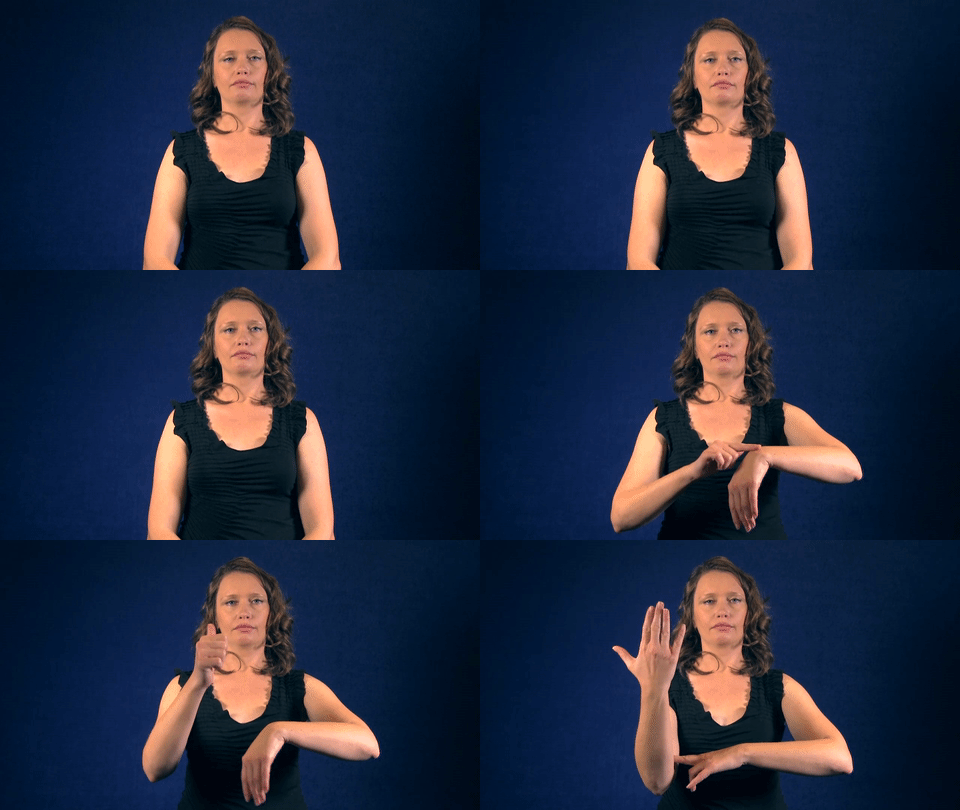
How to Sign 10 AM in ASL
To sign 10 AM, sign the number 10 clearly and include morning or AM time context. Depending on the situation, AM may be understood from context, fingerspelled as A-M, or clarified with the sign for MORNING.
This sign is used when talking about a specific morning time, such as meetings, appointments, classes, work schedules, errands, or daily routines.
| Dominant Handshape | 10-hand, often formed with a fist and thumb extended |
|---|---|
| Non-Dominant Handshape | Usually not required; may be used for time or morning reference depending on variation |
| Location | Neutral signing space in front of the body |
| Palm Orientation | Palm orientation may vary by context; keep the number 10 clear and readable |
| Movement | Sign 10, then clarify AM through context, fingerspelling, or a morning time reference |
| Non-Manual Markers | Neutral expression; use raised eyebrows if asking a question |
When to Use This Sign
Use 10 AM when discussing exact morning times, school schedules, work meetings, appointments, errands, classes, or morning plans.
- morning appointments
- school or class schedules
- work meetings
- daily routines
- event start times
10 AM is the sweet spot where morning plans feel much more reasonable.
Common Mistakes
- Confusing 10 AM with 10 PM
- Signing only the number 10 without giving enough time context
- Making the number 10 movement too large or unclear
- Forgetting to clarify morning if the context is not obvious
- Signing too quickly when giving an exact time
Example Sentences
ASL gloss: 10 AM MEETING START
English: The meeting starts at 10 AM.
ASL gloss: 10 AM CLASS HAVE
English: I have class at 10 AM.
ASL gloss: 10 AM DOCTOR APPOINTMENT
English: The doctor appointment is at 10 AM.
Related Time Signs in ASL
Responses