

Sign for 3 AM in ASL
Quick answer: The sign for 3 AM in ASL refers to three o’clock in the morning. It combines the number 3 with morning or AM time context.
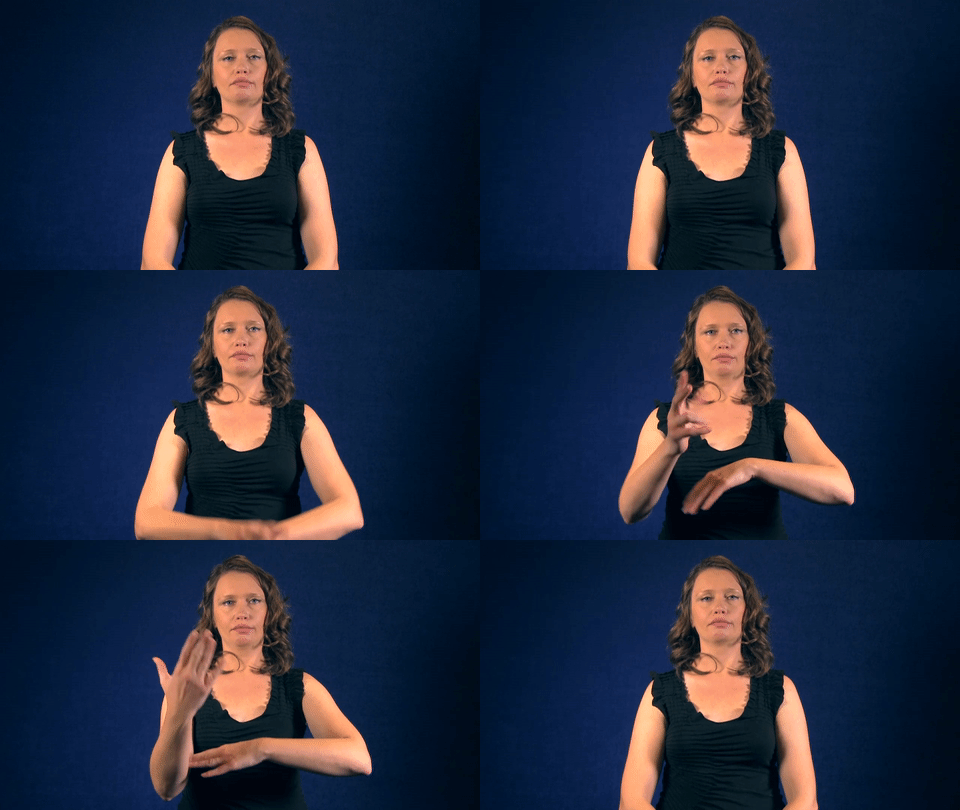
How to Sign 3 AM in ASL
To sign 3 AM, sign the number 3 clearly and include the morning or AM time context. Depending on the situation, AM may be understood from context, fingerspelled as A-M, or clarified with the sign for MORNING.
This sign is used when talking about a specific time in the early morning, such as waking up, going to sleep late, working overnight, traveling early, or describing something that happened during the night.
| Dominant Handshape | 3-hand with thumb, index finger, and middle finger extended |
|---|---|
| Non-Dominant Handshape | Usually not required; may be used for time reference depending on variation |
| Location | Neutral signing space in front of the body |
| Palm Orientation | Palm orientation may vary by context; keep the number 3 clear and readable |
| Movement | Sign 3, then clarify AM through context, fingerspelling, or a morning/time reference |
| Non-Manual Markers | Neutral expression; use emphasis if the time is surprising, early, or important |
When to Use This Sign
Use 3 AM when discussing exact times, sleep schedules, late-night studying, early travel, emergencies, night shifts, or routines that happen very early in the morning.
- sleep schedules
- night shifts
- late-night studying
- early morning travel
- storytelling about unusual events
3 AM is the hour when everything feels either very quiet or very dramatic.
Common Mistakes
- Confusing 3 AM with 3 PM
- Signing only the number 3 without giving enough time context
- Using the wrong 3-handshape by extending the ring finger instead of the thumb
- Forgetting to clarify morning if the context is not obvious
- Signing too quickly when giving an exact time
Example Sentences
ASL gloss: 3 AM I WAKE-UP
English: I woke up at 3 AM.
ASL gloss: 3 AM I STILL STUDY
English: I was still studying at 3 AM.
ASL gloss: 3 AM STORM WAKE-ME-UP
English: The storm woke me up at 3 AM.
Related Time Signs in ASL
Responses