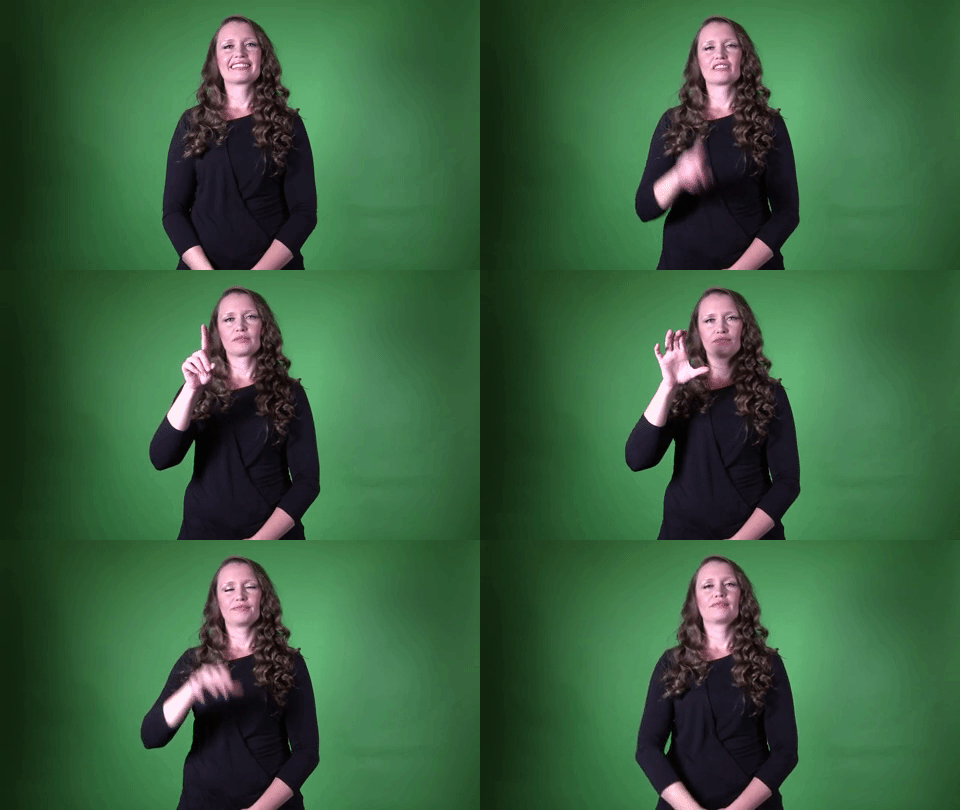
Definition: The number one hundred v2.
Sign for 100 in ASL
Practice Activities:
To practice the sign for 100 in ASL, start by signing it slowly in front of a mirror. Pay close attention to your handshape transition and movement. Repeat the sign multiple times to develop fluency and consistency.
Try signing numbers in sequence with 100, such as 90-100-110, to get comfortable moving between numbers. Practice counting by hundreds, starting from 100 up to 1000, to reinforce number recognition along with the sign. Experiment with switching between similar numbers like 100 and 101 to ensure accuracy.
Use the sign for 100 in ASL in short sentences. Sign phrases like “I have 100 dollars,” “100 people are here,” or “This costs 100 dollars.” Challenge yourself by creating different statements using the sign in varied contexts.
Engage in partner exercises where one person fingerspells a three-digit number that includes 100, and the other person signs it back. Play a guessing game where someone describes a situation involving the number 100, and the other person signs an appropriate response. For example, “I ran this many miles in a year” could prompt the response “100.”
Tell a short story that incorporates the sign for 100 in ASL. For example, describe a shopping experience where you spend 100 dollars or talk about reading 100 books. Signing numbers within a narrative helps reinforce fluency and natural usage.
Use a number drill where you randomly mix 100 with other numbers to strengthen number comprehension. Sign different values in front of a friend or tutor and have them interpret your signs correctly. This reinforces both expressive and receptive skills.
For a fun challenge, set a timer and sign 100 as many times as possible in one minute. This increases speed and confidence. The more you practice, the more natural the sign will feel in everyday conversations.
Cultural Context:
The sign for 100 in ASL is essential for conversations involving numbers, money, and counting. Numbers play a crucial role in American Sign Language, as they allow for clear communication in daily life. Understanding how to express 100 correctly ensures accuracy in various contexts.
In Deaf culture, number signs are deeply ingrained in everyday interactions. The sign for 100 in ASL is commonly used when discussing prices, percentages, and large quantities. Knowing how to sign numbers fluently helps in educational and professional settings.
When learning the sign for 100 in ASL, it’s important to understand the structure of number signs in general. ASL follows a logical pattern for counting, and mastering these signs improves fluency. This makes it easier to engage in discussions about finances, math, or measurements.
Deaf communities rely on number signs for everything from telling time to exchanging contact information. The sign for 100 in ASL is used in classrooms, business transactions, and casual conversations. Learning number signs enhances communication and supports full participation in the language.
ASL numbers, including 100, are often incorporated into storytelling and visual descriptions. Many Deaf storytellers use numbers expressively to enhance their narratives. Being proficient with the sign for 100 in ASL allows for richer storytelling and clearer explanations.
Finger-spelled numbers can sometimes be used, but ASL has specific signs for common numbers like 100. Using the appropriate sign rather than finger-spelling increases speed and clarity in communication. Fluency with numbers makes ASL conversations smoother and more natural.
Teaching children the sign for 100 in ASL at an early age helps build a strong foundation for math skills. Deaf and hard-of-hearing students benefit from structured number learning in ASL. Educators often emphasize numerical signs to support both language and mathematical development.
Numbers are frequently used in ASL sports commentary, business meetings, and daily life. The sign for 100 in ASL appears in discussions about scores, measurements, and milestones. Understanding this sign is useful for both casual and formal conversations.
Accuracy is key when signing numbers to avoid confusion. Practicing the sign for 100 in ASL ensures clear exchanges, especially in financial or instructional situations. Proper handshape and movement make the difference between correct and incorrect signs.
Learning ASL numbers, including 100, makes communication more efficient within the Deaf and hard-of-hearing community. Signing numbers fluently bridges gaps in understanding and fosters better connections. Master
Extended Definition:
The sign for 100 in ASL is an essential part of learning American Sign Language numbers. Understanding how to sign numbers correctly helps improve communication and comprehension. Whether counting, discussing prices, or sharing numerical information, knowing this sign is crucial.
To form the sign for 100 in ASL, start by signing the number 1 using your dominant hand. Extend the index finger while keeping the other fingers folded down. Then, transition into a “C” handshape by curving your index finger and thumb slightly.
This movement represents how numerical signs change in ASL when indicating larger values. Learning number signs like 100 in ASL is useful for daily conversations, especially when discussing money, years, or counting. Mastering these signs improves fluency and confidence in ASL communication.
Numbers play a significant role in ASL, and correctly signing 100 ensures clarity. Many number signs involve similar movements, so practicing helps distinguish them from one another. Watching experienced signers can also improve accuracy.
When using ASL numbers in conversation, facial expressions and context clarify meaning. The sign for 100 in ASL might appear in discussions about age, history, or measurements. Understanding number placement in sentences enhances overall communication skills.
Different regions or individuals may have slight variations when signing numbers. However, the standard way of signing 100 is widely recognized in ASL communities. Practicing with native signers or referencing ASL resources can help refine technique.
Signing numbers correctly is important, especially in educational and professional settings. The ability to sign 100 in ASL accurately ensures smooth exchanges of numerical information. Practicing regularly improves speed and comprehension.
ASL numbers follow specific patterns, making it easier to learn once familiar with the structure. The sign for 100 in ASL follows a logical transition from 1 to 100 using a simple handshape change. Understanding these patterns can make learning other numbers easier.
Fluency in ASL includes mastering numbers and their variations. The sign for 100 in ASL is just one of many that build a strong numerical foundation. Regular practice with different numbers leads to more confident signing.
For beginners, repetition and visual demonstrations help when learning ASL numbers. Watching video tutorials or practicing with a fluent signer improves understanding. The more exposure to number signs, the easier they become to recognize and produce.
ASL is a visually rich language where numbers are often combined in sequences. Knowing how to sign 100 in ASL
Synonyms: century, one hundred, 100, hundred percent, 1 hundred
Educational resources: Find related learning materials in our course bank!
Want more? Check out some of our popular learning activities on the homepage!
Need to look up a sign? Use our highly rated dictionary: https://aslinteractive.com/best-asl-dictionary/
Follow us on tiktok: https://www.tiktok.com/@aslinteractive. More social media links at the bottom of this page!
Long-tail Keywords: what is the sign for 100 in ASL, how do you sign 100 in American Sign Language, learn how to sign 100 in ASL
Categories: Numbers – Basics, Numbers 91-100, cardinal numbers
tags: Numbers, Numbers 91-100, Math, Language Learning, Educational Content
Parameters
*Handshape*:
The sign for 100 in ASL uses the number 1️⃣ handshape at the beginning. The index finger extends while the other fingers remain closed against the palm. The thumb rests lightly against the curled fingers.
To complete the sign for 100 in ASL, the hand transitions into a C handshape. The index finger curls downward as the hand moves slightly back. This movement represents the shift from 1 to 100 in numerical ASL signs.
*Palm Orientation*:
The palm orientation for the sign for 100 in ASL begins with the palm facing forward in an open “1” handshape. As the movement progresses, the fingers slightly curve to form a “C” shape while the palm shifts slightly inward. This transition represents the numerical value 100 while maintaining natural hand positioning. Proper palm orientation ensures clarity when signing the sign for 100 in ASL, helping distinguish it from similar number signs.
*Location*:
The sign for 100 in ASL is formed in the neutral space in front of the signer’s body. The dominant hand typically starts in the “1” handshape near the upper chest or shoulder level. As the movement happens, the fingers change into a “C” handshape. This sign is performed at chest height, keeping the movement within a comfortable signing space to ensure clarity and ease of understanding.
*Movement*:
To make the sign for 100 in ASL, start with the number 1 handshape, extending the index finger while keeping the other fingers curled in. Move the hand slightly forward, then transition to a C handshape by curving the fingers and thumb. This movement represents the number 100 in ASL and is commonly used in numerical contexts. Make sure the motion is fluid to clearly convey the number.
*Non-Manual Signals*:
When using the sign for 100 in ASL, your facial expression should remain neutral or slightly affirmative, depending on the context. If emphasizing precision, raise your eyebrows slightly and focus your gaze forward. If expressing estimation or approximation, tilt your head slightly and purse your lips. Proper use of non-manual signals ensures clarity and enhances comprehension when using the sign for 100 in ASL.
*Prosody, Dominant/Non-Dominant Hand*:
The sign for 100 in ASL starts with the dominant hand forming the “1” handshape, with the index finger extended while the other fingers remain curled. The hand moves slightly forward, then transitions into the “C” handshape by curling the index finger and forming a loose curve. The non-dominant hand is not involved. This motion represents the numerical value and follows the natural flow of ASL number signs.
Tips for Beginners:
Mastering the sign for 100 in ASL requires smooth hand movement and clear formation. Start by forming the number 1 with your dominant hand, extending your index finger while keeping the other fingers curled into your palm. Then, transition smoothly into a “C” handshape, curving your fingers while keeping your thumb and index finger slightly open.
A common mistake when signing 100 in ASL is making the transition too stiff or abrupt. Ensure a natural movement from the number 1 handshape to the “C” handshape without pausing. Practicing in front of a mirror can help you refine the motion and ensure it’s fluid.
Finger positioning is important in making the sign clear. Keep your palm facing forward in the initial “1” position, then move into the “C” shape while maintaining a relaxed hand. Avoid overextending your fingers, as it may obscure the shape. Consistency in movement makes the sign more readable to native signers.
Speed control is key when learning the sign for 100 in ASL. Moving too quickly might make the sign unclear, while going too slow can disrupt the natural flow. Repeating the transition at a comfortable pace helps build muscle memory, making it effortless over time.
When integrating this sign into conversation, use facial expressions for emphasis, especially when discussing numbers in context. Signing with confidence ensures better communication. If unsure, watch experienced signers and try to replicate their smooth hand transitions.
Practice frequently with real-world applications, such as counting or discussing numbers. Watching ASL videos demonstrating the sign for 100 in ASL can help reinforce the movement. With time and effort, this number sign will become second nature and add to your overall fluency.
Connections to Other topics:
The sign for 100 in ASL is closely connected to other number signs, particularly numbers in the hundreds. Once you learn how to form 100, it becomes easier to sign other round numbers like 200, 300, and beyond by modifying the initial handshape. This pattern is similar to how many numbers in ASL follow a logical structure, making it easier for learners to pick up larger numbers with consistency.
This sign also connects to concepts of quantity and currency in ASL. Numbers are frequently paired with money-related signs when discussing prices or large sums. For example, signing 100 alongside DOLLAR creates the concept of “one hundred dollars.” This structure extends to other numerical values when discussing financial transactions, wages, or budgets.
Understanding the sign for 100 in ASL helps with signing years, ages, and measurements. When signing “100 years old,” the sign for 100 connects smoothly with the AGE sign, following the pattern used for expressing ages in ASL. Similarly, measurements like 100 miles or 100 pounds involve blending numerical signs with measurement-related vocabulary. These connections showcase how numbers integrate into various practical contexts.
Another important link is the concept of ordinal and ranking numbers. If discussing “Top 100” or “100th place,” ASL uses number incorporation techniques to convey ranking. The ability to modify numbers within contexts like competitions or lists is vital for clarity in signed communication. This reinforces the structured way numbers function within ASL grammar.
Numbers often appear in dates, statistics, or historical references. For example, signing “100 years ago” requires a combination of time-related signs such as PAST or AGO along with 100. This structure helps discuss important events in history, anniversaries, or milestones. Recognizing how 100 fits into larger sequences makes it easier to incorporate it into practical conversations.
Summary:
The sign for 100 in ASL follows a structured numerical system used in American Sign Language. It combines elements of number signs and incorporates a movement pattern that represents the shift from one digit to the next. Like many ASL numbers, the visual representation is efficient and intuitive.
To produce the sign for 100 in ASL, start with the hand forming the number 1. This is done by extending the index finger while keeping the other fingers curled into the palm. The thumb remains tucked in against the hand, forming a clear and distinct number 1.
From this position, the hand moves into a modified “C” shape. Transitioning smoothly, the fingers curve slightly toward the palm while maintaining a natural arc. This shift from 1 to a “C” shape visually represents the change from 1 to 100 in ASL’s numerical system.
There are variations in signing 100 based on regional preferences and individual styles. Some signers may modify the handshape slightly, moving from the number 1 to a loose “C” with a more relaxed transition. Others retain a firmer “C” formation, depending on clarity and comfort.
The sign for 100 in ASL aligns with the broader structure of ASL number formation. Numbers in ASL often follow patterns, making it easier to recognize sequences. The transition from 1 to 100 demonstrates how numbers are visually constructed with logical shifts in handshape.
ASL numbers convey more than just numerical values. They embody efficiency, allowing communication of complex numerical concepts with a single gesture. The sign for 100 in ASL is an example of this streamlined approach, reducing the need for fingerspelling or longer sequences.
Numbers in ASL also reflect historical influences on signing styles. Early sign language structure influenced modern number signs, ensuring they remain intuitive and clear. The consistency in numerical representation has helped maintain clarity in education and everyday signing.
The sign for 100 in ASL can be used in various contexts. It appears in discussions about money, sports scores, dates, and general counting. Signers use it in both formal and casual conversations, making it a versatile and essential part of ASL.
In financial contexts, 100 is commonly referenced in price discussions. When signing “100 dollars,” the numerical sign is combined with the sign for “dollar,” following a standardized ASL sentence structure. This maintains clarity in economic discussions.
In sports and academics, the sign for 100 in ASL represents achievements such as test scores or statistics. A student might sign “I got 100” when talking about their grade, emphasizing the importance of numbers in academic communication.
The cultural relevance of 100 extends beyond basic counting. It can symbolize achievement, ranking, or even expressions of completeness. In ASL conversations, numbers can carry deeper meanings, sometimes influenced by cultural perceptions of numerical values.
Understanding number signs in ASL enhances fluency and communication efficiency. Whether discussing prices, statistics, or historical dates, mastering the transition between numerical handshapes ensures clarity. The sign for 100 in ASL plays a fundamental role in numerical literacy within the deaf community.
Numbers in ASL differ from spoken language systems in structure and representation. Instead of relying on vocal articulation, ASL numbers use visual-spatial elements to convey meaning. This creates a distinct linguistic framework that reinforces ASL’s identity as a visual language.
Linguistically, ASL numbers involve distinct phonological rules. Handshape, movement, and palm orientation must all align correctly to avoid ambiguity. The sign for 100 in ASL follows these linguistic principles, ensuring clear and consistent communication.
Applied linguistics also explores how numerical signs are acquired by ASL learners. Studies suggest that structured number signs, like 100, help in memory retention due to their visual nature. This reinforces the importance of numerical structuring in language development.
Grammatically, ASL incorporates number incorporation in specific contexts. While the sign for 100 in ASL stands alone in most cases, it can also combine with other numerical expressions. This flexibility allows signers to build complex numerical statements naturally.
The innovative structure of ASL numbers demonstrates the language’s adaptability. From single-digit numbers to large values, ASL numerals maintain efficiency. The sign for 100 in ASL specifically reflects this adaptability by simplifying a three-digit number into a fluid motion.
Recognition of numerical signs is crucial in ASL interpretation and translation. Interpreters often face challenges when interpreting rapid numerical exchanges. Understanding standardized number signs, including the sign for 100 in ASL, ensures accuracy in communication.
Modern ASL education emphasizes numerical fluency alongside traditional vocabulary. Number drills and structured practice help learners recognize signs like 100 instantly. Developing mastery of numerical signs supports overall ASL proficiency.
ASL storytelling sometimes incorporates numbers for dramatic effect. When narrating events that involve quantities or rankings, the sign for 100 in AS
Want more? Check out some of our popular learning activities!
ASL Interactive Resources
ASLInteractive YouTube Channel
Follow us on tiktok: @aslinteractive.com
Follow us on Instagram: aslinteractive
Facebook page: aslinteractive
Facebook group: aslinteractive
LInkedIn: ASL Interactive LLC
Twitter: @ASL_interactive
*Some information on this page is AI-generated. AI can make mistakes. Please check the information.


Responses