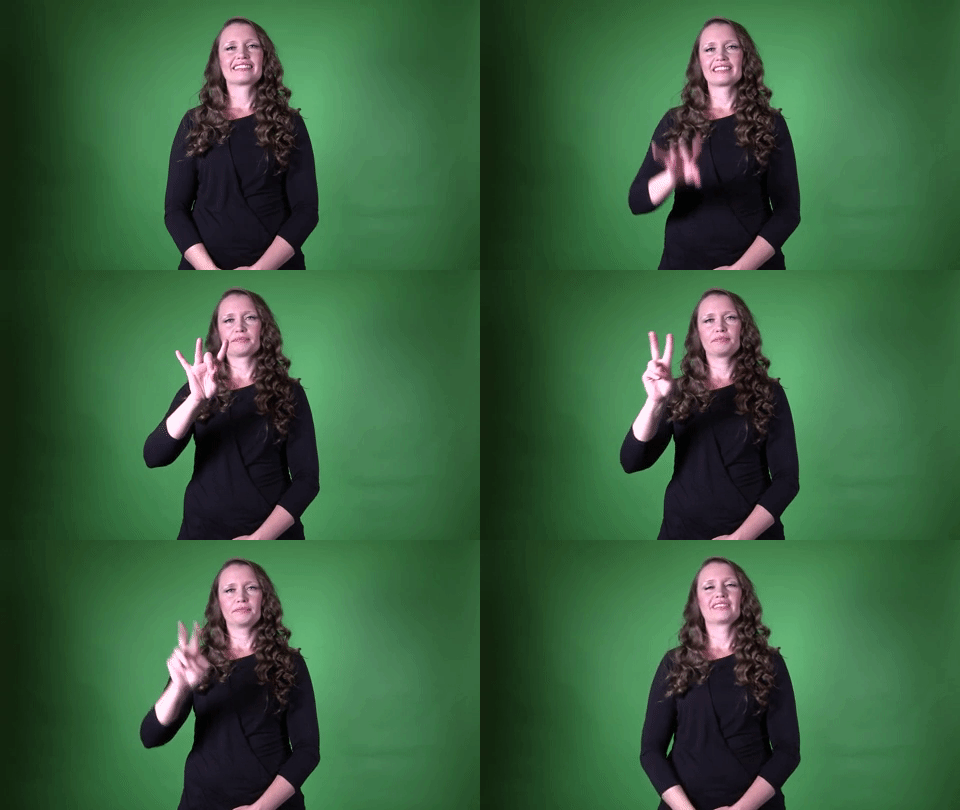
Definition: The number eighty-two.
Sign for 82 in ASL

Practice Activities:
To practice the sign for 82 in ASL, start by signing the number slowly and clearly in front of a mirror. Focus on the handshape and movement transition between the digits to ensure fluency. Repeat the number multiple times, gradually increasing speed while maintaining accuracy.
Try using the sign for 82 in ASL in context by signing numbers in a sequence. For example, sign 80, 81, 82, 83, and continue upward to build recognition of similar number patterns. You can also practice counting by twos, signing 78, 80, 82, 84, and so on.
Create number-based sentences to reinforce fluency. Sign phrases like “I have 82 books,” “She is 82 years old,” or “There are 82 students in the school.” This helps integrate the number into real-life communication. Partner with a friend and take turns asking each other number-related questions using the sign for 82 in ASL.
Engage in a number bingo game where a partner signs various numbers, and you mark them on a bingo card. Incorporate 82 into the game to ensure recognition in a broad numerical context. Another activity is to sign a random number, and your partner must add or subtract to reach 82, reinforcing both math skills and number recognition in ASL.
For an advanced challenge, create a short story or dialogue that includes the sign for 82 in ASL. For example, tell a story about an 82-year-old adventurer or a competition where 82 people participated. Signing full stories with numbers enhances fluency and comfort in using numerical signs effectively.
Cultural Context:
The sign for 82 in ASL follows the standard number pattern found in American Sign Language. When signing numbers in ASL, handshape, palm orientation, and movement are essential components to getting the sign right. The sign for 82 in ASL is part of the larger system of cardinal numbers used in everyday conversations.
Numbers play an important role in Deaf culture, especially in education, finance, and casual interactions. The sign for 82 in ASL is frequently used for addresses, ages, and counting. Mastering ASL numbers helps improve fluency and comprehension when communicating with native signers.
In ASL, numbers like 82 are signed using a combination of handshapes that represent each digit. Understanding number signs is vital for discussing dates, prices, and even sports scores. The sign for 82 in ASL can be learned easily by following the logical number patterns used in the language.
Deaf schools and ASL classes often emphasize numbers as part of the foundational skills needed for fluent signing. The sign for 82 in ASL, like other two-digit numbers, follows a rhythmic pattern that makes it easier to learn. Repetition and practice help solidify number signs in memory, making everyday signing smoother.
In Deaf culture, numerical signs are used in phone numbers, addresses, and math-related discussions. The sign for 82 in ASL is also essential for conversations involving historical events or statistics. Learning ASL numbers enhances communication in both formal and informal settings.
Handshape and movement are key factors in correctly signing numbers in ASL. The sign for 82 in ASL uses a natural fluid motion that makes it easy to integrate into a sentence. Paying attention to sign production details ensures accurate and effective communication.
ASL users rely on numerical signs in both professional and social settings. The sign for 82 in ASL may appear in discussions about prices, quantities, or even sports scores. Knowing how to sign numbers confidently is an asset when engaging in ASL conversations.
Sign variations can occur depending on regional influences and individual signing styles. The sign for 82 in ASL remains consistent within the standard ASL numbering system. Learning this number helps signers build confidence in using ASL for everyday communication.
Digital resources and ASL dictionaries are great tools for learning numerical signs. The sign for 82 in ASL can be found in online videos and educational materials that teach proper handshapes. Practicing with fluent signers can greatly
Extended Definition:
The sign for 82 in asl follows a common pattern found in American Sign Language when signing two-digit numbers. This number is formed using the handshape for 8 followed by the handshape for 2, smoothly transitioning between the two. It is a quick movement that should be fluid and clear to ensure proper understanding.
In asl, numbers in the 80s use a consistent pattern where the first digit is signed with the palm facing forward, followed by the second digit in a similar motion. For the sign for 82 in asl, the hand starts with the number 8 and then moves into the number 2 without breaking the rhythm. This makes it easy to recognize and use in various contexts.
Many numbers in asl rely on fluid movement to maintain clarity, and the sign for 82 in asl is no different. Hand position and direction are essential for proper execution, ensuring that the sign is correctly understood. Practicing the motion slowly and then increasing speed can help develop accuracy and fluency.
The sign for 82 in asl is frequently used in different contexts, such as discussing ages, money, addresses, or quantities. It is important to sign numbers clearly to avoid confusion, especially when communicating critical information. Consistency in handshapes and movement will make number signs more natural.
When learning numbers in asl, recognizing patterns can make them easier to remember. The sign for 82 in asl follows the same rule as other numbers in the 80s, allowing signers to apply the same technique across similar signs. This makes number signs more predictable and easier to master over time.
Finger dexterity and hand control play a crucial role in executing number signs accurately. The transition from 8 to 2 should be smooth, with no unnecessary pauses. Watching skilled signers or using a mirror can help improve technique and make the movement feel more natural.
Numbers like the sign for 82 in asl are a fundamental part of daily communication in sign language. Whether you’re stating a price, giving a total, or sharing an address, proper number signing is essential. Mastering number signs will improve overall fluency and confidence in asl communication.
Beginners may find number signs challenging initially, but regular practice helps build muscle memory. The sign for 82 in asl becomes easier with repetition, reinforcing the shape and movement. Learning to recognize and sign numbers quickly will allow smoother conversations in asl.
Engaging in conversations with fluent signers can improve number signing skills. Watching
Synonyms: eighty-two, number eighty-two, number 82, the number 82, the number eighty-two
Educational resources: Find related learning materials in our course bank!
Want more? Check out some of our popular learning activities on the homepage!
Need to look up a sign? Use our highly rated dictionary: https://aslinteractive.com/best-asl-dictionary/
Follow us on tiktok: https://www.tiktok.com/@aslinteractive. More social media links at the bottom of this page!
Long-tail Keywords: what is the sign for 82 in ASL, how do you sign 82 in American Sign Language, ASL sign for the number 82
Categories: Numbers – Basics, Numbers 81-90, cardinal numbers
tags: Numbers, Numbers 81-90, Math, Language Learning, Educational Content
Parameters
*Handshape*:
The sign for 82 in ASL uses the dominant hand, forming the number 8 handshape, with the thumb touching the middle finger. The hand then transitions smoothly into the number 2 handshape, with the index and middle fingers extended while the rest of the fingers remain folded. This movement creates a clear numerical representation, ensuring accuracy when signing the sign for 82 in ASL. Hand orientation typically remains forward, emphasizing clarity and visibility.
*Palm Orientation*:
The palm orientation for the sign for 82 in ASL begins with the palm facing outward as you form the number 8 with your dominant hand. Then, transition smoothly to the number 2 while maintaining the outward palm orientation. This movement ensures clarity and accuracy in signing numbers. Keeping a steady hand position and distinct transitions helps convey the sign for 82 in ASL effectively.
*Location*:
The sign for 82 in ASL is produced in the neutral signing space in front of the body, typically at chest level. The dominant hand forms the number 8 with the thumb and middle finger touching, then transitions smoothly to the number 2 with the index and middle fingers extended. The movement is fluid, ensuring clarity. Keeping the signs within the usual signing area helps maintain visibility and accuracy.
*Movement*:
To produce the sign for 82 in ASL, form the number 8 by touching the thumb and middle finger together while keeping the other fingers extended. Then, smoothly transition into the number 2 by extending the index and middle fingers while retracting the ring and pinky fingers. The movement should be fluid without excessive pausing between the two numbers. This method ensures clarity when signing 82 in ASL.
*Non-Manual Signals*:
Facial expression remains neutral or slightly focused while forming the sign for 82 in ASL. The eyebrows may be slightly raised if clarifying the number or indicating a question related to it. Head position stays steady, though a slight nod may be added for emphasis. Eye gaze is directed toward the conversation partner or the signing space. Lips remain relaxed, without any exaggerated mouthing unless emphasizing the number within a specific context.
*Prosody, Dominant/Non-Dominant Hand*:
The sign for 82 in ASL is made using the dominant hand. Begin with the number 8 handshape, where the thumb touches the middle finger, then smoothly transition to the number 2 handshape. The movement should be fluid, with the wrist remaining steady while the fingers shift. This number sign follows a consistent two-part motion commonly used in ASL numbering. Keep your palm facing outward for readability.
Tips for Beginners:
When learning the sign for 82 in ASL, focus on maintaining a steady rhythm between the digits. The sign is performed using the dominant hand, forming the number 8 and then transitioning smoothly into the number 2. Make sure your fingers are well-formed to avoid any confusion with similar numbers.
One common pitfall is rushing the number transition, which can make the sign unclear. Practice switching between 8 and 2 slowly at first, ensuring each number is distinct before increasing speed. Keeping your hand steady and within your signing space will improve readability.
Another challenge learners face is incorrectly forming the number 8. Ensure your thumb touches the tip of your middle finger while other fingers remain extended. When transitioning to 2, extend only the index and middle fingers while folding the rest into the palm. This helps differentiate the sign for 82 in ASL from visually similar numbers.
Consistency in finger positioning is key to accuracy. If your fingers are too stiff, it may appear awkward or unclear. Relax your hand slightly, allowing for a fluid transition between numbers while keeping movements controlled.
The lighting and angle of your signing also affect clarity. Signing in good lighting and at a visible hand level ensures easy recognition. If someone seems confused, slightly exaggerate the number formation without overemphasizing movements.
Practicing in front of a mirror can help reinforce accuracy. Record yourself signing and compare it with instructional videos to refine your technique. Signing with a partner will also provide useful feedback on readability and speed.
With regular practice, your confidence in signing numbers will improve. Work on sequencing numbers naturally so counting feels effortless. The more you use the sign for 82 in ASL in daily conversations, the more comfortable and fluent you’ll become.
Connections to Other topics:
The sign for 82 in ASL is part of the broader number system in American Sign Language, which follows specific patterns for cardinal numbers. This number falls in the category of two-digit numbers that use a twisting or sliding movement, depending on the counting pattern. Numbers in ASL follow rules for fluidity and efficiency, making them easier to articulate in rapid succession when signing a sequence, such as phone numbers or addresses.
The sign for 82 in ASL connects to other numbers that follow a similar palm orientation and hand movement, such as 83, 84, and 85. These signs often involve a flick or bounce that makes them visually distinct while maintaining a consistent structure. Mastering the movement for 82 helps in quickly recognizing and using other two-digit numbers with partial shape or motion similarities.
Understanding the sign for 82 in ASL also relates to discussing monetary values, ages, or large numerical concepts in signing. For example, a person might sign “82 years old” or “$82” by incorporating the number into the appropriate phrase structure. When discussing statistics, historical dates, or sports scores, the ability to sign numbers fluidly becomes essential for clear communication.
Beyond numbers, the movement patterns in the sign for 82 in ASL can also resemble elements in other signs that use twisting or sliding hand motions. Some classifiers in ASL incorporate similar shifts in hand position to convey small, detailed changes in movement. Recognizing these shared features can help learners develop muscle memory that makes complex signs easier to learn.
Numbers in ASL follow logical grouping patterns, helping signers move between concepts like counting, ranking, and sequencing effortlessly. The sign for 82 in ASL is one example of how ASL maintains consistency while allowing natural variation in numeric expressions. Practicing related numbers ensures smooth and accurate signing of numerical concepts in everyday conversation.
Summary:
The sign for 82 in ASL follows a structured numerical pattern used in American Sign Language. To create this sign, start by forming the number 8 on one hand, with the thumb touching the middle finger. Then transition smoothly into the number 2 by extending the index and middle fingers while retracting the thumb and other fingers.
ASL numbers above 20 typically follow a movement pattern that makes them distinct from single digits. The sign for 82 in ASL may involve a slight twisting or flicking motion, depending on signing speed and regional variation. Some signers prefer a fluid transition between the two digits, while others may show a more deliberate separation.
Numbers in ASL are highly contextual and often depend on the surrounding signs for clarity. When signing the sign for 82 in ASL within a larger numerical sequence, maintaining consistent hand positioning is important. Misplacing the handshape or movement can lead to misinterpretation, such as signing a different number unintentionally.
The numbering system in ASL is logically structured for efficiency and ease of comprehension. The sign for 82 in ASL follows the standard two-digit pattern, ensuring that the meaning is easily understood in conversations. The movement between the two numbers reflects the natural flow of ASL’s numerical system.
Numbers hold cultural and linguistic significance in ASL. The sign for 82 in ASL is used in daily communication, such as expressing age, years, addresses, or financial amounts. Clarity in producing the number ensures effective visual transmission of information.
When using the sign for 82 in ASL, facial expressions and context play an important role. If referencing money, adding the dollar sign clarifies the meaning. If discussing age, signing “years old” afterward removes any doubt about the number’s purpose.
ASL numbers differ depending on context and user experience. The sign for 82 in ASL should be practiced in various settings, such as casual conversations, storytelling, and formal presentations. This versatility makes ASL numbers an essential part of fluent signing.
Hand dominance is key when signing numbers in ASL. The sign for 82 in ASL should be executed with the dominant hand to maintain fluency. Trying to sign with the non-dominant hand could lead to errors or difficulty in clarity.
There are common challenges when learning the sign for 82 in ASL. Some people struggle with the transition between the 8 and the 2, especially if their finger dexterity is still developing. Smooth movement and consistent hand placement improve accuracy.
Understanding numerical structure in ASL contributes to overall sign language proficiency. The sign for 82 in ASL represents more than just a number—it showcases ASL’s efficiency in conveying information visually. Mastering numbers ensures ease of communication for a variety of situations.
The fingers’ flexibility plays a role in how smoothly someone signs numbers. The sign for 82 in ASL requires a controlled yet fluid change between the two digits. Practicing with each number set strengthens muscle memory and improves speed.
Numbers in ASL are often influenced by signer preference and background. The sign for 82 in ASL follows the broad ASL numerical structure, but minor variations may occur due to personal habits or regional influences. Understanding these variations is valuable in ASL fluency.
Deaf culture emphasizes clarity and precision in signing. The sign for 82 in ASL should be presented clearly without hesitation, ensuring that the intended number is understood. Practicing in front of a mirror or recording oneself can refine the motion.
Using the sign for 82 in ASL in fast conversations requires confidence in number transitions. Numbers often appear in rapid exchanges, such as talking about addresses, scores, or money. A strong grasp of ASL numbers makes conversations more efficient and engaging.
ASL relies on visual-spatial skills, which enhance the way numbers are signed. The sign for 82 in ASL requires spacing and angle adjustments depending on the signer’s audience. Keeping hand movements within the signing space ensures better legibility.
Technology has made learning ASL numbers more accessible. The sign for 82 in ASL can be practiced through video tutorials, ASL dictionary resources, and live interactions with Deaf signers. These learning tools help reinforce proper handshapes and movements.
Numerical literacy in ASL is as crucial as it is in spoken languages. The sign for 82 in ASL is part of a larger system of numerical communication used in everyday life. Strengthening numerical fluency contributes to better sign language comprehension.
Deaf education incorporates ASL number training from early childhood. The sign for 82 in ASL, along with other numerical signs, is taught systematically to ensure effective learning. Exposure to numbers in various contexts aids in long-term retention.
Numbers contribute to ASL’s role as a complete language. The sign for 82 in ASL showcases ASL’s ability to express numerical ideas efficiently. This highlights
Want more? Check out some of our popular learning activities!
ASL Interactive Resources
ASLInteractive YouTube Channel
Follow us on tiktok: @aslinteractive.com
Follow us on Instagram: aslinteractive
Facebook page: aslinteractive
Facebook group: aslinteractive
LInkedIn: ASL Interactive LLC
Twitter: @ASL_interactive
*Some information on this page is AI-generated. AI can make mistakes. Please check the information.


Responses