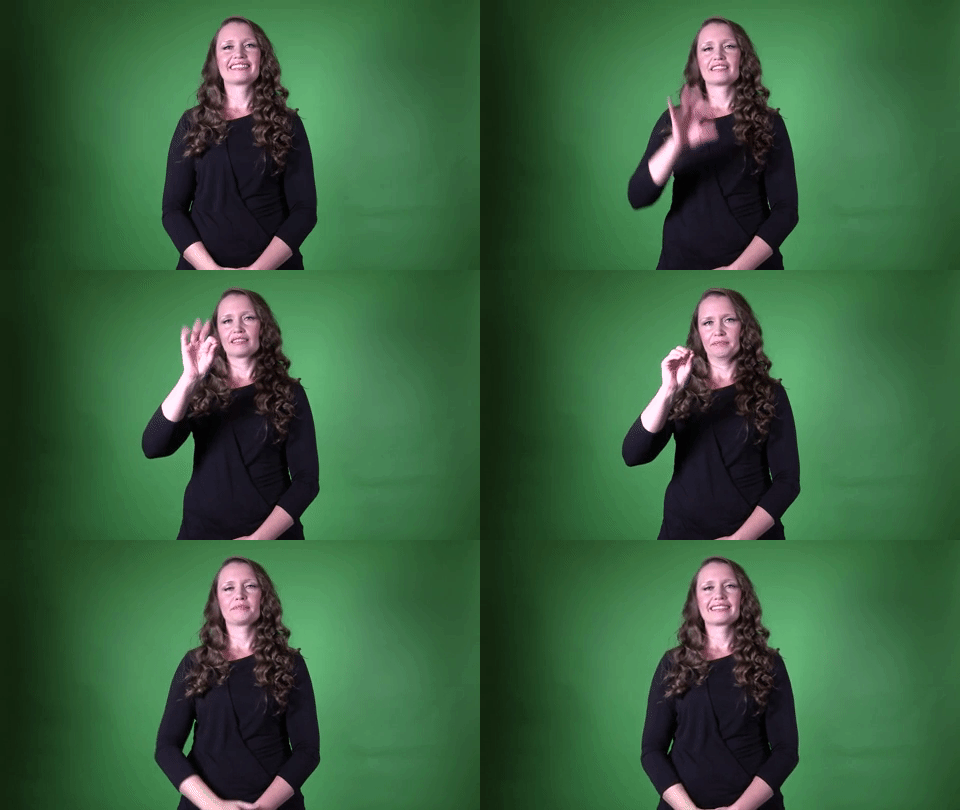
Sign for 90 in ASL | 🔢 ASL Dictionary

Definition: The number ninety.

Sign for 90 in ASL 

YouTube player

Practice Activities:

To practice the sign for 90 in ASL, start by signing it repeatedly in isolation. Focus on maintaining proper handshape and movement. Use a mirror or record yourself to compare consistency in form.

Integrate the sign for 90 in ASL into simple counting exercises. Count by tens starting at ten and move up to 100. Say the numbers aloud while signing to reinforce memory.

Create flashcards with numbers between 80 and 100 and mix them randomly. Sign each number as you flip the card. This will build fluency in recognizing and signing numbers out of order.

Practice signing phone numbers, addresses, and birth years that contain the number 90. For example, sign the year 1990 or an address like 901 Main Street. This helps incorporate the number naturally into real-world contexts.

With a partner, take turns signing a number while the other person writes it down. Then switch roles. This improves recognition and accuracy.

Try building a short story that includes the number 90. For example, talk about a person celebrating their 90th birthday or running a 90-yard race. This encourages natural usage in narratives.

Challenge yourself to practice in different settings. Sign the number while watching television, at a restaurant when checking a menu price, or during a shopping trip when discussing discounts or sale prices.

Finally, engage in timed drills where you sign numbers as fast as possible while maintaining clarity. Use a stopwatch and aim to gradually increase speed without sacrificing accuracy.

Cultural Context:

The sign for 90 in ASL follows a numerical pattern that is commonly used in American Sign Language. Numbers play a crucial role in communication, especially for conveying age, monetary amounts, measurements, and addresses. Learning the correct way to sign numbers helps improve fluency and comprehension in ASL.

In ASL, the sign for 90 is formed using a combination of handshapes and movement. ASL numbers from 1 to 100 follow a structured pattern, and understanding these patterns makes learning numbers easier. The sign for 90 is part of a series that includes other multiples of ten, such as 70 and 80.

American Sign Language is a visual language used by the Deaf community across North America. The sign for 90 in ASL is essential for discussing dates, prices, time, and mathematical concepts. Knowing how to sign numbers accurately ensures clarity in conversations with Deaf signers.

In ASL, numerical signs often incorporate slight movements or handshape changes to differentiate them from similar numbers. The sign for 90 follows the same rules, helping to distinguish it from other numbers like 19 or 900. Mastering these subtle distinctions improves signing accuracy.

Numbers in ASL are frequently used in everyday contexts, such as discussing birthdays, years, and historical events. The sign for 90 appears in conversations about ages, sports scores, and measurements. Understanding numerical signs is particularly beneficial for students, teachers, and interpreters.

ASL numbers rely on a consistent set of rules that make learning them intuitive. The sign for 90 follows this system, making it easy to remember when compared to other numbers in ASL. Recognizing these patterns can help new learners feel more confident with number signs.

Many ASL learners focus on fingerspelling but often overlook the importance of numerical signs. The sign for 90 is just one of many essential number signs that aid in clear communication. Practicing number signs regularly helps build fluency in American Sign Language.

In Deaf culture, numbers have significance in storytelling, dates, and personal milestones. The sign for 90 might be used to indicate an anniversary, a historical event, or a large quantity. Learning how to sign numbers correctly ensures effective and meaningful communication in ASL.

Mastering the sign for 90 in ASL allows signers to engage in complex conversations involving numbers. Whether discussing statistics, prices, or addresses, numerical fluency helps bridge communication gaps. Consistently practicing number signs strengthens

Extended Definition:

The sign for 90 in ASL is an important part of learning American Sign Language numbers. It is a combination of the number 9 and a quick movement to form the number 0. This sign is commonly used in conversations involving age, money, dates, or measurements.

To sign 90 in ASL, start with the handshape for the number 9. The thumb and index finger touch to form a circular shape, while the other fingers remain extended. Then, smoothly transition into the handshape for 0 by bringing the extended fingers down to form an “O” shape with the hand.

Like other ASL numbers, the sign for 90 in ASL should be performed with clear movements and palm orientation. Your palm should generally face forward, but slight variations may depend on context. Practicing in front of a mirror or with a fluent signer can help ensure accuracy.

Numbers play a key role in ASL conversations, and signing them correctly enhances communication. The sign for 90 in ASL is used when discussing prices, sports scores, temperatures, and even large quantities. Mastering ASL numbers allows for smoother interactions in daily conversations.

Many learners find numbers in ASL to be one of the easier aspects of the language, but practice is still essential. Repeating the sign for 90 in ASL multiple times while counting can help improve speed and fluidity. Watching experienced signers can also provide a better understanding of number transitions.

ASL numbers are an essential part of signing fluently and naturally. The sign for 90 in ASL follows the same principles as other two-digit numbers. Learning all of the tens (10, 20, 30, etc.) in ASL helps create a strong foundation for counting and numerical discussions.

For those new to ASL, focusing on finger dexterity can make learning numbers easier. The transition from 9 to 0 in the sign for 90 in ASL may feel awkward at first, but repetition will make it smoother. Keeping a relaxed hand and controlled movements improves overall signing clarity.

Consistency in signing numbers ensures effective communication with other ASL users. The sign for 90 in ASL should be performed just as clearly whether used in casual conversation or formal settings. Proper execution of numbers in ASL shows respect for the language and its users.

Learning numbers in ASL is crucial for engaging in everyday interactions. From shopping to scheduling appointments, knowing how to sign numbers like

Synonyms: ninety, number ninety, number 90, the number 90, the number ninety

Educational resources: Find related learning materials in our course bank!

Want more? Check out some of our popular learning activities on the homepage!

Need to look up a sign? Use our highly rated dictionary: https://aslinteractive.com/best-asl-dictionary/

Follow us on tiktok: https://www.tiktok.com/@aslinteractive. More social media links at the bottom of this page!

Long-tail Keywords: what is the sign for 90 in ASL, how do you sign 90 in American Sign Language, ASL sign for 90

Categories: Numbers – Basics, Numbers 81-90, cardinal numbers

tags: Numbers, Numbers 81-90, Math, Language Learning, Educational Content, rocking numbers, 86, 87, 89 rocking numbers

Parameters

*Handshape*:

The sign for 90 in ASL uses a handshape transition. It begins with the number 9 handshape, where the thumb and index finger form a circle while the other fingers remain extended. The hand then smoothly transitions to the number 0 handshape, where all fingers come together to form a rounded shape. This movement is fluid and helps differentiate the sign for 90 in ASL from other number signs. Maintaining clarity in the transition ensures accurate communication.

*Palm Orientation*:

The palm orientation for the sign for 90 in ASL starts with the hand in the number 9 shape, where the index finger and thumb form a circle, and the remaining fingers are extended. The palm typically faces outward or slightly to the side. As the sign transitions to the 0 shape, the fingers close together while maintaining a consistent palm orientation. The motion should be fluid, ensuring clarity in the sign for 90 in ASL. ️

*Location*:

the sign for 90 in ASL is made in the neutral space in front of the body, typically at chest level. The dominant hand starts in the shape of a “9” with the index finger and thumb extended. Then, the hand transitions smoothly into a “0” shape by bringing the fingertips together. This motion is performed with a slight wrist movement, maintaining a comfortable signing space.

*Movement*:

Start with the number 9 handshape, where the thumb and index finger form a circle, while the remaining three fingers extend upward. Then smoothly transition into the number 0 handshape by bringing all fingers together to form an O-shape. This movement should be fluid without a break between the two handshapes. The sign for 90 in ASL is performed with a slight wrist movement while maintaining a relaxed hand position.

*Non-Manual Signals*:

When signing the sign for 90 in ASL, maintain a neutral or slight confirming facial expression. Your eyebrows may remain relaxed, but a small head nod can reinforce clarity. Eye contact should be direct to ensure engagement with the viewer. A slight mouthing of “ninety” can help reinforce the numerical value, but it is not mandatory. Keep your facial expressions natural to support the meaning of the sign without distraction.

*Prosody, Dominant/Non-Dominant Hand*:

The sign for 90 in ASL uses the dominant hand. Begin with the number 9 handshape, where the thumb and index finger touch to form a circle, while the other fingers extend upward. Then smoothly transition into the number 0 handshape by bringing all fingertips together to form an oval. The movement should be fluid to clearly show the numerical transition. The non-dominant hand remains inactive.

Tips for Beginners:

When learning the sign for 90 in ASL, make sure to form the number 9 correctly before transitioning into a 0. The number 9 is made by touching the tip of the thumb to the tip of the index finger while keeping the other fingers extended. Then, smoothly transition to a 0 shape by bringing your fingers together in a relaxed, circular form.

One common mistake is failing to make a smooth transition between the two numbers. To improve, practice signing 9 and 0 separately first, then work on linking them fluidly. Try to maintain a consistent hand position and avoid unnecessary hand movement, which can make the sign unclear.

Finger positioning is key in the sign for 90 in ASL. The 9 should be distinct, with the circular shape formed properly, and the transition to 0 should be effortless. If your fingers are stiff or tense, it may look awkward. Keep your hand relaxed and flexible to create a more natural sign.

Another challenge for beginners is hand orientation. Your palm should naturally face forward while signing. If you accidentally turn your hand inward or outward too much, it may confuse the meaning. Watch yourself in a mirror or record a video to check your positioning.

Repetition builds confidence when signing numbers, and the sign for 90 in ASL is no exception. Try practicing with other numbers in the 90s sequence to develop muscle memory. Work on transitioning between multiple numbers to improve overall fluency in number signs.

Lastly, always check with native ASL users or instructors to ensure you’re forming the sign correctly. Personalized feedback helps correct small mistakes that might otherwise become habits. Keep practicing, and soon the sign for 90 in ASL will become second nature.

Connections to Other topics:

The sign for 90 in ASL connects to other number signs in ASL, particularly those involving multiples of ten. Like the signs for 10, 20, 30, and so on, the sign for 90 in ASL follows a consistent pattern where the movement and handshape are similar but adjusted for the specific number. Learning the sign helps reinforce the recognition of number signs and their formation, making it easier to sign numbers quickly and accurately in conversation.

Number signs in ASL are often used in contexts like age, money, time, scores, and measurements. When signing a large number that includes 90, such as 1990, the signer must transition smoothly through each numerical component. This fluidity builds a signer’s ability to express years, prices, or mathematical values naturally in ASL conversation.

The sign for 90 in ASL also connects to ordinal number signs when indicating order, such as “90th place” or “90th anniversary.” By adjusting the movement or incorporating certain grammatical markers, numbers can be adapted to fit different contexts appropriately. These variations allow signers to use number signs flexibly in a range of real-life situations.

Comparing ASL number signs to how numbers are expressed in spoken English highlights the efficiency and visual clarity of ASL. Unlike spoken languages where numbers are articulated sequentially, ASL presents numbers spatially and with clear movement. This visual nature helps reinforce memory and understanding, making concepts like 90 part of an intuitive number system.

ASL numbers are also closely related to mathematical and financial literacy within the Deaf community. Learning signs like 90 is essential for handling daily interactions that involve transactions, budgeting, and schoolwork. The consistency of ASL number signs allows for ease in communication and comprehension when discussing finances, measurements, or age-related topics.

Summary:

The sign for 90 in ASL follows the pattern of signing other multiples of ten. It begins with the hand forming the number 9, using the index finger and thumb extended while the other fingers remain curled inward. The hand then transforms into the 0 handshape, where all fingers and the thumb close into a round shape.

This two-part movement captures the numerical value of 90 in a fluid transition. The first position, 9, is critical as it ensures clarity in communication. The shift to 0 completes the expression and follows the standard pattern used in ASL number formation.

Numbers in ASL follow a logical and structured system, making them efficiently understood across users. The sign for 90 in ASL is consistent with how tens are conveyed, maintaining the base numeral followed by the 0 handshape. This pattern aids in making numerical information clear and easy to remember.

ASL numbers can indicate age, time, prices, and distances, making them essential in everyday communication. The sign for 90 in ASL might appear in discussions about years, such as expressing someone’s 90th birthday or a historical event from the 90s. Numbers hold significant meaning in community and cultural contexts.

The formation of the sign for 90 in ASL showcases ASL’s spatial efficiency. Instead of signing two separate numbers, the movement creates an easily recognizable numeral transformation. The transition is seamless when performed with proper handshape and positioning.

Understanding numerical signs like 90 ensures fluency in various conversations involving data, statistics, and personal details. This helps in both casual and professional ASL usage. Proficiency in number signs enhances communication and makes interactions smoother.

Numbers in ASL have regional and stylistic variations, though the base system remains the same. Some signers execute the number transition quickly, while others may emphasize the change for clarity. Regardless, the meaning remains consistent in everyday use.

In Deaf culture, numbers play an essential role in storytelling and historical accounts. The sign for 90 in ASL can be crucial in recounting past decades or highlighting milestones. Numbers help contextualize timelines effectively.

Another key aspect of signing 90 is hand orientation, keeping the palm visible or at a natural angle depending on context. Proper positioning ensures the sign is easily readable and avoids misinterpretation. Clarity in number signs is essential as miscommunication can alter important details.

ASL number signs also integrate into larger phrases, requiring smooth transitions between numbers and other lexical signs. The sign for 90 in ASL can appear in contexts like “90 years ago” or “90 percent.” Understanding numerical signs within broader sentences fosters more natural communication.

Like many signs in ASL, numerical signs exhibit a linguistic efficiency that differs from spoken language. Instead of vocalizing syllables, ASL compresses numerical concepts into concise hand movements. This visual language structure makes numerical communication clear and direct.

Learning the sign for 90 in ASL builds familiarity with the broader number system, reinforcing counting patterns. Practicing transitions between multiples of ten strengthens signing fluency. Recognizing these patterns helps signers develop confidence and speed.

Children learning ASL often familiarize themselves with numbers early, as they are integral to daily conversations. Mastering the sign for 90 in ASL reinforces understanding of similar numerical structures. Early exposure to number signs prepares learners for comprehensive ASL literacy.

Number signs are frequently used when discussing prices, measurements, and historical events. The sign for 90 in ASL may appear in contexts like store transactions, statistics, and addresses. The practical application of number signs goes beyond simple counting.

The precision required for numerical signs highlights the importance of handshape accuracy. Slight variations in finger placement can change the intended number. Ensuring correct positioning when signing 90 maintains clarity and prevents confusion.

Numbers in ASL follow systematic rules that allow for quick comprehension. The sign for 90 in ASL follows the logic of other tens-based numbers, reducing the need for additional explanations. This consistency aids in language efficiency.

In storytelling, number signs help convey important details such as ages, year markers, and statistics. The sign for 90 in ASL might be used in a narrative about a 90-year-old ancestor or a significant event in the 90s. Numbers bring depth and precision to shared experiences.

Beyond conversation, ASL numbers appear in academic settings, formal presentations, and financial discussions. The sign for 90 in ASL is valuable in structured settings like business meetings and classroom environments. Clear numerical communication is key in professional and educational contexts.

Technology has facilitated the wider teaching of ASL numbers, allowing learners to practice through videos and virtual interaction. Seeing the sign for 90 in ASL demonstrated in digital formats helps with memorization and replication. ASL’s adaptability to modern tools aids language acquisition.

For those unfamiliar with ASL, numbers are often among the first signs learned due to their universal application

Want more? Check out some of our popular learning activities!

ASL Interactive Resources

ASLInteractive YouTube Channel

Follow us on tiktok: @aslinteractive.com

Follow us on Instagram: aslinteractive

Facebook page: aslinteractive

Facebook group: aslinteractive

LInkedIn: ASL Interactive LLC

Twitter: @ASL_interactive

*Some information on this page is AI-generated. AI can make mistakes. Please check the information.

Sign for 90 in ASL 

Responses