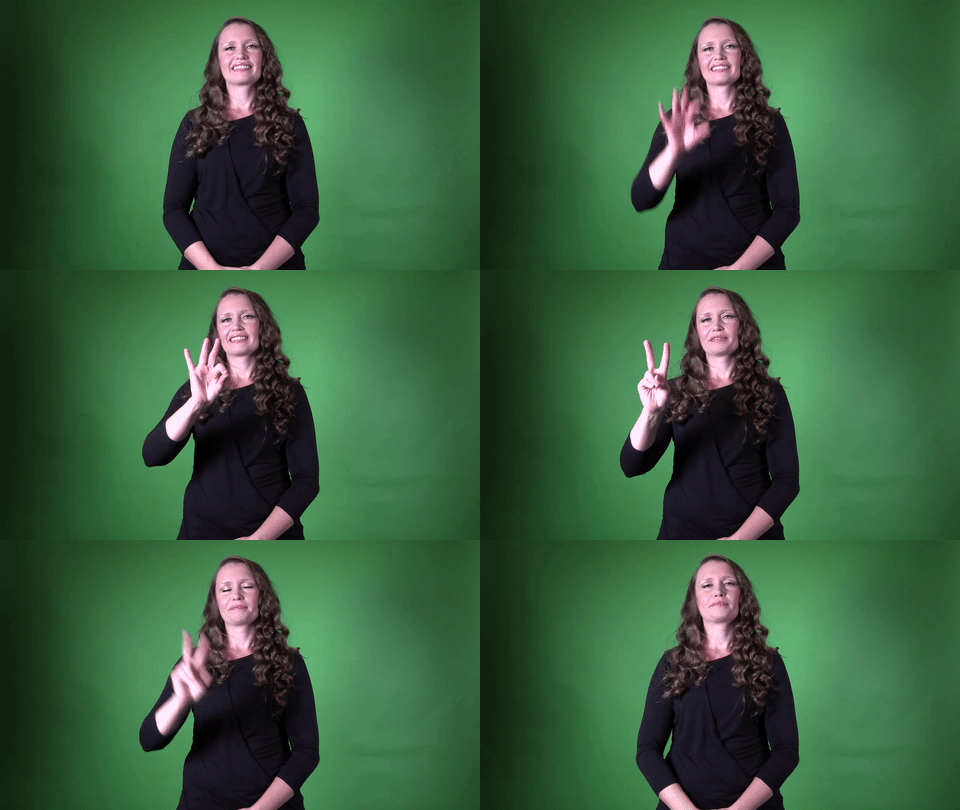
Definition: The number ninety-two.
Sign for 92 in ASL

Practice Activities:
Practicing the sign for 92 in ASL involves both repetition and real-world application. Begin by forming the number 9 on one hand, then smoothly transitioning into a 2. Repeat this motion multiple times, ensuring fluidity. Try signing it slowly at first, then gradually increase your speed while maintaining accuracy.
Use a mirror or record yourself signing the sign for 92 in ASL to check for smooth transitions. Say the number aloud while signing it to reinforce the meaning. Challenge yourself by signing a series of numbers that include 92, such as 90, 91, 92, 93. This helps you recognize and recall numbers quickly.
Incorporate the sign into everyday use by practicing with real-life scenarios. Try signing the number when talking about someone’s age, a sports jersey number, or a price. Create example sentences such as “My grandmother is 92 years old” or “The address is 92 Maple Street.” This will help build fluency in conversation.
Engage in partner activities where one person fingerspells a number and the other signs it back. Another activity is a rapid-response game where your partner calls out numbers and you quickly sign them, including the sign for 92 in ASL. This improves both recognition and response time.
Use storytelling to reinforce learning. Create a short story involving 92, such as a character discovering an old coin from 1892. Sign the number within the story smoothly and naturally. Practicing numbers in context makes them easier to remember.
Finally, test yourself by writing down random numbers and then signing them without looking. This strengthens recall and accuracy. Mixing in different numbers with 92 prevents simple memorization and encourages deeper understanding. Keep practicing until the transition between 9 and 2 becomes second nature.
Cultural Context:
The sign for 92 in ASL is a combination of the numbers 9 and 2, smoothly transitioning from one to the other in a fluid motion. In American Sign Language, number signs play an essential role in everyday communication, helping signers express dates, quantities, and numerical information quickly and clearly. Knowing how to sign numbers accurately ensures effective communication in both casual and formal interactions.
The cultural significance of numbers in ASL goes beyond simple counting. The sign for 92 in ASL is used in various contexts, such as discussing historical events, sports scores, or personal milestones. Because numbers are frequently used in conversation, fluency in number signs enhances communication efficiency in the Deaf community.
Number signs in ASL often follow certain patterns to maintain consistency and ease of understanding. The sign for 92 in ASL follows the standard number transition rule, ensuring clarity when conveying numerical information. Learning these nuances is crucial for grasping the rhythm and flow of ASL conversations.
Historical events from the year 1992 might lead to frequent use of the sign for 92 in ASL. When discussing past events, such as significant world news, pop culture moments, or personal memories, signers rely on these number signs to convey time-related details. Mastering numerical signs helps maintain natural and engaging conversations.
ASL number signs, including the sign for 92 in ASL, are essential for discussing birthdays, addresses, and financial figures. Many everyday interactions require numerical references, making proficiency in signing numbers an important skill. Whether signing phone numbers or listing prices, numbers are a key part of ASL communication.
In sports and gaming, the sign for 92 in ASL can refer to athlete jersey numbers, player statistics, or final scores in competitions. Because numbers are often used in fast-paced scenarios, clarity in execution is vital for ensuring the message is correctly understood. Understanding numerical signs enhances communication in these and many other social settings.
When teaching ASL, instructors emphasize fluidity when signing numbers to improve accuracy and comprehension. The sign for 92 in ASL is one of many that learners practice to build confidence in signing numerical sequences smoothly. Developing strong number sign skills provides a solid foundation for more advanced ASL learning.
Technology and digital communication also depend on number signs as part of virtual conversations and video calls. The sign for 92 in ASL can appear in phone numbers, passwords, or online transactions where numerical information must be conveyed. Being proficient in signing
Extended Definition:
The sign for 92 in ASL is a combination of the numerals 9 and 2, following a standardized pattern used for numbers in American Sign Language. This number is signed using a fluid motion to combine two distinct handshapes into one gesture. Being able to sign numbers accurately is essential for clear and effective communication.
In ASL, numbers are often used for dates, addresses, prices, and various forms of quantitative data. The sign for 92 in ASL follows a pattern where the sign for 9 transitions smoothly into the sign for 2. This helps maintain fluency and makes it easier for deaf and hard-of-hearing individuals to recognize numbers quickly.
Numbers in ASL follow a consistent structure, allowing users to apply the same principles to other two-digit numbers. The sign for 92 in ASL is part of a broader system that includes similar patterns for numbers like 93, 94, and so on. Mastering these number signs will enhance your ability to communicate effectively in ASL.
When learning the sign for 92 in ASL, handshape and movement are critical. The number 9 is formed with the index finger and thumb touching, while the number 2 is signed by extending the index and middle fingers. A smooth transition between these two handshapes ensures clarity and prevents misunderstandings.
Many ASL learners find number signs to be straightforward once they understand the basic rules. The sign for 92 in ASL follows a rhythmic motion that becomes second nature with regular practice. Repetition and reinforcement are key to developing fluency in number signing.
Numbers play a vital role in daily ASL conversations, whether discussing ages, prices, or addresses. The sign for 92 in ASL, like other number signs, relies on muscle memory and coordination. With practice, signing numbers quickly and accurately will feel more natural.
Some variations in signing numbers may exist depending on region or instructor preference. However, the sign for 92 in ASL follows a widely accepted pattern used in standard ASL instruction. Learning and practicing the commonly used version ensures you will be understood by most ASL users.
American Sign Language is a visual-spatial language, making the correct execution of number signs important. The sign for 92 in ASL should be performed clearly and at a comfortable speed. Signing too quickly or too slowly can affect understanding, so maintaining a steady pace is recommended.
For those new to ASL, practicing number transitions
Synonyms: ninety-two, number ninety-two, number 92, the number 92, the number ninety-two
Educational resources: Find related learning materials in our course bank!
Want more? Check out some of our popular learning activities on the homepage!
Need to look up a sign? Use our highly rated dictionary: https://aslinteractive.com/best-asl-dictionary/
Follow us on tiktok: https://www.tiktok.com/@aslinteractive. More social media links at the bottom of this page!
Long-tail Keywords: what is the sign for 92 in ASL, how do you sign 92 in American Sign Language, learn how to sign 92 in ASL
Categories: Numbers – Basics, Numbers 91-100, cardinal numbers
tags: Numbers, Numbers 91-100, Math, Language Learning, Educational Content
Parameters
*Handshape*:
The sign for 92 in ASL uses a combination of two number handshapes. First, form the number 9 by extending the index finger and thumb while keeping the other fingers curled. Then, transition smoothly into the number 2 by extending the index and middle fingers while the rest remain folded. This movement is usually fluid, emphasizing the connection between the digits for clarity when signing the sign for 92 in ASL.
*Palm Orientation*:
The palm orientation for the sign for 92 in ASL starts with the number 9, where the palm faces forward with the index finger and thumb touching in an open circular shape. Then, the hand shifts to form the number 2, with the palm still facing outward and the index and middle fingers extended. The transition between 9 and 2 should be smooth, maintaining consistent palm orientation for clarity.
*Location*:
the sign for 92 in ASL is formed in the neutral space in front of the signer’s torso. The hand begins with the number 9 handshape, palm facing outward, and transitions smoothly into the number 2 handshape. This movement typically occurs at chest level, ensuring visibility and clarity for the viewer. Maintaining a consistent signing space helps with recognition and comprehension of numerical signs in ASL.
*Movement*:
To produce the sign for 92 in ASL, start with the number 9, forming an “open 9” handshape where the index finger and thumb touch in a circle while other fingers remain extended. Briefly hold the position, then transition into the number 2 by extending the index and middle fingers while retracting the others. Move smoothly between the two handshapes in a steady motion, ensuring a clear distinction between 9 and 2.
*Non-Manual Signals*:
When using the sign for 92 in ASL, the facial expression is typically neutral or slightly affirming, depending on the context. Eyebrows may remain relaxed unless emphasizing or questioning the number. A slight nod can be used for confirmation, while maintaining steady eye contact enhances clarity. If the sign appears in a larger numerical sequence, brief pauses and subtle mouth movements like “nine-two” can help with clarity and emphasis.
*Prosody, Dominant/Non-Dominant Hand*:
For the sign for 92 in ASL, use the dominant hand to form the number 9 with the index finger and thumb touching while the other fingers stay extended. Then, smoothly transition to the number 2 by extending just the index and middle fingers while retracting the others. The motion should be fluid, with a slight movement from one digit to the next as if naturally counting. Keep the palm facing outward throughout the transition. ✋
Tips for Beginners:
When learning the sign for 92 in ASL, focus on maintaining a steady rhythm as you transition between the two digits. The sign for 92 in ASL is a combination of the numbers 9 and 2, performed sequentially with a slight bounce or shift in hand position. Keep your hand relaxed and ensure each number is formed clearly to avoid confusion.
One common mistake beginners make with the sign for 92 in ASL is rushing through the movement, which can make the numbers blend together. To prevent this, practice forming each number distinctly before attempting the transition. Over time, you can build up speed without sacrificing accuracy.
Hand orientation is also crucial when signing the sign for 92 in ASL. Make sure your palm faces outward for both numbers and that your fingers are positioned correctly. If you are unsure about your technique, practice in front of a mirror or record yourself to check for consistency.
Finger dexterity plays a big role in making number signs precise. If you find the sign for 92 in ASL challenging, do some finger exercises to improve control and flexibility. Practicing number sequences regularly will help you gain confidence and make signing numbers feel more natural.
Watching fluent signers demonstrate the sign for 92 in ASL can provide valuable insight into correct hand positioning and movement flow. Try slowing down ASL videos or practicing with a friend to refine your skills. Consistency is key, so keep practicing until you feel comfortable signing it smoothly.
Connections to Other topics:
The sign for 92 in ASL is part of a structured number system used in American Sign Language, where different numerical signs follow a consistent pattern. It belongs to the category of two-digit numbers in the 90s, which share a similar formation with other numbers in the series, such as 93, 94, and so on. By understanding the sign for 92 in ASL, learners can more easily recognize and internalize the signs for other numbers in this sequence.
Two-digit numbers like 92 often follow a movement pattern similar to other numbers in the tens series, helping reinforce ASL numbering consistency. This pattern can aid in learning numbers beyond the 90s, as the 70s and 80s often use similar handshapes and movement types. Practicing the sign for 92 in ASL alongside neighboring numbers can strengthen one’s ability to fluidly count and recognize numerical patterns.
Numbers in ASL are frequently incorporated into time signs, ages, addresses, and sports scores. For example, if signing a year like 1992, the signer would separate the digits into two parts, signing 19 and then the sign for 92 in ASL. This method of signing years also applies to past decades and can be useful in discussing historical dates in ASL conversations.
ASL numerical signs are also crucial in financial contexts, such as stating prices, measurements, or telephone numbers. When handling money-related discussions, including prices like “$92,” the dollar sign is typically integrated with the numerical sign to form a smooth transition. The sign for 92 in ASL, like other two-digit numbers, enhances fluency when discussing numerical data in different conversation topics, making it essential for functional ASL communication.
Summary:
The sign for 92 in ASL follows a pattern commonly used for signing two-digit numbers in American Sign Language. It is a combination of the number 9 and the number 2, signed in sequence. This means the signer first forms the handshape for 9, followed by the handshape for 2, moving slightly from one position to the next.
Numbers in ASL are an essential component of the language, and understanding their structure can enhance fluency. The sign for 92 in ASL is an example of how the language efficiently conveys numerical information through handshapes and movement. These numerical signs follow a standard structure, allowing signers to communicate quickly without confusion.
The use of the sign for 92 in ASL reflects the unique linguistic properties of ASL’s numbering system. Unlike English, where numbers are spoken sequentially, ASL presents them visually and spatially. This modality impacts how numbers are perceived and processed in communication, making ASL distinct as a visual language.
When signing numbers, clarity and precision in finger placement are crucial. The signer must ensure that the number 9 is formed clearly with the thumb and the index finger touching while the remaining fingers remain extended. After that, the transition to the number 2 should be smooth to maintain fluency in the sign for 92 in ASL.
Context also plays a role in numerical signs, as different settings may require adjustments to maintain clarity. Similar-looking numbers, such as 92 and 96, can be easily misinterpreted if the handshape transitions are not executed cleanly. Therefore, practice and careful hand positioning help signers avoid confusion.
Linguistically, number signs in ASL exhibit characteristics of both lexical and numerical systems. Some numbers function as lexicalized signs, meaning they are signed in a single motion rather than separate digits. However, the sign for 92 in ASL follows a sequential approach, making it slightly different from numbers with distinct movements.
Cultural context is also important when using number signs in ASL. Certain numbers may carry specific meanings or references in the Deaf community, such as historical events or personal milestones. Although the sign for 92 in ASL does not have a widely recognized cultural significance, it still demonstrates the importance of numerical literacy in ASL.
Numerical literacy in ASL is essential for daily interactions, from discussing prices to referencing years. The sign for 92 in ASL remains relevant in various situations, such as identifying addresses, years, or ages. Since numbers play a fundamental role in communication, mastering numerical signs enhances a signer’s overall fluency.
The broader theme of numerical representation in ASL extends beyond just communication. It includes educational contexts, where students learn number signs at an early stage to develop ASL proficiency. Learning the sign for 92 in ASL within this framework highlights the interconnected nature of language and cognition.
ASL numbers are also used in Deaf culture for games, social interactions, and storytelling. The sign for 92 in ASL, like other numerical signs, may appear in structured storytelling where numbers provide emphasis. This reinforces the dynamic and expressive nature of ASL as a visual language.
The evolution of numerical signs in ASL demonstrates how languages adapt to different forms of communication. While fingerspelling allows for the expression of specific words or brand names, numerical signs provide a systematic method for expressing quantities. The sign for 92 in ASL fits into this evolving linguistic framework while maintaining consistency with overall ASL structure.
Another interesting aspect of numerical signs is their influence on ASL grammar. Number incorporation is a grammatical feature in ASL that allows numbers to blend seamlessly with certain signs, such as time and quantity. While the sign for 92 in ASL is typically signed in sequence, other numbers can be incorporated into broader linguistic expressions.
From an applied linguistics perspective, learning and retaining numbers in ASL requires memory and motor coordination. The ability to sign numbers quickly and clearly demonstrates a high level of proficiency. Practicing transitions, such as moving smoothly from 9 to 2, enhances muscle memory for producing the sign for 92 in ASL effortlessly.
Finger dexterity plays a key role in numerical fluency within ASL. Some signers develop shortcuts or smoother transitions when signing number sequences rapidly. However, maintaining accuracy when signing the sign for 92 in ASL ensures that communication remains clear.
In terms of accessibility, numerical signs help bridge communication gaps between Deaf and hearing individuals. The use of standardized number signs ensures that information remains consistent in educational, professional, and social environments. This makes the sign for 92 in ASL an integral part of broader efforts to improve language inclusivity.
Number signs are also featured in digital communication and media representations of ASL. As sign language content expands through videos and online learning resources, signs like the sign for 92 in ASL become readily accessible worldwide. This highlights the role of technology in preserving
Want more? Check out some of our popular learning activities!
ASL Interactive Resources
ASLInteractive YouTube Channel
Follow us on tiktok: @aslinteractive.com
Follow us on Instagram: aslinteractive
Facebook page: aslinteractive
Facebook group: aslinteractive
LInkedIn: ASL Interactive LLC
Twitter: @ASL_interactive
*Some information on this page is AI-generated. AI can make mistakes. Please check the information.


Responses