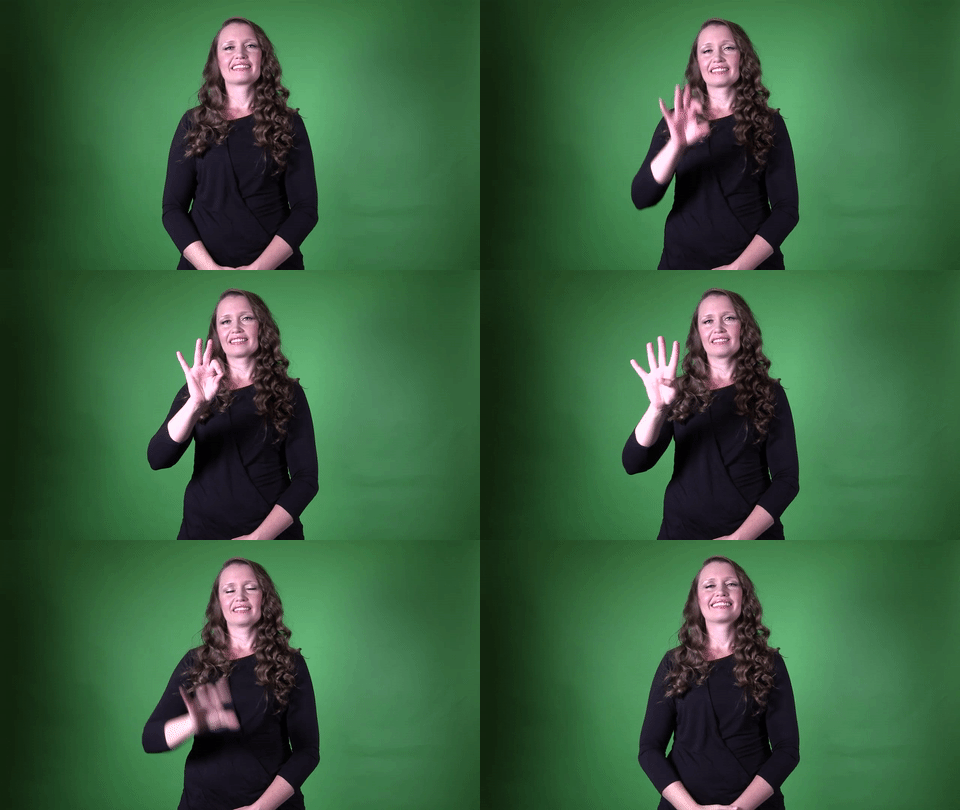
Sign for 94 in ASL | 🔢 ASL Dictionary

Definition: The number ninety-four.

Sign for 94 in ASL 

YouTube player

Practice Activities:

To practice the sign for 94 in ASL, start by isolating the movement. Form the number 9 with your dominant hand, then smoothly transition to the number 4. Repeat this sequence multiple times to build muscle memory. Focus on keeping the motion fluid and precise.

Once comfortable with the transition, incorporate it into a counting sequence. Count from 90 to 100 while signing each number clearly. Then, count backward from 100 to 90, ensuring that 94 is signed correctly each time. This will help reinforce your ability to sign it in broader number sequences.

Use the sign for 94 in ASL in real-life applications. Practice saying your birth year if it includes 94 or find historical events that occurred in 1994 to discuss with a friend. This adds meaningful context to the sign and helps reinforce memory retention.

Engage in a number recognition game with a partner. One person signs a two-digit number, and the other identifies it. Include 94 frequently to build confidence. Another fun practice is a speed round where you or a partner sign numbers quickly and must instantly recognize them.

Apply the sign for 94 in ASL to storytelling. Imagine narrating a scene set in 1994. Include other ASL numbers to enrich the practice, such as 90 or 99. This enhances fluency with numerical expressions and storytelling skills in ASL.

For additional reinforcement, watch videos of fluent ASL users signing years and numbers. Try to mimic their signing speed and fluidity for 94. Recording yourself and comparing it to these examples will help you refine accuracy and smoothness.

Cultural Context:

The sign for 94 in asl follows a common pattern used when signing two-digit numbers. American Sign Language incorporates specific movements and palm orientation to represent numbers clearly and efficiently. Learning this sign helps improve overall fluency in numerical communication.

Numbers play an essential role in ASL, from daily conversations to academic and professional settings. The sign for 94 in asl is useful when expressing ages, addresses, prices, and other numerical data. Accurate number signing ensures effective communication within the Deaf community.

Deaf culture values clear and precise number signs to prevent miscommunication. The sign for 94 in asl, like many numerical signs, follows a fluid motion to maintain visual clarity. Mastering number signs strengthens ASL comprehension and confidence in conversations.

Number signs in ASL are generally based on a consistent handshape system. The sign for 94 in asl uses the dominant hand with specific finger positioning to differentiate it from similar numbers. Consistent practice helps in developing natural number-signing skills.

Learning the sign for 94 in asl also enhances understanding of ASL numbering conventions. Numbers often follow sequential patterns that make them easier to recall and use in daily interactions. Familiarity with these signs is essential for effective ASL communication.

In formal and casual settings, proper number signing helps avoid confusion. The sign for 94 in asl, like other numerical signs, depends on clarity and hand positioning. Paying attention to slight variations in number signs prevents misunderstandings.

ASL numbers are commonly used in education, sports, and financial transactions. The sign for 94 in asl allows for seamless conversations involving numerical data. Proficiency in number signs increases confidence when using ASL in different environments.

ASL incorporates numerical signs into storytelling, discussions, and presentations. The sign for 94 in asl may appear in contexts such as schedules, statistics, or event planning. Practicing number signs regularly improves signing speed and comprehension.

Mastering ASL numbers enhances overall signing fluency. The sign for 94 in asl builds a foundation for signing other two-digit numbers with ease. As learners become familiar with ASL number patterns, their overall signing skills improve.

Fingerspelling is sometimes used alongside number signs for clarification. However, the sign for 94 in asl follows ASL number signing rules, making it more efficient. Using correct handshapes for numbers ensures effective visual communication.

Consistent use of correct number signs helps promote fluid ASL conversations. The sign for 94 in asl

Extended Definition:

The sign for 94 in ASL follows the common pattern for signing two-digit numbers. It uses a combination of the numbers 9 and 4, signed in sequence with a fluid motion. Understanding this sign is essential for discussing numbers in American Sign Language accurately.

To sign 94 in ASL, begin with the handshape for 9, which is formed by touching the tip of the thumb to the tip of the index finger while the other fingers remain extended. Then transition smoothly into the handshape for 4, where the thumb is tucked in and the four fingers are extended. This movement should be fluid to maintain clarity and natural flow in conversation.

ASL numbers are an important aspect of communication, allowing signers to express numerical values in various contexts. The sign for 94 in ASL is commonly used in addresses, phone numbers, prices, and measurements. Proper execution helps ensure accuracy and prevents misunderstandings.

Numbers in ASL follow specific patterns based on whether they are cardinal, ordinal, or part of a larger numerical concept. The sign for 94 in ASL is an example of a cardinal number, used for counting and identifying numeric values. By mastering number signs, ASL users can enhance their signing fluency.

Learning the sign for 94 in ASL is easier when practiced in front of a mirror or with a partner. Repeating the movement several times helps with muscle memory and fluency. Watching experienced signers use this number in natural conversation also reinforces proper technique.

In signed communication, numbers must be signed clearly and at a consistent pace. The sign for 94 in ASL should be performed without hesitation or exaggerated motion. Precise handshapes and transitions contribute to smooth and effective signing.

Numbers higher than 10 in ASL usually require some movement, but they remain simple to learn. Since the sign for 94 in ASL consists of two distinct numbers, both must be signed correctly for clarity. Practicing different number combinations strengthens overall signing skills.

Signing numbers accurately is important in daily conversations, education, and professions that rely on numerical data. Whether discussing a specific year, a total amount, or a reference number, the sign for 94 in ASL plays a practical role. Developing strong number-signing skills enhances communication efficiency.

ASL numbers are influenced by regional and stylistic variations, though the sign for 94 in ASL generally remains consistent. Some signers may sign numbers slightly differently based on context

Synonyms: ninety-four, number ninety-four, number 94, the number 94, the number ninety-four

Educational resources: Find related learning materials in our course bank!

Want more? Check out some of our popular learning activities on the homepage!

Need to look up a sign? Use our highly rated dictionary: https://aslinteractive.com/best-asl-dictionary/

Follow us on tiktok: https://www.tiktok.com/@aslinteractive. More social media links at the bottom of this page!

Long-tail Keywords: what is the sign for 94 in ASL, how do you sign 94 in ASL, ASL sign for 94

Categories: Numbers – Basics, Numbers 91-100, cardinal numbers

tags: Numbers, Numbers 91-100, Math, Language Learning, Educational Content

Parameters

*Handshape*:

The sign for 94 in ASL uses a two-part movement involving number handshapes. First, form the number 9 by extending the index finger and thumb while curling the remaining fingers inward. Then, smoothly transition into the number 4, extending the index, middle, ring, and pinky fingers while keeping the thumb tucked against the palm. Maintain a fluid motion between the numbers to ensure clarity when signing the sign for 94 in ASL.

*Palm Orientation*:

The palm orientation for the sign for 94 in ASL starts with the number 9, where the palm faces forward with the index finger and thumb forming an open circle. Then, the hand transitions smoothly into the number 4, keeping the palm forward while extending the four fingers apart. Throughout the movement, the palm remains oriented outward, ensuring clarity for the viewer. This number sequence is fluid and should be performed with a steady hand position.

*Location*:

The sign for 94 in ASL takes place in the neutral space in front of the body. The dominant hand begins in the number 9 handshape, with the thumb touching the tip of the index finger. Then, it transitions smoothly into the number 4 handshape, where the four fingers are extended while the thumb stays tucked against the palm. This movement occurs at chest level for clear visibility.

*Movement*:

To produce the sign for 94 in ASL, start by forming the number 9 with your dominant hand—thumb and index finger touching while the other fingers stay extended. Then transition smoothly into the number 4 by extending the index, middle, ring, and pinky fingers while tucking the thumb in. The movement should be fluid, without pausing between numbers. This sign for 94 in ASL is performed at chest level with minimal hand or wrist movement.

*Non-Manual Signals*:

When forming the sign for 94 in ASL, maintain a neutral or slightly focused facial expression to convey precision. The eyebrows may lower slightly if emphasizing the number, especially in instructional or formal contexts. Eye gaze should follow the hand movement as the numbers transition smoothly. Avoid excessive head movement; a small nod can reinforce clarity. If using the sign for 94 in ASL in a casual setting, a relaxed expression is acceptable.

*Prosody, Dominant/Non-Dominant Hand*:

The sign for 94 in ASL uses the dominant hand in a fluid motion. Start with the number 9, where the thumb and index finger touch to form an open “9” shape, while the other fingers remain extended. Then smoothly transition to the number 4 by extending the index, middle, ring, and pinky fingers while tucking the thumb. Maintain a steady wrist movement to ensure clarity when signing the sign for 94 in ASL.

Tips for Beginners:

When learning the sign for 94 in ASL, focus on maintaining clear finger positioning for both numbers. The sign involves transitioning smoothly from the 9 handshape to the 4 handshape. Ensure that your fingers remain distinct and properly extended to avoid confusion with similar numbers like 84 or 95.

Hand placement plays a crucial role in signing numbers accurately. Keep your hand at a comfortable position near shoulder height, and face your palm outward so that the numbers are visible to the person you are signing with. A common mistake beginners make is curling the fingers too much when forming the number 9, which can make it unclear.

Finger movement should be fluid but controlled. When transitioning from 9 to 4, avoid unnecessary hand movement to keep the sign efficient. Instead of jerky transitions, shift smoothly from one handshape to the next while maintaining consistent orientation.

One useful practice technique is signing a sequence of numbers that include 94, such as 90-94-99, to boost fluency. Repetition will help build muscle memory and reinforce accuracy. Incorporate a mirror or record yourself signing to check for any unintended flicks or misalignments.

Context matters when using numbers in ASL, as the sign for 94 in ASL is often used in addresses, prices, and age. When signing in a conversation, maintain eye contact and make sure your facial expressions match the intent behind the number. This will make your communication clearer and more natural.

If you struggle with number transitions, break them down and practice individual handshapes before combining them. Watching native signers or instructional videos can also help reinforce proper technique. With consistent effort, signing 94 in ASL will become second nature.

Connections to Other topics:

The sign for 94 in ASL integrates two numerical handshapes, combining the signs for 9 and 4 into a fluid motion. This reflects ASL’s number system, where multi-digit numbers often blend together smoothly. Mastering the sign for 94 in ASL helps in understanding the broader structure of cardinal numbers, which are essential in various contexts like addresses, years, and measurements.

Numbers in ASL have a dynamic structure that changes based on context, such as age, money, and ranking. For example, the sign for 94 in ASL follows the same pattern as other two-digit numbers, making it easier to learn related numbers like 95 or 93. Recognizing these connections helps in counting exercises and financial transactions when signing about amounts or prices.

ASL numbers are often incorporated into larger compound signs, like phone numbers or statistics. The sign for 94 in ASL may appear in discussions of history, such as referring to the year 1994, where the full year is signed as 19 followed by 94. Understanding number patterns in ASL strengthens the ability to sign fluently when discussing time periods, addresses, or general numerical data.

Handshape variations in numbers also demonstrate the importance of consistency in finger placement to avoid confusion with similar-looking numbers. The transition between 9 and 4 in the sign for 94 in ASL follows the same principles as other two-digit numbers, reinforcing the importance of smooth number articulation. This also relates to fluency in signing higher numbers, such as 294 or 1,094, which require similar articulation techniques.

Learning numerical structures like the sign for 94 in ASL provides a foundation for many mathematical and statistical conversations. Whether talking about historical dates, percentages, or sports scores, numbers create essential connections in ASL communication. Understanding this sign within broader numerical patterns ensures clear and effective signing in various contexts.

Summary:

The sign for 94 in ASL follows a common numerical pattern based on the ASL number system. It is a two-part sign, first displaying the number 9 and then transitioning smoothly into the number 4. This movement is done fluidly to maintain clarity and natural rhythm.

In ASL, numbers play a crucial role in communication and are often used in daily life. The sign for 94 in ASL is no exception, as it can appear in contexts like addresses, prices, and years. When signing, handshape and motion must be precise to avoid confusion with similar number patterns.

The number 9 in ASL is made by extending the thumb and index finger in a circular shape while the other fingers remain folded. The number 4 involves extending all fingers except the thumb, which remains tucked in. The transition from 9 to 4 must be smooth to keep the number visually distinct.

Numerical signs like the sign for 94 in ASL fall under cardinal numbers. These represent quantity and differ from ordinal numbers, which indicate sequence or ranking. How smoothly a signer moves between these digits directly affects clarity.

ASL numbers follow a pattern that can change slightly depending on the grouping. Multi-digit numbers rely on distinct, sequential handshapes to convey meaning. This is why fluency in numerical signs like the sign for 94 in ASL is essential for effective signing.

Different number signs in ASL often carry contextual importance. The sign for 94 in ASL might be used when discussing historical years or street addresses. Understanding these contexts helps signers apply the number accurately in conversation.

The rhythm of signing numbers is essential for readability. Numbers above 10 transition between two forms in fluent motion, preventing misinterpretation. Signers practicing the sign for 94 in ASL should ensure that their movement is fluid to avoid confusion with other numbers.

In linguistic studies, ASL numbers serve as a fascinating area of research. The way numbers are signed connects to ASL grammar and syntax, as numerical information often modifies a sentence’s structure. The sign for 94 in ASL contributes to the broader linguistic understanding of numerical systems in signed languages.

The cultural use of numbers in ASL reflects how Deaf communities interact in various settings. Numbers appear prominently in education, finance, and storytelling. The sign for 94 in ASL represents more than just data—it becomes part of personal and communal narratives.

Signed numbers can vary slightly in regional dialects, though standard ASL maintains consistency. Some number signs may be influenced by local signing habits, but the sign for 94 in ASL remains mostly uniform across different ASL-speaking communities. This standardization helps maintain cross-regional understanding.

ASL number signs differ from spoken number systems in that they rely on visual-spatial elements. Spoken languages depend on phonetic sequencing, while ASL incorporates motion and placement. The sign for 94 in ASL highlights this distinction through its structured hand movements.

Numbers in ASL sometimes integrate with classifiers and time indicators. For instance, if the sign for 94 in ASL refers to a year, it might undergo slight modifications in movement. These subtle adjustments reflect the importance of ASL grammar in conveying numerical information effectively.

Numbers also interact with non-manual signals, such as facial expressions. Someone signing the sign for 94 in ASL while discussing a large sum of money may incorporate facial emphasis. These additional linguistic features help refine the meaning of the numerical sign.

The speed of signing numbers can impact comprehension. Rushing through the sign for 94 in ASL may cause ambiguity, whereas clear and deliberate movements ensure accuracy. This balance between speed and clarity is a key skill for ASL users.

ASL number signs also play a role in technology and accessibility. Digital tools, such as video-based interpreting services, rely on precise numerical signing. The sign for 94 in ASL remains important in these digital exchanges, ensuring accurate communication.

Teaching ASL numbers often involves repetition and practice. Students learning the sign for 94 in ASL should focus on the handshape transition between 9 and 4. This consistent practice strengthens muscle memory and fluency in signing.

The numerical system in ASL connects to broader language structures. Research indicates that ASL users often develop cognitive skills related to visual processing through regular use of numerical signs. The sign for 94 in ASL, like other number signs, contributes to enhanced spatial awareness.

Using numbers in storytelling allows for creative and engaging narratives. A signer discussing the year 1994 will incorporate the sign for 94 in ASL within a structured format. These storytelling methods show how numeracy intertwines with personal and historical narratives in ASL.

Comparing ASL numbers to numbers in other signed languages reveals variations. Some signed languages structure their multi-digit numbers differently, though ASL maintains a clear and recognizable pattern. The sign for 94 in ASL

Want more? Check out some of our popular learning activities!

ASL Interactive Resources

ASLInteractive YouTube Channel

Follow us on tiktok: @aslinteractive.com

Follow us on Instagram: aslinteractive

Facebook page: aslinteractive

Facebook group: aslinteractive

LInkedIn: ASL Interactive LLC

Twitter: @ASL_interactive

*Some information on this page is AI-generated. AI can make mistakes. Please check the information.

Sign for 94 in ASL 

Responses