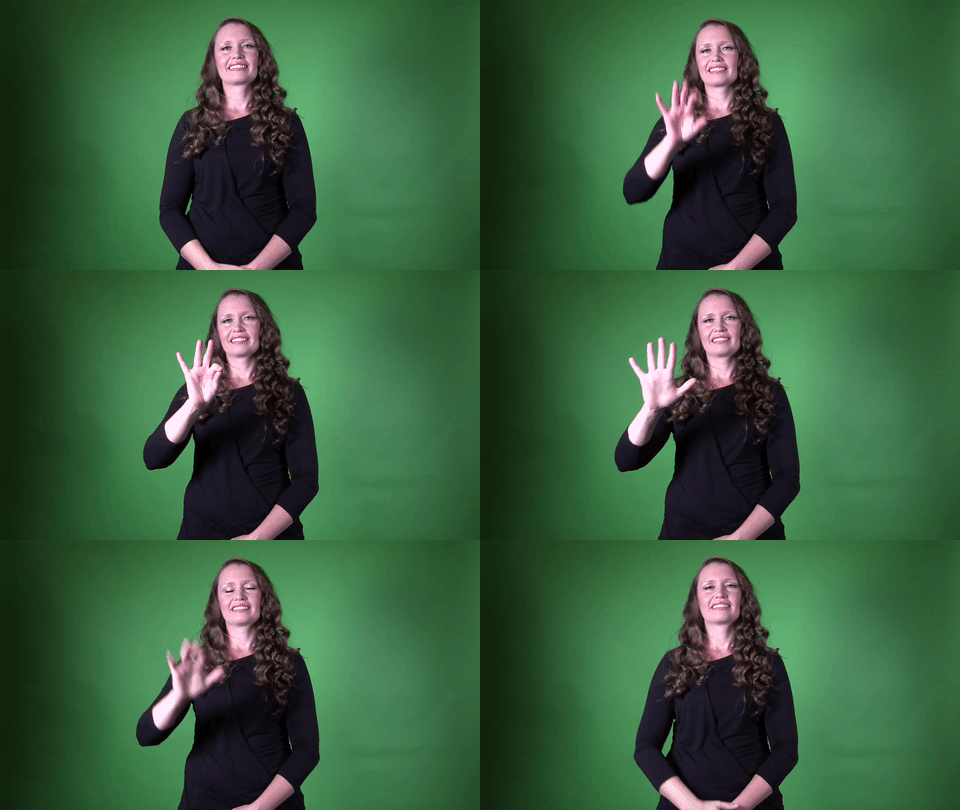
Definition: The number ninety-five.
Sign for 95 in ASL

Practice Activities:
Practicing the sign for 95 in ASL can be made fun and interactive through repetition and real-world application. Start with handshape drills by forming the number 9 and smoothly transitioning to the number 5, ensuring a fluid motion. Repeat this transition slowly, then gradually increase your speed while maintaining accuracy. Mirror practice in front of a reflective surface can help refine movement and positioning.
Use finger-tracing exercises by writing the number 95 in the air before signing it to reinforce muscle memory. Combine the sign for 95 in ASL with other numbers to simulate counting or monetary amounts. Try signing sequences like 90, 91, 92, 93, 94, 95 to develop a rhythmic flow. A fun challenge is to time yourself and see how quickly you can sign numbers while maintaining accuracy.
Create small stories or scenarios that require the use of the sign for 95 in ASL. For example, pretend you are reading a historical fact about an event from 1995 or telling a friend that an item costs 95 cents. Signing age-related statements like “My grandpa is 95 years old” or “There are 95 students in the class” helps build confidence in conversational signing.
Partner activities allow for interactive engagement. Have one person sign a number, and the other has to sign 95 in response. Play a guessing game where one signer provides clues, such as “This number is five more than 90,” prompting the other to sign 95. Another exercise is signing numbers in random order while your partner quickly identifies and fingerspells them back.
Lastly, incorporate real-world practice by looking for instances where the sign for 95 in ASL is applicable, such as street addresses, sports scores, or statistics. Engaging with numbers regularly will help strengthen both comprehension and signing fluency.
Cultural Context:
American Sign Language is a rich and expressive language that blends handshapes, movement, and facial expressions to communicate concepts clearly. The sign for 95 in ASL follows a common pattern used for other two-digit numbers in sign language. Understanding this pattern makes learning ASL numbers easier and more intuitive.
In ASL, numbers play a crucial role in daily communication, from sharing age to discussing prices or measurements. The sign for 95 in ASL uses a fluid motion that mirrors the logical structure of other numerical signs. Mastering these signs helps improve fluency and confidence in conversations.
Deaf culture values clarity and precision in numerical communication, making it essential to sign numbers correctly. The sign for 95 in ASL is often used in pricing, addresses, measurements, and historical references. Using the correct sign ensures smooth and effective interactions in both casual and professional settings.
Number signs in ASL use patterns that allow for quick recognition and minimal effort. The sign for 95 in ASL follows the conventions for expressing double-digit numbers, making it easy for fluent signers to understand. Recognizing these patterns helps learners pick up ASL more efficiently.
ASL is a visual language, meaning numbers need to be easily distinguishable from one another. The sign for 95 in ASL is distinct but follows a logical progression from other ninety-series numbers. Consistent handshapes and movements help ensure accurate communication.
Learning the sign for 95 in ASL is helpful not just for talking about numbers but also for understanding how ASL structures numerical sequences. This number may appear in phone numbers, addresses, or monetary amounts. Using the correct sign improves clarity and ensures effective messaging.
In Deaf communities, fingerspelling and number signs are used frequently in social and professional interactions. The sign for 95 in ASL is one of many that form the foundation of numerical literacy within ASL. Knowing how to sign numbers correctly is a crucial skill for ASL users at any level.
Many ASL learners find that numbers are among the first signs they memorize because they’re used so often. The sign for 95 in ASL fits into the broader numerical system that makes counting and calculations simple in sign language. Regular practice helps reinforce these number signs for everyday conversations.
Understanding how to sign numbers helps bridge communication gaps between Deaf and hearing individuals. The sign for 95 in ASL, like all number signs, is an efficient way to share numerical information without confusion. Learning these
Extended Definition:
The sign for 95 in ASL follows the standard pattern for signing numbers in American Sign Language. It incorporates the number 9 and transitions smoothly into the number 5 using a single motion. This sign is commonly used when expressing numerical values in conversations, addresses, prices, or measurements.
American Sign Language has a distinct numbering system that relies on handshape transitions for numbers like 95. It is signed with one hand, using a clear and fluid motion to maintain accuracy. Proper palm orientation and movement ensure clarity when communicating in ASL.
When signing 95 in ASL, the number 9 is formed by touching the thumb and index finger, while the other fingers remain extended. The transition to 5 happens by opening the hand fully with all fingers extended. This change occurs seamlessly without pausing, demonstrating fluency in number signs.
Numbers like 95 are frequently needed in everyday conversations, such as discussing ages, dates, or prices. Clarity in signing numbers is essential for effective communication. Practicing this sign alongside other numbers helps improve signing speed and accuracy.
The structure of number signs in ASL follows logical progressions, making it easier to remember patterns. Learning the sign for 95 in ASL and related number sequences supports overall proficiency in numerical expressions. Mastery of number signs enhances communication skills in various settings.
ASL fingerspelling differs from number signing, as fingerspelling represents words letter by letter instead of numerical values. When signing numbers, the hand shapes and motions are specific to numerical concepts. The sign for 95 follows the ASL numerical system rather than the manual alphabet.
Context plays a key role in how numbers are signed in ASL, including whether a number is used for counting, ranking, or labeling. Numbers such as 95 must be signed clearly to avoid confusion with similar numbers. Practicing with native ASL users can help refine signing techniques.
When signing 95 in ASL, maintaining a smooth hand transition is essential for fluid communication. Consistency in palm orientation, finger shape, and motion contributes to legibility. Watching videos or learning from experienced signers can help reinforce the correct movement.
Numbers in ASL are versatile and are used in various real-world applications, from daily interactions to formal settings. Understanding number signs like 95 ensures effective communication with the Deaf and hard-of-hearing community. Mastering numerical signs contributes to overall language fluency in ASL.
Synonyms: ninety-five, number ninety-five, number 95, the number 95, the number ninety-five
Educational resources: Find related learning materials in our course bank!
Want more? Check out some of our popular learning activities on the homepage!
Need to look up a sign? Use our highly rated dictionary: https://aslinteractive.com/best-asl-dictionary/
Follow us on tiktok: https://www.tiktok.com/@aslinteractive. More social media links at the bottom of this page!
Long-tail Keywords: what is the sign for 95 in ASL, how do you sign 95 in ASL, 95 in American Sign Language
Categories: Numbers – Basics, Numbers 91-100, cardinal numbers
tags: Numbers, Numbers 91-100, Math, Language Learning, Educational Content
Parameters
*Handshape*:
The sign for 95 in ASL uses the dominant hand in a five-handshape with fingers extended and spread apart. It transitions smoothly from a nine-handshape, where the index finger and thumb form a circle while the remaining fingers stay extended. The movement alternates between these two handshapes. The sign for 95 in ASL is performed with a slight wrist motion to clearly show the numerical shift.
*Palm Orientation*:
The palm orientation for the sign for 95 in ASL starts with the palm facing outward. The dominant hand forms the number 9, then transitions smoothly into the number 5 while maintaining an open position. Throughout the movement, the palm remains facing forward, ensuring clarity in the numerical representation. When signing the sign for 95 in ASL, keep the fingers comfortably extended to maintain natural fluidity.
*Location*:
the sign for 95 in ASL is formed in the neutral space in front of the body. The dominant hand takes a “9” handshape, with the thumb and index finger making a circle while the other fingers are extended. The hand then transitions to a “5” handshape, spreading all fingers apart. This movement happens at chest height, ensuring clear visibility. Maintaining steady hand positioning and clear finger transitions is key to signing 95 accurately.
*Movement*:
To make the sign for 95 in ASL, start by forming the number 9 with your dominant hand, extending the index finger and thumb while curling the other fingers. Then, smoothly transition to the number 5 by extending all five fingers. This movement is usually performed with a slight bounce or shift in position to emphasize the number change. The sign for 95 in ASL should be fluid and natural, without any abrupt stops.
*Non-Manual Signals*:
Facial expression remains neutral or slightly focused while signing the sign for 95 in ASL. The eyebrows may be slightly raised if confirming or clarifying the number. Head movement can be steady or include a slight nod for emphasis. Lip posture is typically relaxed, though some signers may mouth “ninety-five” to aid understanding. Eye contact should be maintained with the conversation partner to ensure clarity.
*Prosody, Dominant/Non-Dominant Hand*:
The sign for 95 in ASL uses the dominant hand to form the number “9” with the thumb and index finger touching while the other fingers extend. Then, the hand transitions smoothly into the number “5” with all fingers spread apart. This movement is typically done with the palm facing forward and a slight bounce or shift to indicate the number transition clearly. The non-dominant hand is not used. ✋
Tips for Beginners:
When learning the sign for 95 in ASL, it’s important to focus on handshape clarity and movement. This sign is produced using the dominant hand in the number 9 handshape, then transitioning smoothly to the number 5 handshape with a slight bounce. Practicing this transition fluidly will help ensure accuracy and natural movement.
One common challenge beginners face with the sign for 95 in ASL is maintaining the correct hand orientation throughout the motion. Make sure your palm is facing outward and the fingers remain steady as you execute the sign. If the transition from 9 to 5 appears jerky, slow down and focus on control before increasing speed.
Finger tension is another key consideration. Keep your fingers slightly relaxed rather than stiff to avoid an unnatural or robotic movement when forming the number 9 and then transitioning to 5. A gentle bounce between numbers will help keep the sign looking smooth and effortless.
To enhance fluency, practice counting from 90 to 100 using the same bouncing pattern. This will strengthen muscle memory and help you feel more comfortable signing larger numbers. Watching native signers demonstrate the sign for 95 in ASL can also provide useful visual cues for accuracy.
Another good practice technique is signing in front of a mirror or recording yourself. This allows you to check for consistent handshape transitions and proper palm orientation. If you notice inconsistencies, take time to correct them before building speed.
Remember that ASL numbers rely on clear and confident movements. Avoid rushing or making the transition too subtle, as that can make the number unclear. With dedicated practice, you will develop smooth, natural execution of the sign for 95 in ASL. Keep practicing and soon it will feel effortless!
Connections to Other topics:
The sign for 95 in ASL connects to other number signs, specifically those in the 90s series, like 90, 91, 92, 93, and 94. These numbers follow a fluid pattern, typically using the same handshape and a movement pattern that varies slightly for each digit. Recognizing these patterns can help signers quickly grasp how numbers progress in ASL, making it easier to sign and understand larger numerical values efficiently.
The sign for 95 in ASL also ties into discussions around cardinal and ordinal numbers. While cardinal numbers express quantity, ordinal numbers like “95th” are used for ranking or sequential order. Understanding how to modify numbers for ordinals, such as incorporating a twisting motion, extends the versatility of numerical concepts in ASL. This distinction is useful in contexts like sports rankings, event placements, and historical references.
The movement in the sign for 95 in ASL also connects to larger number structures, particularly in mathematical expressions and measurements. Numbers are critical not just in counting but also when discussing prices, weights, and distances. This is especially relevant when signing about money, such as “$95,” where the dollar sign is sometimes incorporated into the number or signed separately before the value.
Another connection is with time-related terms since 95 could appear when discussing years, decades, or even percentages. For example, a phrase like “95 years old” or “95 percent” requires an understanding of how to structure numbers in context. This makes numerical fluency essential in everyday ASL communication, from discussing historical dates to describing statistics.
By learning the structure of the sign for 95 in ASL, signers gain confidence in using numbers dynamically. Since ASL has a visually structured numerical system, mastering consistent number patterns enhances overall communication proficiency. Recognizing these number patterns makes it easier to form related number-based signs quickly and accurately.
Summary:
The sign for 95 in ASL follows the standard pattern for signing two-digit numbers in the 90s. This involves using a combination of handshapes that represent the individual digits while maintaining fluid movement. The number 9 is formed by extending the index finger and thumb in a circular shape, while the other three fingers remain extended.
To transition from 9 to 5, the signer shifts from the “9” handshape to the “5” handshape. In the “5” handshape, the fingers are fully extended and spread apart, with the palm facing outward. The movement between these handshapes should be smooth and natural, ensuring clarity for the viewer.
ASL manual numbers follow consistent patterns to maintain readability for both fluent signers and newer learners. The sign for 95 in ASL requires a distinct shift in handshape, which should be done with controlled motion. Avoiding extra movement ensures that the sign remains efficient and clearly understood.
This sign belongs to a broader pattern of counting in ASL, where numbers from 90 to 99 follow a similar transition structure. For example, 96, 97, and 98 transition from 9 to their respective second digits in the same manner as 95. Understanding this pattern helps new learners recognize number sequences quickly.
ASL numbers are incorporated into conversations frequently, from discussing prices to expressing dates and addresses. The sign for 95 in ASL might be used in contexts such as discussing historical years, monetary amounts, or age. Context determines how the number is interpreted, reinforcing the importance of clear signing.
In linguistic terms, ASL has a unique numerical system that differs from spoken language representation. Numbers in ASL are visually structured rather than spoken sequentially, allowing quick communication of numerical values. The sign for 95 in ASL relies on both handshape and movement, showcasing ASL’s reliance on spatial and gestural communication.
Signers should practice transitioning smoothly between numbers to develop fluency. The movement from 9 to 5 should feel natural, avoiding hesitation or choppy changes. Watching native signers perform ASL numbers can help with this refinement, improving speed and clarity.
Number signs in ASL can be modified with inflection and emphasis to indicate importance. A signer might use a slightly exaggerated motion to emphasize 95 in certain contexts, such as making a strong point about a quantity. Additionally, signers can integrate facial expressions to provide further context or emotion when signing.
When learning the sign for 95 in ASL, it’s helpful to practice alongside other 90s numbers. This builds confidence in number articulation and solidifies the pattern in muscle memory. Many ASL learners find that repetition and practice with a mirror or recording themselves improves their accuracy.
The development of ASL numbers has linguistic roots in early sign language formation. As sign languages evolved, numerical systems formalized to support communication in education, commerce, and daily interaction. The sign for 95 in ASL is part of this structured numerical system, which has been refined over generations.
In everyday use, numbers like 95 may appear in conversations about prices, statistics, or other numerical data. Signers often need to pair numbers with classifiers to convey additional meaning, as ASL incorporates numerical quantification into broader concepts. This makes numerical fluency a valuable skill in communicating effectively.
Like many ASL numbers, 95 is signed using the dominant hand. The non-dominant hand remains inactive, ensuring a clear and direct presentation. Keeping the movement minimal while maintaining clarity is key to signing efficiently.
Culturally, ASL numbers are essential for inclusion and accessibility. Whether voicing a price, marking a historical event, or conveying an age, numbers are a universal part of communication. The sign for 95 in ASL allows signers to participate fully in discussions involving numerical information.
ASL numbers also play a role in Deaf education, where numerical fluency supports math learning and other academic subjects. Educators often use structured number drills to reinforce both recognition and production among students. The sign for 95 in ASL is one of many essential numerical signs used in language development.
Some regional variations exist in numerical signs, but the structure for numbers like 95 remains largely consistent. Minor differences in presentation may exist between older and younger signers or across different signing communities. However, the core handshape and movement usually remain recognizable.
ASL has distinct rules for numerical incorporation, where numbers blend into signs related to time, money, or quantity. The sign for 95 in ASL can be used in various compound structures, enabling signers to express detailed numerical information efficiently. Understanding when and how to modify numerical signs enhances language proficiency.
Practicing with fluent signers provides the best exposure to natural ASL number usage. Signing in everyday settings, such as discussing prices at a store or stating a birth year, builds confidence. Repetition with
Want more? Check out some of our popular learning activities!
ASL Interactive Resources
ASLInteractive YouTube Channel
Follow us on tiktok: @aslinteractive.com
Follow us on Instagram: aslinteractive
Facebook page: aslinteractive
Facebook group: aslinteractive
LInkedIn: ASL Interactive LLC
Twitter: @ASL_interactive
*Some information on this page is AI-generated. AI can make mistakes. Please check the information.


Responses