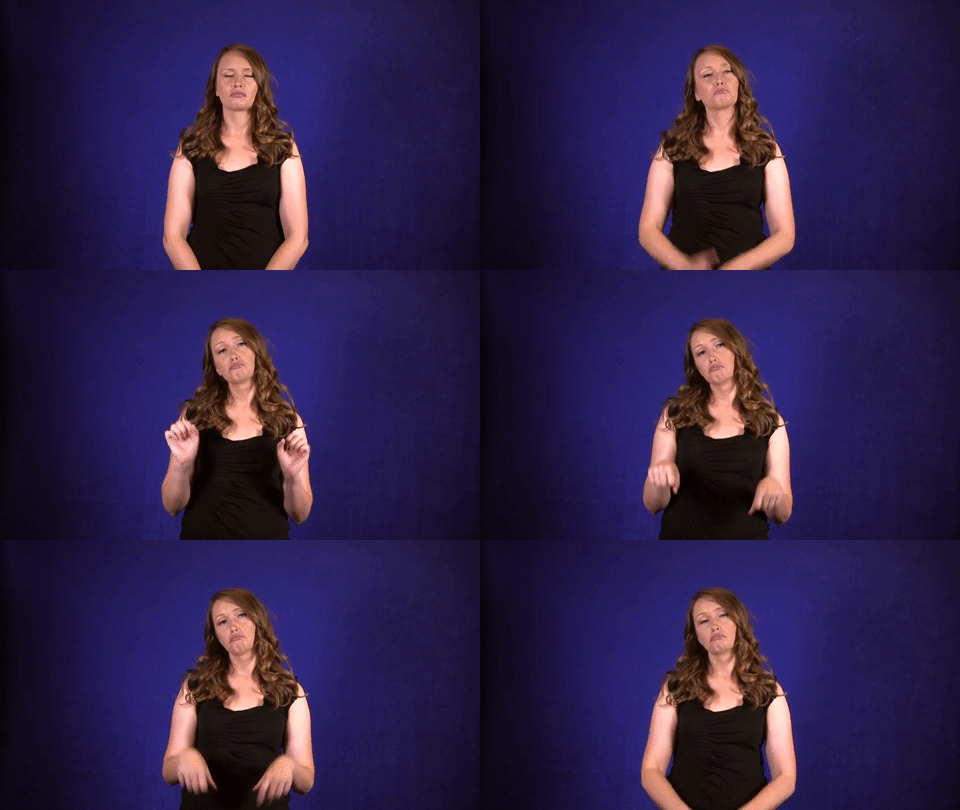
Definition: to have the ability to do something
Sign for ABLE CAN in ASL

Practice Activities:
Begin by practicing the sign for able can in ASL in isolation. Repeat it smoothly and confidently with both hands forming the “S” handshape and moving them downward in unison. Focus on maintaining a steady pace and a natural motion.
Use the sign for able can in ASL with different facial expressions to convey confidence, uncertainty, or excitement. Try signing sentences like “I am able can help” or “She is able can swim” to practice incorporating it into statements. Experiment with emphasizing the sign by slightly changing the speed or intensity of movement for different contexts.
Create a short story where you describe different things people are able to do. For example, “The boy is able can run fast. The girl is able can paint beautifully.” Sign your story to a partner or record yourself to check fluency. Challenge yourself by expanding the story with more details.
Work with a partner and take turns asking ability-related questions like “Are you able can cook?” or “Is he able can jump high?” Respond in full ASL sentences. If working alone, list things you are able to do and sign them sequentially. This will help develop confidence in using the sign naturally.
Play a charades-inspired game where one person acts out an ability like dancing, driving, or singing while the other person signs the phrase using the sign for able can in ASL. This helps with spontaneous production and reinforces both individual signs and full sentence structure.
Engage in a role-playing scenario where you interview someone about their skills and capabilities. Use questions such as “Are you able can play soccer?” or “Who is able can fix the car?” This practice builds fluency in conversational ASL by incorporating the sign smoothly within natural dialogue.
Cultural Context:
American Sign Language is a rich and expressive language with its own unique grammar and structure. The sign for able can in ASL conveys the ability or capability to do something. It is frequently used in everyday conversations to express confidence, permission, or potential.
The sign for able can in ASL is commonly used in both casual and formal settings. It can indicate strength, skill, or opportunity depending on the context. Understanding how to use this sign correctly helps ensure clear and effective communication.
In Deaf culture, being able to do something is often tied to independence and advocacy. The sign for able can in ASL is an important part of self-expression, empowering individuals to communicate their abilities. It is often used in discussions about accessibility, capability, and self-sufficiency.
This sign is useful in a variety of discussions, from personal achievements to everyday tasks. Whether talking about physical ability, mental capacity, or permission, the sign for able can in ASL is a key part of conversation. Signing fluently helps ensure that messages are conveyed with the right emphasis and meaning.
Some ASL signs have variations depending on regional dialects and personal styles. However, the sign for able can in ASL is widely understood across the Deaf community. Learning this sign accurately ensures that communication remains effective and inclusive.
ASL relies on body language, facial expressions, and hand movements to express meaning. When signing able can in ASL, facial expressions can add emphasis to indicate certainty or doubt. Adjusting facial expressions helps provide additional context to the sign’s meaning.
This sign is also useful in educational and professional settings. Whether in the workplace, classroom, or social interactions, the sign for able can in ASL helps convey confidence and ability. Using this sign correctly fosters clear and engaging communication.
Mastering foundational ASL signs like this one is essential for fluent conversation. The sign for able can in ASL is practical for many real-life scenarios. Learning and practicing it regularly enhances communication skills and strengthens connections with the Deaf community.
Extended Definition:
The sign for able can in ASL is commonly used to express capability, permission, or potential. This sign conveys the idea that someone is capable of doing something or that something is possible. It is frequently used in both everyday conversation and formal ASL communication.
To sign able can in ASL, both hands are placed in the “S” handshape, positioned at shoulder width. Then, the hands move downward in a firm motion. This movement visually represents the ability or possibility of an action.
This sign is often used in contexts where someone is discussing their own capabilities or granting permission. For example, a person might sign it when saying, “I can help you,” or a teacher might use it to indicate that a student is able to proceed with an assignment. It helps express confidence, willingness, or the ability to do something.
In ASL grammar, able can in ASL is typically used in affirmative statements but can also be negated. To indicate negation, the same sign is performed while shaking the head or including a negative facial expression. This changes the meaning to “unable” or “cannot.”
Non-manual markers play an essential role when using this sign. Facial expressions can emphasize confidence, hesitation, or doubt depending on the situation. For instance, raising the eyebrows can turn the phrase into a question, such as “Can you go?”
The sign for able can in ASL is also frequently modified when used in different contexts. Its meaning can shift slightly based on speed, intensity, and additional signs used in a sentence. This allows for nuanced communication depending on the intent of the signer.
Different ASL users may have slight variations in signing based on regional dialects or personal signing styles. However, the general structure of able can in ASL remains the same. Understanding these variations helps improve communication with a diverse group of signers.
ASL learners should practice able can in ASL with native signers or through ASL dictionaries and videos. Watching fluent signers use it in conversation aids in understanding natural usage. Regular practice ensures clear and confident signing.
This sign is essential in daily interactions, making it one of the fundamental vocabulary words in ASL. It appears frequently in discussions about skills, permissions, and potential actions. Learning this sign well helps improve fluency and comprehension in ASL conversations.
Mastering the sign for able can in ASL enhances communication efficiency and clarity. Whether in casual conversation or professional settings, this sign
Synonyms: capable, competent, suitable, qualified, fit
Educational resources: Find related learning materials in our course bank!
Want more? Check out some of our popular learning activities on the homepage!
Need to look up a sign? Use our highly rated dictionary: https://aslinteractive.com/best-asl-dictionary/
Follow us on tiktok: https://www.tiktok.com/@aslinteractive. More social media links at the bottom of this page!
Long-tail Keywords: Understood! Please provide the term or phrase you’d like me to create the long-tail keywords for.
Categories:
tags: actions, verbs, language learning, commands, everyday activities
Parameters
*Handshape*:
The sign for ABLE CAN in ASL uses both hands in an “S” handshape. The fists start at chest level, slightly apart, with palms facing downward. The hands move downward in a firm, controlled motion. The movement conveys the affirmative meaning behind the sign for ABLE CAN in ASL. The repeated action emphasizes capability or possibility. This sign is clear and easy to execute, making it an efficient way to express ability or permission in ASL.
*Palm Orientation*:
The palm orientation for the sign for ABLE CAN in ASL starts with both hands in an S-handshape, facing downward. The wrists are in a neutral position before making a downward movement. As the movement happens, the palms remain facing downward, ensuring the sign maintains clarity. Maintaining this palm orientation is essential for correctly conveying the sign for ABLE CAN in ASL, preventing confusion with similar signs.
*Location*:
The sign for ABLE CAN in ASL is located in the neutral signing space in front of the body. Both hands form the “S” handshape and start at shoulder height. The hands then move downward simultaneously in a firm motion. The location remains within the neutral zone, ensuring visibility and clarity. This placement makes the sign for ABLE CAN in ASL easy to recognize and maintain within comfortable signing space.
*Movement*:
To sign for able can in ASL, form both hands into the “S” handshape, making fists with thumbs resting on top. Start with your hands near shoulder level, palms facing downward. Move both hands downward in a smooth motion until they are near your waist. The movement should be firm and controlled, emphasizing the capability conveyed by the sign for able can in ASL. Keep facial expressions neutral or positive to reinforce the meaning.
*Non-Manual Signals*:
When signing the sign for ABLE CAN in ASL, keep a neutral or slightly affirmative facial expression. A slight nod of the head reinforces the meaning, adding emphasis. Avoid exaggerated expressions unless emphasizing certainty or insisting on ability. For a question, raise your eyebrows slightly and tilt your head forward. When expressing confidence, a firm motion with a determined expression enhances clarity. Keep eye contact to maintain engagement and ensure effective communication.
*Prosody, Dominant/Non-Dominant Hand*:
The sign for ABLE CAN in ASL uses both the dominant and non-dominant hands. Both hands form the “S” handshape (fists) and start at shoulder height. Then, they move downward in a controlled motion, ending in a neutral position near the waist. The movement should feel firm and intentional, conveying capability. Facial expressions can add emphasis, reinforcing the meaning of the sign for ABLE CAN in ASL.
Tips for Beginners:
When learning the sign for ABLE CAN in ASL, focus on smooth and confident movements. This sign uses both hands in an “S” handshape, moving downward with a slight push. Keep your wrists firm but relaxed to avoid stiffness, which can make the motion appear robotic.
A common mistake beginners make is over-exaggerating the motion. The movement should be controlled yet natural. Too much force or hesitation can make the sign unclear. Watching fluent signers and practicing in front of a mirror can help refine your execution.
Hand positioning is also important when signing ABLE CAN. Keep your hands shoulder-width apart and move them in sync. Avoid the temptation to move them separately or stagger the motion, as this can lead to misunderstandings. Precision and fluidity make the sign look natural and easy to understand.
Facial expressions can help support the meaning of the sign. While not always necessary, showing confidence or determination can reinforce the meaning, especially in conversation. Avoid a blank expression, as ASL relies heavily on facial cues for context and emphasis.
Repetition and consistent practice will help you master the sign for ABLE CAN in ASL. Try signing it in slow motion first, then gradually build up to a natural pace. Practicing in everyday situations, such as when talking about capabilities or permissions, will reinforce muscle memory.
If you’re unsure about your technique, seek feedback from fluent ASL users or use video resources. Signing with others will help identify small errors and improve overall fluency. Over time, the sign will feel effortless and look more natural.
Connections to Other topics:
The sign for ABLE CAN in ASL connects to various modal verbs like “may,” “should,” and “must,” which express ability, permission, and necessity. In ASL, modals often come at the end of a sentence or may appear at the beginning for emphasis. The sign for ABLE CAN in ASL is used similarly to the English words “can” and “able,” helping convey the capability to perform an action, much like the modals that modify verbs in signed sentences.
This sign is also closely related to concepts of potential and permission. While ABLE CAN expresses a person’s ability to do something, “allow” or “permit” add nuances of authority or permission. These terms work together in discussions about rules, agreements, and personal capacity. For instance, pairing ABLE CAN with “not” creates a strong negation, similar to saying “can’t” in English.
Another connection is with action-based signs that describe a person doing something possible or impossible. The sign often appears in sentences where someone confirms whether they are capable of completing a task, such as “I ABLE CAN SWIM” meaning “I can swim.” Combining it with time-related signs like “before” or “after” helps specify when someone is or was capable of performing an action.
In conditional statements, the sign for ABLE CAN in ASL plays a crucial role in discussing hypothetical situations. It often appears with signs like “if” or “when” to express conditions for ability. The use of this sign with facial expressions often clarifies whether someone is confidently capable or hesitant. This makes it an essential component in ASL conversations about skills, opportunities, and restrictions.
Summary:
The sign for ABLE CAN in ASL is produced using both hands in the “S” handshape. The movement involves a downward motion, mirroring the concept of capability or permission. This sign visually captures the idea of having the strength or permission to do something.
In ASL, the sign for ABLE CAN in ASL is commonly used in affirmative responses. It expresses capability or permission, depending on the context. Facial expressions add nuance, clarifying if the meaning is about physical ability or authorization.
This sign belongs to a family of modality verbs in ASL that indicate possibility, ability, or permission. It functions similarly to the English words “can” and “able” but is often used differently in grammatical structures. Understanding its usage enhances communication effectiveness in ASL.
The sign for ABLE CAN in ASL is context-dependent. It can indicate ability, such as “I can swim,” or permission, like “You can go.” Non-manual markers determine the exact meaning, emphasizing the importance of facial expression in ASL grammar.
ASL employs spatial and contextual modifications to clarify meaning. When combined with other signs, the sign for ABLE CAN in ASL can change slightly in movement intensity to convey certainty or doubt. This flexibility makes the sign versatile in everyday communication.
A stronger movement in the sign for ABLE CAN in ASL can imply confidence or certainty. A lighter or hesitant motion can suggest doubt or partial ability. This nuance is essential for fluency and natural ASL signing.
Negative forms of this sign involve adding a headshake or modifying the movement. To sign “can’t,” one typically changes the shape or adds a negation sign. This highlights how negation in ASL integrates movement instead of separate auxiliary words.
Compared to spoken languages, ASL’s depiction of ability is more visual and concept-driven. The sign for ABLE CAN in ASL provides an embodied representation of capability, contrasting with the abstract nature of English grammar. This visual nature is a defining feature of ASL.
The cultural significance of the sign for ABLE CAN in ASL ties to the Deaf community’s emphasis on capability and self-reliance. The concept of ability is empowering, reflecting the community’s value of independence. ASL users often use this sign affirmatively to reinforce confidence.
Grammar in ASL does not rely on auxiliary verbs like English does. The sign for ABLE CAN in ASL can stand alone without needing extra words. This demonstrates how ASL functions as a complete and independent language.
Many ASL learners initially translate English sentences word for word. However, ASL structures utilize signs such as ABLE CAN in ASL differently. Recognizing this distinction helps learners adapt to the natural flow of ASL syntax.
The sign for ABLE CAN in ASL connects to related signs like “PERMISSION” and “SKILL.” While all these signs relate to capability, their specific meanings differ. Understanding distinctions between similar signs is key to mastering ASL.
The distinction between “ABLE” and “CAN” in English does not always exist in ASL. The sign for ABLE CAN in ASL covers both concepts, illustrating ASL’s efficiency. This demonstrates how ASL expresses ideas concisely compared to many spoken languages.
In conversational ASL, the speed and intensity of movement can change meaning. A fast motion can indicate certainty, while a slower sign can suggest hesitation. These subtle distinctions enrich ASL communication.
The sign for ABLE CAN in ASL is frequently combined with other signs to clarify action. For example, signing “CAN DRIVE” means “I can drive.” This shows how combining signs conveys complete thoughts.
Deaf culture emphasizes ability rather than limitations. The sign for ABLE CAN in ASL reflects this value by focusing on what a person can do. This contrasts with common misconceptions about disability.
In ASL storytelling, classifiers often accompany signs like ABLE CAN in ASL. These classifiers add visual meaning, enhancing communication. An ASL storyteller may modify the sign to match the character’s experience.
The sign for ABLE CAN in ASL merges physical movement with visual meaning, reinforcing ASL’s expressive nature. This exemplifies why ASL is not just a translation of English but a unique language. It thrives on visual space and movement.
ASL linguistics studies the rules underlying signs like ABLE CAN in ASL. Research shows how signers unconsciously follow grammatical patterns. These studies highlight the natural complexity of ASL.
Cognitive research has shown that ASL grammar, including modality signs like ABLE CAN in ASL, engages different brain areas than spoken language. Neurological data supports ASL’s status as a fully developed language.
Applied linguistics in ASL teaching focuses on helping students internalize signs like ABLE CAN in ASL naturally. Context-based learning is more effective than rote memorization. By seeing the sign in
Want more? Check out some of our popular learning activities!
ASL Interactive Resources
ASLInteractive YouTube Channel
Follow us on tiktok: @aslinteractive.com
Follow us on Instagram: aslinteractive
Facebook page: aslinteractive
Facebook group: aslinteractive
LInkedIn: ASL Interactive LLC
Twitter: @ASL_interactive
*Some information on this page is AI-generated. AI can make mistakes. Please check the information.


Responses