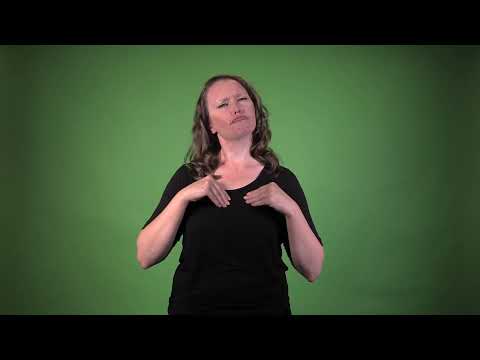
Definition: The act of receiving or agreeing to.
Sign for ACCEPTING in ASL

Practice Activities:
Start by practicing the sign for accepting in ASL in isolation. Repeat the movement multiple times, ensuring fluidity in your hand placement and motion. Use a mirror or record yourself to check for accuracy.
Now try using the sign for accepting in ASL with common phrases. Sign sentences like “I am accepting your offer” or “She is accepting the gift.” Practice signing these at different speeds and with natural facial expressions to match the meaning.
Work with a partner to engage in a signing dialogue. One person can offer something, like a job or invitation, and the other can respond with the sign for accepting in ASL. Switch roles to reinforce understanding and improve fluency.
Create a short story where someone refuses something at first but later decides on accepting it. Sign your sentences slowly, ensuring clarity and smooth transitions between signs. If possible, record yourself and analyze your signing for improvement.
Watch ASL videos and look for how the sign for accepting in ASL is used in natural conversation. Pay attention to how facial expressions and body language modify the meaning. Try mimicking the signing styles to improve your expressive skills.
Engage in real-life practice by using this sign in everyday interactions with Deaf or signing friends. For example, when agreeing to help someone or receiving a gift, incorporate the correct sign naturally into your responses. This helps reinforce learning in practical settings.
Cultural Context:
In American Sign Language, the sign for accepting in ASL conveys more than just agreement; it reflects an openness to ideas, people, and experiences. The concept of accepting is deeply rooted in Deaf culture, where inclusivity and mutual respect hold great significance. When signing accepting in ASL, facial expressions and body language also play an essential role in conveying sincerity.
Deaf culture values acceptance as a core principle, fostering strong community bonds. The sign for accepting in ASL can be used in various contexts, whether expressing personal growth, embracing diversity, or acknowledging new perspectives. It represents the idea of welcoming differences and maintaining an open mind.
The visual nature of ASL gives the sign for accepting in ASL a rich, expressive quality. As with many signs, its meaning can change slightly depending on how it is used in conversation. Non-manual markers, such as facial expressions, can add depth to the sign’s intended message.
Within the Deaf community, accepting new members, ideas, and cultural identities is an ongoing practice. Whether someone is learning ASL for the first time or adapting to Deaf culture, the need for acceptance is crucial. Signing accepting in ASL shows not only comprehension but also a willingness to connect.
ASL is a dynamic language where context and intent shape communication. The sign for accepting in ASL can be a powerful way to express consent, acknowledgment, or approval. By using this sign, individuals demonstrate openness and appreciation for different viewpoints.
Understanding the cultural significance of accepting in ASL fosters a more meaningful connection within the Deaf and signing communities. It encourages inclusive interactions and promotes positive communication. Learning this sign is a step toward deeper cultural appreciation and social harmony.
Extended Definition:
The sign for accepting in ASL conveys the act of willingly receiving or agreeing to something. It is commonly used in conversations to show agreement, understanding, or acknowledgment. This sign plays an essential role in interactions, both casual and formal.
When using the sign for accepting in ASL, hand movements and facial expressions help clarify the meaning. ASL is a visual language, so signing with the correct expression enhances communication. The sign reflects the idea of embracing or welcoming something, whether tangible or abstract.
In daily conversations, the sign for accepting in ASL can indicate approval of an offer or idea. It is often used in social and professional settings to express agreement or willingness. Understanding the context helps ensure the message is correctly conveyed.
This ASL sign is useful in various interactions, from accepting a gift to agreeing with a statement. It fosters clear communication, making conversations smoother and more inclusive. Learning and using this sign correctly enhances fluency in ASL.
Facial expressions play a crucial role in signing, reinforcing the message being conveyed. A positive expression can strengthen the meaning of the sign for accepting in ASL, whereas a neutral or hesitant expression might suggest uncertainty. Mastering these nuances improves signing accuracy.
Signing effectively requires attention to movement and hand placement. The sign for accepting in ASL typically involves the hands moving toward the body, symbolizing receiving something. Practicing in front of a mirror or with a fluent signer helps perfect the gesture.
ASL is a dynamic language with rich expressions that rely on visual and spatial communication. The sign for accepting in ASL can be adapted based on context, ensuring clarity in different situations. Proper use of space and motion enhances comprehension.
In discussions about personal decisions, this sign helps express openness and willingness. It allows signers to communicate acceptance of new ideas, changes, or responsibilities. This makes it an essential sign for everyday conversations.
When engaging with the Deaf community, using the sign naturally and appropriately improves communication. A well-executed sign for accepting in ASL shows respect and understanding. It also helps strengthen relationships by demonstrating clear and effective signing.
Synonyms: receiving, approving, welcoming, acknowledging, embracing
Educational resources: Find related learning materials in our course bank!
Want more? Check out some of our popular learning activities on the homepage!
Need to look up a sign? Use our highly rated dictionary: https://aslinteractive.com/best-asl-dictionary/
Follow us on tiktok: https://www.tiktok.com/@aslinteractive. More social media links at the bottom of this page!
Long-tail Keywords: What is the sign for accepting in ASL, How do you sign accepting in ASL, Accepting in American Sign Language meaning
Categories:
tags: acceptance, major decisions, responses, verbs, everyday activities
Parameters
*Handshape*:
The sign for ACCEPTING in ASL uses both hands with open, relaxed fingers that start away from the chest. The hands move inward, closing into a loose flat “O” shape as they come toward the torso. This motion represents the concept of gathering or taking something in. The sign for ACCEPTING in ASL visually conveys the idea of willingly receiving or embracing something, reinforcing its meaning through movement and hand positioning.
*Palm Orientation*:
The palm orientation for the sign for ACCEPTING in ASL starts with both hands open, palms facing upward in front of the body. As the movement progresses, both hands curve inward towards the chest, closing slightly as if gathering something. The fingers come together as they touch the chest, with palms now partially facing the body. This motion visually represents the concept of receiving or embracing something.
*Location*:
The sign for accepting in ASL is located in the area in front of the chest. Both hands start open with palms facing upward and fingers slightly spread apart. As the movement progresses, the hands close into flattened “O” handshapes, pulling toward the center of the chest. This motion represents taking something in or receiving, reinforcing the concept of accepting in ASL. The sign remains within the neutral signing space near the upper torso.
*Movement*:
To sign for accepting in ASL, start with both hands open, palms facing upward in front of your chest. Your fingers should be slightly curved. Bring both hands inward toward your chest while closing your fingers slightly, as if pulling something toward yourself. This motion represents the concept of taking something in or embracing an idea. The sign for accepting in ASL visually conveys the act of receiving or agreeing with something.
*Non-Manual Signals*:
When performing the sign for ACCEPTING in ASL, maintain a neutral or slightly content facial expression to reflect a welcoming demeanor. Depending on context, a small nod may accompany the sign to show agreement or willingness to receive something. If using the sign in a deeper emotional context, slightly raised eyebrows may indicate openness, while a subtle smile reinforces a sense of willingness or gratitude.
*Prosody, Dominant/Non-Dominant Hand*:
The sign for ACCEPTING in ASL uses both hands. The dominant and non-dominant hands start open with palms facing upward in front of the body. Then, both hands move inward toward the chest, closing into relaxed “and” or “curved five” handshapes . This motion represents the concept of receiving or embracing something. Facial expressions can enhance the meaning, depending on the context.
Tips for Beginners:
Mastering the sign for ACCEPTING in ASL requires smooth and deliberate movement. Make sure both hands start open and relaxed, then bring them in toward your chest with a gentle, scooping motion, as if pulling something in. Keep the motion symmetrical to avoid confusion with similar signs.
One common mistake beginners make when signing ACCEPTING is moving too fast or abruptly. The movement should feel natural and fluid, not jerky or stiff. Pay attention to your hand shape—fingers should be slightly curved as you bring them in toward your chest.
Practicing in front of a mirror can help you refine your movement for the sign for ACCEPTING in ASL. Watching your hands ensures both move evenly and maintain proper shape. If possible, record yourself signing and compare it to videos from fluent signers to check for accuracy.
Hand positioning is key for clarity. If your hands start too far apart or end unevenly, the meaning may not be conveyed correctly. Keep your movements smooth, and if you’re unsure, ask a fluent signer for feedback to ensure your sign looks natural.
Facial expression plays a subtle but important role in signing ACCEPTING. Even though this sign doesn’t require exaggerated expressions, a calm and receptive look naturally enhances the meaning. Avoid tense or stiff facial expressions, which can create unintended ambiguity.
Daily practice with real-life signing situations will help reinforce your skills. Try using the sign when discussing concepts like approval, willingness, or embracing ideas. The more you incorporate the sign for ACCEPTING in ASL into conversations, the more natural it will feel.
If you’re struggling, slow down and focus on accuracy first before increasing speed. With consistent effort, your signing will become fluid and effortless. Stay patient with yourself, and don’t hesitate to seek feedback from experienced signers.
Connections to Other topics:
The sign for accepting in ASL connects to concepts of agreement, openness, and willingness. It visually illustrates the motion of taking something in, which conceptually links to signs like receive, approve, and adopt. The movement of the hands bringing something in toward the body suggests an internalization or embracing of an idea, making it useful in discussions about personal growth or inclusion.
This sign also relates to the idea of approval and consent, which is significant in both interpersonal and professional contexts. It shares visual similarities with signs like take-in and believe, both of which involve movement toward the body, reinforcing the concept of internalizing or embracing something. The connection to accepting an offer, position, or responsibility demonstrates how this sign extends beyond personal acceptance to broader social and professional settings.
In a compound structure, the sign for accepting in ASL can be incorporated into phrases like accepting responsibilities or accepting challenges. These contexts highlight the flexibility of the sign, showing how it can convey deeper levels of willingness and commitment. Combined with expressions like willing or ready, it emphasizes not just approval but preparedness for new experiences.
This sign also plays a role in discussions about diversity and inclusion, especially when describing accepting different perspectives or lifestyles. It aligns with signs like diversity or respect, reinforcing the importance of welcoming differences. In social or educational environments, the use of this sign can help express support for inclusive policies, fostering discussions about acceptance in communities.
Because the sign for accepting in ASL involves taking something in, it can also contrast with signs that express rejection or refusal. Signs like deny or decline use visibly opposite movements, often pushing away, making them useful for comparisons in ASL learning. Understanding these contrasts helps deepen comprehension of how spatial and directional movements influence meaning in ASL.
Summary:
The sign for accepting in ASL embodies the concept of embracing something fully, whether physically, emotionally, or intellectually. The motion and positioning of the hands reflect a sense of openness transforming into assertion, a visual metaphor for taking something in. This sign captures a deeper meaning, symbolizing not just the idea of receiving but also internalizing and welcoming something.
To perform the sign for accepting in ASL, both hands start open and slightly apart in front of the chest, palms facing upward. The fingers then move inward toward the chest, closing slightly as if grasping an invisible object and drawing it close. This movement mirrors the symbolic action of taking something in, both physically and metaphorically.
This sign can indicate acceptance in many contexts, such as accepting an idea, an offer, or personal feelings. It can be used in social, emotional, and intellectual discussions, making it highly versatile. The meaning is influenced by facial expressions, which provide additional emotional context.
Facial expressions play a crucial role in clarifying whether the sign for accepting in ASL expresses willingness, reluctance, or sincere embrace. A neutral expression signals a simple acknowledgment, while a smile enhances a sense of warm welcome. A hesitant or reluctant look might suggest acceptance with reservations.
Grammatically, the sign for accepting in ASL can function as a verb, commonly paired with other signs to deepen meaning. It can appear in short phrases like “accepting responsibility” or “accepting help.” Context and facial expressions always contribute to the precise interpretation.
Cultural nuances are essential when using the sign for accepting in ASL, as acceptance has profound cultural implications within the Deaf community. Being accepting of Deaf culture, identity, and signing abilities fosters inclusion and respect. This sign can also convey powerful emotional depth when discussing self-acceptance or personal growth.
Related signs share conceptual and visual similarities with the sign for accepting in ASL. The sign for receive has a similar motion but may involve a single dominant hand and a more specific grasping movement. Accept is also related to appreciate when discussing gratitude or acknowledgment.
Understanding how the sign for accepting in ASL connects with surrounding signs helps enhance fluency in expressing nuanced ideas. Combining it with signs for willingness, agreement, or recognition creates richer and more detailed conversations. Emphasizing slight variations in movement or hand shape can subtly shift meaning.
Linguistically, the sign for accepting in ASL demonstrates how physical space and movement can metaphorically convey abstract ideas. The directional pull toward oneself makes the acceptance visual and tangible, exemplifying ASL’s spatial grammar. The shift from an open hand position to a pulling motion effectively illustrates conceptual verbs without need for spoken words.
From an applied linguistics perspective, learning the sign for accepting in ASL emphasizes embodiment in language acquisition. The motor movement reinforces comprehension, connecting cognitive learning with physical gestures. This application makes ASL accessible and memorable to both Deaf and hearing learners.
Deeper cognitive insights emerge when analyzing the cognitive process behind the sign for accepting in ASL. The brain links gestures with meaning through kinesthetic and visual learning, aiding memory retention. This reinforces theories on how motor function and language processing are interconnected.
Broader themes of communication and human connection are embedded in the sign for accepting in ASL, illustrating how sign language fosters emotional and intellectual dialogue. In various scenarios, the sign may be used to express personal growth, forgiveness, or even tolerance in discussions. The ability to convey such complex concepts through movement demonstrates the richness of ASL.
Social movements have also emphasized the importance of acceptance, making the sign for accepting in ASL relevant in advocacy for inclusivity. Discussions about diversity, equity, and inclusion often personalize this sign to reflect ideological or identity-based acceptance. Using this sign in ASL conversations about such topics reinforces these value-driven messages.
The sign for accepting in ASL also appears when discussing mental health and emotional wellness. Conversations around self-acceptance, resilience, and coping often employ this sign to validate emotions and experiences. Therapists and counselors who use ASL may rely on this sign when guiding Deaf clients through self-reflection exercises.
In interpersonal relationships, the sign for accepting in ASL plays a role in expressing understanding and agreement. Whether in friendships, romantic relationships, or professional settings, signing acceptance signifies openness to another’s perspective. This fosters trust and constructive communication within the Deaf community.
Comparing this sign across different sign languages reveals slight variations in execution or movement dynamics. While many sign languages use similar pulling gestures to represent acceptance, there may be differences in handshapes or directional movements. Understanding these variations provides insight into the nuances of sign language evolution across cultures.
The sign for accepting in ASL adapts naturally into interpreted conversations, allowing for smooth integration into spoken English translations. Interpreters often align this sign with spoken words such as agree, take in, or acknowledge, depending on context. This flexibility strengthens the sign’s communicative power
Want more? Check out some of our popular learning activities!
ASL Interactive Resources
ASLInteractive YouTube Channel
Follow us on tiktok: @aslinteractive.com
Follow us on Instagram: aslinteractive
Facebook page: aslinteractive
Facebook group: aslinteractive
LInkedIn: ASL Interactive LLC
Twitter: @ASL_interactive
*Some information on this page is AI-generated. AI can make mistakes. Please check the information.


Responses