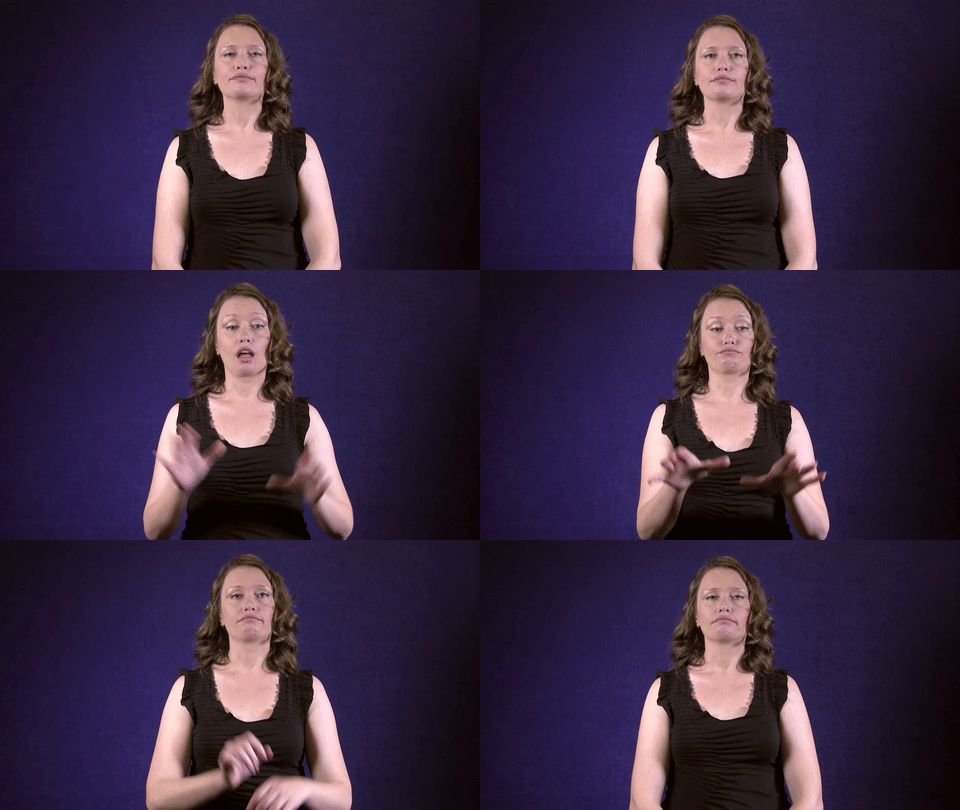
Definition: Engaged in action.
Sign for ACTIVE in ASL

Practice Activities:
To build fluency with the sign for active in ASL, start by practicing in isolation. Repeatedly form the sign in front of a mirror to ensure correct handshape and movement. Say the English word “active” aloud or in your head each time you sign to reinforce meaning.
Incorporate the sign for active in ASL into short phrases. Try signing “I am active,” “She is very active,” or “They stay active every day.” Practice switching between the sign for active and other related concepts like exercise, movement, or energy.
Create short sentences using the sign for active in ASL while storytelling. For example, describe a character in an adventure who is always moving and exploring. You can also sign a daily routine that involves activity, such as playing sports, walking, or dancing.
Engage in a game of charades where you or a partner act out different activities, and the other person signs “active” when appropriate. Another fun group activity is to describe different people using ASL, focusing on their activity level. Try signing “My friend is very active. They run, jump, and swim.”
Watch video clips or real-life situations and identify when someone is being active. Sign the word each time you recognize activity in action. You can also create a dialogue where you encourage someone to be more active by including supportive phrases.
Challenge yourself by using the sign for active in ASL in conversations throughout the day. When discussing hobbies, lifestyle, or characteristics of a person, make sure to incorporate the sign naturally. The more you integrate this sign into daily use, the more comfortable and fluent you will become.
Cultural Context:
The sign for active in ASL represents movement, energy, and engagement. In Deaf culture, being active goes beyond physical movement; it includes participating in conversations, contributing to the community, and supporting social connections. The sign for active in ASL is often used to describe people who are involved, motivated, and full of energy.
Deaf individuals use the sign for active in ASL to describe someone who enjoys sports, dancing, or social events. It can also refer to mental activity, such as problem-solving, studying, or being creatively engaged. ASL is a visual language, and signs like this express both physical and mental energy in meaningful ways.
When discussing lifestyle and habits, the sign for active in ASL plays an important role. It helps express a person’s energy level, daily routines, and involvement in activities. Whether talking about an active child, a busy professional, or an energetic pet, this sign conveys enthusiasm.
The sign for active in ASL is not just about sports or movement. It can also describe someone socially active in the Deaf community or actively participating in advocacy. This makes it a valuable sign when discussing activism, leadership, and involvement in social causes.
When using the sign for active in ASL, facial expressions and movement help provide context. A bigger or more intense motion can emphasize a high level of activity. ASL relies on body language to add meaning, making this sign versatile and expressive.
Understanding how to use the sign for active in ASL helps improve communication skills in ASL conversations. It allows signers to describe their own energy levels and ask about others. This sign is useful in casual chats, professional settings, and discussions about health and lifestyle.
Many Deaf and hard-of-hearing individuals value an active lifestyle, and this sign is used to express that idea. Whether discussing hobbies, career pursuits, or social commitments, being active is an important aspect of life. The sign for active in ASL reinforces the importance of staying engaged and involved.
In storytelling within the Deaf community, the sign for active in ASL can help bring characters to life. It helps describe movement, energy, and enthusiasm in ASL storytelling and performances. This enhances communication by adding depth and expression.
The sign for active in ASL is common in discussions about education, work, and social life. It helps describe dynamic individuals who take initiative and embrace challenges. This sign supports the idea that involvement and participation are essential aspects of life.
Extended Definition:
The sign for active in ASL conveys movement, energy, and engagement. It is commonly used to describe someone who is physically involved in activities or mentally engaged in tasks. This sign helps express concepts related to movement, liveliness, and participation.
To sign active in ASL, both hands form the letter “C” and move in a circling motion in front of the chest. The movement suggests action and continuous energy. Facial expressions can add emphasis to indicate higher energy or enthusiasm.
The concept of active can apply to various situations. It can describe a physically active lifestyle, such as exercising or playing sports. It can also mean being mentally active, like participating in discussions or solving problems.
This sign is often used when discussing an active child, someone who enjoys outdoor activities, or a person who takes initiative. It can also refer to active members in a group, organization, or community. In conversations, it can help describe someone’s involvement in events or projects.
When learning the sign for active in ASL, consider using expressive body language. The amount of movement and intensity can help clarify the meaning. More exaggerated motion can indicate a higher level of activity, while a calmer motion may suggest moderate engagement.
Using this sign correctly improves ASL communication. It helps express levels of energy in daily conversations. Understanding how to modify the sign can make descriptions more precise.
Active in ASL can also relate to being busy or engaged with responsibilities. Students may use it to describe participation in school activities. Professionals might use it to highlight their involvement in work tasks.
This sign connects with other ASL words, such as exercise, movement, and energy. It fits naturally in conversations about fitness, work, and social life. Knowing how to use it effectively enhances signing fluency.
Learning the sign for active in ASL is useful for describing personal habits and lifestyle choices. It allows signers to share details about their daily routines. It can be especially helpful when discussing hobbies, work, or group participation.
Sign variations may exist depending on region or signing style. Some signers may modify the movement slightly based on context. Observing fluent ASL users can provide more insight into these subtle differences.
Signing active correctly ensures clear and accurate communication. It helps avoid confusion in discussions about physical activity, participation, and engagement. Practicing with native signers can improve fluency and understanding.
Knowing how to sign active in ASL expands overall vocabulary. It allows signers
Synonyms: energetic, lively, dynamic, busy, engaged
Educational resources: Find related learning materials in our course bank!
Want more? Check out some of our popular learning activities on the homepage!
Need to look up a sign? Use our highly rated dictionary: https://aslinteractive.com/best-asl-dictionary/
Follow us on tiktok: https://www.tiktok.com/@aslinteractive. More social media links at the bottom of this page!
Long-tail Keywords: what is the sign for active in ASL, how do you sign active in ASL, ASL sign for active
Categories:
tags: Activities, Verbs, Everyday activities, Commands, Sports
Parameters
*Handshape*:
The sign for ACTIVE in ASL uses both hands in a modified “C” handshape, with fingers curved and thumbs extended. The hands move in a circular motion, representing energy and motion. This movement visually expresses the concept of being engaged or energetic. The sign for ACTIVE in ASL is dynamic, reflecting the idea of movement and participation. Hand orientation and fluidity are key components in conveying the meaning effectively.
*Palm Orientation*:
The palm orientation for the sign for ACTIVE in ASL involves both hands in a curved shape with the palms facing downward. The hands move in small alternating circles, representing motion or engagement. This movement emphasizes the concept conveyed by the sign for ACTIVE in ASL, symbolizing continuous action or involvement. The downward orientation and movement suggest physical or energetic activity, reinforcing the meaning effectively.
*Location*:
The sign for active in ASL is located in the upper chest area. Both hands, in a bent “B” handshape, move in small circular motions near the upper torso. This placement emphasizes engagement and movement, visually representing the concept of being active.
*Movement*:
To produce the sign for active in ASL, form both hands into bent “5” handshapes . Position them near your chest, palms facing downward. Move your hands in small forward circular motions, alternating them as if representing continuous movement or engagement. This motion symbolizes energy and involvement, reinforcing the meaning of the sign. The sign for active in ASL visually conveys a sense of movement or activity, making it a dynamic representation.
*Non-Manual Signals*:
When signing the sign for ACTIVE in ASL, the facial expression should convey engagement and energy. Slightly raised eyebrows and an alert expression help emphasize the meaning. A small head nod or slight forward body movement can enhance the sign, reinforcing the idea of being engaged or physically dynamic. The sign for ACTIVE in ASL often benefits from an enthusiastic or determined expression to distinguish it from similar movement-based signs.
*Prosody, Dominant/Non-Dominant Hand*:
The sign for ACTIVE in ASL uses both hands in a curved “5” handshape . The hands move in a circular motion in front of the body, representing continuous movement or engagement. The movement is typically small but deliberate, emphasizing energy and motion.
Each hand moves alternately or in sync, depending on context, maintaining a steady rhythm. Facial expressions can enhance the meaning, especially if emphasizing intensity. This sign for ACTIVE in ASL can also convey “energetic” or “involved” based on movement dynamics.
Tips for Beginners:
When learning the sign for ACTIVE in ASL, focus on maintaining fluid and controlled hand movements. The sign involves both hands in a slightly curved “C” shape, moving in a circular motion near your chest. Keep the movement consistent and smooth, avoiding overly stiff or exaggerated gestures.
A common mistake beginners make is making the motion too large or too small. Keep the movement at a natural pace, ensuring clarity without overdoing it. Watching native signers can help you develop a better sense of the correct speed and motion.
Handshape and palm orientation are essential for signing accurately. The hands should stay relaxed but firm to maintain proper form. If your fingers are too rigid, the sign may look unnatural, while overly loose fingers can cause confusion. Check your hand position in a mirror or record yourself for feedback.
Another challenge is maintaining good facial expressions while signing. Since ASL relies on facial communication as much as hand movements, be mindful of neutral or engaged expressions. Avoid looking disconnected, as this can reduce the impact of your sign.
When practicing the sign for ACTIVE in ASL, repetition is key. Sign in front of a mirror or with a partner to get comfortable. Incorporate it into conversations so you can reinforce muscle memory and feel more confident using it naturally.
If you’re unsure about your technique, seek feedback from fluent signers or instructors. They can help you make small adjustments that improve your overall clarity. Don’t be discouraged by mistakes—consistent practice will make the motion feel more natural over time.
Lastly, remember to stay patient with yourself. Mastering ASL takes time, and learning new signs requires muscle memory to build up. Stay consistent, and soon, the sign for ACTIVE in ASL will become second nature.
Connections to Other topics:
The sign for ACTIVE in ASL connects to various movement-related concepts such as “energy,” “motion,” and “engagement.” It shares similarities with signs like “exercise,” “busy,” and “working,” emphasizing physical or mental involvement. This sign can function descriptively to show that someone is engaged in an activity, whether physically active in sports or mentally engaged in an event.
The sign for ACTIVE in ASL also ties into related adjectives such as “energetic” or “lively,” which describe the state of being full of movement or enthusiasm. This makes it useful in ASL storytelling and conversations when describing someone who is always on the go. Combining this sign with others, such as “participate” or “involve,” can express deeper engagement with a task or group effort.
A compound or nuanced phrase can emerge when combining ACTIVE with other concepts. For instance, combining “ACTIVE” with “mind” could help describe someone who is mentally aware or alert. Similarly, pairing it with “community” conveys the idea of an engaged and involved individual in social causes or local groups. These combinations enhance communication by adding layers of meaning.
This sign has strong connections to terms frequently used in discussions about physical fitness, leadership, and productivity. In fitness contexts, ACTIVE pairs well with “exercise” or “run” to talk about staying in motion. In workplace discussions, linking it with “work” or “responsibility” highlights dedication and participation. Using it in different settings allows for nuanced communication that reflects movement, enthusiasm, or dedication.
Because it can describe both physical and non-physical activity, learners should observe the context in which it is used. Some uses of the sign for ACTIVE in ASL may lean toward mental engagement rather than physical movement, depending on the conversation. Paying attention to accompanying signs, facial expressions, and sentence structure ensures clarity and appropriate use.
Summary:
The sign for active in ASL captures the essence of movement, energy, and engagement. It visually represents the idea of being physically or mentally engaged in an activity. The handshapes, motion, and intensity of the sign help convey different levels of activity.
In ASL, the sign for active in ASL typically involves both hands forming an “A” handshape. The hands move in circular motions in front of the body, suggestive of movement, work, or engagement. The direction and speed of the motion can subtly modify the meaning of the sign, indicating intensity.
The movement in the sign for active in ASL symbolizes dynamism and effort. The circular motion reinforces the idea of sustained action rather than a one-time event. This closely aligns with how English speakers conceptualize the word “active” as involving continuous effort or engagement.
ASL grammar allows for modifications to the sign for active in ASL to fit different contexts. The sign may be signed with more force to indicate a higher degree of activity. Similarly, facial expressions can intensify the meaning by showing enthusiasm or exhaustion, depending on the context.
Like most ASL signs, the sign for active in ASL is not used in isolation but within a larger signed sentence. Context determines whether it refers to a physically active person, an engaged participant, or an energetic process. The sign adapts fluidly depending on surrounding signs.
The cultural meaning of active in ASL extends beyond physical movement. It can represent someone who is socially engaged, involved in work, or participating in discussions. The Deaf community values active participation in culture, advocacy, and learning.
A related sign in ASL is “energy,” which also involves expressive motion. However, “energy” often incorporates an “E” handshape, differentiating it from the sign for active in ASL. While both reflect movement and engagement, they carry distinct nuances in meaning.
“Work” is another related sign, as being active often refers to productivity. In ASL, “work” uses “S” handshapes that tap together, linking effort with structured tasks. This distinguishes work from general activity, though the two concepts are closely related.
The sign for active in ASL is especially useful in educational settings. Teachers use the sign to encourage students to stay engaged in lessons. It helps reinforce classroom participation and movement-based learning strategies.
Linguistically, the sign for active in ASL fits within the category of descriptive verb signs. It conveys a state rather than a single action, making it structurally similar to other signs like “busy” or “involved.” These signs describe qualities rather than specific activities.
There are variations of the sign for active in ASL, depending on regional and generational preferences. Some signers modify the motion slightly or incorporate facial expressions in unique ways. These subtle variations do not change the core meaning but reflect diversity in how ASL is used.
In discussions about health and wellness, the sign for active in ASL is frequently used. It supports communication about exercise, mobility, and maintaining an energetic lifestyle. This aligns with broader conversations about well-being in Deaf communities and beyond.
The sign for active in ASL is also relevant in discussions about activism and advocacy. In the Deaf community, being “active” often implies engagement in social change and greater awareness of rights. This sign, therefore, holds both literal and metaphorical importance.
Children learning ASL quickly grasp the meaning of the sign for active in ASL through movement-based learning. Its dynamic nature makes it an appealing and memorable sign. The repetition of circular motions reinforces understanding and recall.
Facial expressions play a crucial role in enhancing the meaning of the sign for active in ASL. Raised eyebrows, an open mouth, or head movement can indicate excitement about an activity. Conversely, a tired expression with the sign can suggest someone is active but exhausted.
Comparing ASL to other signed languages, variations of active exist across regions. Some signed languages depict movement differently, reflecting cultural interpretations of activity. This highlights the fascinating diversity of visual languages worldwide.
Applied linguistics insights reveal that the sign for active in ASL helps reinforce cognitive connections between movement and action. Since ASL is a highly visual language, signs like this one directly link physical expression with vocabulary retention. This benefit extends to both Deaf and hearing learners of ASL.
The sign for active in ASL is commonly used in workplace settings. It can describe employees who are engaged in their tasks or involved in team discussions. This application makes the sign valuable in professional ASL interpretation.
In the context of sports, the sign for active in ASL appears frequently. Coaches and players use it to describe movement, participation, and energy levels. This sign plays a significant role in fitness-related discourse.
Some modifications to the sign incorporate directional signing. For example, signing active toward oneself can indicate personal engagement, while signing it outward can
Want more? Check out some of our popular learning activities!
ASL Interactive Resources
ASLInteractive YouTube Channel
Follow us on tiktok: @aslinteractive.com
Follow us on Instagram: aslinteractive
Facebook page: aslinteractive
Facebook group: aslinteractive
LInkedIn: ASL Interactive LLC
Twitter: @ASL_interactive
*Some information on this page is AI-generated. AI can make mistakes. Please check the information.


Responses