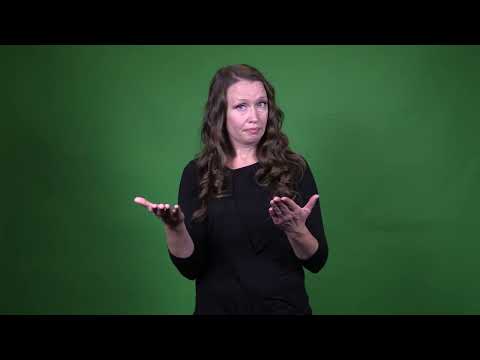
Definition: Additional features or characteristics.
Sign for ADDITIONAL FEATURES in ASL

Practice Activities:
Practice signing the sign for additional features in ASL by first isolating each hand movement. Focus on clarity, ensuring that each part of the sign is distinct. Repeat the sign slowly at first, then gradually increase your speed while maintaining accuracy.
Use a mirror or record yourself signing to check handshape and movement consistency. Practice signing it ten times in a row while maintaining smooth transitions. Try signing it in different locations and angles to ensure your sign is visible from various perspectives.
Incorporate the sign for additional features in ASL into short phrases. For example, sign “This software has additional features” or “Are there additional features included?” Practice using facial expressions to convey questions or emphasis appropriately.
Work with a partner to take turns describing a product or service and include the sign for additional features in ASL. For instance, describe a new smartphone and list its additional features while signing. Encourage your partner to ask follow-up questions, reinforcing conversational practice.
Create a short story about an upgraded piece of technology or a new gadget. Sign a few sentences, ensuring you use the sign for additional features in ASL when describing upgrades or improvements. Try retelling your story with slightly different wording to strengthen your fluency.
Watch media content about new products, such as commercials or reviews, and practice translating them into ASL while incorporating the sign. Challenge yourself to sign entire explanations, improving spontaneity.
End your practice session with a review. Sign the phrase multiple times with different hand shapes or speeds to ensure accuracy. Reflect on any difficulties and refine your technique in future sessions.
Cultural Context:
American Sign Language is a rich and expressive language that relies on hand movements, facial expressions, and body language to convey meaning. The sign for additional features in ASL follows this principle, combining clear gestures to represent the concept of adding more functionality, options, or elements. Understanding this sign helps improve communication, especially when discussing technology, products, or events that include extra features.
When signing additional features in ASL, the movement typically involves a sign for ‘extra’ or ‘more’ along with a gesture representing characteristics or attributes. This sign is useful in conversations about software updates, product enhancements, or services that offer more than the standard package. Knowing how to express this phrase efficiently allows signers to engage in business, technology, and consumer-related discussions with clarity.
Deaf and hard-of-hearing individuals often refer to additional features when talking about accessibility options in technology, education, and entertainment. Many devices and services now include features like captions, vibrating alerts, or visual indicators to accommodate diverse needs. Using the sign for additional features in ASL can help advocate for better inclusivity and accessibility in various settings.
In the world of technology and innovation, additional features play a significant role in product development. Whether discussing smartphone capabilities, software updates, or new tools in assistive technology, signing additional features in ASL ensures that information is conveyed effectively. This supports accessibility within the Deaf community by making sure discussions about new advancements are inclusive and understandable.
When shopping, users frequently compare products based on their included options and upgrades. The sign for additional features in ASL allows for fluent discussions about product comparisons, upgrades, and customizable options. This is especially beneficial in customer service interactions, where clear communication ensures that a person gets the service or product that best suits their needs.
Learning the correct sign for additional features in ASL can enhance discussions in professional and casual settings. In business meetings, employees may need to describe new additions to software, hardware, or services. In casual conversations, this phrase can be used to talk about added benefits in various aspects of daily life, from vehicle upgrades to premium services.
Inclusive conversations about additional features in ASL support greater accessibility in consumer and professional industries. The ability to clearly express this term in sign language promotes a better understanding of available resources, upgrades, and services. Mastering this sign strengthens communication and ensures that the Deaf and hard-of-hearing community remains well-informed about the latest innovations.
Extended Definition:
The sign for additional features in ASL is useful when discussing extra options, new elements, or bonus attributes. It is commonly used in conversations about technology, products, and entertainment. Understanding this sign can help improve communication in a variety of contexts.
When signing additional features in ASL, the movement and handshape convey the idea of something being added or included. Different variations may exist depending on the signerβs preference or regional influence. Facial expressions can also emphasize the importance of the added features.
This sign is often seen in consumer discussions, such as software updates, product upgrades, or enhanced service plans. It helps clarify when something comes with extra benefits or an improved version. Knowing the sign for additional features in ASL allows for clear and efficient conversations about these topics.
In workplace settings, this sign can be used to describe enhancements in job-related software, tools, or procedures. It is particularly valuable during meetings and presentations where new resources or modifications are introduced. Colleagues and clients benefit from clear ASL communication regarding these updates.
For marketing and advertising, the sign for additional features in ASL is helpful in showcasing selling points. Brands and businesses often highlight upgrades to attract customers. When presenting these details in ASL, signing this phrase ensures that deaf and hard-of-hearing individuals fully grasp the benefits being offered.
Students and educators also use this sign to discuss course materials, learning tools, and expanded curriculum options. In ASL-friendly classrooms, this sign supports discussions about academic advancements. It creates better engagement when addressing extra learning resources.
In everyday conversations, the sign for additional features in ASL can be useful when talking about anything that includes bonus options. This could be a streaming service offering exclusive content or a vehicle with upgraded technology. The ability to sign this phrase enhances descriptions and makes communication smoother.
Understanding how to sign additional features in ASL allows for better participation in consumer-based decision-making. Whether talking about the latest smartphone, a new software update, or added travel benefits, this sign provides clear communication. It helps individuals compare and evaluate options with clarity.
The flexibility of this sign allows it to be used in both formal and informal settings. It can be seen in product demonstrations, social conversations, and even in customer service settings. Learning and using the sign for additional features in ASL ensures that discussions remain inclusive for the deaf community.
Mastering this sign enhances vocabulary and helps improve meaningful interactions. It provides a way to express the concept of add-ons
Synonyms: extra functionalities, added options, supplementary features, enhanced capabilities, extended features
Educational resources: Find related learning materials in our course bank!
Want more? Check out some of our popular learning activities on the homepage!
Need to look up a sign? Use our highly rated dictionary: https://aslinteractive.com/best-asl-dictionary/
Follow us on tiktok: https://www.tiktok.com/@aslinteractive. More social media links at the bottom of this page!
Long-tail Keywords: what is the sign for additional features in ASL, how do you sign additional features in ASL, learn the ASL sign for additional features
Categories:
tags: Language Learning, Features, Technology, Additions, Enhancements
Parameters
*Handshape*:
The sign for ADDITIONAL FEATURES in ASL incorporates both hands using a modified “A” or open “B” handshape, depending on the variation. The dominant hand moves slightly forward to indicate something extra or added onto an existing base. This motion reflects the idea of adding or expanding, reinforcing the meaning of the sign. The non-dominant hand typically remains stationary as a reference point while the dominant hand builds upon it.
*Palm Orientation*:
The palm orientation for the sign for ADDITIONAL FEATURES in ASL varies depending on how it is signed. For “additional,” the dominant hand is typically in a flat or bent “B” shape with the palm facing upward, moving forward slightly. For “features,” an “F” handshape is usually used, with the palms facing each other as the dominant hand moves down the non-dominant index finger. These movements combined create the sign for ADDITIONAL FEATURES in ASL effectively.
*Location*:
The sign for ADDITIONAL FEATURES in ASL is produced in the neutral space in front of the body. The dominant hand, shaped in a bent “B” or flat “O” handshape, moves forward from the non-dominant hand, representing something extra or added. For FEATURES, the dominant hand in an “F” handshape circles or touches the chest to indicate characteristics. The sign primarily stays within the upper torso and chest area for clear visibility and meaning. ββ
*Movement*:
To sign for additional features in ASL, begin by forming the dominant hand into a bent “B” handshape with the palm facing upward. Place the non-dominant hand in an open “B” shape, palm also facing up. Move the dominant hand forward slightly while maintaining contact, as if layering one thing on top of another. For features, use both “F” handshapes and tap the thumb and index fingers together in front of the chest. Repeat the tapping motion twice to indicate multiple features.
*Non-Manual Signals*:
Facial expressions play a key role when signing the sign for ADDITIONAL FEATURES in ASL. A neutral or slightly raised eyebrow expression conveys a general statement, while a slight head tilt adds emphasis. If clarifying or emphasizing new additions, a subtle nod or slight squint enhances meaning.
Mouth movements such as “more” or “extra” naturally complement the sign for ADDITIONAL FEATURES in ASL. If highlighting specific features, pursed lips indicate focus. A relaxed facial posture keeps the message fluid and natural.
*Prosody, Dominant/Non-Dominant Hand*:
The sign for ADDITIONAL FEATURES in ASL involves both hands. The non-dominant hand is in an open flat handshape, held still in front of the body. The dominant hand starts in a curved “C” shape and moves toward the non-dominant hand, tapping on top of it. Then, to represent FEATURES, the dominant hand forms an “F” shape and moves in a circular motion in front of the chest. This sign effectively conveys the concept in ASL using clear visual elements.
Tips for Beginners:
When learning the sign for ADDITIONAL FEATURES in ASL, focus on maintaining clear and precise hand movements. Handshape, palm orientation, and movement are critical for conveying the correct meaning. Keep your facial expressions natural, as they help provide context and clarity.
Many beginners struggle with hand positioning and transitions when signing phrases like the sign for ADDITIONAL FEATURES in ASL. Keep your fingers relaxed yet firm to avoid any confusion with similar signs. If you find yourself fumbling, slow down and practice each part individually before tying them together smoothly.
Repetition is essential when mastering the sign for ADDITIONAL FEATURES in ASL. Practice in front of a mirror or record yourself to check fluidity and accuracy. Watching native signers or instructional ASL videos can also help reinforce the correct movements and improve muscle memory.
A common mistake is signing too stiffly or making movements that are too small. Be confident with your hand motions, but avoid exaggerated movements that could make the sign look unnatural. If you’re unsure about hand placement, ask a fluent signer or use resources like ASL dictionaries for visual confirmation.
In conversational settings, speed and clarity both matter. Once you understand the mechanics of the sign for ADDITIONAL FEATURES in ASL, start incorporating it into full sentences. Practicing in context will help you feel more confident and natural when using it in daily communication.
Finally, be patient with yourself. ASL fluency comes with time and consistent practice. Engage with the Deaf community when possible, as real-life interaction is one of the best ways to refine your signing skills. Keep practicing, and your accuracy and confidence will improve!
Connections to Other topics:
The sign for ADDITIONAL FEATURES in ASL connects to other signs related to extra, more, and options. The concept of “additional” aligns closely with signs like MORE and EXTRA, which are often used to indicate an increase or upgrade. Similarly, FEATURES relates to characteristics or details, which can be signed using DESCRIBE or DETAIL depending on the context. Understanding these connections makes it easier to expand vocabulary and describe different contexts where extra components or characteristics are discussed.
This sign also relates to technology and product descriptions, where adding new functions or upgrades is a key concept. For example, when talking about a phone, one might sign UPGRADE to indicate new or “additional features.” Similarly, the sign for ADD can be incorporated to show that something has been included beyond the original version. This makes the phrase useful in discussions about software, equipment, or any evolving product.
In business and marketing, the sign for ADDITIONAL FEATURES in ASL is helpful in explaining product customization and special offers. A person may use the sign in combination with OPTIONAL or CHOOSE to discuss different packages or levels of service. The idea of adding features also connects with the concept of BENEFITS, as extra features often enhance the value of a product or experience. Understanding how to combine these signs creates clear communication in professional settings.
The motion and formation of this sign are closely related to signs representing choice and distinction. In some cases, classifiers can be used to further specify different kinds of “features.” This variation helps signers differentiate between physical features, software features, or even character traits. Mastering this concept allows for more precise discussions about options and enhancements across different contexts.
Summary:
The sign for ADDITIONAL FEATURES in ASL conveys the idea of extra elements, enhancements, or special characteristics. Because ASL is a visual language, this sign focuses on expressing the concept of something more being included. It captures the notion of added details or improved attributes for a product, service, or situation.
To sign ADDITIONAL, the dominant hand often uses a flat-O shape moving forward or upward. This movement signifies something extra being included. Some variations involve the movement starting from the non-dominant hand, reinforcing the concept of adding more.
FEATURES is often signed by using the F-handshape in contact with the chest or moving downwards in a controlled motion. The sign can also be fingerspelled depending on the context. Combining the two elements makes it clear that the meaning relates to extra characteristics or options.
Context matters when using the sign for ADDITIONAL FEATURES in ASL. It’s frequently used in technology, product descriptions, or when discussing services. Knowing when to sign it directly or fingerspell it enhances clarity in communication.
This phrase is especially relevant in consumer goods, where people discuss upgrades, expansions, or improvements. For example, discussing the features of a phone, computer, or subscription service often requires this concept. The sign helps express the idea of something beyond the basic offering.
Linguistically, the concept of “additional” is closely linked to ASL classifiers that indicate extra size, width, or inclusions. ASL often uses spatial modification to demonstrate increased attributes. This gives signers a natural way to describe added features dynamically.
Facial expressions and non-manual markers also play an important role in signing ADDITIONAL FEATURES. A raised eyebrow or slight head tilt can emphasize the “extra” nature of what is being described. These non-manual cues help reinforce the intended meaning.
Related signs include MORE, EXTRA, IMPROVE, OPTIONS, and INCLUDED. Each of these signs can provide additional clarity depending on the meaning needed. Choosing the right variation ensures effective communication in different settings.
The sign for ADDITIONAL FEATURES in ASL can also be modified based on industry-specific contexts. In technology, a signer might emphasize the sign with a classifier representing a device. In design, spatial elements might be incorporated to indicate enhancements.
Culturally, the idea of adding features aligns with ASLβs tendency toward descriptive storytelling. When Deaf individuals discuss a product or service, they often use space to show before and after differences. This enhances the way information is conveyed.
Grammatically, ASL allows for adjusting the movement and repetition of the sign for ADDITIONAL FEATURES to suggest multiple upgrades. A signer may repeat the motion to indicate numerous additional attributes. This flexibility helps with specificity.
The sign can be used both formally and informally depending on the setting. In business, it may be used with precise articulation to describe product details. In casual conversation, it may have a more fluid motion to fit natural ASL flow.
Because “features” is a broad term, it’s important to provide context when signing. Signers can supplement the sign with classifiers or examples to clarify meaning. This prevents ambiguity and ensures the message is fully understood.
The phrase is highly adaptable, making it relevant in areas such as marketing, technology, and customer service. Signers often adjust the specificity of the sign depending on their audience. This makes it an effective tool for clear discussions in professional and everyday settings.
Deaf professionals in industries like software development, automobile sales, and consumer electronics frequently use the sign for ADDITIONAL FEATURES. It allows for precise descriptions of product specifications and enhancements. Adjusting the signβs movement can show different levels of feature enhancement.
The sign also integrates well into ASL sentence structures focused on comparisons. When comparing two products, a signer can use space to contrast basic versus additional features. This technique makes discussions more visually engaging and informative.
In educational settings, the sign for ADDITIONAL FEATURES is useful when teaching Deaf students about improvements or upgrades in various fields. This helps bridge technical terminology and ASL, making concepts easier for students to grasp. Teachers may use classifiers to supplement the sign and illustrate deeper meanings.
Since written English often uses suffixes like “-s” for plurality, ASL users naturally pluralize through movement. To indicate multiple additional features, the sign can be repeated or spatially expanded. This allows for a visually clear representation of quantity.
When signing promotional or advertisement content in ASL, the phrase can be emphasized with exaggerated movements. Some signers may add excitement with a larger signing space or a slight bounce. This technique draws attention to the significance of the added features.
Technology terminology continues to evolve, making the expression of ADDITIONAL FEATURES in ASL increasingly valuable. Deaf consumers benefit from clear signing when understanding new technology. Ensuring accessibility in product discussions helps bridge gaps in communication.
Signers should be aware that some concepts of
Want more? Check out some of our popular learning activities!
ASL Interactive Resources
ASLInteractive YouTube Channel
Follow us on tiktok: @aslinteractive.com
Follow us on Instagram: aslinteractive
Facebook page: aslinteractive
Facebook group: aslinteractive
LInkedIn: ASL Interactive LLC
Twitter: @ASL_interactive
*Some information on this page is AI-generated. AI can make mistakes. Please check the information.


Responses