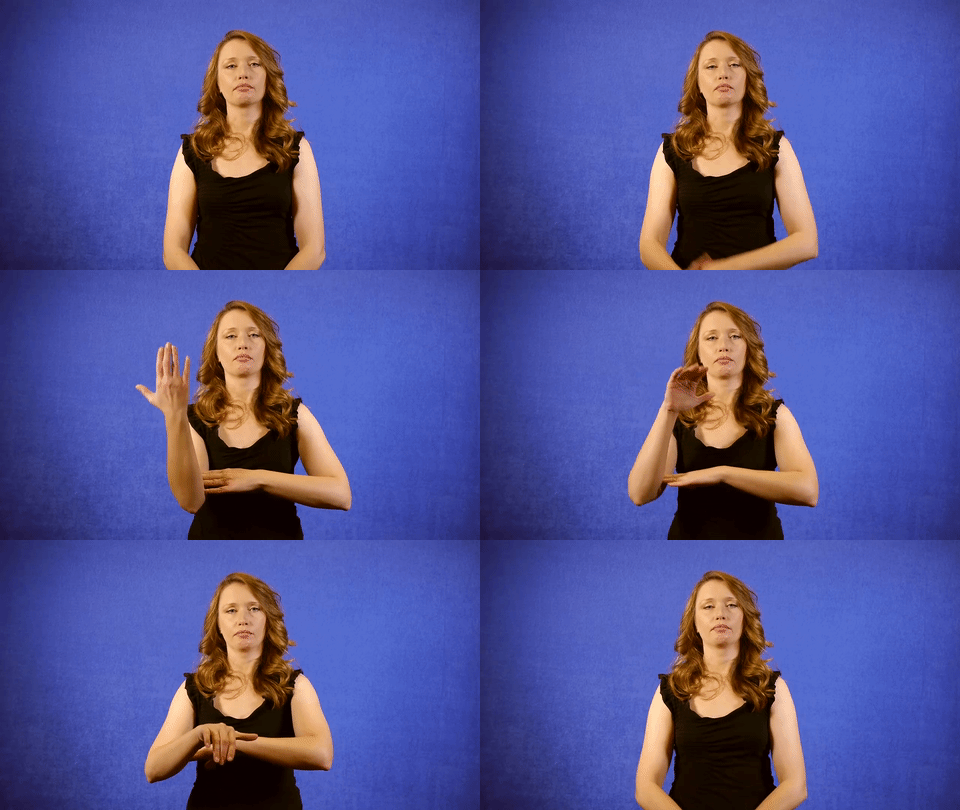
Definition: Throughout the entire day.
Sign for ALL-DAY in ASL

Practice Activities:
Practicing the sign for all-day in ASL can help reinforce fluency and comprehension when discussing time duration. Start by practicing the sign in isolation. Repeatedly sign all-day while focusing on smooth and fluid movement. Use a mirror or a recording device to check for accuracy in handshape and motion.
In a timed activity, sign all-day repeatedly while gradually increasing your signing speed. Ensure fluency but avoid rushing. Try signing all-day with one hand and then with the other to test comfort and flexibility. If practicing with a partner, take turns signing all-day and offering feedback on clarity and form.
Use the sign in real-world context by describing a day-long event. For example, sign all-day when discussing activities such as working, studying, or traveling. Create a sentence like “I worked all-day” or “She studied all-day” to deepen understanding. Signing time-related phrases with all-day, such as “Yesterday, I slept all-day,” boosts comprehension.
For storytelling practice, narrate a day in detail using all-day at least three times. For instance, describe a long road trip or a festival and emphasize how long it lasted. If working with a partner, take turns telling stories that include all-day while the other translates into ASL.
In a group game, one person acts out an event that took all-day while others guess the activity. For example, mimic reading a book all-day without using specific signs for the action. Another option is role-playing conversations that use all-day, such as discussing work or school schedules.
By signing all-day in various contexts and interactive activities, learners can improve retention and signing fluency while building confidence in expressing time duration.
Cultural Context:
In American Sign Language, the sign for ALL-DAY in ASL is commonly used to describe an action or event that lasts the entire day. This phrase is frequently used in casual and formal conversations when discussing work schedules, events, or routines. Understanding the cultural context of this sign is essential for natural communication in ASL.
The sign for ALL-DAY in ASL reflects a broader cultural value in Deaf communities—time is described visually rather than verbally. Deaf culture relies on a spatial and visual representation of time, making this sign an efficient way to convey duration. ASL users often use facial expressions alongside this sign to add emphasis or clarify meaning.
When using the sign for ALL-DAY in ASL, context matters. If someone signs ALL-DAY with a relaxed facial expression, it simply means something lasted all day. If signed with a tired or exaggerated expression, it can suggest that the day felt very long. Subtle visual cues are crucial in ASL communication.
Deaf culture values storytelling, and the sign for ALL-DAY in ASL plays a key role in narratives. When sharing personal experiences, ASL users often describe how an event lasted all day using this sign. This helps create an engaging and immersive visual story.
In conversations about work or school, the sign for ALL-DAY in ASL is essential. People use it to mention how long they were busy with tasks or activities. ASL signers frequently use this phrase when discussing responsibilities and schedules.
Events such as Deaf social gatherings, workshops, and sports tournaments also involve the sign for ALL-DAY in ASL. Participants use this sign to explain that an event or celebration extends throughout the day. It’s a useful phrase when planning and discussing schedules.
Facial expressions play an important role when using the sign for ALL-DAY in ASL. A neutral expression keeps the meaning straightforward, while an exaggerated facial expression can indicate exhaustion or excitement. ASL relies on non-manual markers for clear communication.
New ASL learners benefit from practicing the sign for ALL-DAY in ASL in different contexts. Using it in various scenarios helps improve fluency and understanding. Watching native signers use this phrase in conversations can be especially helpful.
The sign for ALL-DAY in ASL captures the visual nature of ASL and its emphasis on time conceptualization. Deaf individuals rely on this sign to efficiently communicate events and durations. Mastering it helps signers engage in natural conversations.
Extended Definition:
The sign for all-day in ASL is useful when describing an event or activity that lasts the entire day. This sign helps communicate duration clearly, whether discussing a work shift, a road trip, or a full-day event. Using the correct movement and facial expressions enhances the meaning and ensures clarity in conversation.
To sign all-day in ASL, begin with your dominant arm extended outward with the elbow resting near your side. Move your hand in a slow, sweeping arc from one side to the other, indicating the passage of time. The movement should be smooth and continuous to show that something lasts from morning to night.
Context and facial expressions play a significant role when signing all-day in ASL. A neutral expression may indicate a routine or expected situation, while an exaggerated motion and raised eyebrows could imply the event felt particularly long. Adjusting the movement or facial expression helps convey different shades of meaning.
This sign is commonly used in daily conversations related to schedules, work shifts, or travel plans. Someone might sign all-day in ASL when describing a long outing, a school day, or a work schedule. The sign is also useful when sharing personal experiences about lengthy activities.
When signing all-day in ASL, it’s important to maintain fluid movement to differentiate it from similar signs. Pausing or changing the motion could alter the meaning and create confusion. Smooth execution ensures that the sign is recognized easily by others familiar with ASL.
The concept of time in ASL often relies on gestures that mimic the movement of the sun. The sign for all-day in ASL follows this principle by representing the sun’s motion across the sky. Understanding this visual representation helps improve signing accuracy and comprehension.
ASL often condenses information efficiently, making signs like all-day in ASL essential for fluency. Instead of explaining in full sentences, this sign conveys the idea quickly while maintaining natural flow in conversation. Mastering such signs enhances overall communication skills in ASL.
Regional variations of the sign for all-day in ASL may exist, depending on the signing community. While the standard version is widely recognized, some individuals may use minor adaptations. Observing experienced signers can help learners become familiar with potential variations.
Learning to sign all-day in ASL is helpful for both beginners and fluent signers. It’s commonly used in discussions about time management, plans, and experiences. Practicing the sign regularly ensures proper execution and comprehension.
Using all-day in ASL correctly allows
Synonyms: all day long, entire day, whole day, throughout the day, from dawn to dusk
Educational resources: Find related learning materials in our course bank!
Want more? Check out some of our popular learning activities on the homepage!
Need to look up a sign? Use our highly rated dictionary: https://aslinteractive.com/best-asl-dictionary/
Follow us on tiktok: https://www.tiktok.com/@aslinteractive. More social media links at the bottom of this page!
Long-tail Keywords: what is the sign for all-day in ASL, how do you sign all-day in ASL, ASL sign for all-day
Categories:
tags: activities, time, days of the week, everyday activities, time
Parameters
*Handshape*:
The sign for ALL-DAY in ASL uses a dominant hand in the flat handshape (✋). The palm faces outward as the arm moves in a smooth arc from one side to the other, symbolizing the passage of time throughout the day. The non-dominant hand may remain stationary, representing a reference point. This sign for ALL-DAY in ASL visually conveys the idea of an entire day passing by using a continuous, sweeping motion.
*Palm Orientation*:
The palm orientation for the sign for ALL-DAY in ASL starts with the dominant hand open and facing slightly downward or to the side. As the arm moves in an arc from the non-dominant side to the dominant side, the palm remains facing downward. The movement represents the passage of time throughout the day. In some variations, the palm may be angled slightly outward at the end of the motion to emphasize completion.
*Location*:
The sign for ALL-DAY in ASL is produced in the neutral signing space in front of the body. The dominant hand starts near the side of the head with an open palm facing outward. It then arcs downward in a smooth motion, ending near the opposite forearm. This movement represents the passage of time across an entire day. The non-dominant arm stays in place as a reference point, ensuring clarity in the sign.
*Movement*:
The sign for ALL-DAY in ASL uses the dominant hand in a flat “B” shape. The non-dominant arm rests horizontally across the body. The dominant hand starts near the shoulder and moves in a wide arc downward until it rests on the fingertips of the non-dominant hand. This motion represents the passage of time throughout the day. Facial expressions can emphasize the meaning, showing duration or ease of the day.
*Non-Manual Signals*:
When using the sign for ALL-DAY in ASL, the facial expression typically conveys a sense of duration or completeness. Eyebrows remain neutral or slightly raised if emphasizing the length of time. The head may tilt slightly forward or remain steady, reinforcing the extended period. A relaxed or slightly firm mouth posture helps indicate whether the action felt long or routine. If emphasizing frustration or impatience about the duration, the lips may tighten or press together.
*Prosody, Dominant/Non-Dominant Hand*:
The sign for ALL-DAY in ASL uses the dominant hand in an open palm shape, starting near the dominant side of the face. The non-dominant arm is extended in front of the body, palm down. The dominant hand moves in a smooth, arcing motion, lowering until it rests on the non-dominant arm. This motion mimics the path of the sun, indicating the progression of an entire day .
Tips for Beginners:
The sign for ALL-DAY in ASL is a smooth, sweeping motion that requires proper arm positioning and fluidity. Keep your dominant hand in a flat-B shape and start with it near your head, then smoothly arc it down to rest near your non-dominant elbow. Ensure the motion is continuous and relaxed, as choppy or jerky movements can make the sign look unclear.
One common mistake is making the movement too small or too quick. The sign for ALL-DAY in ASL represents an extended period, so the arc should be slow and deliberate. If the motion is rushed, it might be mistaken for a different sign like “morning” or “afternoon.” Additionally, be mindful of where your hand starts and ends, as slight variations could confuse the meaning.
Another tip is to maintain a natural posture while signing. Some beginners hold their dominant arm too stiffly, which can make the movement look unnatural. Keep the motion fluid and ensure your elbow guides the hand in a gentle arc. Practicing in front of a mirror can help you refine the movement and confirm the arc is smooth.
Facial expressions also play a key role in emphasizing the duration implied by the sign for ALL-DAY in ASL. A neutral or slightly relaxed expression works well for a general statement, but if you’re expressing exhaustion or frustration about it taking the whole day, your facial expressions should match that feeling. Expressing emotions enhances clarity in ASL communication.
Practicing this sign with others or in daily conversations reinforces muscle memory. When talking about events or tasks lasting all day, be sure to use the correct speed and movement to convey the right meaning. The sign for ALL-DAY in ASL is simple yet effective, but precise execution ensures your meaning is clear in conversations.
Connections to Other topics:
The sign for ALL-DAY in ASL connects closely with other time-related concepts, such as MORNING, AFTERNOON, and NIGHT. These signs describe periods within a day and are often combined with ALL-DAY to clarify durations, such as ALL-DAY MORNING to emphasize an extended morning event. This sign also pairs naturally with verbs like WORK, WAIT, or STUDY to indicate sustained actions over a full day.
A related concept is the sign for ALL-NIGHT, which follows a similar movement pattern but shifts position to depict the nighttime hours. When discussing multiple consecutive days, the sign for ALL-DAY can be modified or combined with variations like ALL-WEEK to describe an extended timeframe. This demonstrates how ASL incorporates time in a spatial and visual manner, making the representation of durations more intuitive.
The sign for ALL-DAY in ASL is useful in storytelling, where signers often need to establish a timeline. It appears frequently in everyday conversation when explaining schedules, routines, or past events. For example, a signer might describe being ALL-DAY at school or attending an ALL-DAY event, providing important context about time commitment.
This sign connects to broader discussions about ASL grammar, particularly the use of time markers at the beginning of sentences. Since ASL typically follows a time-topic-comment structure, expressions like YESTERDAY ALL-DAY or TOMORROW ALL-DAY set the timeframe before giving details about an event. Understanding how to use ALL-DAY within this framework helps improve fluency and clarity in signing.
The concept of duration in ASL also links to the signs STILL and CONTINUE, which convey ongoing actions. While ALL-DAY emphasizes a single day, these signs can extend an action beyond one day or show an uninterrupted process. Recognizing these connections enhances a signer’s ability to describe events with precision and natural flow.
Summary:
The sign for ALL-DAY in ASL captures the concept of an entire day in a fluid, sweeping motion. It typically involves the dominant hand moving in an arc from one side to the other, resting on the non-dominant hand. This movement visually represents the passage of time from morning to night.
Facial expressions help clarify the intended meaning, emphasizing duration or emotional undertones. A neutral expression conveys a simple passage of time, while raised eyebrows or a slight shake of the head can add emphasis. ASL relies on these non-manual markers to add nuance to temporal expressions.
The sign for ALL-DAY in ASL is often used in casual and formal settings alike. It can describe an ongoing activity, such as working or resting for an entire day. In storytelling, it serves as a crucial tool for conveying extended periods without needing additional words.
Many signs related to time in ASL incorporate sweeping or linear motions. These movements reflect the concept spatially, reinforcing how ASL often integrates meaning directly into the signing space. ALL-DAY follows this linguistic pattern by visually encapsulating the transition of time.
The sign for ALL-DAY in ASL is closely related to signs like ALL-NIGHT or DAY. These variations modify hand movement or placement to indicate different durations. Understanding these relationships helps signers convey more precise temporal meanings.
Context determines whether ALL-DAY refers to a literal 24-hour period or just an extended timeframe within daylight hours. Additional signs or clarifications via lip movements can resolve ambiguity. ASL’s flexibility allows for natural adjustments depending on the communication needs.
In conversations, signers often emphasize ALL-DAY if they want to stress tiredness or effort. This can be done through a slower movement or an exaggerated facial expression. Such modifications align with ASL’s visually expressive nature.
The sign for ALL-DAY in ASL exemplifies how the language conveys abstract time concepts. Instead of relying on auxiliary words to extend meaning, ASL integrates duration through motion. This inherent efficiency makes ASL particularly rich in visual storytelling.
Children learning ASL quickly grasp time-related signs because of their intuitive movements. Concepts like ALL-DAY become easy to remember due to their visual representation of the progression of time. This reinforces how ASL’s spatial nature enhances memory and comprehension.
The sign for ALL-DAY in ASL can also be seen in poetic and performance contexts. It is often extended or stylized to match the rhythm of signed poetry or storytelling. These artistic uses highlight ASL’s depth beyond basic conversation.
Culturally, ALL-DAY is frequently used when discussing work, school, or social engagements. In Deaf communities, it is common to use this sign while recounting long or tiring days. This shared use fosters community identity and mutual understanding.
Signers adjust the movement of ALL-DAY to fit different signing speeds and styles. Faster motion can indicate impatience, while a sustained movement suggests a prolonged experience. Such subtle variations enrich communication and help express emotions effectively.
ASL syntax allows the sign for ALL-DAY to be placed flexibly in a sentence. It can occur at the beginning to set a time frame or at the end for emphasis. This adaptability showcases ASL’s non-linear grammatical structure.
The sign for ALL-DAY in ASL aligns with the language’s broader treatment of time concepts. Rather than relying on verb tense markers, ASL uses temporal framework signs. This results in a dynamic, visually expressive way to illustrate time durations.
ALL-DAY connects to broader linguistic discussions on signed languages and time representation. Researchers study how sign languages worldwide encode temporal concepts without relying on verbs changing form. Signs like ALL-DAY illustrate these fascinating patterns.
In signed conversations, ALL-DAY often appears alongside signs like WORK or SIT to indicate prolonged activities. The combination of these elements builds rich, meaningful sentences efficiently. ASL’s ability to combine movement and space makes such descriptions seamless.
ALL-DAY in ASL also parallels natural gestures people use when describing time spans in nonverbal communication. Many hearing individuals instinctively gesture in sweeping motions when discussing long durations. This underscores the universal nature of visual language.
The sign for ALL-DAY in ASL can be used figuratively in storytelling settings. It might be exaggerated for comedic effect or altered slightly to show exasperation. Such modifications support ASL’s expressive storytelling tradition.
ASL learners often find time-related signs complex due to their movement-based nature. However, once they understand the logic behind spatial representation, these signs become intuitive. ALL-DAY serves as an excellent gateway into learning ASL’s approach to time.
In group conversations, the sign for ALL-DAY helps provide shared context before introducing specific events. This prevents misunderstandings about when an action took place. Deaf culture values clear and structured communication, making such markers highly useful.
The structure of ALL-DAY reflects ASL’s efficiency in communicating duration.
Want more? Check out some of our popular learning activities!
ASL Interactive Resources
ASLInteractive YouTube Channel
Follow us on tiktok: @aslinteractive.com
Follow us on Instagram: aslinteractive
Facebook page: aslinteractive
Facebook group: aslinteractive
LInkedIn: ASL Interactive LLC
Twitter: @ASL_interactive
*Some information on this page is AI-generated. AI can make mistakes. Please check the information.


Responses