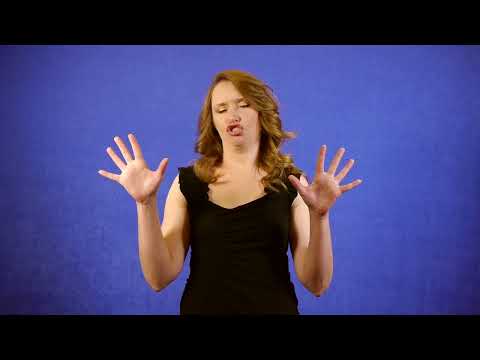
Definition: An expression indicating the completion of an action.
Sign for ALL DONE_FINISHED in ASL

Practice Activities:
Practicing the sign for all done_finished in ASL can be fun and effective through a mix of repetition and real-world application. Start by signing it repeatedly in front of a mirror to ensure proper hand movement. Transition between signing all done_finished slowly and then at a natural conversational speed.
Use the sign for all done_finished in ASL while completing everyday tasks. For example, after finishing a meal, brushing your teeth, or putting away laundry, sign all done_finished to reinforce its meaning. Watching videos of fluent ASL users can also help you see how the sign fits naturally in conversation.
Practice using this sign in sentences such as “I am all done_finished eating” or “The meeting is all done_finished.” Try creating your own sentences incorporating the sign to help solidify its use. Writing sentences down and then signing them can improve recall and fluency.
Engage in role-play scenarios with a partner. One person can act as a parent asking a child if they are finished with their food, while the other responds by signing all done_finished. This activity is helpful for those learning ASL for parenting or caregiving situations.
Storytelling is another useful exercise. Create a short story about completing different activities in a day and use the sign for all done_finished in ASL at appropriate moments. You can also watch ASL storytellers and try to notice when they use this sign naturally.
Lastly, play a timed game where one person completes a task or activity and then immediately signs all done_finished. The other person must quickly respond with an appropriate follow-up sign or sentence. This helps reinforce quick recognition and response in ASL conversations.
Cultural Context:
The sign for all done_finished in ASL is commonly used in everyday conversations and interactions, especially with young children. It conveys the idea of completion, signaling that an activity, task, or meal has ended. Parents and caregivers use the sign for all done_finished in ASL to help toddlers communicate their needs before they can speak.
In Deaf culture, using clear visual cues like the sign for all done_finished in ASL is an important part of effective communication. ASL relies on facial expressions, body language, and movement to convey meaning. This sign is a natural and intuitive way to show completion without needing spoken words.
Many teachers and educators incorporate the sign for all done_finished in ASL into classroom settings. It helps students with hearing loss, nonverbal learners, and young children understand transitions between activities. This makes daily routines smoother and encourages inclusivity in both Deaf and hearing environments.
The sign for all done_finished in ASL is particularly popular in baby sign language. Parents use it to help infants express themselves before they can talk, reducing frustration. Babies often learn this sign early, making communication more seamless and enjoyable.
In restaurants and social settings, the sign for all done_finished in ASL helps clarify when someone has finished eating. Servers, caregivers, and family members can quickly understand when a person is done with their meal. This visual cue eliminates confusion and enhances accessibility for Deaf signers.
The sign for all done_finished in ASL plays a key role in healthcare and therapy settings. Speech therapists and occupational therapists use ASL signs to assist children with developmental delays or communication challenges. Signing all done_finished provides a simple and effective way to express completion.
Within ASL storytelling and conversations, the sign for all done_finished in ASL helps transition between topics. It signals a shift in focus, allowing for smoother communication. Fluent signers use this sign naturally to keep conversations flowing without interruption.
The versatility of the sign for all done_finished in ASL makes it useful in workplaces, households, and public spaces. It is a practical tool for Deaf and hearing individuals to communicate efficiently. Learning and using this sign enhances understanding and fosters inclusive interactions.
By incorporating the sign for all done_finished in ASL into daily life, both Deaf and hearing individuals can communicate more effectively. Using ASL signs enriches language development and strengthens social connections. This simple yet powerful gesture promotes greater accessibility and understanding in diverse communities.
Extended Definition:
The sign for all done_finished in ASL is commonly used to indicate completion or that something has ended. This phrase is especially useful in everyday conversations, particularly with young children to signal that an activity, meal, or task is finished. Both variants, all done and finished, are widely accepted and often used interchangeably.
To sign all done_finished in ASL, you can use an open-hand motion that moves outward from the body, or you can use the sign for finished by flicking both open hands from the chest forward. The motion and facial expression help clarify the intention behind the sign, whether it signifies an activity has ended or someone is no longer interested in continuing. Context will determine the preferred version of the sign.
Parents and caregivers frequently use the sign for all done_finished in ASL with young children, especially during meals and playtime. Teaching this sign to toddlers allows them to communicate their needs effectively before they develop spoken language. It helps reduce frustration and encourages early communication skills in a natural and engaging way.
Outside of parenting, the sign for all done_finished in ASL is useful in various situations, such as classrooms, workplaces, and social settings. It can indicate that a task is complete, that someone is ready to move on, or that a conversation topic has ended. Because ASL is a visual language, the clarity of movement ensures that the meaning is easily understood without the need for spoken words.
The phrase all done_finished in ASL also plays a role in interactions involving Deaf and hard-of-hearing individuals. By using this sign, hearing individuals can enhance their communication skills and foster inclusivity in diverse environments. Whether in casual or professional settings, this sign provides a simple yet effective way to express completion.
When signing all done_finished in ASL, non-manual markers such as facial expressions can enhance the meaning. A neutral or slightly raised eyebrow expression can indicate a general statement, while an exaggerated facial expression might emphasize finality. Understanding these subtle differences can help convey the message more accurately.
Learning how to sign all done_finished in ASL is beneficial for both ASL learners and native signers. Whether used with children, colleagues, or friends, this sign is a valuable addition to everyday communication. By incorporating it into regular interactions, individuals can improve their ability to express when something has ended.
Practicing the sign for all done_finished in ASL consistently can help build fluency and confidence in using American Sign Language. Watching video demonstrations,
Synonyms: completed, finished, wrapped up, over, done
Educational resources: Find related learning materials in our course bank!
Want more? Check out some of our popular learning activities on the homepage!
Need to look up a sign? Use our highly rated dictionary: https://aslinteractive.com/best-asl-dictionary/
Follow us on tiktok: https://www.tiktok.com/@aslinteractive. More social media links at the bottom of this page!
Long-tail Keywords: what is the sign for all done finished in ASL, how do you sign all done finished in ASL, ASL sign for all done finished
Categories:
tags: commands, language learning, everyday activities, verbs, responses
Parameters
*Handshape*:
The sign for ALL DONE_FINISHED in ASL uses open “5” handshapes with palms facing inward. The hands start close to the body, then swiftly rotate outward as the palms face forward. This motion conveys the action of completion or being finished. The fingers remain extended throughout the movement, ensuring clarity. When signing the sign for ALL DONE_FINISHED in ASL, maintain a confident and fluid motion to emphasize the meaning.
*Palm Orientation*:
The palm orientation for the sign for ALL DONE_FINISHED in ASL starts with both hands open, fingers spread, and palms facing inward toward the body. Then, the hands rotate outward so that the palms face forward. This movement visually represents completion or that something is finished. The palm shift conveys the transition from an ongoing state to one of finality, reinforcing the meaning behind the sign for ALL DONE_FINISHED in ASL.
*Location*:
The sign for all done_finished in ASL is produced in front of the torso, slightly above the waist. The hands, positioned with palms facing inward, start near the body and then move outward while flipping to face forward. This sign is commonly made within the neutral signing space in front of the chest, ensuring clear visibility. The motion conveys completion, making it ideal for indicating that something is finished or no longer needed.
*Movement*:
Hold both open hands (palms facing in) near your chest. Quickly flip them outward so the palms face away from you. This movement should be fluid and slightly emphasized for clear expression.
The sign for all done_finished in ASL is often used with babies and young children to indicate completion. Some variations include a repeated flipping motion or a single movement depending on context. Ensure a smooth, quick rotation to convey the meaning effectively.
*Non-Manual Signals*:
When using the sign for all done_finished in ASL, the facial expression should match the context. If emphasizing completion, raise the eyebrows slightly and widen the eyes to show certainty. If expressing relief or finality, a subtle head nod and a gentle exhale can strengthen the meaning. In casual situations, a slight smile may accompany the sign to indicate a positive outcome. Adjust facial expressions based on whether the phrase conveys satisfaction, urgency, or neutrality.
*Prosody, Dominant/Non-Dominant Hand*:
The sign for ALL DONE_FINISHED in ASL uses both hands. The dominant and non-dominant hands start with open palms facing inward, near the chest. They then pivot outward so that the palms face forward. This motion is fluid and slightly sudden, emphasizing completion. Facial expressions can enhance the meaning by showing satisfaction or finality. This sign is commonly used to indicate something is finished, especially when talking to children or in casual conversation.
Tips for Beginners:
When learning the sign for ALL DONE_FINISHED in ASL, focus on proper hand positioning and movement. Begin with open hands facing inward toward yourself, then rotate them outward in a quick yet controlled motion. Keep your fingers spread apart slightly to ensure clarity, as this helps distinguish the sign from similar gestures.
One common mistake is making the motion too fast or too small, making it difficult for others to recognize. Smooth, deliberate movement is key to making the sign for ALL DONE_FINISHED in ASL clear and natural. Avoid stiff hand shapes—your fingers should be relaxed but not floppy.
Another beginner challenge is forgetting to use facial expressions. Facial expressions support meaning in ASL, and in this case, a neutral or slightly finalizing expression works best. Over-exaggerated emotions aren’t necessary, but a blank expression may make the sign feel less communicative.
This sign is often used in everyday conversations, especially with children and in mealtime or task-related settings. When signing in a conversation, ensure that your hands are positioned where they can be easily seen by the viewer. Signing too low or too close to your body can make the movement unclear.
Practice with a mirror or record yourself to check for accuracy. Watching fluent signers or instructional videos can also improve your ability to refine the sign for ALL DONE_FINISHED in ASL. If you’re signing for infants or toddlers, make sure to use clear repetition, as exposure over time helps reinforce meaning.
Consistency is key to mastering this sign. Regardless of whether you are using it with adults or children, remain mindful of speed, clarity, and expression. With regular practice, this sign will become second nature in your ASL vocabulary.
Connections to Other topics:
The sign for ALL DONE_FINISHED in ASL is closely connected to the concept of completion and transition in conversations. It is often used in everyday communication to indicate that a task, activity, or event has come to an end. This makes it highly useful in discussions about finishing meals, completing assignments, or signaling the end of a particular action, especially when interacting with children or in educational settings.
This sign also relates to concepts of time and finality such as DONE, OVER, and COMPLETE. In ASL, context helps determine if the meaning is about finishing an action or simply signaling that something is no longer occurring. For example, the sign for ALL DONE_FINISHED in ASL is commonly used when wrapping up a conversation or moving on to another topic, making it function similarly to transition phrases in English.
There is a strong connection between this sign and negation or rejection, depending on facial expressions and motion. If the sign is paired with a negative head shake, it can indicate rejection, similar to how someone might say “No more” or “I’m done with that.” This is particularly useful when signing with toddlers or individuals who may use ASL for basic needs and preferences.
This sign also plays a role in compound phrases and derived signs such as ALL DONE and FINISH+TIME, which can indicate more specific meanings. For instance, FINISH+TIME expresses an event being completely over in a broader sense, such as a class session or job shift ending. Signers can modify movement and intensity to emphasize urgency, adding to the versatility of the sign for ALL DONE_FINISHED in ASL within daily interactions.
Summary:
The sign for all done_finished in ASL is commonly used in both everyday conversation and structured environments like classrooms and homes. It indicates the completion of an action, a task, or a process. This makes it especially useful in interactions with children or individuals who may have limited verbal communication.
To produce the sign for all done_finished in ASL, begin with both hands open, palms facing inward toward the body. Then, swiftly twist your hands outward, flipping the palms to face forward. The movement should be smooth yet distinct, signaling a clear transition from one state to another.
This sign emphasizes completion or finality, making it an effective way to indicate the end of a meal, an activity, or a discussion. It is frequently used by parents and caregivers to communicate with young children, reinforcing the idea of an activity being over. The sign also appears in structured settings such as classrooms to indicate the end of a lesson or assignment.
Grammatically, the sign for all done_finished in ASL functions similarly to past-tense verbs in English, but ASL does not strictly rely on tense markers. Instead, context and timing establish meaning. By switching the palm orientation in one fluid motion, the sign visually represents a change from an ongoing action to completion.
This sign has several synonyms in ASL, including signs for “finished” and “done.” While some signers use slight variations in handshape or movement, the core concept remains consistent across dialects and regions. In natural conversation, the sign may be accompanied by facial expressions that reinforce whether the task was completed successfully or with difficulty.
Non-manual markers, such as eyebrow movement or a head nod, modify the nuance of the sign. A neutral facial expression simply conveys the idea of something being finished. A raised eyebrow or sudden motion might indicate surprise at an unexpectedly swift completion.
Because ASL is a visual language, the sign for all done_finished in ASL uses movement to capture the transition between states. Rather than using spoken words to express completion, this sign physically demonstrates how something changes from action to conclusion. This makes it a prime example of ASL’s inherent efficiency in conveying concepts.
This sign plays a crucial role in early childhood learning, as it helps babies and toddlers develop communication skills before they can speak. Many parents introduce this sign alongside mealtime, diaper changes, and play sessions. By teaching young children a way to indicate completion, caregivers reduce frustration and make daily routines smoother.
The sign for all done_finished in ASL is also useful in settings for individuals with communication challenges, such as autism or speech impairments. Because it is intuitive and visually clear, it bridges gaps in understanding. Speech-language pathologists often incorporate this sign when working with nonverbal children or adults.
While this sign is widely recognized in ASL, some minor variations exist. In certain signing communities, the motion may be faster or slightly exaggerated for emphasis. In casual conversation, some signers reduce the movement slightly while still maintaining clarity.
Socially, this sign is significant because it facilitates smooth interactions. In group conversations, it helps indicate when someone has finished speaking, allowing for turn-taking. This prevents misunderstandings and ensures an orderly exchange in discussions.
Culturally, the sign for all done_finished in ASL aligns with ASL’s emphasis on conciseness and clarity. Rather than relying on multiple words to convey completion, this one sign efficiently communicates the message. This efficiency is a key characteristic of ASL and highlights the language’s reliance on movement dynamics.
As a linguistic concept, this sign showcases ASL’s verb structure, which often differs from English. In spoken language, past tense is typically indicated through verb conjugation, whereas ASL conveys time and completion through movement, context, and non-manual markers. This highlights ASL’s spatial and visual nature.
Related signs include those for “stop,” “over,” and “nothing,” all of which convey ideas of completion or cessation. Understanding these related signs provides greater fluency in ASL, as signers can modify their communication depending on specific contexts. Using facial expressions alongside these signs enhances their clarity and intent.
In fluent ASL conversations, signers often use the sign for all done_finished in ASL in combination with other signs to create complex meaning. For instance, pairing it with the sign for “work” indicates that work has been completed, while using it in the context of food signals the end of a meal. Such combinations demonstrate ASL’s grammatical flexibility.
The sign’s effectiveness stems from its simple visual representation of “completion.” By physically turning the palms outward, the signer shows a tangible shift in status. This aligns with ASL’s broader principles of motion-based syntactic structure, where direction and hand orientation contribute to meaning.
In many cases, the sign for all done_finished in ASL replaces the need for spoken explanations. This makes it valuable in noisy environments where verbal communication is difficult. It also serves as a helpful reinforcement in classrooms where visual cues assist in conveying
Want more? Check out some of our popular learning activities!
ASL Interactive Resources
ASLInteractive YouTube Channel
Follow us on tiktok: @aslinteractive.com
Follow us on Instagram: aslinteractive
Facebook page: aslinteractive
Facebook group: aslinteractive
LInkedIn: ASL Interactive LLC
Twitter: @ASL_interactive
*Some information on this page is AI-generated. AI can make mistakes. Please check the information.


Responses