Sign for ANXIETY in ASL | 😰 ASL Dictionary

Definition: A feeling of worry, nervousness, or unease.

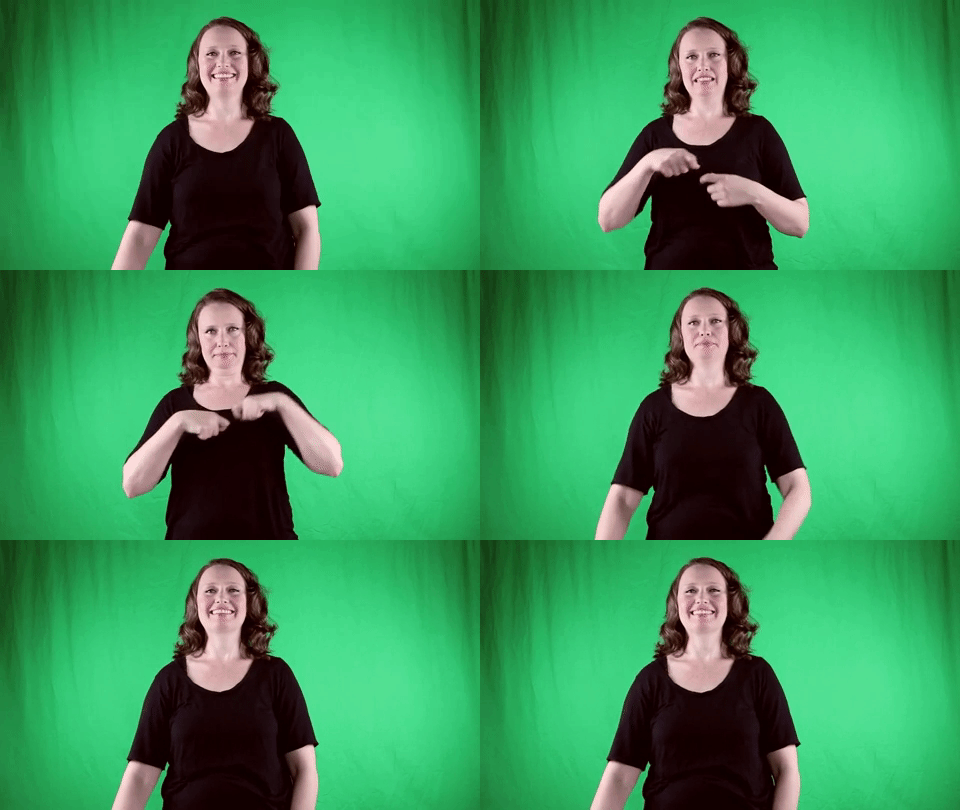
Sign for ANXIETY in ASL 

YouTube player

Practice Activities:

To practice the sign for anxiety in ASL, start by signing it repeatedly in front of a mirror. Focus on handshape, movement, and facial expression. Since this sign conveys an emotional state, use appropriate facial expressions to enhance the meaning. Try signing it with different levels of intensity to show varying degrees of anxiety.

Use the sign for anxiety in ASL in short phrases. Sign “I feel anxiety before a test” or “My friend has anxiety about public speaking.” Practice transitioning between this sign and others related to emotions, such as nervous, scared, or excited. This will improve fluency and help convey different emotional states clearly.

Create a short story about a situation where anxiety arises. For example, describe being late for an appointment, preparing for a speech, or waiting for important news. Incorporate supporting signs like stress, worry, and relief. This activity helps develop expressive skills while reinforcing the sign in context.

Partner up for a role-play conversation. One person describes a stressful situation while the other reacts supportively. Use phrases like “I understand your anxiety” or “Try to relax.” Emphasize facial expressions and body language to make the conversation feel natural. This practice builds confidence in real-life signing interactions.

Play a guessing game where one person signs different emotions, and the other person identifies them. When the sign for anxiety in ASL appears, discuss what situations might cause anxiety. This encourages deeper thinking about emotions while ensuring correct sign production.

Record yourself signing sentences using the sign for anxiety in ASL. Watch the video to analyze accuracy and fluency. Look for clear hand movements and natural facial expressions. This self-assessment technique helps identify areas for improvement.

Cultural Context:

The sign for anxiety in ASL reflects the emotions of worry and unease. In ASL, facial expressions and body language are just as important as hand movements. When signing anxiety in ASL, a stressed or nervous expression enhances the meaning.

Deaf culture values direct and honest communication. Expressing emotions like anxiety in ASL allows for clear understanding without relying on spoken words. The use of space, movement, and expression helps convey the depth of the feeling.

Many people experience worry or stress, and the sign for anxiety in ASL captures that feeling visually. Whether discussing personal struggles or offering support, using this sign fosters connection. In Deaf culture, acknowledging emotions through sign language strengthens relationships.

Mental health awareness is important in the Deaf community. Signing anxiety in ASL can help break down barriers and encourage discussions about emotional well-being. Access to signs for different emotions helps deepen conversations in ASL.

ASL provides a way to communicate anxiety naturally within conversations. Whether in casual or professional settings, the sign for anxiety in ASL is useful for self-expression. Learning this sign promotes understanding and inclusivity.

Families and educators teaching ASL should incorporate emotional vocabulary. Teaching the sign for anxiety in ASL helps children and adults express themselves clearly. It also encourages empathy and awareness of emotions within the Deaf and signing communities.

Using ASL for mental health discussions ensures accessibility for the Deaf community. The ability to sign anxiety in ASL creates a space for open conversation. It allows for support within Deaf spaces without requiring spoken language.

Non-signers learning ASL can benefit from understanding emotional signs. The ability to recognize the sign for anxiety in ASL enhances communication with Deaf individuals. It helps build stronger connections and encourages a more inclusive society.

Extended Definition:

The sign for anxiety in ASL conveys feelings of worry, nervousness, or unease. It is commonly used to express emotional distress, apprehension, or general anxiety about a situation. This sign is an important part of communication for those who experience anxiety and want to express their emotions clearly in ASL.

To sign anxiety in ASL, both hands move in a circular, alternating motion near the upper chest. Facial expressions play a crucial role in conveying the intensity of the feeling. A furrowed brow or tense expression can emphasize higher levels of anxiety.

Anxiety is a common emotion that affects people in different ways, from mild nervousness to severe distress. The sign for anxiety in ASL can be used in everyday conversations to describe emotions, reactions, and mental health concerns. It allows Deaf and hard-of-hearing individuals to communicate their feelings effectively.

Many people experience anxiety in various situations, such as before a big test, during social interactions, or when facing uncertainty. The ability to use the sign for anxiety in ASL helps create awareness and understanding of emotions within the signing community. It fosters better communication about mental health and emotional well-being.

Using proper facial expressions along with the sign for anxiety in ASL enhances its meaning. Non-manual markers, such as eye widening or shaking the head, can indicate different levels of distress. Expressing emotions accurately through sign language helps build deeper connections and understanding among Deaf and hearing individuals.

In ASL, conveying emotions is a combination of hand movements and body language. The sign for anxiety in ASL demonstrates how signers use visual and spatial elements to describe inner emotions. This makes ASL a powerful language for expressing personal experiences and feelings.

Learning the sign for anxiety in ASL is helpful for anyone who wants to communicate with Deaf individuals about emotions and mental health. It can be useful for friends, family members, therapists, and educators working with the Deaf community. Understanding and using this sign promotes inclusivity and support.

ASL provides a rich way to express emotions beyond spoken words. The sign for anxiety in ASL is just one example of how sign language captures personal and emotional experiences. By learning this sign, individuals can foster empathy and connection with those who use ASL daily.

Synonyms: worry, nervousness, unease, apprehension, angst

Educational resources: Find related learning materials in our course bank!

Want more? Check out some of our popular learning activities on the homepage!

Need to look up a sign? Use our highly rated dictionary: https://aslinteractive.com/best-asl-dictionary/

Follow us on tiktok: https://www.tiktok.com/@aslinteractive. More social media links at the bottom of this page!

Long-tail Keywords: what is the sign for Anxiety in ASL, how do you sign Anxiety in ASL, ASL sign for Anxiety

Categories:

tags: Emotions, Telling how one is, Mental health, Stress, Feelings

Parameters

*Handshape*:

The sign for anxiety in ASL uses both hands in an open-5 handshape . The fingers are slightly spread apart, with the palms facing inward toward the body. The hands alternate moving in a small shaking or trembling motion near the forehead, reflecting the nervous or uneasy feeling associated with anxiety. The movement adds an expressive quality, emphasizing the emotional state. This sign visually captures the inner restlessness that defines anxiety.

*Palm Orientation*:

The palm orientation for the sign for anxiety in ASL involves both hands being open with fingers slightly spread. The palms face inward toward the body and alternate moving slightly up and down, creating a trembling motion near the chest. This movement symbolizes internal unease, effectively conveying the concept of anxiety. The sign for anxiety in ASL visually represents emotional distress by mimicking a shaky or fluttering feeling, reinforcing the meaning through motion.

*Location*:

The sign for anxiety in ASL is located in front of the upper chest or face area. Both hands are positioned with open palms facing inward, typically near the forehead or upper chest, depending on the variation. Movement involves alternating, rapid motions to convey a sense of nervousness or distress. The expressive use of facial emotions enhances the meaning, emphasizing feelings of unease or uncertainty.

*Movement*:

To produce the sign for anxiety in ASL, both hands are held open with fingers spread apart and palms facing downward. The hands move in alternating circular motions near the upper chest, mimicking a restless or uneasy movement. This motion represents a sense of nervousness or distress. Facial expression adds crucial context—widened eyes or a tense expression enhances the meaning of the sign for anxiety in ASL.

*Non-Manual Signals*:

When using the sign for anxiety in ASL, your facial expression should convey worry or nervousness. Raise your eyebrows slightly as if anticipating something uneasy, and widen your eyes to indicate heightened alertness. Your mouth may be slightly open or tense, with lips pressed together subtly. Exaggerating a quickened breath through the nose can reinforce the anxious feeling. Shifting your shoulders slightly or displaying restless body movements adds to the urgency of the sign for anxiety in ASL.

*Prosody, Dominant/Non-Dominant Hand*:

The sign for ANXIETY in ASL uses both hands, with the dominant and non-dominant hands open and slightly curved. Place them near the forehead with palms facing outward, then make small, alternating circular movements as if expressing inner turmoil or restlessness. The motion should be quick and slightly tense, reflecting the emotional state of anxiety. Facial expressions play a crucial role in reinforcing the meaning, often involving raised eyebrows or a worried look.

Tips for Beginners:

When learning the sign for anxiety in ASL, start with relaxed hands and focus on fluid movement. This sign involves both hands, typically in an open position, moving alternately in front of the forehead to convey the feeling of inner turmoil. Keep your hands steady and consistent in movement to ensure clarity.

A common mistake beginners make is moving too quickly or erratically, which can make the sign look unclear. It’s important to keep a steady rhythm with your hands while maintaining a neutral facial expression or one that conveys worry. Exaggerating the movement too much can distort the sign, making it harder for others to understand.

Facial expressions play a key role in conveying the meaning behind the sign for anxiety in ASL. Try practicing in front of a mirror to ensure your expression matches the emotion of anxiety. A furrowed brow or a slightly nervous facial expression enhances the meaning of the sign and makes communication more effective.

Consistent practice will help muscle memory develop, making the motion feel natural over time. If you’re struggling with hand coordination, slow down and break the movement into smaller steps before increasing speed. Watching native signers or video demonstrations can help reinforce the natural rhythm and intensity of the sign.

Context is important when using the sign for anxiety in ASL. Pairing it with other related signs, such as “worry” or “fear,” can add more depth to your message. Signing in appropriate settings will also help solidify understanding, so try using it in conversations about emotions or mental health topics.

Finally, always remember that fluency takes time, and small adjustments will improve clarity. Regularly practicing with a fluent ASL user or instructor will help refine your technique. Stay patient, and soon the sign for anxiety in ASL will become second nature.

Connections to Other topics:

The sign for anxiety in ASL is closely related to other signs that represent emotions, stress, and mental states. It shares similarities with the signs for nervous, worry, and fear, as all these concepts involve hand movements that depict internal turmoil. Many emotion-related signs in ASL incorporate shaking or circular hand movements near the chest or head, reinforcing the physical expression of feelings.

This sign connects to other mental health-related vocabulary, such as depression, stress, and overwhelmed. These signs often involve facial expressions that enhance meaning, like raised eyebrows for worry or a distressed expression for anxiety. Because ASL is a visual language, emotional context plays a huge role in distinguishing between similar signs, such as nervous and the sign for anxiety in ASL, which may have overlapping characteristics.

In conversation, this sign can be combined with other signs to create more nuanced meanings. For example, pairing it with the sign for feel can emphasize emotional unease, while combining it with work can indicate job-related stress or work anxiety. Similarly, the sign for anxiety in ASL can be modified with intensity by adjusting movement speed or facial expressions, allowing signers to express varying degrees of anxiousness.

This sign is also commonly used in discussions related to mental health awareness, self-care, and therapy. It can appear in dialogues about coping strategies, such as deep breathing or relaxation, where additional signs like calm or relax can contrast with anxiety. Understanding these connections helps ASL learners grasp how different signs interrelate and provides insight into the expressive nature of the language.

Summary:

The sign for anxiety in ASL captures the emotional tension associated with the feeling. It typically involves both hands, open with fingers spread, moving in an alternating circular motion near the chest. This movement symbolizes the internal turbulence that often comes with anxiety.

Facial expression is crucial when signing anxiety in ASL. A tense or worried facial expression enhances the meaning, making the sign more accurate. ASL heavily relies on non-manual markers to convey the intensity of emotions.

The positioning of the hands can vary slightly depending on regional or individual signing styles. Some signers may position their hands closer to the face or the upper chest. The movement remains consistent, reflecting an unsettled or nervous energy.

This sign for anxiety in ASL is often modified depending on context. Faster movements can indicate heightened anxiety or panic. Slower movements may reflect mild nervousness or unease.

ASL is a visual language, and the representation of emotions is often more direct than in spoken languages. The sign for anxiety in ASL provides a clear visual metaphor for the experience of anxious feelings. A person unfamiliar with ASL may still infer the meaning just from watching the movement and expression.

Different ASL users may accompany this sign with various facial expressions to refine its meaning. A worried frown signals a moderate level of concern, while raised eyebrows with an open mouth might indicate sudden stress. Each variation fine-tunes the emotion being communicated.

The sign for anxiety in ASL shares similarities with other emotionally charged signs. Fear, worry, and nervousness have movement patterns that can sometimes overlap. Context and facial expressions distinguish each sign.

Native ASL signers use spatial movement to express degrees of anxiety. The size and speed of the circular motion can indicate whether the feeling is overwhelming or just a minor concern. This flexibility allows signers to personalize their message.

Grammar in ASL follows a topic-comment structure rather than standard English syntax. A sentence including the sign for anxiety in ASL might place the feeling first, followed by a reaction or resolution. This structure emphasizes emotions more naturally in ASL.

No spoken words accompany the sign for anxiety in ASL, but it can be part of a broader expressive conversation. Signers often pair it with signs for stress, frustration, or fear to provide more context. The combination can create a layered message.

This sign is useful in both casual conversations and serious discussions. It allows Deaf individuals to discuss mental health concerns in a direct and nuanced manner. The visibility of the sign makes it an accessible representation of emotional states.

Mental health awareness is essential in deaf communities, just as it is in hearing communities. The sign for anxiety in ASL fosters conversations about stress, worry, and emotional well-being. It serves as an important tool in therapy and mental health advocacy.

ASL linguistics recognizes the importance of classifier handshapes and movement. The alternating hand motion in the sign for anxiety in ASL exemplifies how physical movement conveys intensity. This showcases the dynamic nature of ASL as a nonverbal language.

Applied linguistics highlights how signed languages encode emotions differently from spoken languages. Anxiety in spoken English is expressed through vocal stress or pitch changes. In ASL, the meaning is captured visually with movement and facial expression.

Studies in cognitive linguistics suggest that visual-spatial languages like ASL activate different neural pathways than spoken languages. Signs like the one for anxiety in ASL involve full-body movement. This engagement of both hands and facial muscles strengthens retention and emotional expression.

Deaf culture values direct communication about emotions. The sign for anxiety in ASL allows users to express their concerns without ambiguity. This ensures clarity and prevents miscommunication in emotionally charged discussions.

Minor dialectical variations exist in ASL across regions. Some signers may introduce slight differences in movement when signing anxiety. However, the fundamental meaning remains consistent across the Deaf community.

The sign for anxiety in ASL emphasizes the feeling of unease in a way that words alone may not fully capture. This is one reason why visual languages remain so effective in conveying emotions. Visual representation often surpasses spoken descriptions.

Some people pair this sign with the sign for overwhelmed or nervousness when reinforcing emotional intensity. Combining multiple emotional signs can deepen the meaning. ASL naturally allows expressive layering of emotions.

ASL storytelling incorporates emotional signs to enhance narratives. The sign for anxiety in ASL plays a key role in stories about stress, danger, or anticipation. Skilled storytellers use exaggerated movement to maximize expressive depth.

The cultural significance of non-manual markers in ASL cannot be overstated. Many emotions, including anxiety, are fine-tuned by facial expressions and body posture. Even without hand motion, a person’s body language can suggest anxious feelings.

Children learning ASL are taught to pair signs like anxiety with expressive facial features. This helps them develop nuanced communication skills early on. Deaf children are naturally exposed to the visual element of emotions in

Want more? Check out some of our popular learning activities!

ASL Interactive Resources

ASLInteractive YouTube Channel

Follow us on tiktok: @aslinteractive.com

Follow us on Instagram: aslinteractive

Facebook page: aslinteractive

Facebook group: aslinteractive

LInkedIn: ASL Interactive LLC

Twitter: @ASL_interactive

*Some information on this page is AI-generated. AI can make mistakes. Please check the information.

Sign for ANXIETY in ASL 

Responses