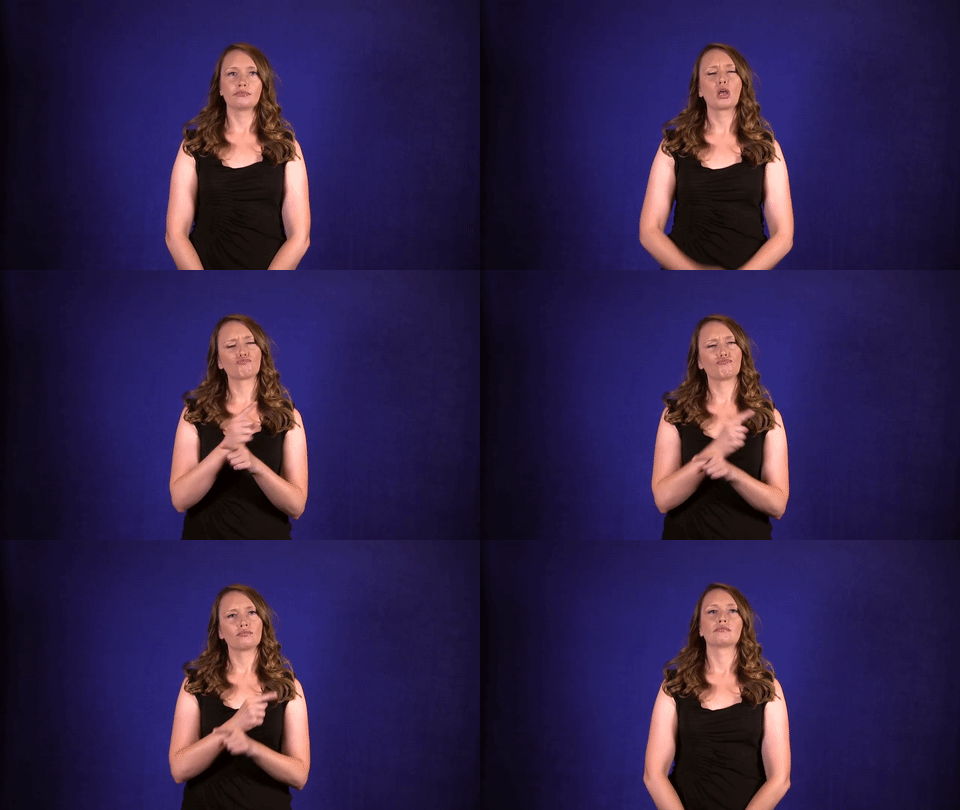
Definition: Suitable or proper in the circumstances.
Sign for APPROPRIATE in ASL

Practice Activities:
To practice the sign for appropriate in ASL, start by signing it in isolation. Stand in front of a mirror and repeat it multiple times while focusing on handshape and movement. Record yourself signing and compare your accuracy to an ASL dictionary or video source.
Use the sign for appropriate in ASL with different facial expressions to show varying intensities. Try using a neutral face, an approving nod, or a disapproving look to see how it changes the meaning. Practicing with facial expressions will help make your signing more natural and expressive.
Create simple sentences incorporating the sign for appropriate in ASL. Examples include “That outfit is appropriate for school” and “It’s not appropriate to yell in a library.” Sign and repeat these sentences to build fluency. You can also come up with your own sentences based on real-life situations.
For a storytelling exercise, think of a time when you had to decide whether something was appropriate. Describe the situation in ASL, using the sign for appropriate in ASL whenever it applies. Focus on using full facial expressions and body language while maintaining smooth signing.
Pair up with a practice partner and play a scenario game. One person describes a situation, such as wearing pajamas to work, and the other responds by signing whether it is appropriate or not and explaining why. This will improve expressive and receptive skills.
Lastly, watch ASL videos or conversations and look for instances of the sign for appropriate in ASL. Notice how native signers use it in context. Try to mimic their signing, focusing on fluency and natural flow.
Cultural Context:
In American Sign Language, the sign for appropriate in ASL is commonly used in conversations about social norms, behavior, and expectations. Deaf and hard-of-hearing individuals rely on ASL to express what is considered suitable in various situations. Understanding the correct sign for appropriate in ASL helps ensure clear communication in different cultural and social contexts.
Deaf culture places a strong emphasis on respectful and appropriate communication. Using the correct sign for appropriate in ASL allows signers to discuss what is acceptable in both personal and professional settings. Learning how to sign appropriate in ASL is especially useful in discussions about manners, etiquette, and boundaries.
When signing appropriate in ASL, facial expressions play a key role in conveying meaning. ASL is a visual language where context is important, and different expressions or movements can slightly change the intent of a sign. Understanding how to properly use the sign for appropriate in ASL helps signers navigate conversations smoothly.
The concept of what is appropriate varies across cultures, including within Deaf culture. In Deaf spaces, appropriate behavior often includes maintaining direct eye contact while signing and respecting the visual nature of communication. Knowing when to use the sign for appropriate in ASL ensures respectful interactions within the Deaf community.
ASL evolves over time, and regional differences may lead to variations in how signs are used. While the general sign for appropriate in ASL is widely accepted, some signers may use slight modifications depending on their background or signing community. Being aware of these differences helps improve communication when discussing appropriateness in ASL.
ASL learners benefit from understanding not just the mechanics of the sign but also the cultural significance behind it. Learning how to use the sign for appropriate in ASL helps foster meaningful connections with Deaf individuals. This deeper understanding allows signers to express themselves more naturally in ASL conversations.
Teaching appropriate behavior is important in all languages, including ASL. Parents, teachers, and interpreters often use the sign for appropriate in ASL when guiding children or students in social interactions. Using ASL effectively in these situations supports positive communication and reinforces good behavior.
Mastering the sign for appropriate in ASL enhances fluency and comprehension in conversations about expectations. Whether discussing workplace etiquette, school rules, or personal interactions, using this sign accurately ensures clarity in communication. Practicing the correct sign for appropriate in ASL strengthens signing skills and builds confidence in ASL users.
Understanding appropriate behavior is essential when engaging with the Deaf and hard-of-hearing community.
Extended Definition:
The sign for appropriate in ASL is a useful and commonly used term in conversations, especially when discussing suitable behaviors, actions, or responses. Understanding this sign can help improve fluency in American Sign Language while promoting clear communication. It is essential to get the sign right to ensure accuracy in conversations.
In ASL, the sign for appropriate typically conveys the idea of something being proper, correct, or fitting for a specific situation. It can be used in a variety of contexts, from social interactions to professional discussions. Learning how to sign it correctly helps express ideas effectively.
To sign appropriate in ASL, both hands are used in a specific movement that represents suitability or correctness in a particular situation. The motion and handshape may vary slightly depending on regional differences or signing style. Practicing the sign regularly ensures better fluency and understanding.
The sign for appropriate in ASL can be used in different settings, such as classrooms, workplaces, and social gatherings. It is often used when discussing rules, etiquette, or behaviors that align with expectations. This sign helps clarify whether something is suitable or acceptable.
In everyday conversations, the sign for appropriate in ASL can be useful when setting boundaries or describing actions that align with certain standards. It can also be helpful in educational environments when teaching children about proper behavior. This sign plays an important role in discussions about what is deemed suitable in different contexts.
As with many ASL signs, facial expressions and body language can enhance the meaning of appropriate in ASL. A serious or approving facial expression can help clarify whether something is deemed correct or suitable. This adds depth to communication and makes the message clearer.
When learning the sign for appropriate in ASL, it is beneficial to practice with fluent signers or through instructional videos. Watching native signers use the sign in different conversations helps develop a deeper understanding of its correct application. Interactive practice can boost confidence in using the sign naturally.
ASL signs sometimes have multiple meanings depending on the context, so it is important to consider the entire conversation when using the sign for appropriate. Understanding how it is applied in different discussions ensures accurate use. Contextual awareness is key in any ASL conversation.
The sign for appropriate in ASL is an essential vocabulary word for anyone looking to improve their signing skills. Whether used in formal discussions, casual conversations, or educational settings, it allows for clear expression of what is proper or fitting. Expanding ASL vocabulary with useful signs like this enhances overall communication abilities.
By incorporating the sign for appropriate in
Synonyms: suitable, fitting, proper, pertinent, relevant
Educational resources: Find related learning materials in our course bank!
Want more? Check out some of our popular learning activities on the homepage!
Need to look up a sign? Use our highly rated dictionary: https://aslinteractive.com/best-asl-dictionary/
Follow us on tiktok: https://www.tiktok.com/@aslinteractive. More social media links at the bottom of this page!
Long-tail Keywords: what is the sign for appropriate in ASL, how do you sign appropriate in ASL, appropriate in American Sign Language
Categories:
tags: Language Learning, Commands, Telling how one is, Verbs, Basic grammar
Parameters
*Handshape*:
The sign for APPROPRIATE in ASL uses a **5-handshape** on both hands. The dominant hand moves downward and lightly taps the non-dominant hand, which is stationary and positioned palm-up. This movement represents something being properly placed or fitting well. The symmetrical motion emphasizes balance, reinforcing the meaning of “appropriate.” This sign effectively conveys the concept through clear hand positioning and movement. It is commonly used in everyday conversations to indicate suitability or correctness. ✋
*Palm Orientation*:
The palm orientation for the sign for APPROPRIATE in ASL involves both hands in flat B-handshapes. The dominant hand is placed over the non-dominant hand, and both palms face downward. As the motion occurs, the dominant hand slides slightly forward over the non-dominant hand. This movement signifies a sense of agreement or fittingness, reinforcing the meaning behind the sign for APPROPRIATE in ASL. The palms maintain a steady downward orientation throughout the motion.
*Location*:
The sign for appropriate in ASL is located in the neutral space in front of the body, slightly above the waist. Both hands are positioned in “open B” handshapes, with palms facing down. The dominant hand taps down onto the back of the non-dominant hand in a quick, controlled motion. This placement keeps the sign centered and easily visible for clear communication.
*Movement*:
To produce the sign for appropriate in ASL, start with both hands in an open “5” shape, palms facing each other. Position the dominant hand on top of the non-dominant hand. Move the dominant hand down, lightly tapping the back of the non-dominant hand as they come together. This motion resembles the idea of things aligning or being suitable. The sign for appropriate in ASL conveys the concept of correctness or fittingness through this smooth, controlled movement.
*Non-Manual Signals*:
When performing the sign for APPROPRIATE in ASL, maintain a neutral or slightly affirmative facial expression, depending on the context. If emphasizing correctness, a slight head nod can reinforce the meaning. Keep direct eye contact to establish engagement and clarity. Raising the eyebrows slightly can indicate a question or confirmation. A firm mouth posture conveys confidence, while relaxed lips maintain a neutral tone. Adjust facial expressions to match the intent of the conversation.
*Prosody, Dominant/Non-Dominant Hand*:
The sign for APPROPRIATE in ASL uses both hands. The dominant hand, in an open “5” shape ✋, moves downward and clasps the non-dominant open “5” hand ️, which remains steady in front of the body. This action mimics placing one thing correctly onto another, symbolizing something being fitting or suitable. The motion is fluid and controlled, emphasizing the meaning of appropriateness in different contexts.
Tips for Beginners:
When learning the sign for APPROPRIATE in ASL, focus on maintaining clear and precise hand placement. This sign involves both hands, so make sure they are aligned properly to avoid any confusion. Practicing in front of a mirror or with a fluent signer can help fine-tune your execution.
A common mistake beginners make is using incorrect hand orientation. Ensure that your palms are facing downward and that your dominant hand moves to rest on top of the non-dominant hand cleanly. Rushing through the motion or positioning your hands unevenly may make the sign less recognizable.
Handshape and movement consistency are key for clarity. The sign for APPROPRIATE in ASL involves a quick and controlled movement, so avoid hesitating or exaggerating the motion. Keeping a steady rhythm while signing will make your communication more natural and understandable.
Facial expressions play an important role in conveying meaning. While the sign itself is straightforward, adding the right expression can help reinforce the context of appropriateness. Practice in different conversational scenarios to enhance your fluency and comfort using the sign in real life.
To reinforce learning, use the sign for APPROPRIATE in ASL regularly in daily conversations or exercises. Watching ASL videos or joining sign language groups can provide valuable context and exposure. Repetition and real-world application will help solidify your understanding and execution.
If you’re ever unsure about your signing accuracy, don’t hesitate to ask for feedback from an ASL instructor or Deaf signer. Receiving corrections and adjusting accordingly will improve your skills over time. With patience and consistent practice, you’ll feel confident incorporating this sign smoothly into conversations.
Connections to Other topics:
The sign for APPROPRIATE in ASL connects closely to concepts like “proper,” “correct,” and “acceptable.” Many of these signs share similar movements or meanings, reinforcing the idea of fitting behavior. Understanding this sign can also help learners grasp subtle differences in ASL, such as distinguishing it from “right” or “fair,” which can sometimes overlap in meaning depending on the context.
This sign also relates to discussions on cultural norms and situational awareness. In ASL, conversations often include signs that express whether something is “acceptable” or “not appropriate” based on social settings. Learning the sign for APPROPRIATE in ASL can help signers navigate polite discussions, workplace etiquette, and behavioral expectations in professional or personal spaces.
Compound signs may incorporate “appropriate” with qualifiers like “not” or “very,” altering the intensity of meaning. For example, “not appropriate” can emphasize disapproval, while “appropriate behavior” can highlight an expected standard. These variations allow signers to express nuances in judgment, making it a valuable sign for formal discussions.
Pragmatics in ASL involve clarity when negotiating what is considered appropriate based on the setting. For instance, in Deaf culture, directness is typically appropriate, while indirect communication might feel out of place. Understanding how the sign for APPROPRIATE in ASL fits into these cultural norms allows signers to engage more naturally in conversations about behavior and expectations.
Additionally, this sign can be useful in educational and legal contexts where determining proper conduct is essential. Schools and workplaces often establish rules about what actions are appropriate or not, making this sign valuable in discussions about guidelines and expectations. Expanding vocabulary around appropriateness helps build strong communication skills in both formal and informal ASL settings.
Summary:
The sign for APPROPRIATE in ASL conveys the idea of something being suitable, fitting, or proper. It is essential in discussions about behavior, etiquette, and societal norms. This sign is frequently used in educational, professional, and social environments.
To sign APPROPRIATE in ASL, both hands are in an open “B” handshape. The dominant hand moves downward onto the non-dominant hand in a simultaneous motion. This sign expresses the concept of something being placed correctly or properly.
This movement can be understood metaphorically, as if ensuring that something matches or fits in the right place. The spatial and gestural nature of the sign highlights ASL’s visual modality. The sign demonstrates ASL’s ability to represent abstract concepts through physical positioning and movement.
Grammatically, this sign may be modified based on context and intensity. Facial expressions play a major role in emphasizing various levels of appropriateness. A neutral face suggests a standard appropriateness, while an exaggerated expression may indicate something is very appropriate or strict in properness.
ASL classifiers can help complement the sign for APPROPRIATE when discussing abstract or metaphorical appropriateness. Classifiers allow signers to describe how an action, behavior, or thing aligns with a certain expectation. These additional visual tools enhance clarity and depth.
The sign for APPROPRIATE in ASL can also be used in discussions of ethics or cultural norms. It is highly relevant in conversations about behavior in public, workplace professionalism, and social conduct. The ability to express this term visually reinforces ASL’s efficiency in conveying complex societal ideas.
This sign also connects to other ASL concepts such as SUITABLE, PROPER, and ACCEPTABLE. The nuanced differences between these variations rely on emphasis and contextual usage. Understanding these related signs helps improve overall ASL fluency.
The use of the sign for APPROPRIATE in ASL reflects the visual-spatial nature of ASL’s syntax. The movement and contact between hands illustrate abstract ideas through physical representation. This aligns with the linguistic principle of iconicity, where signs visually resemble their meanings.
Cultural context plays a significant role in how the sign is used. What is considered appropriate in one culture may not be in another. Understanding cultural norms and expectations within Deaf communities is essential when using this sign in discussions.
The concept of appropriateness is also relevant in educational settings. Teachers and interpreters use this sign frequently when reinforcing rules and expectations. It is a key part of classroom communication, particularly in behavior management and social skill instruction.
In professional contexts, the sign for APPROPRIATE in ASL is valuable for discussions about workplace etiquette. It helps express the importance of proper attire, respectful communication, and ethical decision-making. This reinforces social norms visually for Deaf professionals.
Social interactions also often involve discussions of what is or is not appropriate. This sign is frequently used in casual talks about personal conduct, respect, and boundaries. Parents and caregivers may use this sign when teaching children about acceptable behaviors.
This sign’s utility extends into legal and ethical discussions. It is important when addressing issues of fairness, justice, and moral responsibility. The ability to describe appropriate actions accurately helps maintain clarity in signed discourse.
Modifications in the sign’s speed or repetition can affect meaning. A quick, firm movement may indicate strong adherence to appropriateness, while a slower, more deliberate motion may imply consideration or evaluation of appropriateness. These subtle variations enhance communication.
When signing APPROPRIATE in ASL, signers should also consider non-manual markers. Raised eyebrows may indicate questioning appropriateness, while a nod may reinforce confidence in something being appropriate. These elements provide further depth to meaning.
Historical use of the sign may have evolved over time. Changes in societal norms influence how often and in what contexts the sign is used. This reflects language’s adaptability to social progress and shifting values.
The sign for APPROPRIATE in ASL also appears in discussions of social justice and inclusion. It helps emphasize the importance of fairness and fitting behavior in diverse communities. This is particularly relevant in advocacy and awareness efforts.
Education about the correct use of the sign ensures clear communication. Misusing or overusing the sign could lead to ambiguity or misunderstanding. Proper training and exposure help learners use the sign effectively in various contexts.
Interpreters play a key role in conveying appropriateness accurately. They must not only translate the sign but also adjust for cultural nuance and situational relevance. Their role in maintaining clear communication highlights the importance of skilled interpretation.
ASL poetry and storytelling occasionally incorporate the sign for APPROPRIATE. This can symbolize balance, order, or correctness within a narrative. Such artistic expressions showcase the sign’s flexibility beyond everyday communication.
Technology and media have influenced the spread and awareness of this sign. ASL learners can now access video resources and online discussions on appropriateness in ASL. Digital content helps broaden understanding across a wider audience.
The
Want more? Check out some of our popular learning activities!
ASL Interactive Resources
ASLInteractive YouTube Channel
Follow us on tiktok: @aslinteractive.com
Follow us on Instagram: aslinteractive
Facebook page: aslinteractive
Facebook group: aslinteractive
LInkedIn: ASL Interactive LLC
Twitter: @ASL_interactive
*Some information on this page is AI-generated. AI can make mistakes. Please check the information.


Responses