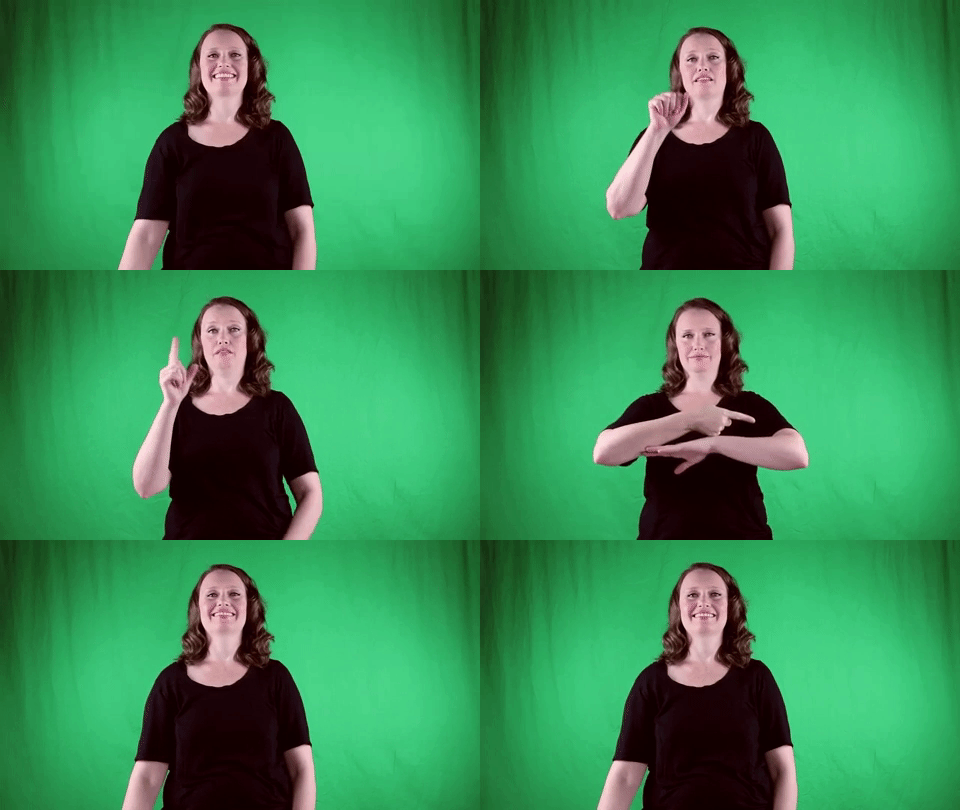
Definition: A day for playing practical jokes on people.
Sign for APRIL FOOLS DAY in ASL

Practice Activities:
Practice signing the sign for April Fools Day in ASL by first isolating each part of the phrase. Start by signing “April” using the fingerspelled form, then practice the sign for “fool” by swiping the dominant index finger across the forehead. Finally, add “day” by moving the dominant hand, in a “D” handshape, from an upright position to resting on the non-dominant arm. Repeat the full phrase slowly, then increase speed and fluidity.
Use a mirror or record yourself signing the sign for April Fools Day in ASL to check for accuracy in hand positioning and movement. Practice transitioning smoothly between each part of the phrase without hesitation. Try signing it with both your dominant and non-dominant hand to develop flexibility in your skills.
Now, incorporate the sign into a short sentence. Sign phrases like “I love April Fools Day” or “Tomorrow is April Fools Day.” Challenge yourself to create full sentences using facial expressions to match the meaning. Try emphasizing excitement by raising your eyebrows or surprise by widening your eyes.
Pair up with a friend and play a role-playing game where one person pretends to pull a prank, then the other reacts and responds by signing the sign for April Fools Day in ASL. Share funny or memorable pranks you’ve experienced and describe them using ASL, incorporating this sign naturally.
For storytelling practice, create a short story about a playful April Fools Day prank. Begin by fingerspelling “April,” show the setup of a trick, and then express the reaction using facial expressions and body language. Challenge yourself to tell the story smoothly without fingerspelling too much.
Engage in conversation by asking a partner if they like April Fools Day and explaining why or why not. Try to keep the discussion in ASL, making sure to use the sign for April Fools Day in ASL to reinforce your learning.
Cultural Context:
April Fools Day in ASL is a fun and playful concept that reflects the spirit of the holiday. This day is all about pranks, jokes, and laughter, making it a favorite for both Deaf and hearing communities. The sign for April Fools Day in ASL captures the essence of trickery and humor in a visual way.
The Deaf community enjoys participating in April Fools Day just like the hearing community, using creative ways to surprise their friends. Since ASL is a visual language, Deaf people often come up with unique and clever signed jokes. Some of these tricks involve playful changes to handshapes or unexpected sign variations.
One of the best parts of April Fools Day in ASL is how signing allows for expressive storytelling. Deaf individuals can exaggerate facial expressions, body movements, and sign speed to make jokes even funnier. This adds an extra layer of humor that spoken language often can’t replicate.
Pranks on this day can include signing something completely different than expected or pretending not to understand a simple sign. Friends in the Deaf community may jokingly switch common signs to confuse each other. The sign for April Fools Day in ASL is often accompanied by laughter and cheerful facial expressions.
Families and schools that use ASL also get involved in celebrating April Fools Day. Teachers in Deaf schools might play lighthearted pranks on students using ASL storytelling. Children who sign may try to trick their parents or siblings with visual jokes.
Online, the Deaf community loves to share April Fools Day jokes through ASL videos. Social media platforms feature videos where signers pull off hilarious pranks or tell funny stories in ASL. The sign for April Fools Day in ASL is often used in these videos to introduce the joke.
Despite the fun and mischief, the goal of April Fools Day in ASL is always to create laughter, not harm. The Deaf community values respectful humor that brings people together. The sign for April Fools Day in ASL helps spread joy in a way that everyone can appreciate.
Extended Definition:
The sign for April Fools Day in ASL represents the fun and lighthearted nature of this well-known holiday. In American Sign Language, it combines signs for “April” and “Fool” to convey the meaning clearly. Since April Fools Day is all about jokes and pranks, facial expressions and body language play an important role in delivering the correct tone.
When signing April Fools Day in ASL, it is essential to understand the meaning behind the individual signs. “April” is signed using the manual alphabet fingerspelling approach, while “Fool” typically involves a motion near the forehead. Depending on the region or individual preference, slight variations may exist in the way people use the sign.
April Fools Day has been celebrated for centuries as a day to play harmless pranks on friends and family. In Deaf culture, humor and storytelling are significant, making April Fools Day a well-loved occasion. Using the correct sign for April Fools Day in ASL ensures that jokes and pranks are understood within the Deaf community.
Facial expressions are an essential part of ASL, especially when signing something playful or humorous. When signing April Fools Day in ASL, a mischievous grin or playful expression helps convey the intent of the holiday. This aspect of ASL makes communication engaging and expressive, adding an extra element to the jokes and pranks being shared.
Different Deaf communities may have slight variations in how they sign April Fools Day in ASL. Some people may emphasize the foolish aspect of the holiday more strongly with a playful movement. Regardless of the variation, using expressive signing helps make the meaning clear to all signers.
Learning the sign for April Fools Day in ASL is useful for ASL students and those who interact with the Deaf community. Understanding the cultural significance of humor in ASL makes conversations richer and more enjoyable. Practicing this sign and using it in the right context ensures effective communication and inclusion.
Since American Sign Language is a visual language, context is important when using signs related to holidays or jokes. Using the sign for April Fools Day in ASL alongside other signs that describe the prank or joke adds clarity. This approach helps ensure that the message is not only understood but also appreciated in the playful spirit it is intended.
April Fools Day in ASL is an opportunity to engage in friendly pranks and share laughter with Deaf friends and family. Understanding the correct way to sign it while incorporating expressive
Synonyms: April Fools’ Day, All Fools’ Day, April Fools, April 1st Prank Day, Pranksters’ Day
Educational resources: Find related learning materials in our course bank!
Want more? Check out some of our popular learning activities on the homepage!
Need to look up a sign? Use our highly rated dictionary: https://aslinteractive.com/best-asl-dictionary/
Follow us on tiktok: https://www.tiktok.com/@aslinteractive. More social media links at the bottom of this page!
Long-tail Keywords: What is the sign for april fools day in ASL, How do you sign april fools day in ASL, Learn how to sign april fools day in American Sign Language
Categories:
tags: April Fools Day, Occasions, Holidays, Pranks, Humor
Parameters
*Handshape*:
The sign for APRIL FOOLS DAY in ASL typically combines signs for “April,” “fool,” and “day.” “April” is fingerspelled using the dominant hand in an open palm orientation. For “fool,” the dominant hand forms a 2-handshape and taps against the nose, representing the playful trickery associated with the day. Finally, “day” is signed by placing the non-dominant arm horizontally while the dominant index finger moves down, symbolizing the passing of a day.
*Palm Orientation*:
The palm orientation for the sign for APRIL FOOLS DAY in ASL varies depending on how each part of the phrase is signed. For “APRIL,” the dominant hand fingerspells the letters, with the palm facing outward. For “FOOL,” the dominant hand, in a “V” handshape, moves outward from the nose, with the palm facing sideways. For “DAY,” the dominant hand in a “D” handshape moves downward, with the palm facing sideways.
*Location*:
The sign for APRIL FOOLS DAY in ASL is produced in the area near the forehead and front of the face. The dominant hand is used to sign “FOOL,” which involves placing the index finger of the dominant hand in front of the nose and moving it slightly while the non-dominant hand remains stationary. The sign for “DAY” moves from a horizontal arm to an upright position. The location plays a crucial role in conveying the meaning clearly.
*Movement*:
To sign for April Fools Day in ASL, begin by fingerspelling “APRIL.” For “FOOL,” place your dominant hand in the “V” shape and swipe the fingertips forward once across the tip of your nose. Finally, for “DAY,” place your non-dominant arm horizontally in front of you and rest your dominant elbow on top while extending your index finger upward. Lower your dominant arm in an arc to complete the sign.
*Non-Manual Signals*:
When signing the sign for APRIL FOOLS DAY in ASL, the facial expression plays a crucial role in conveying the playful and trickster nature of the phrase. The eyebrows often raise slightly, combined with a mischievous or amused expression to show the intent of fooling someone. A sudden head tilt or a slight smirk can also emphasize the humor behind the sign.
Since APRIL FOOLS DAY involves trickery, you might include a quick widening of the eyes or an exaggerated nod to enhance meaning. Depending on context, some signers might add a small chuckle or a light, playful shake of the head. These non-manual signals ensure that the sign for APRIL FOOLS DAY in ASL reflects the fun and surprising nature of the holiday.
*Prosody, Dominant/Non-Dominant Hand*:
For the sign for APRIL FOOLS DAY in ASL, the sign for “APRIL” is typically fingerspelled using the dominant hand in an open, fluid motion. “FOOL” is signed by bringing the dominant hand in a “2” handshape and swiping it forward under the chin. “DAY” involves the non-dominant arm forming a base while the dominant hand, in a “D” shape, moves from vertical to resting position. Together, these signs create a clear representation of the concept.
Tips for Beginners:
When learning the sign for APRIL FOOLS DAY in ASL, focus on accuracy and clarity to avoid confusion. This sign combines elements of “April,” “fool,” and “day,” so ensuring each part is performed correctly is essential. Start by fingerspelling “April” fluidly, keeping your hand steady and your letters clear.
For “fool,” use the dominant hand in the “2” handshape, tapping the extended index finger of the non-dominant “S” hand. Be gentle but deliberate with the motion so it remains distinct. Many beginners struggle with keeping the movement precise, so practicing in front of a mirror can help refine accuracy.
For the “day” portion, use the non-dominant hand in the flat “B” shape as a base, then place your dominant hand in a “D” shape on top before moving it downward in an arc. This represents the passing of a day and must be done smoothly. Maintain consistent hand positioning to avoid an unclear sign.
A common mistake when signing APRIL FOOLS DAY in ASL is rushing through each element, making them look jumbled or unclear. Instead, take your time to ensure each part is recognized separately. Pay close attention to facial expressions, as they add an extra layer of meaning to the sign.
Repetition and practice are key to mastering the sign for APRIL FOOLS DAY in ASL. Try signing it in different contexts, such as when discussing pranks with friends or referencing the holiday in conversation. The more comfortable you become, the more fluid and natural your signing will be. Keep practicing to develop confidence and accuracy!
Connections to Other topics:
The sign for APRIL FOOLS DAY in ASL connects to several key concepts in sign language, including humor, pranks, and calendar-related vocabulary. The sign incorporates the idea of “FOOL” which is closely related to signs like “JOKE” and “TRICK.” Understanding this connection can help signers recognize the thematic similarity between words associated with playful deception and see how ASL conveys humor through movement and facial expressions.
This sign also connects to how ASL expresses holidays and special occasions. Like other holidays such as THANKSGIVING or INDEPENDENCE DAY, APRIL FOOLS DAY in ASL follows a structure that often combines time-related elements with a core meaning. Recognizing how ASL structures calendars and events can improve comprehension of other date-related signs like NEW YEAR and BIRTHDAY.
The word “FOOLS” in the phrase APRIL FOOLS DAY in ASL is thematically linked to ideas of being tricked, confused, or joking. This word association helps signers understand other expressions involving mischief or playfulness in ASL, such as “TEASE” and “MISUNDERSTAND.” These relationships show how ASL communicates different levels of humor and trickery.
Another important connection involves cultural aspects of language use. The way the sign for APRIL FOOLS DAY in ASL is expressed may change slightly depending on the region or signer preference, especially because it references a holiday rooted in social customs. This variation is similar to how signs for culturally significant words like CHRISTMAS or HALLOWEEN can have alternate versions based on community preferences.
By learning the sign for APRIL FOOLS DAY in ASL, signers can strengthen their ability to describe other celebrations, jokes, and humorous interactions. Mastering this sign also deepens an understanding of how ASL incorporates elements of movement and expression to convey the playful nature of April Fools’ jokes.
Summary:
The sign for APRIL FOOLS DAY in ASL captures both the concept of the month and the playful nature of the holiday. Since APRIL can be fingerspelled, some signers choose to spell it out, while others may abbreviate it. The sign for FOOL often involves a handshape representing a person’s actions being tricked or made fun of.
FOOL in ASL is usually signed using a dominant “Y” handshape that brushes forward against the nose. This movement mimics the idea of being deceived or tricked in a lighthearted way. The sign’s small but deliberate movement conveys the idea of a prank or harmless joke.
The sign for DAY typically involves the dominant “D” hand resting on the non-dominant arm, then moving downward like the sun setting. This sign completes the phrase by marking the time reference, ensuring clarity. The full sign for APRIL FOOLS DAY in ASL is understood by signing these elements in order.
Context plays a big role in how the phrase is interpreted in conversation. Because APRIL can be fingerspelled, the signer may indicate the exact meaning based on the situation. If the conversation clearly involves humor or jokes, the meaning is immediately understood.
Some signers prefer to replace FOOL with a sign that represents tricking or deceit in a lighthearted way. A sign like TRICK, done with bent “V” fingers moving over the non-dominant palm, might be used instead. Different regions or communities may prefer slight variations.
Signers often modify facial expressions to enhance the meaning of the sign for APRIL FOOLS DAY in ASL. A playful smirk, raised eyebrows, or an exaggerated head tilt can emphasize the humor behind the phrase. Without such expressions, the meaning may appear more neutral or even negative.
Since April Fools’ Day is a cultural holiday associated with pranks, Deaf culture embraces humor in unique ways. Practical jokes in the Deaf community often involve visual humor, exaggerated expressions, or unexpected changes in signing speed or structure. Understanding signing humor enhances the appreciation of the holiday.
Like spoken language, ASL has idioms and culturally relevant signs that carry deeper meanings. The sign for FOOL can sometimes be used metaphorically to indicate that someone is being gullible or naive. The context in which it is used helps determine its full meaning.
Humor in ASL often relies on visual storytelling rather than wordplay. When signing the phrase for April Fools’ Day, a signer can amplify the meaning by adding exaggerated movements or dramatic pauses. These storytelling techniques make jokes more engaging in ASL.
Although some Deaf community members celebrate April Fools’ Day similarly to hearing people, the methods of humor might differ. Because ASL is visually based, Deaf pranksters may use unexpected signing reversals, visual deceptions, or playful misinterpretations to create humor. The richness of ASL humor makes April Fools’ pranks particularly engaging.
Linguistically, the sign for APRIL FOOLS DAY in ASL demonstrates how languages express abstract concepts. Since FOOL is often associated with jesting and trickery, the sign uses a small yet intentional movement to convey the nuance. The simplicity of the sign preserves clarity while allowing for expressive variation.
Many signs related to humor, jokes, and trickery share similar movement patterns. The repetition in FOOL, TRICK, or JOKE has rhythm and structure that help reinforce meaning. These patterns illustrate how ASL relies on consistent movement types to categorize similar sign families.
ASL has numerous culturally significant signs that reinforce communal understanding. The sign for APRIL FOOLS DAY in ASL is an example of how language adapts to cultural traditions. By borrowing elements of time references and humor, ASL allows for fluid expression of holiday celebrations.
Broader linguistic themes emerge through this sign. ASL frequently combines fingerspelling with natural signs to accommodate borrowed words or proper nouns like APRIL. This flexibility in the language keeps phrases accessible to all signers while maintaining clarity.
From an applied linguistics perspective, signing holidays like April Fools’ Day shows how ASL encapsulates cultural experiences. Signs linked to humor and festivity provide insights into how the Deaf community interacts with widely recognized events. These signs facilitate social cohesion and cultural expression.
Another key aspect of signing humor is role-shifting and facial storytelling. When signing a joke in ASL, a storyteller may use different facial expressions to indicate the roles of prankster and victim. This added layer of expression makes humor more dynamic.
Humor in ASL is also highly dependent on shared experiences. Since wordplay is less common, signers often craft jokes that rely on familiar situations. April Fools’ jokes in the Deaf community might revolve around signing misinterpretations or exaggerated expressions that add to the humor.
The way Deaf and hearing communities approach humor sometimes differs. Verbal puns may not translate
Want more? Check out some of our popular learning activities!
ASL Interactive Resources
ASLInteractive YouTube Channel
Follow us on tiktok: @aslinteractive.com
Follow us on Instagram: aslinteractive
Facebook page: aslinteractive
Facebook group: aslinteractive
LInkedIn: ASL Interactive LLC
Twitter: @ASL_interactive
*Some information on this page is AI-generated. AI can make mistakes. Please check the information.


Responses