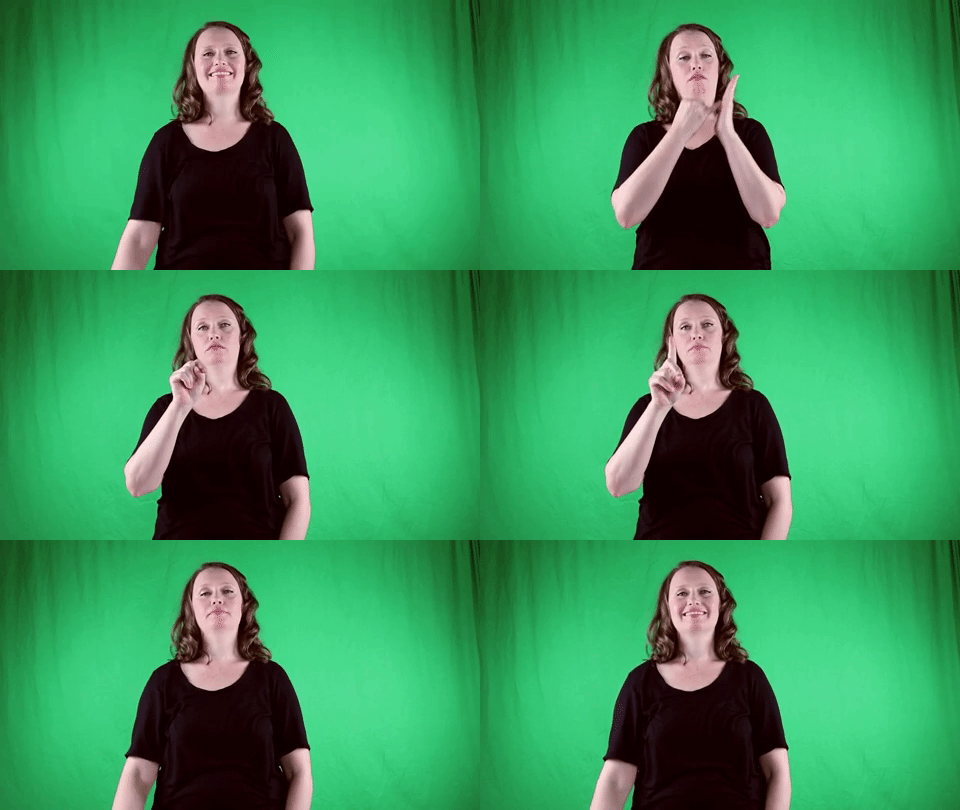
Sign for ART STUDIO in ASL | 👩🏼‍🎨 ASL Dictionary

Definition: A place for creating art.

Sign for ART STUDIO in ASL 

YouTube player

Practice Activities:

To practice the sign for art studio in ASL, start by signing it slowly in front of a mirror. Focus on each handshape and movement to ensure accuracy. Repeat the sign multiple times, paying attention to fluidity and clarity.

Try incorporating the sign for art studio in ASL into daily conversations. For example, describe a favorite place to create art, such as “I love working in my art studio” or “My friend has a big art studio.” Signing in context helps reinforce memory and accuracy.

Engage in storytelling activities using the sign. Create a short story about an artist working in an art studio. Describe what they paint, how they feel, and what tools they use. Practicing in a narrative format strengthens both receptive and expressive skills.

Work with a partner and quiz each other. One person can describe a setting and the other must correctly sign art studio when appropriate. This back-and-forth practice helps with recall and builds confidence in real conversations.

Play a category game by listing related words after signing the phrase. Sign things you would find in an art studio, such as canvas, paint, brushes, and easel. Associating vocabulary with the main sign improves language connections.

Practice signing sentences at different speeds. Start slowly for precision, then gradually increase speed while maintaining clarity. Signing smoothly will make communication more natural in everyday conversations.

Film yourself signing and review the footage. This self-assessment can help identify areas that need improvement. Compare your signing to native ASL users to refine handshape and movement.

Cultural Context:

American Sign Language has a rich vocabulary that reflects many aspects of life, including creative spaces like an art studio. In deaf culture, an art studio is not just a workspace; it is a place for self-expression, communication, and connection. Many deaf artists use their art studios to share their experiences, perspectives, and emotions through visual storytelling.

In an art studio, visual elements play an essential role in communication. Deaf artists often incorporate ASL, deaf experiences, and cultural symbols into their work. Whether the art studio is for painting, sculpture, digital media, or mixed media, it serves as a space where ideas come to life without the need for spoken language.

Using the sign for art studio in ASL allows for easy communication when discussing creative spaces. Learning this sign helps deaf and hearing individuals engage in conversations about artistic expression, spaces, and workshops. Whether you are a student, professional artist, or hobbyist, knowing the right ASL signs can enhance your discussions about the artistic world.

ASL and artistic expression share a strong connection, making an art studio an important setting in the deaf community. Events like art exhibits, workshops, and classes in art studios provide opportunities for deaf and hard-of-hearing artists to connect. Through ASL, artists can explain techniques, share ideas, and collaborate in visually immersive ways.

Using ASL in an art studio setting supports accessibility and inclusion for deaf artists and art lovers. By signing about painting, sculpting, or designing, deaf creatives can fully engage in the artistic process. Spaces that prioritize ASL create a welcoming environment where deaf and hearing individuals can collaborate freely.

Visual art and ASL both place strong emphasis on movement, form, and expression. An art studio becomes a place where deaf artists can explore their identity and communicate visually. Through sign language, artists can discuss colors, textures, and creative techniques without barriers.

Learning the sign for art studio in ASL also fosters appreciation for how language and creativity intersect. Art has been an essential part of deaf culture, with many iconic deaf artists using their work to express linguistic and cultural pride. By connecting language with art, creatives in the deaf community continue to shape a vibrant and expressive culture.

Extended Definition:

The sign for art studio in ASL combines the concepts of “art” and “studio” to create a meaningful representation of a creative workspace. The sign for “art” typically involves using the dominant hand to depict painting or drawing on the non-dominant hand. The sign for “studio” can be expressed by fingerspelling or incorporating signs meaning “room” or “place.”

An art studio in ASL refers to a dedicated space where artists create visual works like paintings, sculptures, and drawings. This space often includes tools, supplies, and equipment essential for artistic expression. Signing art studio in ASL allows Deaf and hard-of-hearing individuals to discuss creative workspaces naturally.

When signing art studio in ASL, the movement and handshape are crucial for conveying the correct meaning. Since “art” is signed using an “I” or “P” handshape to mimic an artistic motion, the addition of “studio” clarifies that the space is dedicated to creative activities. Depending on regional variations, some signers may use an initialized sign or rely on contextual gestures.

Artists use an art studio to explore creativity, refine their skills, and showcase their work. Whether working professionally or as a hobbyist, these spaces offer inspiration and focus. The ability to sign art studio in ASL makes it easier for Deaf artists to discuss their work with peers and the community.

Art studios can range from personal rooms at home to large communal spaces in universities or galleries. The sign for art studio in ASL can be adapted depending on the setting or specific artistic discipline being discussed. For example, a studio focusing on ceramics may include additional clarification about pottery or handcrafting.

Deaf artists have historically contributed to the art world by creating unique pieces that reflect Deaf culture and experience. Having a distinct sign for art studio in ASL enables more effective communication about these creative environments. This helps increase accessibility in art education, workshops, and professional spaces.

Learning how to sign art studio in ASL is beneficial for students, teachers, and professionals working in creative industries. Using the correct sign ensures clear communication and promotes inclusivity in artistic discussions. Whether discussing a personal workspace or a professional studio, signing correctly enhances understanding in ASL conversations.

Understanding the sign for art studio in ASL also supports ASL learners in broadening their vocabulary. By practicing this sign alongside related terms like “painting,” “sculpting,” or “drawing,” individuals can improve their fluency

Synonyms: Atelier, Artist’s Workshop, Creative Workspace, Art Room, Craft Studio

Educational resources: Find related learning materials in our course bank!

Want more? Check out some of our popular learning activities on the homepage!

Need to look up a sign? Use our highly rated dictionary: https://aslinteractive.com/best-asl-dictionary/

Follow us on tiktok: https://www.tiktok.com/@aslinteractive. More social media links at the bottom of this page!

Long-tail Keywords: what is the sign for art studio in ASL, how do you sign art studio in ASL, art studio in American Sign Language

Categories:

tags: Art, Studio, Activities, Language Learning, Objects in the Classroom

Parameters

*Handshape*:

The sign for ART STUDIO in ASL incorporates two signs. For “art,” the dominant hand uses the “I” handshape, with the pinky acting as a brush drawing on the non-dominant palm. The sign for “studio” is fingerspelled, forming each letter distinctly. This sign effectively conveys the idea of a creative workspace. Using expressive facial features enhances clarity when signing the sign for ART STUDIO in ASL.

*Palm Orientation*:

The palm orientation for the sign for ART STUDIO in ASL varies slightly between the two concepts. For “art,” the dominant hand typically uses the “I” handshape, with the palm facing downward while moving in a wavy motion across the non-dominant open palm, which faces upward. For “studio,” the dominant hand, forming an “S” or initialized “ST” shape, moves in connection with the non-dominant hand, often reflecting related spatial or circular motion.

*Location*:

The sign for art studio in ASL is produced in the neutral space in front of the signer. The dominant hand typically forms the “I” handshape while moving in a wavy motion down the non-dominant palm, representing painting. Then, the sign for “studio” is often fingerspelled, though some signers may use an initialized sign with “S” handshapes. The hands remain at chest level, ensuring clear visibility and accurate formation.

*Movement*:

To sign for art studio in ASL, start with the dominant hand in an “I” handshape, with the pinky extended. Move it in a wavy downward motion along the opposite palm, as if painting. Then, sign “studio” by fingerspelling “S-T-U-D-I-O.” Keep the movements fluid and natural. The sign for art studio in ASL visually represents the concept of making art in a dedicated space.

*Non-Manual Signals*:

Facial expressions play an important role when signing the sign for art studio in ASL. A neutral or slightly focused expression is typical, but a slight head tilt can add emphasis. If describing a specific location, raised eyebrows and a questioning look may be used. Mouth movements like “mm” may accompany smooth, continuous motion, while a slight pursing of the lips can indicate concentration or specificity in the context of art.

*Prosody, Dominant/Non-Dominant Hand*:

The sign for ART STUDIO in ASL combines two distinct signs. For “art,” the dominant hand forms the “I” handshape and moves in a wavy motion along the non-dominant palm, mimicking a paintbrush. The sign for “studio” is fingerspelled, with each letter articulated clearly. The dominant hand remains active while the non-dominant hand provides a stable surface. Facial expression can enhance meaning, especially to indicate a creative space.

Tips for Beginners:

When learning the sign for ART STUDIO in ASL, focus on making clear, deliberate movements. The sign for ART is typically made by using the pinky of the dominant hand to draw a squiggly line on the open non-dominant palm. Make sure your movements are fluid yet controlled to resemble the motion of painting or drawing. For STUDIO, some signers may fingerspell it, while others may use a concept-driven sign that conveys a workspace. Be consistent in how you sign STUDIO so that others can recognize your meaning.

A common mistake beginners make when signing ART STUDIO in ASL is rushing through the motion for ART, making it unclear. Instead of a quick flick, maintain a smooth yet visible motion to convey the creative aspect of the word. For STUDIO, if you are fingerspelling, focus on each letter’s form rather than speed—accuracy is more important than speed when fingerspelling longer words. If your variation of STUDIO involves a more conceptual sign, ensure that your chosen sign fits within the context of art-related spaces.

To improve clarity, maintain proper hand positioning and use facial expressions to support your meaning. If you are discussing an art studio in a formal or academic setting, a neutral expression works well, whereas an excited or passionate expression might better convey enthusiasm for an artist’s personal space. If fingerspelling STUDIO, keep your hand steady and in a comfortable position close to your chest for ease of reading. Practicing in front of a mirror or recording yourself can help you spot errors. Watching native or fluent signers use the sign for ART STUDIO in ASL in natural conversation can give you a stronger sense of how to incorporate it smoothly in your own signing.

Connections to Other topics:

The sign for art studio in ASL connects closely with signs related to creativity, painting, and professional spaces. The sign for “art” typically involves movement that mimics drawing or creating, linking it directly to signs like “paint,” “draw,” and “design.” The concept of a “studio” relates to designated creative workspaces, which connects with signs like “room,” “work,” and “building.” By understanding these related signs, learners can expand their vocabulary for discussing various aspects of artistic professions and environments.

Many ASL signs for creative disciplines incorporate movement shaped by the tools used in real-life professions. For example, the sign for “paint” imitates brush strokes, similar to how “write” mimics the motion of a pen or pencil. These movements help communicate the broader concept of artistry by making visual links to real-world actions. This approach also extends to signs like “sculpture,” which can mimic shaping something with the hands, reinforcing how ASL expresses artistic concepts naturally.

Compounds in ASL often blend two concepts into one sign, which is useful when discussing specialized creative spaces. The sign for “art studio” combines artistic expression with a structured workspace, making it comparable to signs like “music room” or “dance studio.” The same principle applies to fields like “photography studio” and “recording studio,” where the location is defined by the type of work done there. These compound signs allow speakers to be precise when referring to different professional or educational spaces.

By learning the sign for art studio in ASL, users can easily describe locations where artists work and collaborate. Understanding how ASL blends location-based and activity-based elements makes it easier to discuss other work environments. Expanding vocabulary in this way helps signers discuss not only artistic creation but also professional and academic spaces where creativity is fostered.

Summary:

The sign for art studio in ASL combines two separate concepts: “art” and “studio.” The sign for “art” typically involves using the dominant “I” handshape to trace a small squiggly line down the non-dominant open palm. This movement symbolizes drawing or painting, touching on visual creativity.

The sign for “studio” is not standardized but may be represented in a few ways. One option is to fingerspell “S-T-U-D-I-O,” especially in formal or educational settings. Another method is to modify the sign for “room” or “workspace,” incorporating contextual understanding.

When signing art studio in ASL, fingerspelling may be necessary in professional settings. However, within the signing community, people may establish a specific sign to refer to a particular studio space. Context and familiarity with fingerspelling can ensure clarity when describing artistic environments.

The concept of an art studio carries deep cultural significance within the Deaf community. Many Deaf artists use art as a form of storytelling, advocacy, and self-expression. Signing art studio in ASL reflects a shared appreciation for creativity and accessibility in creative spaces.

ASL relies on visual-spatial representation, making it an ideal language for describing artistic environments. The sign for art studio in ASL captures the essence of art through movement and space, embodying creativity in both form and concept. Spatial awareness in ASL enhances the description of an art studio, allowing for rich, expressive communication.

Within ASL linguistics, classifiers can play a role in describing an art studio. Classifier handshapes can represent easels, tables, or canvases, adding depth to a signed conversation. These classifiers make discussions about artistic spaces more vivid and engaging for signers.

The sign for art studio in ASL can also be modified by adding facial expressions for emphasis. Raised eyebrows may indicate curiosity or inquiry about an art studio, while an excited expression can show enthusiasm about a creative space. ASL’s reliance on non-manual markers makes signing about art dynamic and visually expressive.

ASL grammar allows for modifying signs to show size, shape, or depth. If describing a large art studio, enlarged gestures and spatial expansion can be used. This visual adaptability in ASL helps convey more intricate details about different types of creative spaces.

In conversations about artistic spaces, related signs such as “artist,” “painting,” and “sculpture” may also appear. These signs build context around the concept of art studio in ASL, enriching discussions about creative professions. Knowing these related signs broadens signers’ ability to discuss various art forms.

Deaf artists and creatives have historically contributed to the arts through painting, sculpture, and design. Signing art studio in ASL acknowledges the presence of Deaf art spaces and their ongoing influence. Art studios provide a place where Deaf artists can freely create and communicate in a fully visual environment.

The recognition of art studios as creative hubs extends beyond the Deaf community. Hearing artists learning ASL may use the sign for art studio in ASL to engage with Deaf peers and foster inclusion. Bilingual environments that incorporate ASL promote accessibility in the arts.

Many art programs and schools now emphasize accessibility within their spaces. Learning the sign for art studio in ASL ensures that Deaf and hard-of-hearing artists can participate fully in educational and creative experiences. ASL inclusion in art education breaks barriers and promotes greater representation in the arts.

Applied linguistics emphasizes how ASL enhances access to artistic education and professional spaces. Using the sign for art studio in ASL highlights linguistic diversity within the creative field. ASL fosters clear visual communication among artists, educators, and students.

The bilingual nature of many Deaf artists’ lives means that fingerspelling and signed concepts often coexist. Fingerspelling “studio” in addition to the sign for “art” ensures accuracy in ASL discussions. Bilingual English-ASL artists may switch between signed and fingerspelled words based on their audience.

Incorporating ASL into art events ensures Deaf artists have equal opportunities to showcase their work. Using the sign for art studio in ASL during art gatherings and workshops signifies inclusion. More galleries and studios are employing ASL interpretation to foster greater accessibility.

The increasing representation of ASL in artistic spaces signals progress toward inclusive arts communities. Many Deaf and hearing artists collaborate, using ASL as a bridge for communication. Art, much like language, is a visual mode of expression that transcends barriers.

By signing art studio in ASL, signers recognize the role of ASL in making creative spaces accessible. Describing an art studio using ASL highlights the importance of visual communication in artistic professions. More art institutions are creating programs to serve Deaf artists and designers.

Using space effectively in ASL allows signers to fully describe an art studio’s layout and purpose. The ability to visualize and sign about art studios strengthens ASL’s role in creative storytelling. Combining

Want more? Check out some of our popular learning activities!

ASL Interactive Resources

ASLInteractive YouTube Channel

Follow us on tiktok: @aslinteractive.com

Follow us on Instagram: aslinteractive

Facebook page: aslinteractive

Facebook group: aslinteractive

LInkedIn: ASL Interactive LLC

Twitter: @ASL_interactive

*Some information on this page is AI-generated. AI can make mistakes. Please check the information.

Sign for ART STUDIO in ASL 

Responses