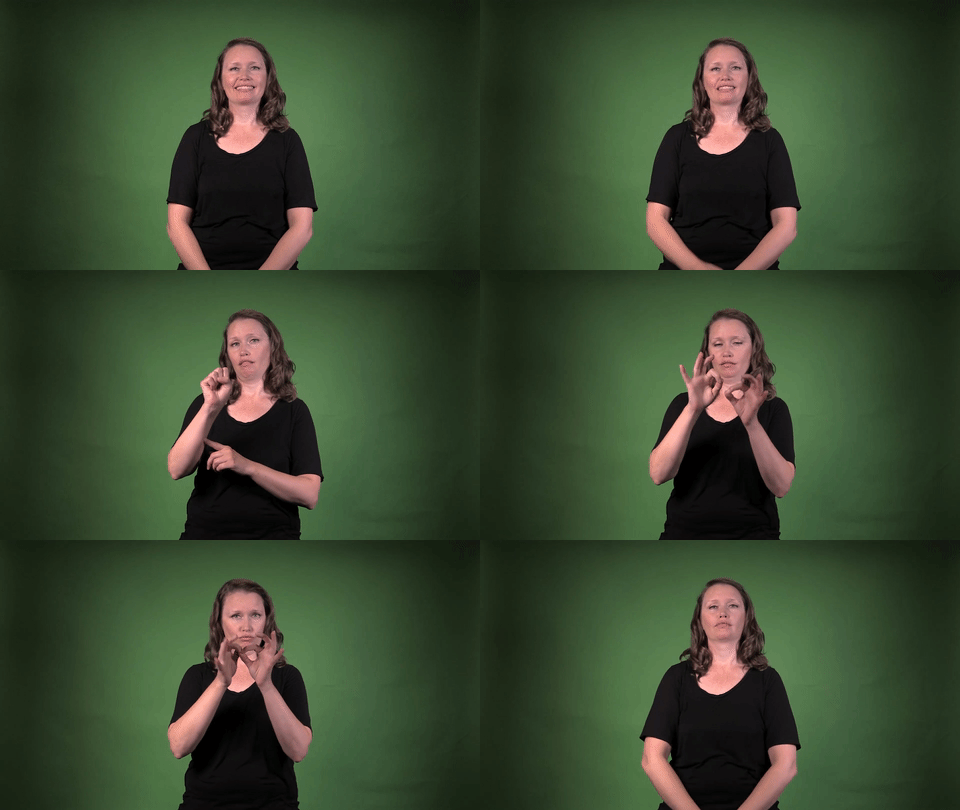
Definition: The profession of translating spoken language into ASL.
Sign for ASL INTERPRETING in ASL

Practice Activities:
To practice the sign for ASL interpreting in ASL, start by signing it in isolation. Repeat the movement multiple times while looking in a mirror to check hand positioning. Try switching between slow and fast speeds to ensure fluidity and accuracy.
Next, integrate the sign into short phrases. For example, sign “I learning ASL interpreting in ASL” or “They need ASL interpreting in ASL.” Focus on maintaining a clear movement while staying natural in signing speed.
For a storytelling activity, create a short dialogue where an interpreter is helping two people communicate. Use signs like deaf, hearing, and communicate along with the sign for ASL interpreting in ASL to build fluency. Practice switching roles to enhance expressive skills.
Try a role-play with a partner. One person acts as an ASL interpreter while the other signs basic sentences in English order. The interpreter must rearrange the signing into proper ASL structure while using the sign for ASL interpreting in ASL to indicate their role.
Engage in receptive practice by watching a fluent signer use the sign in conversations. Pause the video and copy the movement to match their speed and precision. Practicing in context will help reinforce accuracy.
End the session with a practice exercise where you sign a sentence involving an interpreter, such as “At school, ASL interpreting in ASL is important.” Focus on facial expressions and body movement to make the message clear.
Cultural Context:
In the Deaf community, the sign for ASL interpreting in ASL is essential for effective communication. ASL interpreters bridge the gap between Deaf and hearing individuals, ensuring accessibility in various settings. From classrooms to hospitals, having an interpreter allows Deaf individuals to fully understand and participate in conversations.
ASL interpreting plays a vital role in education, healthcare, and legal situations. Without ASL interpreting, many Deaf individuals would struggle to access important information. Interpreters must be fluent in both ASL and English to accurately convey messages between Deaf and hearing individuals.
The process of ASL interpreting in ASL involves both receptive and expressive skills. Interpreters must understand ASL nuances, facial expressions, and cultural context to ensure accurate communication. A qualified interpreter maintains neutrality and ensures both parties can effectively exchange information.
There are different types of ASL interpreting, including simultaneous and consecutive interpreting. Simultaneous ASL interpreting in ASL happens in real time, where interpreters sign while the speaker is talking. Consecutive interpreting means the speaker pauses, allowing the interpreter to sign each segment separately.
ASL interpreting in ASL requires professional training and certification. Interpreters often take courses, pass exams, and gain experience to ensure high-quality interpreting services. Many work in educational settings, government agencies, or freelance in the Deaf community.
Respecting the role of ASL interpreters is crucial for accessibility. Deaf individuals rely on ASL interpreting in ASL for equitable communication in daily life. Whether in job interviews, public events, or medical appointments, interpreters facilitate clear and effective interactions.
Cultural competence is essential for ASL interpreting in ASL. An interpreter not only translates words but also conveys tone, intent, and cultural meaning. Being aware of Deaf culture and norms helps avoid misinterpretation and ensures respectful communication.
Many Deaf people prefer working with certified ASL interpreters over AI or automated captioning. Technology cannot yet capture the full meaning of ASL interpreting in ASL, including facial expressions and non-manual markers. Professional interpreters provide the best accuracy and cultural awareness.
Employment opportunities for ASL interpreters continue to grow as Deaf awareness increases. More businesses and organizations recognize the importance of ASL interpreting in ASL and prioritize accessibility. This shift ensures Deaf individuals receive equal access to communication in all aspects of life.
Understanding the significance of ASL interpreting strengthens connections between Deaf and hearing communities. Learning the sign for ASL interpreting in ASL
Extended Definition:
The sign for ASL interpreting in ASL is an essential term in American Sign Language, especially in professional and educational settings. It represents the process of conveying spoken language into ASL and vice versa, ensuring effective communication between deaf and hearing individuals. ASL interpreters play a critical role in bridging communication gaps in schools, workplaces, medical appointments, and public events.
In ASL, the sign for ASL interpreting in ASL typically involves both hands forming an “F” handshape, moving back and forth to symbolize the transfer of information. This motion represents the continuous exchange of language between two parties, emphasizing the importance of accuracy and clarity. The movement also conveys the idea of interpretation as an active and dynamic process.
Fluency in the sign for ASL interpreting in ASL is crucial for both professional interpreters and members of the deaf community. Understanding this sign helps individuals identify interpreters in public settings and request their services when needed. It also reinforces the importance of accessibility and inclusion in various environments.
ASL interpreters undergo extensive training to master language skills, cultural competency, and ethical standards. The demand for ASL interpretation is high in environments like courtrooms, hospitals, and media broadcasts. Using the correct sign for ASL interpreting in ASL ensures effective communication and upholds professional standards.
Many organizations rely on qualified interpreters to ensure equal access to information and services. Hospitals, conferences, and government institutions often require ASL interpretation to comply with accessibility laws. Knowing the sign for ASL interpreting in ASL helps both deaf individuals and service providers communicate seamlessly.
In educational settings, ASL interpreters assist deaf students by translating spoken lessons into ASL. They also interpret student responses, allowing full participation in classroom discussions. Mastering the sign for ASL interpreting in ASL ensures that students, teachers, and interpreters can work together efficiently.
With the rise of digital communication, virtual ASL interpreting services have become more common. Video relay services (VRS) allow deaf individuals to make phone calls through an ASL interpreter. The sign for ASL interpreting in ASL remains widely recognized in both in-person and virtual settings.
Professional ASL interpreters must adhere to a code of ethics, maintaining neutrality and confidentiality. They facilitate conversations in various settings while ensuring accurate and unbiased interpretation. The correct sign for ASL interpreting in ASL helps distinguish trained professionals from unqualified individuals.
The sign for ASL interpreting in ASL is widely used in
Synonyms: ASL Translation, American Sign Language Interpreting, ASL Interpretation, Sign Language Translation, Sign Language Interpreting
Educational resources: Find related learning materials in our course bank!
Want more? Check out some of our popular learning activities on the homepage!
Need to look up a sign? Use our highly rated dictionary: https://aslinteractive.com/best-asl-dictionary/
Follow us on tiktok: https://www.tiktok.com/@aslinteractive. More social media links at the bottom of this page!
Long-tail Keywords: what is the sign for ASL interpreting in ASL, how do you sign ASL interpreting in ASL, ASL interpreting sign in American Sign Language
Categories:
tags: Languages, Language Learning, Communication, Activities, Education
Parameters
*Handshape*:
The sign for ASL interpreting in ASL uses both hands in an “F” handshape . The tips of the thumbs and index fingers touch, forming a circular shape while the remaining fingers extend upward. The dominant hand moves in a small alternating twisting motion to show the concept of communication exchange. This movement symbolizes the role of an interpreter facilitating understanding between two languages in ASL.
*Palm Orientation*:
The sign for ASL interpreting in ASL is made using both hands in an “F” handshape . The palms are generally oriented inward, facing each other, with fingertips pointing slightly outward. As the hands move back and forth in a twisting motion, the palm orientation adjusts slightly, maintaining an inward-facing direction. The movement signifies the dynamic exchange of information, representing the concept of interpretation in American Sign Language.
*Location*:
The sign for ASL interpreting in ASL is produced in front of the chest, at the neutral signing space. Both hands use the “F” handshape, with the thumbs and index fingers touching. The hands twist back and forth while maintaining contact, representing the process of interpretation between two languages. This sign is typically made at chest level, ensuring visibility within the natural signing space.
*Movement*:
Start with both hands in the F handshape , with the tips of the index finger and thumb touching on each hand. Hold these handshapes in front of your chest, palms facing each other. Simultaneously, pivot both hands back and forth in small alternating motions, as if representing the back-and-forth exchange of language. The sign for ASL interpreting in ASL visually represents the role of an interpreter transferring meaning between two languages. Maintain a steady, rhythmic motion to emphasize clarity.
*Non-Manual Signals*:
The sign for ASL interpreting in ASL often includes a focused and engaged facial expression. The eyebrows may be slightly furrowed or raised to emphasize clarity, and the mouth may form a slight “mm” or neutral shape to indicate attentiveness.
Head movement can follow the flow of the handshapes, subtly nodding while the hands transition. The signer’s posture remains upright, conveying professionalism and precision in the sign for ASL interpreting in ASL.
*Prosody, Dominant/Non-Dominant Hand*:
The sign for ASL INTERPRETING in ASL uses both hands in an “F” handshape . The dominant and non-dominant hands are positioned in front of the chest with the thumbs and index fingers touching. The dominant hand moves back and forth in a small alternating motion while maintaining contact with the non-dominant hand. This movement symbolizes the dynamic process of interpreting between languages. Keep facial expressions engaged to reinforce meaning.
Tips for Beginners:
When learning the sign for ASL INTERPRETING in ASL, focus on clear hand movements and consistency in motion. The sign involves the F-hands rotating as they alternate touching each other at the tips. Keep your fingers steady and avoid unnecessary movement to maintain clarity.
A common mistake beginners make when signing ASL INTERPRETING in ASL is not maintaining the correct rhythm. The movement should be smooth and continuous, not jerky or too fast. Maintaining a steady pace ensures the sign is easy to understand and visually clear.
Hand placement is also essential when signing ASL INTERPRETING in ASL. Keep your hands near the chest or slightly forward, aligning with the natural signing space. Placing your hands too high or too low can make the sign look awkward or harder to read.
Finger positioning matters when forming the F-handshape. Beginners sometimes accidentally curl or extend their fingers incorrectly. Make sure the tips of your thumb and index fingers touch, forming a proper F shape with both hands.
Pay attention to facial expressions, especially when using the sign for ASL INTERPRETING in ASL in a specific context. If you are talking about a formal interpreter, keep a neutral or professional facial expression. If expressing frustration with interpretation, your face should match the meaning.
Practice in front of a mirror or record yourself signing. Watching yourself can help identify any inconsistencies or inaccuracies in your movements. Comparing your sign to fluent signers or ASL videos can refine your technique.
One way to improve fluency is by using the sign for ASL INTERPRETING in ASL in full sentences. Practicing it within conversations helps build confidence and ensures you can sign it fluidly. Engaging with native signers is also beneficial, as they can provide feedback on accuracy and clarity.
Connections to Other topics:
The sign for ASL INTERPRETING in ASL connects closely to the signs for TRANSLATE and COMMUNICATION, as both involve the exchange of information between two or more languages. INTERPRETING differs from TRANSLATE in that it conveys real-time language exchange, often with ASL and English. The concept of INTERPRETING links naturally to professional interpreter training, emphasizing fluency in both ASL and English as well as ethical considerations in the interpreting profession.
This sign is also related to HELP, SUPPORT, and FACILITATE, as an interpreter serves as a linguistic bridge between deaf and hearing people. In conversation, interpreters ensure accurate message meaning without adding or omitting information. Understanding the sign for ASL INTERPRETING in ASL is crucial for communicating about access, accommodations, and professional interpreter roles in educational, legal, or medical settings.
Compound or related signs like INTERPRETER CERTIFIED and INTERPRETER REQUEST use the foundation of the INTERPRET sign but add descriptive elements. People may fingerspell RID when discussing certified ASL interpreters, referencing the Registry of Interpreters for the Deaf, a national certifying body. Describing interpreting styles, such as SIMULTANEOUS INTERPRETING or CONSECUTIVE INTERPRETING, expands language proficiency related to this concept.
This sign connects to broader conversations about language access, Deaf rights, and the importance of clear communication. It appears frequently in discussions about job opportunities, accessibility in public events, and the need for qualified interpreters in various settings. Understanding the sign for ASL INTERPRETING in ASL helps promote awareness of Deaf culture and ensures smoother interactions between Deaf and hearing individuals.
Summary:
The sign for ASL INTERPRETING in ASL is an essential concept within Deaf culture and the broader Deaf community. It conveys the critical role that interpreters play in facilitating communication between Deaf and hearing individuals. ASL interpreters serve as linguistic and cultural mediators, ensuring accessibility across various settings such as education, healthcare, and government services.
This sign involves both hands in an “F” handshape, representing the exchange of information between two languages. The hands alternate movement, pivoting from their thumbs and index fingers touching to slightly separate and reconnect. The movement symbolizes the continuous flow of interpretation between ASL and English or another spoken language.
Linguistically, this sign reflects the dynamic nature of interpretation, where meaning is transferred between two distinct languages. ASL, being a completely visual language, requires interpreters to shift between spatial grammar and the linear structure of spoken English. This task involves not only vocabulary translation but also cultural mediation to retain the speaker’s intent.
The role of an ASL interpreter is highly specialized, requiring fluency in both ASL and English. Certified interpreters undergo intensive training and assessments to ensure they can handle complex linguistic nuances. Their work is guided by a professional code of ethics that ensures confidentiality, accuracy, and neutrality.
Interpreting in ASL is different from simple translation because it requires real-time adaptation based on context and audience. Unlike written translation, which allows a translator time to analyze and revise, ASL interpreting demands instant decision-making. This makes the cognitive load of an interpreter significantly high, requiring rapid mental processing.
In a cultural sense, the presence of ASL interpreters at public events and institutions reflects legal advancements in accessibility. Laws such as the Americans with Disabilities Act (ADA) mandate interpreters in courtrooms, schools, and hospitals to ensure equal access for Deaf individuals. Without ASL interpreting, many Deaf individuals would face significant communication barriers in essential services.
Many ASL interpreters work in specialized domains such as medical, legal, or educational interpreting. Medical interpreters navigate complex terminology and ensure informed consent in healthcare settings. Legal interpreters must maintain impartiality while conveying precise legal terminology to Deaf individuals in courtrooms.
Educational interpreters play a key role in Deaf students’ academic success. They bridge the gap between Deaf students and their teachers, making sure that lectures and discussions are fully accessible. The quality of interpretation can greatly impact a student’s ability to grasp complex academic content.
The sign for ASL INTERPRETING in ASL is closely related to other signs like “translate,” “explain,” or “exchange,” which also involve movement between two concepts. However, “interpreting” specifically denotes linguistic mediation between two languages. This makes it distinct from signs that represent teaching or paraphrasing rather than true language conversion.
ASL interpreting also highlights the distinction between Deaf interpreters (DIs) and hearing interpreters. Deaf interpreters work alongside hearing interpreters to enhance clarity in situations where cultural and linguistic differences create unique challenges. Deaf interpreters are often needed for clients who use an atypical form of ASL, such as international Deaf individuals or those with minimal language exposure.
In live settings, ASL interpreting adds a rich visual element to communication. Concerts, theater performances, and public speeches often feature ASL interpreters to provide full access to Deaf audiences. Interpreters at such events must integrate timing, emotional expression, and clarity into their work.
When interpreting, the ability to use classifiers, facial expressions, and spatial referencing is crucial. ASL is not simply a word-for-word translation of English; it requires conceptual accuracy. Interpreters must adapt spoken content into ASL’s unique grammatical structure while maintaining meaning.
The demand for ASL interpreters continues to grow as awareness of Deaf rights increases. Universities and training programs offer interpreting degrees to prepare individuals for this vital profession. National certification exams and state licensing requirements ensure that professional interpreters meet high standards.
Video relay interpreting (VRI) and video remote interpreting (VRI) have expanded accessibility for Deaf individuals in remote areas. Through these services, interpreters provide real-time ASL interpreting over video calls. This technology-driven solution helps Deaf individuals communicate with hearing counterparts more efficiently.
ASL interpreting is also essential in emergency situations. In crisis communication, clear and immediate interpretation of safety instructions can save lives. Well-trained ASL interpreters in disaster response teams ensure that Deaf individuals receive timely and accurate information.
Interpreters also must navigate regional and generational language variations in ASL. Different parts of the country may have slight variations in sign usage, which interpreters must be aware of. Understanding these differences allows interpreters to adjust their signing to match the communication style of the Deaf individual.
Being an interpreter requires strong ethical decision-making skills. Professional interpreters adhere to the Registry of Interpreters for the Deaf (RID) Code of Professional Conduct. This includes confidentiality, impartiality, professionalism,
Want more? Check out some of our popular learning activities!
ASL Interactive Resources
ASLInteractive YouTube Channel
Follow us on tiktok: @aslinteractive.com
Follow us on Instagram: aslinteractive
Facebook page: aslinteractive
Facebook group: aslinteractive
LInkedIn: ASL Interactive LLC
Twitter: @ASL_interactive
*Some information on this page is AI-generated. AI can make mistakes. Please check the information.


Responses