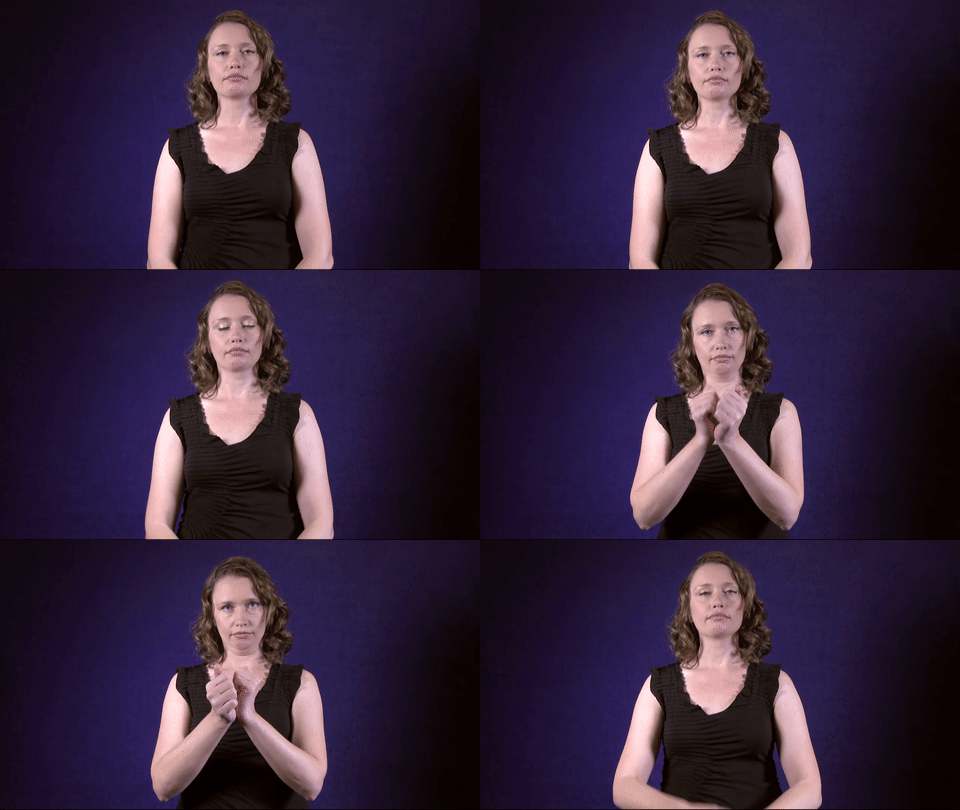
Sign for ATHLETIC in ASL | ⛹️‍♀️ ASL Dictionary

Definition: Relating to physical exercise and sports.

Sign for ATHLETIC in ASL 

YouTube player

Practice Activities:

To practice the sign for athletic in ASL, start by signing it in isolation multiple times. Focus on using the correct handshape and movement while standing in front of a mirror. Pay attention to how your shoulders and arms engage with the movement, ensuring clarity and accuracy.

Once you feel comfortable, use the sign for athletic in ASL in a series of descriptive sentences. For example, sign sentences like “My brother is very athletic” or “She enjoys doing athletic activities.” Record yourself signing these sentences and watch them back to check for accuracy.

Practice incorporating the sign naturally into conversations. If you’re in a Deaf or ASL-friendly environment, try talking about sports or physical fitness using the sign for athletic in ASL. You can also practice with a friend by asking and answering questions like “Are you athletic?” or “Who is the most athletic person you know?”

Storytelling can help reinforce the sign in a meaningful way. Create a short story about someone training for a sports event or learning a new physical skill. Include the sign for athletic in ASL multiple times to strengthen your recall. Try telling your story to a partner and have them ask follow-up questions using the same sign.

For a fun challenge, play a guessing game with a friend. One person can describe an athlete or a famous sporting event while the other tries to guess who or what is being described. Use the sign for athletic in ASL often to make connections between movement and meaning.

If you’re practicing alone, watch videos of athletes and describe their skills using ASL. Compare different types of physical activities and how they relate to being athletic. Engage in these exercises regularly to build fluency and confidence in using the sign naturally in conversation.

Cultural Context:

The sign for athletic in ASL is often used to describe someone who is physically active, strong, or engaged in sports. In Deaf culture, sports and athleticism play a significant role in fostering community, teamwork, and competition. Many Deaf individuals participate in organized sports, from local leagues to international events like the Deaflympics.

Athleticism is highly valued in the Deaf community, as it promotes physical health and social connections. Schools for the Deaf often have strong sports programs, where athletes can develop their skills in a supportive and accessible environment. Using the sign for athletic in ASL can help express admiration for someone’s strength and dedication.

Deaf athletic events bring people together and create inspiring role models. Watching skilled athletes perform and compete shows the power of determination and talent. The sign for athletic in ASL is commonly used in conversations about sports, exercise, and active lifestyles.

Physical activity is an essential part of a healthy lifestyle, and many Deaf individuals participate in running, swimming, basketball, and other sports. The sign for athletic in ASL is useful when discussing fitness goals or encouraging someone’s efforts. Whether at the gym or on the field, this sign captures the spirit of movement and endurance.

Many Deaf schools and clubs focus on building athletic skills to give students confidence and pride. With strong participation in both amateur and professional sports, the Deaf community has produced many skilled athletes who have broken barriers. The sign for athletic in ASL is a great way to discuss accomplishments in the world of sports.

In social settings, the sign for athletic in ASL is often used to describe someone with a strong or toned body. It can also indicate a passion for staying active and fit. Whether complimenting someone’s physical abilities or discussing sports, this sign is commonly seen in ASL conversations.

Learning the sign for athletic in ASL is useful for discussing workouts, team sports, or general fitness. Being athletic is not just about competition; it’s also about maintaining a strong and healthy body. Understanding this sign can help in many conversations related to health, wellness, and sportsmanship.

Athletic achievements in the Deaf community are widely celebrated, from school championships to international competitions. The sign for athletic in ASL helps highlight the importance of dedication and practice. Whether talking about an inspiring athlete or personal fitness goals, this sign adds depth to any discussion.

By using the sign for athletic in ASL, you can easily discuss sports, fitness routines, and physical activities. It

Extended Definition:

The sign for athletic in ASL conveys the idea of being strong, fit, or physically active. This sign is commonly used when talking about sports, exercise, or someone who is physically capable. It is an important term in conversations about health, fitness, and competition.

When signing athletic in ASL, the movement and handshape represent strength and physical ability. The motion often imitates the act of flexing muscles, reinforcing the meaning of being fit and active. This visual element makes it easy to understand, even for beginners learning ASL.

Athletic in ASL can describe a person who regularly exercises, participates in sports, or simply has a strong, toned physique. This sign helps describe athletes, dancers, or anyone who prioritizes physical movement. It can also be used in discussions about training, competition, and performance.

ASL uses expressive movements to convey meaning, making signs like athletic highly visual. The sign captures the essence of physical fitness in a simple, effective gesture. As with many ASL signs, facial expressions and body language can enhance its meaning.

People use the sign for athletic in ASL to describe someone’s abilities or dedication to physical activities. Whether talking about a professional athlete or an enthusiastic gym-goer, this sign effectively communicates their level of fitness. It’s a useful sign in sports discussions, fitness classes, and casual conversations.

In classroom settings, teachers often use the sign when discussing physical education, fitness routines, or sports teams. It is helpful for students who are learning about health and wellness in ASL. The sign allows for clear communication about athleticism and its importance.

Parents and coaches also use athletic in ASL to encourage children and athletes in training. This sign can express admiration for an individual’s physical abilities or hard work. It serves as a positive reinforcement in sports and fitness conversations.

The sign for athletic in ASL is widely recognized in Deaf sports communities. It plays a key role in discussions about athletic competitions, events, and training sessions. Many Deaf athletes use this sign to describe their commitment to sports and fitness.

If you are learning ASL, knowing how to sign athletic is valuable for discussing exercise, sports, and physical performance. It helps in conversations about personal fitness goals and health awareness. This sign is commonly used when talking about gym activities, dance, and other physical pursuits.

To sign athletic in ASL correctly, attention to handshape and motion is important. Observing fluent signers and practicing

Synonyms: fit, strong, vigorous, muscular, active

Educational resources: Find related learning materials in our course bank!

Want more? Check out some of our popular learning activities on the homepage!

Need to look up a sign? Use our highly rated dictionary: https://aslinteractive.com/best-asl-dictionary/

Follow us on tiktok: https://www.tiktok.com/@aslinteractive. More social media links at the bottom of this page!

Long-tail Keywords: what is the sign for athletic in ASL, how do you sign athletic in ASL, ASL sign for athletic

Categories:

tags: athlete, sports, activities, people, life milestones

Parameters

*Handshape*:

The sign for ATHLETIC in ASL uses two “A” handshapes , one on each hand. Both hands are placed near the chest and move in an alternating circular motion, mimicking the flexing of muscles . This motion represents physical strength and fitness. The sign for ATHLETIC in ASL effectively conveys the idea of being strong and active by emphasizing movement and controlled muscle engagement.

*Palm Orientation*:

The palm orientation for the sign for ATHLETIC in ASL involves both hands forming open claw shapes , with the palms facing inward toward the chest. The fingers remain slightly curved, as if gripping an imaginary object. Throughout the movement, the hands maintain this inward-facing orientation without rotating. This palm orientation helps convey the concept of physical strength and endurance, which aligns with the meaning of the sign for ATHLETIC in ASL.

*Location*:

The sign for ATHLETIC in ASL is produced at the upper chest area, near the shoulders. Both hands form open-A handshapes with the thumbs resting against the chest. The hands move in small alternating circular motions to indicate physical activity or strength. This movement represents an active or sporty nature, reinforcing the meaning behind the sign for ATHLETIC in ASL. The location near the chest symbolizes physical effort and personal fitness.

*Movement*:

To perform the sign for ATHLETIC in ASL, form both hands into open “5” handshapes and place them near your shoulders. Move both hands in small, inward circular motions toward your chest, as if demonstrating physical effort or exertion. The movement should be firm and energetic, representing strength and athleticism. This sign captures the essence of being physically active, making it effective for conversations about sports and fitness.

*Non-Manual Signals*:

When performing the sign for ATHLETIC in ASL, the face often expresses determination or intensity , mimicking the effort associated with physical activity. Eyebrows may be slightly furrowed, and lips might press together or part slightly as if exhaling from exertion. The head may subtly move forward or nod, reinforcing the concept of strength and endurance ️. This non-manual expression enhances the meaning, emphasizing the energy required to be athletic.

*Prosody, Dominant/Non-Dominant Hand*:

The sign for ATHLETIC in ASL uses both hands in an “A” handshape. The dominant and non-dominant hands move in a circular motion near the chest as if demonstrating physical strength . The motion is repeated a couple of times to emphasize the meaning. Facial expressions can reinforce the meaning, especially if describing someone as highly athletic. The sign for ATHLETIC in ASL varies slightly depending on the emphasis or context in which it is used.

Tips for Beginners:

When learning the sign for ATHLETIC in ASL, focus on maintaining fluid hand and arm movement. This sign mimics a strong, physical motion, so it’s important to convey the essence of being physically active. Keep your hands at chest level and make sure both hands move consistently to avoid an unclear or choppy presentation.

One common mistake is using too much or too little force when signing. Overexaggerating may make the movement unclear, while timid movements can make the sign harder to recognize. Find a comfortable balance where your movement appears natural but still strong enough to communicate the concept clearly.

Hand positioning is crucial when practicing the sign for ATHLETIC in ASL. Make sure your hands are properly shaped and positioned at the right height. Keeping your hands too low or too high can affect clarity and make it more difficult for others to understand. A mirror or video recording can help you check accuracy.

Facial expressions can enhance the meaning of the sign and make your signing more natural. A slight look of determination or confidence can help reinforce the concept of strength and athleticism. While facial expressions are optional here, they bring more depth to your signing and improve overall communication.

Consistent repetition is key to mastering this sign. Practicing regularly will help develop muscle memory, making it easier to sign accurately without hesitation. Try incorporating the sign for ATHLETIC in ASL while describing athletes or sports to strengthen your recall.

Lastly, make sure to watch how fluent signers perform this sign. Observing native signers will help you refine your technique and ensure your signing is both accurate and natural. If possible, ask for feedback from a Deaf signer or an ASL instructor to improve further.

Connections to Other topics:

The sign for ATHLETIC in ASL connects closely with other signs related to physical activity, movement, and sports. It shares similarities with the sign for STRONG, which emphasizes physical power, and relates to signs like EXERCISE and SPORTS, which involve dynamic, repeated motions. These connections help reinforce the concept of fitness, competition, and physical abilities in ASL discourse.

This sign also appears with variations in contexts where physical skill or activity is being described. For example, the sign for ATHLETE builds off of the same root motion but incorporates the PERSON classifier, making it a noun form that refers explicitly to someone who participates in athletics. This noun-verb relationship is common in ASL, similar to how TEACH evolves into TEACHER when signed with the appropriate agent marker.

Other related signs include COMPETE, CHAMPION, and WIN, all of which commonly appear alongside the sign for ATHLETIC in ASL when discussing events like the Olympics, college sports, or personal fitness goals. The connection between these signs allows for a more fluid discussion of different levels of skill, achievement, and competition.

In a broader sense, the sign for ATHLETIC in ASL links to lifestyle and health-related vocabulary, such as TRAIN, PRACTICE, and DISCIPLINE. These signs often appear together in conversations related to personal fitness journeys or discussions about professional athletes. Additionally, signs for FITNESS and HEALTH often overlap in ASL storytelling, emphasizing the connection between athletics and overall well-being.

ASL classifiers can further expand the expression of athleticism by depicting movements of running, jumping, or lifting weights. Classifier use adds depth to discussions about different sports and levels of physical activity. The dynamic nature of ASL allows for highly visual descriptions of athletic performance, making the language well-suited for expressing sports and movement concepts.

Summary:

The sign for ATHLETIC in ASL visually conveys strength, movement, and physical exertion. This sign is typically produced by forming both hands into an “A” handshape and moving them in a circular motion near the chest. The motion mimics the idea of movement and effort, emphasizing the physical nature of athleticism.

This sign is derived from the concept of working out or exerting physical energy. It can be associated with general fitness, sports participation, or someone who is physically strong. Many ASL signs rely on metaphorical representations, and the sign for ATHLETIC in ASL follows this pattern by emphasizing exertion through hand motion.

In some contexts, the sign for ATHLETIC in ASL may be used interchangeably with signs for “strong” or “fit,” depending on the conversation. The meaning often depends on facial expressions and sentence structure. Emphasizing effort in the movement can adjust the meaning slightly to convey greater intensity.

Facial expressions play a critical role in ASL and can alter the definition of this sign. A determined expression can indicate serious athleticism, while a more neutral or casual look may suggest simple physical activity. Changes in speed or force of movement may also adjust the meaning.

The linguistic structure of this sign aligns with ASL’s preference for visual representation of concepts. Instead of using a separate word for suffixes like “-ic” in English, ASL conveys the concept through movement and context. This eliminates the need for multiple signs to differentiate between related words like “athlete” or “athletic.”

In ASL grammar, adjectival signs like ATHLETIC are placed differently in sentences than in English. If describing a person, the sign might come before the noun. In a statement about oneself, it usually appears at the end of the sentence for emphasis.

Culturally, the idea of physical activity is important in both Deaf and hearing communities. Deaf individuals participate in sports at all levels, and the sign for ATHLETIC in ASL is common in discussions about fitness, competition, and training. The Deaflympics, a global event, showcases the importance of athletics in the Deaf community.

There are slight regional variations in how this sign is executed. Some signers may adjust the movement pattern, opting for smaller or larger circles. This variation is influenced by individual signing style and regional signing differences.

The sign for ATHLETIC in ASL is often accompanied by context-specific classifiers to provide additional meaning. A classifier representing a muscular body may be added after the sign to indicate remarkable physical fitness. When describing an athletic event, a classifier might illustrate a specific movement, such as running or lifting weights.

One related sign is “athlete,” which is produced similarly but often used to describe a specific person. The sign for “sports” is another related term, using “A” handshapes but with a different back-and-forth movement to indicate competition. These signs can be used together to discuss athletic participation.

Metaphorically, the sign for ATHLETIC in ASL can represent determination, effort, or perseverance. The exerting motion suggests pushing through challenges, which ties into broader cultural themes of resilience and hard work. Signers may use this metaphorically in discussions about strong individuals.

The concept of physical fitness connects broadly to health and well-being in ASL discourse. Discussions about maintaining an active lifestyle often use this sign alongside terms for “healthy,” “energy,” and “exercise.” It frequently appears in ASL lectures and conversations about wellness.

Applied linguistics perspectives show that ASL signs often incorporate spatial reasoning. The sign for ATHLETIC in ASL demonstrates kinesthetic elements by simulating effort, aligning with how signers engage with spatial and motor awareness. This ties into research about how sign language processing differs from spoken language comprehension.

This sign also reflects ASL’s efficiency in conveying meaning through movement. Instead of listing out descriptive words like “physically strong and energetic,” ASL encapsulates this idea in one visual gesture. This conciseness highlights ASL’s fluidity as an expressive language.

In children’s ASL education, this sign can be introduced when discussing physical activities. Teachers might use it when encouraging kids to participate in sports or describing active play. Because many Deaf children learn ASL differently based on household exposure, visual representation enhances comprehension.

The use of space in signing ATHLETIC also relates to discourse markers in ASL. If discussing an athlete, a signer may establish a signing space that associates the sign with a specific person. This helps organize information when discussing multiple people in conversation.

Modalities in ASL can be combined with this sign to indicate degrees of athleticism. Slight changes in facial expression, head movement, or intensity of the sign can depict different levels of involvement. These nuanced variations expand upon the concept of being athletic.

Another linguistic insight is how this sign fits into ASL’s preference for iconic

Want more? Check out some of our popular learning activities!

ASL Interactive Resources

ASLInteractive YouTube Channel

Follow us on tiktok: @aslinteractive.com

Follow us on Instagram: aslinteractive

Facebook page: aslinteractive

Facebook group: aslinteractive

LInkedIn: ASL Interactive LLC

Twitter: @ASL_interactive

*Some information on this page is AI-generated. AI can make mistakes. Please check the information.

Sign for ATHLETIC in ASL 

Responses