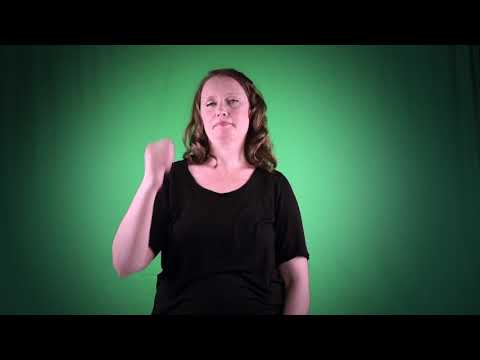
Definition: toward the rear; in the opposite direction from the one that one is facing or traveling.
Sign for BACK THUMB in ASL

Practice Activities:
To practice the sign for BACK THUMB in ASL, start by isolating the movement and handshape in front of a mirror. Repeat the sign slowly, paying close attention to the position of the thumb behind the back or the specific hand orientation depending on the regional variation. Practice signing it on both your dominant and non-dominant sides to build muscle memory and flexibility.
Use repetition drills to help retain the sign for BACK THUMB in ASL. Set a timer and go through 20 repetitions while alternating between a relaxed and deliberate signing speed. Say the word softly to yourself while signing it to create a stronger mental connection between the sign and the concept.
Next, try simple sentence exercises like “I hurt my back thumb” or “My back thumb is sore.” Practice altering these with different pronouns: “His back thumb is fine” or “Her back thumb bends more.” This variation helps reinforce vocabulary and grammar simultaneously. Use these sentences in physical storytelling where you mimic activities like playing sports or gardening that might emphasize a back thumb.
With a partner, act out small everyday scenarios where you might mention the back thumb. You could pretend to be in a doctor’s office describing an injury, or working with tools where your back thumb needs special care. Switch roles and correct each other to ensure accuracy and clarity in the sign.
Storytelling is another powerful activity. Create a short story about someone who injures their back thumb and sign the story while emphasizing physical description and emotion. For added challenge, record yourself telling the story in ASL, then watch the video and self-correct.
Flashcards with body parts can also help reinforce the sign for BACK THUMB in ASL. Mix them up and try to quickly produce the appropriate sign when shown the card, improving recognition and speed under light pressure.
Cultural Context:
In the Deaf community, signs for specific body parts like the sign for back thumb in ASL are important for everyday communication. Detailed signs allow Deaf individuals to describe locations on the body accurately, which is especially useful in medical, personal care, or injury-related conversations.
The sign for back thumb in ASL helps express discomfort, injury, or focus on the thumb’s back area. Since ASL uses visual-spatial cues, the accuracy of such signs ensures clear communication without the need for excessive explanation. This makes the sign both functional and essential in ASL vocabulary.
Within Deaf culture, there’s a strong emphasis on body awareness, and that includes knowing terms like the sign for back thumb in ASL. Community discussions about pain management, medical appointments, or physical activity often include precise references to body parts. Understanding and correctly using this sign is a key part of those exchanges.
When someone shares about hurting the back of their thumb during sports, crafting, or daily life, using the sign for back thumb in ASL allows for clarity. Deaf and hard-of-hearing people rely on such signs not only for conversation but also to advocate for themselves in appointments or in group settings ⚕️. It’s an empowering aspect of visual language.
This specific sign also plays a role in education and interpreting. ASL interpreters use signs for body parts like the back thumb during translations for health classes, physical therapy sessions, or in children’s education . It ensures students and clients fully grasp the information being shared, reinforcing inclusivity.
Healthcare providers who serve the Deaf community often study signs like the sign for back thumb in ASL to build trust and offer effective care. Being able to clearly communicate something as specific as back thumb pain can improve diagnosis and treatment outcomes. It shows the respect for cultural and linguistic needs.
The sign for back thumb in ASL also appears in storytelling within Deaf culture. Visual description is vital, and references to body movements or positions add drama and depth to traditional narratives. The use of exact signs like this enriches the storytelling experience .
Art and performance in the Deaf community may use ASL signs like the sign for back thumb in ASL to creatively portray actions or emotions. The ability to isolate and express specific body parts connects audiences more deeply to the message being delivered visually. It highlights the expressive potential of the language.
Parents teaching their Deaf children ASL include signs for all parts of the body, including the sign for back thumb in ASL. Learning these early helps children identify
Extended Definition:
The sign for back thumb in ASL is a specific gesture used to refer to the back side of the thumb or to indicate a direction or feature related to the thumb’s position. In American Sign Language, body parts like the thumb have distinct signs, and combining them with location descriptions gives clear communication. The sign for back thumb in ASL typically involves pointing or indicating the rear surface of the thumb using the dominant hand.
Understanding how to sign body parts accurately helps with describing injuries, giving directions on the hand, or referencing something specific in storytelling or instruction. The sign for back thumb in ASL can be useful in medical, educational, or everyday contexts. For example, someone might want to tell a doctor about a pain on the back of their thumb or describe where a mark or tattoo is located.
Facial expressions, as always in ASL, play a role in making the sign for back thumb in ASL more precise. If there is discomfort, the face might show pain; if the sign is used playfully in a story, the expression would reflect that. The sign may involve showing the back of the hand, keeping the thumb extended, and demonstrating the specific location of interest.
Learning the correct sign for back thumb in ASL can improve precision in communication, especially in discussions involving injuries, identification, or anatomy. Since ASL is a visual language, spatial orientation matters, and signing the back of a hand versus the front changes meaning. Using accurate handshape and orientation ensures that the message is understood clearly.
The sign for back thumb in ASL can also appear in descriptions involving signs for gloves, accessories, or motions that feature the thumb prominently. This makes it useful in various topics like fashion, sports, and manual tasks. For example, if someone’s thumb was injured while playing a game, the signer can specify the back of the thumb was affected.
In teaching about hand anatomy or explaining exercises involving fingers and thumbs, knowing the sign for back thumb in ASL creates better understanding. For children learning ASL, including detailed body part signs builds vocabulary and improves their ability to describe their physical experiences. Signers can also incorporate the sign when speaking about gripping or holding things, where thumb position is important.
To effectively use the sign for back thumb in ASL, context will guide the movement and clarity. When paired with gestures that show pointing or using another hand to indicate surface direction, the sign becomes easily understood. This makes it a highly functional sign in everyday conversation or professional situations.
Synonyms: Sorry, it looks like “Back Thumb” is not a recognizable word or phrase with multiple synonyms that I can generate. Please clarify the term or provide more context. If “Back Thumb” refers to a sign in ASL, additional details could help me better understand and provide appropriate synonyms or descriptions.
Educational resources: Find related learning materials in our course bank!
Want more? Check out some of our popular learning activities on the homepage!
Need to look up a sign? Use our highly rated dictionary: https://aslinteractive.com/best-asl-dictionary/
Follow us on tiktok: https://www.tiktok.com/@aslinteractive. More social media links at the bottom of this page!
Long-tail Keywords: what is the ASL sign for back thumb, how do you sign back thumb in American Sign Language, how to say back thumb in ASL
Categories:
tags: Commands, Fingerspelling, Directions, Hand Movements, Sign Parameters
Parameters
*Handshape*:
The handshape for the sign for BACK THUMB in ASL uses a closed fist, where the thumb is extended and points backward while the fingers remain curled into the palm. The back of the hand generally faces outward, showing the direction of the thumb.
This handshape plays a crucial role in conveying the location and orientation of the thumb. Since the sign for BACK THUMB in ASL emphasizes the thumb’s position, maintaining the correct angle and tension is essential for clarity. ️
*Palm Orientation*:
The palm orientation in the sign for BACK THUMB in ASL typically features the dominant hand with the palm facing inward toward the body. The thumb points over your shoulder or toward the back, depending on the directionality intended within context.
In the sign for BACK THUMB in ASL, it’s important that the palm remains relatively vertical while the thumb is isolated and clearly points backward. This helps convey the meaning clearly and naturally in conversation.
*Location*:
The sign for BACK THUMB in ASL is typically produced with the dominant hand located at the side or slightly behind the dominant shoulder, depending on whether the thumb is being referenced anatomically or descriptively. The thumb often points backward toward the shoulder or extended behind the body to illustrate placement.
When demonstrating the sign for BACK THUMB in ASL, hand orientation and body positioning are important. The sign stays close to the upper torso and may shift slightly for emphasis or clarity.
*Movement*:
To produce the sign for BACK THUMB in ASL, start with your dominant hand in an open “A” handshape, with the thumb extended. Position the hand near the top of your shoulder or upper back. Move the hand downward slightly along the shoulder blade area to signal the concept of the back.
The BACK THUMB in ASL emphasizes the location and hand orientation. The thumb remains extended throughout the movement, clearly indicating the thumb while connecting it to the back area of the body for clarity.
*Non-Manual Signals*:
The non-manual signals for the sign for BACK THUMB in ASL typically include a neutral or slightly inquisitive facial expression, depending on context. Eyebrows may be slightly furrowed if clarification is needed, especially if distinguishing between BACK or THUMB locations.
Body posture remains steady, and the eyes usually track the movement of the thumb to highlight its direction or position. Non-manual markers align with context to support accurate interpretation of the sign for BACK THUMB in ASL ️.
*Prosody, Dominant/Non-Dominant Hand*:
The sign for BACK THUMB in ASL uses the dominant hand, formed into a thumbs-up shape. The thumb is pointed backward over the shoulder or curved behind to indicate the position behind the body. The non-dominant hand is not typically involved in this sign. Movement is minimal, with the wrist or arm rotating slightly to show the direction of the back thumb.
When using the sign for BACK THUMB in ASL, body orientation and facial expression can add clarity, especially if referencing a specific location or object behind the signer. Prosodic features like eye gaze and slight torso movement help reinforce the spatial concept of the thumb being positioned toward the back.
Tips for Beginners:
When learning the sign for BACK THUMB in ASL, it’s important to recognize that this is not a standard sign in everyday ASL vocabulary but may instead involve indicating a specific part of the body using directional cues. In this case, you typically use your dominant hand to point to the back of the opposite hand’s thumb. You want your movements to be deliberate and your facial expressions to match the context for clarity.
Begin by practicing your handshape and orientation. Your non-dominant hand should remain steady, facing palm-in, as you point to the back of your thumb. The dominant hand uses the index finger to point clearly at the back of the thumb on your passive hand. Slow down this gesture until you feel confident with your accuracy and positioning.
Don’t rush when trying to master the sign for BACK THUMB in ASL. Beginners often gesture too broadly or misplace the pointing hand, which can confuse the meaning. Precise body location reference is essential in ASL, especially for descriptive terms. Use a mirror to check that your finger is aligned with the correct part of the thumb.
Consistency in your dominant hand use is crucial. Switching hands mid-conversation without intentional reason can be confusing. Stick with your dominant hand to point or describe. Practice regularly in front of a mirror or with a video recording to ensure you’re getting consistent results.
Also, remember that slight tilts or unclear pointing can create misunderstandings. Clear movement and proper posture help keep the sign for BACK THUMB in ASL easy to understand. If you’re using this as part of a larger explanation, keep your signing space tight and structured to avoid visual clutter.
Finally, seek feedback. Sign with a fluent signer or teacher and ask if your production looks clear. Direct feedback can improve your handshape, location, and expression when using the sign for BACK THUMB in ASL.
Connections to Other topics:
The sign for BACK THUMB in ASL connects closely with body part vocabulary, which is foundational in everyday conversation and in medical or anatomical contexts. Knowing how to sign parts of the hand, such as thumb, palm, finger, and back of the hand, prepares learners for more specific discussions, from physical discomfort to gestures in storytelling.
This sign also relates to orientation and spatial referencing in ASL. Describing the position of the thumb on the back side of the hand involves using classifiers and visual focus, reinforcing the importance of direction and palm orientation in ASL grammar. Signs like BACK or BEHIND also share this spatial concept and help provide context when explaining position.
In compound sign formation, the sign for BACK THUMB in ASL can be combined with other signs to describe injuries, such as BRUISE or CUT. For instance, a person might sign HURT combined with BACK THUMB to describe pain localized in that area. This illustrates how ASL often uses descriptive components to build clarity and precision into communication.
This sign is also useful when explaining gestures or directional cues. For example, in describing a thumbs-up or a backwards motion made with the thumb, users may reference the BACK THUMB area to indicate either contact or visual emphasis. This is valuable in interpreting idiomatic phrases, gestures, or physical actions.
Comparatively, understanding the sign for BACK THUMB in ASL supports recognition of non-manual signals involving thumb position. In storytelling or role-shifting, thumb direction can indicate who’s doing the action or what object is being manipulated. This builds context and can transform the nuance of a sentence. Awareness of body-specific signs deepens comprehension and expression when using ASL.
Summary:
The sign for BACK THUMB in ASL is a compound phrase that requires breaking down into its elements. Since BACK and THUMB have independent meanings in ASL, the construction leans on contextual clarity. Typically, signs for body parts like “thumb” are indicated specifically with reference to hand anatomy.
To produce the sign for THUMB, one typically extends the thumb while folding the other fingers into the palm, then points it upward or flexes it based on context. For BODY LOCATIONS like the back of the hand or arm, classifiers and directional indexing are often used to show placement.
To indicate BACK in ASL, the signer may use a flat hand that moves backward to demonstrate a spatial orientation. This infers something located behind or referring to the rear side of something. When combining BACK with THUMB, careful attention to body language and location helps convey meaning clearly.
A signer may show the thumb using a standard sign for THUMB, then use spatial referencing to indicate the “back” part. This helps bridge the conceptual representation of the sign for BACK THUMB in ASL. It is not a lexicalized sign in ASL but rather an assembled construction.
The sign for BACK THUMB in ASL often becomes relevant in medical, anatomical, and sports-related settings. The use is typically descriptive rather than metaphorical. For example, injury descriptions, massage vocabulary, or anatomical naming in biomechanics may require this sign.
In interpreting, the construction for BACK THUMB in ASL must retain its clarity to avoid confusion with signs for hand or finger in general. This necessitates a reliance on locative classifiers. Describing an injury on the back side of the thumb might pair fingerspelling with depiction.
Linguistically, the description of BACK THUMB in ASL involves understanding compound signs and spatial orientation. The sign deploys the manual modality of ASL effectively by building on two discrete morphemes. Visual-spatial information plays a central role in constructing the meaning.
From an applied linguistics standpoint, this sign underscores the importance of spatial grammar in ASL. Spatial grammar allows precise communication without lexical signs for every possible concept. This is characteristic of visual languages that depend on classifiers and indexing.
The sign reflects a broader trend in ASL, wherein signs for body parts or specific locations often require compound or descriptive strategies. There are many examples where precision is achieved not through new vocabulary but spatial elaboration. This is particularly true of uncommon terms like BACK THUMB.
Grammatically, the phrase is a noun with heavy reliance on non-manual markers and spatial modifiers. While unfamiliar to new users, ASL relies more on spatial logic than on rote vocabulary to describe anatomical detail. This enables expressiveness without word inflation.
The sign for BACK THUMB in ASL may be contextualized using depicting signs. For instance, the signer might use a CL:1 or CL:B handshape to draw attention to the thumb and then motion to the back of it. This interplay visualizes the concept clearly for native signers.
For Educational Interpreters or healthcare interpreters, explaining or interpreting signs like BACK THUMB requires solid understanding of anatomy and mapping it visually. The sign must make cognitive sense to both parties in a conversation. Context leads the construction.
In Deaf culture, the specificity of physical description supports autonomy and health literacy. Knowing how to discuss body parts in detail—like the BACK THUMB—facilitates clearer healthcare discussions. It empowers Deaf patients through expressive confidence in ASL.
From a morphological view, the sign for BACK THUMB in ASL exemplifies productive morphology. The language doesn’t rely on fixed terms for every concept; signers use classifier systems and directionality. This affirms ASL’s strong roots in modality-based communication.
Classifier usage in this sign is critical. An L-handshape can represent the index finger and thumb. Motioning that shape’s backside towards oneself or another visual axis demonstrates BACK THUMB effectively. These sorts of classifier combinations are central to fluent signing.
It’s worth noting that the sign for BACK THUMB in ASL may vary regionally. While ASL is widely consistent, certain body-part signs can differ based on community usage. This variation underscores the dynamic, evolving nature of signed languages.
Non-manual signals like eyebrow raises or head tilts can refine what the signer means. When indicating dimensions like “back side” or “posterior,” a slight shift in orientation adds shared understanding. The face and body play subtle but crucial roles.
Explaining something affecting the BACK THUMB may include additional signs for pain, swelling, or function. These contextual clues expand the original sign into a storyline. Narrative flow complements grammatical fluency in ASL.
Medical ASL vocabulary often adapts terms mid-discussion. If BACK THUMB becomes a recurring focus in a conversation, the signer may establish it in space. After that, referencing it becomes simpler and more graphic. This setup mirrors the way names or topics can be “set” in AS
Want more? Check out some of our popular learning activities!
ASL Interactive Resources
ASLInteractive YouTube Channel
Follow us on tiktok: @aslinteractive.com
Follow us on Instagram: aslinteractive
Facebook page: aslinteractive
Facebook group: aslinteractive
LInkedIn: ASL Interactive LLC
Twitter: @ASL_interactive
*Some information on this page is AI-generated. AI can make mistakes. Please check the information.


Responses