Sign for BAD in ASL | 😈 ASL Dictionary

Definition: Not good.

Sign for BAD in ASL

YouTube player

Practice Activities:

To begin practicing the sign for BAD in ASL, start by isolating the movement and facial expression. Stand in front of a mirror and say the word “bad” aloud while performing the sign to connect the visual with the concept. Remember to focus on the negative facial expression that naturally accompanies this sign, as facial grammar is essential in ASL.

Next, use the sign for BAD in ASL in common phrases or short sentences. Examples include “That food is bad,” “She got a bad grade,” or “It’s a bad day.” Sign these slowly at first, then with increasing fluency. Practice transitioning into and out of the sign from other vocabulary words to ensure smooth communication.

Pair work can help reinforce comprehension and fluency. With a partner, create short dialogues that include positive and negative opinions. For example, one person might sign “The movie was good” and the other might respond “No, I thought it was bad.” This creates natural opportunities to use the sign for BAD in ASL in conversation.

Try using storytelling to incorporate the sign in context. Make up a simple story about a bad day and sign the narrative. For example, “I woke up late, forgot my homework, and spilled coffee. It was a bad day.” Focus on fluency, facial grammar, and clear sign production.

To reinforce memory, try role-play situations where you describe events or choices using the sign. For instance, discuss “A bad restaurant experience” or review a “bad decision” made in a game or activity. These scenarios make use of expressive signing and help connect the sign for BAD in ASL with real-life communication.

Daily journaling using video logs is another fun way to practice. Record one or two bad events from your day using ASL. This personalizes the learning and increases retention of the sign for BAD in ASL.

Cultural Context:

In American Sign Language, understanding the cultural context behind signs is just as important as learning the handshapes and motions. The sign for BAD in ASL may seem simple, but it carries meanings and nuances that are shaped by Deaf culture and communication norms.

Deaf culture places a strong emphasis on clarity and directness. The sign for BAD in ASL is often used to express disapproval, negativity, or describe something unpleasant, but its use is not always literal. Context matters greatly, and tone, facial expression, and body language play a large role in how the sign for BAD in ASL is received.

Facial expressions are crucial in ASL communication. When signing bad, the signer typically uses a negative facial expression to reinforce the meaning. Without the appropriate expression, the message might be misunderstood. So, mastering the sign for BAD in ASL means more than just getting the hand motion right — it’s about conveying a full message using the whole body.

The sign for BAD in ASL can also reflect cultural values about honesty and openness. In Deaf culture, it’s common to be direct when giving opinions. If someone or something is bad, saying so using the appropriate sign is considered honest, not rude. That’s an important cultural difference to understand when using the sign for BAD in ASL.

It’s also typical in social settings to describe experiences or events using this sign. Whether talking about bad food, bad weather, or a bad situation, the sign for BAD in ASL is commonly used in everyday storytelling. This helps enrich conversations and makes communication more precise and colorful.

The sign is not just used negatively — it can be part of humor or exaggeration, too. In storytelling, a signer might use the sign for BAD in ASL with playful expressions to share a funny or ironic tale. In this case, tone and delivery make all the difference.

Parents and teachers use the sign for BAD in ASL to teach children about behavior. It helps set boundaries clearly without raising voices, which aligns with visual language discipline strategies often used in Deaf education. Teaching right and wrong through signs fosters early understanding of ethics and social norms.

In the arts, especially Deaf theater and poetry, the sign for BAD in ASL may symbolize deeper societal issues or personal struggles. Artists use it creatively to tell stories, challenge ideas, or express strong emotions. This adds layers of meaning that go beyond its usual use in daily conversation.

Interpreters often have to adjust the intensity of the sign based on the spoken

Extended Definition:

The sign for BAD in ASL is an essential part of everyday communication. This sign is used to express something negative, unpleasant, or morally wrong. Understanding how to use the sign in the right context can help in accurately conveying emotions or judgments.

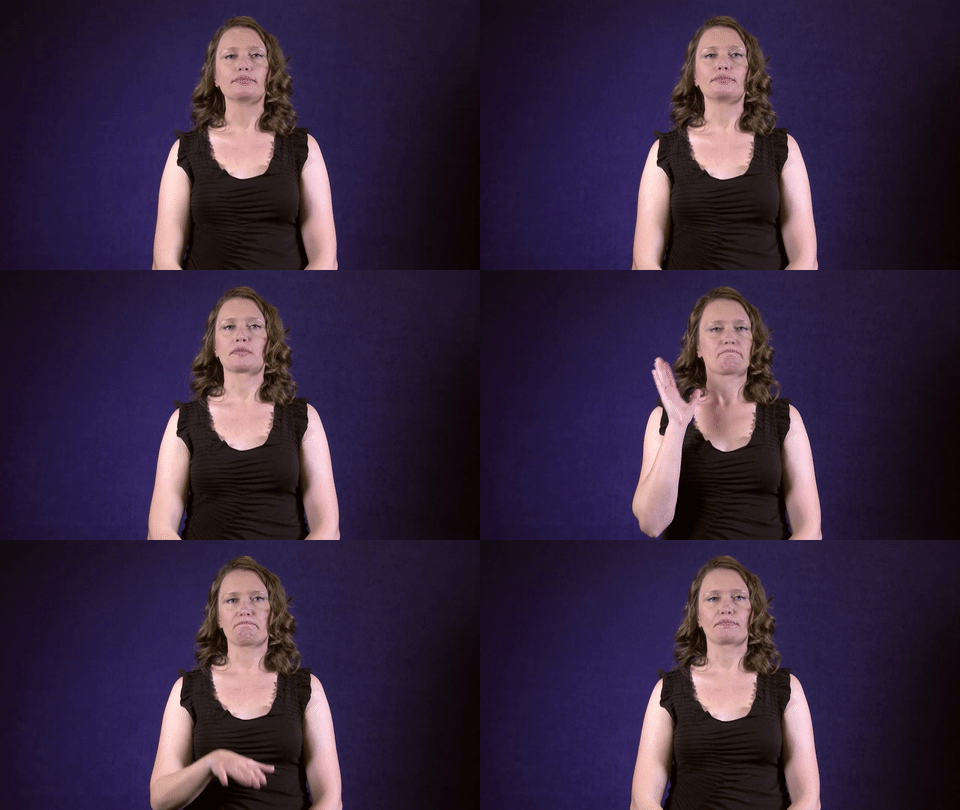
In American Sign Language, the sign for BAD typically begins with the dominant hand in a flat shape touching the mouth, then moving outward and downward with the palm facing downward. This motion mirrors the idea of something going from good or neutral to negative. Handshape, movement, and facial expression all play a role in giving the sign its full meaning.

Facial expressions are especially important when signing BAD in ASL. A disapproving or concerned expression reinforces the emotional tone of the sign. Without the correct facial cues, the sign might be misunderstood or lose its intended impact. For beginners, practicing both the hand motion and face cues can greatly improve accuracy.

The sign for BAD in ASL can be used in many different situations. From describing the weather or food to talking about behavior or decisions, this sign helps express a range of sentiments. It’s a common vocabulary word used by signers of all levels, from children learning simple words to fluent adult communicators.

In contrast to GOOD, which also starts near the mouth and moves in another direction, BAD is easy to distinguish once you’ve had some practice. The directional movement and palm orientation are key differences. When teaching or learning, comparing these basic signs can help reinforce understanding and boost memory.

This sign can also be modified or paired with other signs to form more complex phrases. For example, signing very BAD or BAD idea involves combining this core word with others to give more depth to what you’re saying. Learning how to incorporate it into sentence structure strengthens overall ASL skills.

Because BAD is a high-frequency word, it’s often one of the first signs taught in beginner classes. It’s helpful in describing general situations and in making both casual and serious commentary. As part of your ASL vocabulary, it’s a valuable tool for more expressive communication.

Digital tools and video tutorials can be especially helpful when learning the sign for BAD in ASL. Seeing it used in real-life dialogue or practice sentences gives context that helps with memorization. Watching fluent signers demonstrate the sign also highlights the subtle movements and expressions involved.

In conversational ASL, the tone of the term BAD can change depending on context. It might be used playfully, seriously, or even sarcastically. Non-manual signals, like eyebrow movement and head position,

Synonyms: awful, terrible, horrible, dreadful, poor

Educational resources: Find related learning materials in our course bank!

Want more? Check out some of our popular learning activities on the homepage!

Need to look up a sign? Use our highly rated dictionary: https://aslinteractive.com/best-asl-dictionary/

Follow us on tiktok: https://www.tiktok.com/@aslinteractive. More social media links at the bottom of this page!

Long-tail Keywords: what is the sign for bad in asl, how to sign bad in american sign language, bad in asl

Categories:

tags: Negation, Locations, Describing Residence, Language Learning, Vocabulary

Parameters

*Handshape*:

The dominant hand uses a flat handshape with fingers extended and together, thumb aligned with the fingers. This hand begins at the mouth, palm facing in, then moves outward and downward, flipping so the palm ends facing down. The handshape is similar to the one used in the sign for GOOD, but with a downward motion instead.

In the Sign for BAD in ASL, the flat handshape is essential for clarity and distinction. A relaxed but precise formation ensures the meaning is easily interpreted, making the sign fluid and easy to incorporate into conversational ASL. Using the proper handshape helps convey the Sign for BAD in ASL with confidence and accuracy.

*Palm Orientation*:

The palm orientation for the sign for BAD in ASL begins with the dominant hand open and flat, palm facing inward toward the chin. As the motion is completed, the hand moves downward and outward, flipping the palm to face downward toward the ground.

This fluid motion enhances the expressive component of the sign for BAD in ASL, emphasizing its negative meaning. The palm rotation is important to maintain clarity and grammatical correctness. ️

*Location*:

The sign for BAD in ASL is produced at the mouth level. The dominant hand starts with the fingers touching the lips, palm facing in. The hand then moves away from the mouth and flips to face downward as it moves slightly forward.

This face-level location is key to the sign for BAD in ASL because it incorporates a subtle expression change that often accompanies negative or disapproving emotion. Keeping the motion and location precise enhances the clarity of the sign.

*Movement*:

The sign for BAD in ASL begins with the dominant hand in a flat “B” handshape, palm facing in toward the mouth. The fingertips touch the lips lightly to start.

Then the hand moves downward and slightly outward, flipping so the palm faces down at the end of the motion. The movement is fluid and deliberate, showing contrast between the initial position and the final one. The sign for BAD in ASL may also include a slight facial expression to indicate negativity.

*Non-Manual Signals*:

The non-manual signals used in the sign for BAD in ASL typically include a slight frown or neutral expression, often accompanied by a slight head shake. This negative or disapproving facial expression helps reinforce the meaning behind the sign.

When performing the sign for BAD in ASL, the signer may also show a subtle narrowing of the eyebrows to emphasize displeasure or disapproval. These facial cues are essential to convey the full meaning of the sign accurately.

*Prosody, Dominant/Non-Dominant Hand*:

The dominant hand starts in a flat B-handshape, fingertips touching the lips, palm facing in. It then flips forward and down sharply, ending palm down. The non-dominant hand is not used in this sign. Facial expression is neutral or disapproving, matching the meaning of the sign. The sign for BAD in ASL captures the idea of something unfavorable or negative through this quick motion.

When signing, make sure the movement is deliberate and clear. The sign for BAD in ASL is commonly used, so precision with handshape and movement is important to convey the right tone.

Tips for Beginners:

When learning the sign for BAD in ASL, start by focusing on handshape and movement. The dominant hand begins with an open palm at the chin, then moves outward and downward, flipping to a palm-down position. Make sure your facial expression matches the meaning—disgust, disappointment, or distaste can help reinforce the sign’s tone. Expression adds clarity and emotional depth to your message.

New signers often forget to flip the hand or may do it too fast or clumsily. To avoid this, practice slowly in front of a mirror until the motion feels natural and smooth. Consistency is key. The sign for BAD in ASL should not resemble the sign for GOOD, even though they begin similarly. Remember that BAD flips the hand while GOOD moves straight outward. This distinction helps prevent misunderstandings.

A common pitfall is using a neutral face or smiling while discussing something negative. In ASL, facial grammar plays a crucial role in meaning. Practice pairing the correct expression with the hand movement. This helps make your signing appear more fluent and expressive.

Also, avoid adding extra movements or flaring your fingers unless you’re emphasizing for dramatic or poetic effect. Keep the motion clean and controlled. The sign for BAD in ASL is straightforward in structure but powerful in communication. Less is often more when it comes to clear and effective signing.

Sign with intention and pay attention to your audience. If someone looks confused, repeat the sign a little more slowly and clearly. Getting immediate feedback from fluent signers or tutors can be extremely helpful. Record yourself signing and compare it to native signers online. This helps you catch subtle differences in hand position or motion that may not be obvious at first.

With patience and consistent practice, using the sign for BAD in ASL will become second nature.

Connections to Other topics:

The sign for BAD in ASL connects to a variety of descriptive emotional and evaluative signs. It is often paired with facial expressions to enhance meaning, such as frowning or grimacing, showing displeasure or disappointment. This sign has clear ties to values and judgments, and it’s often taught early in ASL classes to express basic feelings or reactions.

This sign shows up in multiple compound signs related to moral or qualitative evaluation. Phrases like BAD HABIT or BAD IDEA use the base sign for BAD in ASL followed by appropriate contextual nouns. These compounds help learners see how descriptive concepts combine naturally in the language structure.

Grammatically, the sign for BAD in ASL mirrors positive counterparts like GOOD in form but contrasts sharply in meaning and facial expression. This direct opposition helps learners develop a deeper awareness of non-manual signals’ importance in ASL. It also shows how signs can be mirrored or modified to create binary opposites, a frequent pattern in ASL vocabulary.

The sign for BAD in ASL also connects with emotion-based signs like SAD, ANGRY, and DISAPPOINTED. These emotional signs often appear in sequences when describing events or telling stories. Being able to link BAD with more specific emotional states helps signers develop nuance in expressing personal reactions.

In a broader context, BAD interacts with signs for behavior or consequences, such as BAD BEHAVIOR or PUNISHMENT. This connection aids in classroom management signing, storytelling, or daily communication in social and educational settings. Learners can benefit from seeing how adjectives like BAD combine with nouns and verbs to form vivid and meaningful expressions.

Emoji reinforcements like or are sometimes used in online ASL contexts to support learning and emphasize mood. These visual cues, while not part of formal ASL, show how BAD can be visually reinforced beyond handshapes. This makes the sign for BAD in ASL part of a larger multisensory learning experience in modern signing practices.

Summary:

The sign for BAD in ASL is commonly produced using a flat dominant hand, fingers together, starting at the chin with the palm facing in, and then flipping outward so the palm faces down, ending the motion away from the face. The facial expression accompanying this sign often adds weight to its meaning, typically reflecting disapproval, disgust, or disappointment, depending on the context and intention.

Culturally, the sign for BAD in ASL carries strong affective cues. ASL, like all natural languages, integrates facial grammar with manual signs. So, for the sign for BAD in ASL, facial expressions like a frown or slight grimace will make the message clearer and more emphatic.

Like many evaluative adjectives, the sign for BAD in ASL is context-sensitive. It may carry different emphases based on where it appears in the sentence. For instance, when used with a directional verb, such as TREAT (as in, “they treated me BAD”), signing BAD incorporates emotional nuance, intensifying the sentiment.

In terms of topical structure, the sign for BAD in ASL can act as a predicate, attributing a quality to a noun. Signers often use it after establishing a subject–object set-up, allowing for topic-comment grammar that is essential in ASL discourse. This distinguishes it structurally from English but achieves the same semantic goal.

Semantically, the sign for BAD in ASL sits opposite to the sign for GOOD, which uses a similar handshape and movement, but mirrors it in direction and facial expression. The parallel structure between these two signs reflects an iconic relationship, making them intuitive for learners and fluent signers alike.

The sign for BAD in ASL is not limited to moral judgments. It can describe physical states or conditions, such as feeling sick, experiencing pain, or reacting negatively to news. Depending on the facial expression and sign intensity, BAD may convey anything from mild distaste to strong condemnation.

The sign integrates well with classifiers to create visual representations of actions or conditions. For example, pairing classifiers with BAD can depict someone limping badly, or a dish tasting badly prepared. This expands its expressiveness beyond a standalone sign into a broader visual grammar.

From a linguistic perspective, the sign for BAD in ASL is an example of a fully lexicalized sign. It has a fixed handshape, location, motion, and palm orientation, making it a stable unit within ASL vocabulary. This differs from classifiers or constructed actions, which are more dynamic and context-dependent.

Phonologically, the sign for BAD in ASL is structured with a marked orientation change, starting from the signer’s body and moving outward. This inward-to-outward motion signifies emotional detachment or rejection, aligning with the negative valence of the word. The palm flip itself may symbolize turning away from or casting off something undesirable.

Morphologically, BAD is not typically inflected, but it can be modified for degree. Repeating the sign or exaggerating the motion and facial expression intensifies the meaning. This flexibility shows how inflection in ASL often involves non-manual signals rather than changes to the handshape or path movement.

In terms of syntax, the sign for BAD in ASL usually follows ASL’s topic-comment word order. For example, one could sign “FOOD, BAD” to indicate that the food is not good. This structure prioritizes the subject or theme first, aligning with ASL’s spatial-organizational grammar.

The sign for BAD in ASL can also appear in idiomatic phrases. Combining BAD with signs like LUCK or BREAK can convey deeper meaning. For example, BAD LUCK uses a compound approach that blends two key signs for a succinct expression of misfortune.

Interpersonally, using the sign for BAD in ASL may display empathy or criticism depending on the facial tone. Within conversations, signers often check in emotionally by gauging reactions to statements like “that’s BAD.” This function reflects ASL’s rich social and affective dimensions.

When examining sign acquisition, learners often struggle with the palm orientation in the sign for BAD in ASL. The reversal of motion is less intuitive for English speakers and may take repetition to master. Teaching strategies often pair this sign with GOOD to aid kinesthetic contrast and memory.

There are regional and generational variations in how BAD is expressed among native and fluent signers. Some communities may favor slightly different facial expressions or sign pacing. These variations highlight the fluidity and adaptability in ASL across different demographics.

In educational discourse, the sign for BAD in ASL might be used to point out mistakes during feedback. It can be softened with gentle facial expression or replaced with euphemisms in sensitive environments. Language instructors often model this carefully to support positive interactions while maintaining clear communication.

The sign for BAD in ASL also serves as a key evaluative concept in narratives and storytelling. Within ASL literature, BAD frequently accompanies depictions of villains, harmful actions, or unpleasant scenarios.

Want more? Check out some of our popular learning activities!

ASL Interactive Resources

ASLInteractive YouTube Channel

Follow us on tiktok: @aslinteractive.com

Follow us on Instagram: aslinteractive

Facebook page: aslinteractive

Facebook group: aslinteractive

LInkedIn: ASL Interactive LLC

Twitter: @ASL_interactive

*Some information on this page is AI-generated. AI can make mistakes. Please check the information.

Sign for BAD in ASL
Sign for BAD in ASL

Responses