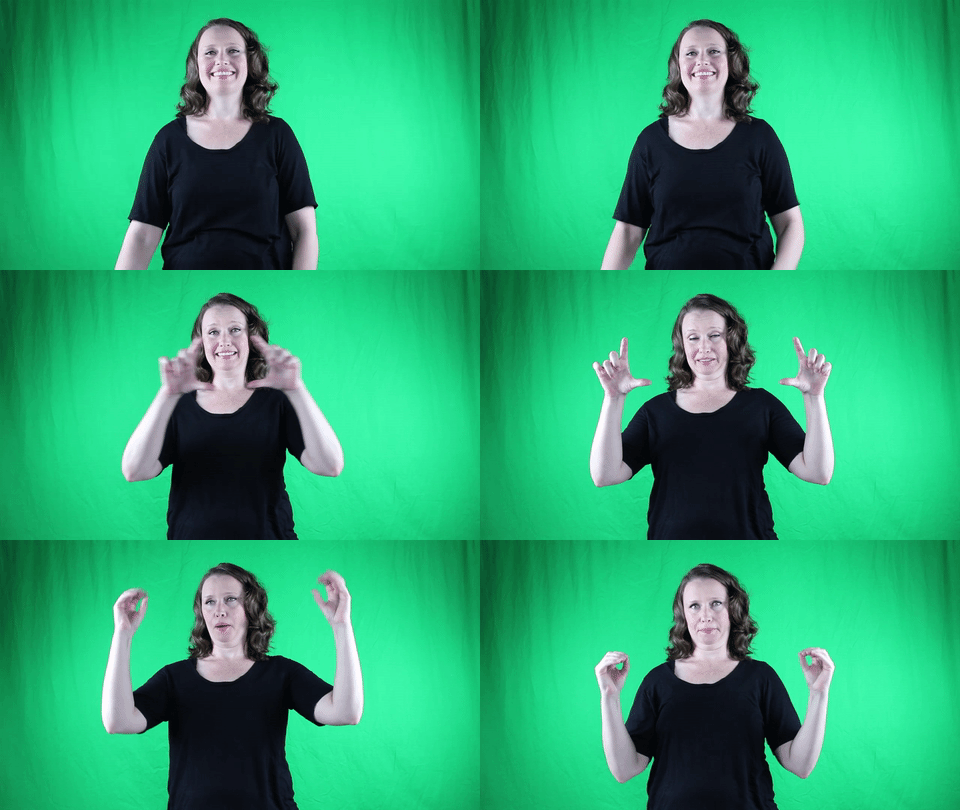
Sign for BALLS ON END (FABRIC) in ASL | 🧣 ASL Dictionary

Definition: an embellishment on fabric

Sign for BALLS ON END (FABRIC) in ASL

YouTube player

Practice Activities:

To practice the sign for BALLS ON END (FABRIC) in ASL, begin with mirror exercises. Stand in front of a mirror and repeat the sign slowly while observing your handshape, palm orientation, and movement. Repeat the sign 10 times while saying the English word in your mind to strengthen the connection between concept and sign.

After mastering the sign in isolation, begin using it in short phrases. Try signing descriptions such as “my sweater has balls on the end” or “old fabric gets balls on end.” Record yourself or practice with a partner who can give feedback. Emphasize clarity and natural expression as you integrate the sign into descriptions.

Use flashcards to describe textures and materials. When you pull one that says “worn-out blanket” or “old wool hat,” sign a short sentence incorporating the sign for BALLS ON END (FABRIC) in ASL. Expand your vocabulary by identifying other texture-related signs like “rough,” “soft,” or “thin” and see how they connect with this sign in conversation.

Storytelling is a great way to build fluency. Create a narrative about doing laundry and noticing fabric damage. Include scenes where a character rubs a shirt and identifies the balls on the end. Use facial expressions to emphasize surprise or frustration related to the texture.

For partner practice, take turns describing different clothing items from photos or real garments. Each partner includes the sign for BALLS ON END (FABRIC) in ASL within their descriptions. Ask and answer questions like “Do you wear this?” or “Would you donate it?” to encourage dialogue and repeated use of the sign.

Visual games are helpful too. Create or find images of clothing with and without fabric pilling. Try to label or describe the ones with balls on end using the appropriate ASL sign. Use these exercises to reinforce natural usage and build conversational confidence.

Cultural Context:

In American Sign Language (ASL), the sign for BALLS ON END (FABRIC) in ASL reflects a unique way of depicting specific textures or appearances that may not exist in English terminology. This concept can be found in fashion, design, and crafts, particularly when describing textiles that feature rounded or puffy elements that stand up or are placed continuously along seams or patterns. Using this sign helps ASL users communicate precise visual or tactile details about materials in a simple and effective manner.

The sign for BALLS ON END (FABRIC) in ASL can be seen in conversations related to arts and crafts, sewing, costume design, or home decor. People may describe blankets, curtains, or clothing with small balls, pom-poms, or soft spheres that are attached to the edge or surface. These types of fabric designs are not only decorative but may also carry cultural or stylistic significance in different contexts.

In Deaf culture, using space and classifiers to describe shapes, texture, and motion is fundamental. The sign for BALLS ON END (FABRIC) in ASL uses classifier handshapes to indicate repeated, raised spherical features. This visual dimension allows Deaf individuals to convey the feel of a material without physically touching it.

The attention to detail through signs like BALLS ON END (FABRIC) in ASL shows how ASL serves as a visually rich and descriptive language. It plays an essential role in how the community shares descriptions of objects that rely on visual or textural cues. Whether it involves talking about handmade crafts or shopping for specific fabrics, this sign adds clarity and dimension to a conversation.

The concept behind the sign for BALLS ON END (FABRIC) in ASL might come up when attending art programs or crafts classes within the Deaf community. It helps individuals talk about their work more precisely, especially when analyzing or critiquing design elements. Terminology like this is part of what makes ASL a powerful visual language for describing creative work.

In classroom settings or storytelling, teachers can use the sign for BALLS ON END (FABRIC) in ASL to describe costumes or characters. When interpreting visual scenes, such signs allow students to build stronger connection with the depicted objects and environments. The use of this specific sign fosters deeper understanding and interaction in ASL-dominant environments.

When someone in the Deaf community describes a child’s toy, a sensory object, or even whimsical home decorations, the sign for BALLS ON END (FABRIC) in ASL may be

Extended Definition:

The sign for BALLS ON END (FABRIC) in ASL is a descriptive concept used to show a specific texture or condition of fabric. This phrase is often used when referring to material that has become worn, fuzzy, or dotted with small balls due to friction or aging.

In American Sign Language, the sign for BALLS ON END (FABRIC) in ASL uses classifiers to visually describe the appearance of the material. This involves using handshapes that illustrate the raised, fuzzy texture that develops on surfaces like sweaters, blankets, or other soft materials when they age or are overused.

The sign combines a general sign for fabric or material and adds a modification that indicates the presence of these small, raised bumps. The motion and shape of the hand show how the texture feels and looks. It mimics the irregular pattern created by balled-up fibers that stand on end.

This sign is commonly used in conversations about clothing quality, laundry mishaps, or shopping for new textiles. Someone might use the sign for BALLS ON END (FABRIC) in ASL to complain that a certain item has started to look old or to describe damage from frequent washing and drying. It’s practical and visually expressive in ASL storytelling.

In educational settings or Deaf culture, describing texture plays an important role in communication. When discussing the state of clothes in a home, school, or store environment, knowing how to use the sign for BALLS ON END (FABRIC) in ASL helps convey detailed information efficiently. It’s a sign rooted in everyday life and common interactions.

The texture being described may result from synthetic materials, overuse, or low-quality fabric. This sign enables someone to visually emphasize that a garment isn’t just old but specifically pilled or textured in an undesirable way. It adds depth to storytelling by highlighting visual and tactile elements.

When teaching this sign, ASL instructors usually emphasize using the classifier handshape accurately to show where the balls appear, like across the surface of a sweater or fabric item. The context in which this sign is used also matters, as it typically accompanies a larger conversation about clothing condition or fabric care.

Using the sign for BALLS ON END (FABRIC) in ASL is helpful for people working in laundry services, clothing stores, or home settings where material quality is discussed. It allows for detailed dialogue and creates a fuller picture of what’s being described, especially in visual conversations where physical feel is important.

This sign connects to broader vocabulary in ASL that involves texture,

Synonyms: Tassels, Fringe, Trim, Pom-poms, Edging

Educational resources: Find related learning materials in our course bank!

Want more? Check out some of our popular learning activities on the homepage!

Need to look up a sign? Use our highly rated dictionary: https://aslinteractive.com/best-asl-dictionary/

Follow us on tiktok: https://www.tiktok.com/@aslinteractive. More social media links at the bottom of this page!

Long-tail Keywords: What is the ASL sign for balls on end fabric, how do you sign balls on end fabric in ASL, ASL sign for balls on end

Categories:

tags: fashion, clothes, objects, toys, outdoor activities

Parameters

*Handshape*:

The handshape for the sign for BALLS ON END (FABRIC) in ASL typically uses a modified “F” or open “8” handshape. Both hands form loose circles with the thumb and index finger while the remaining fingers extend naturally.

To express the texture and appearance of the balls along fabric, the hands move slightly along an imaginary line, mimicking small round protrusions. The sign for BALLS ON END (FABRIC) in ASL captures both shape and tactile sensation.

*Palm Orientation*:

The palm orientation for the sign for BALLS ON END (FABRIC) in ASL generally involves both hands in a modified C or claw shape with palms facing each other or slightly facing down. This represents the texture or raised portions like fabric puckering or forming small balls.

Depending on the regional variation, the palm might also face slightly forward or use brushing movements. The sign for BALLS ON END (FABRIC) in ASL uses subtle changes in palm angles to mimic the uneven surface of worn fabric.

*Location*:

The location for the sign for BALLS ON END (FABRIC) in ASL is generally in the neutral space in front of the torso, around chest level. Both hands are typically used, starting slightly apart and positioned to show where decorative round balls or pom-poms sit on the edges of fabric.

This placement in the signing space allows clear depiction of ornamental fabric elements, keeping the sign visually descriptive. The sign for BALLS ON END (FABRIC) in ASL may move slightly outward to mimic the trim’s embellishments.

*Movement*:

To produce the sign for BALLS ON END (FABRIC) in ASL, start by forming both hands into loose claw shapes. Place the hands about shoulder-width apart, palms facing each other, as if holding a soft round object. Move both hands upward in small, bouncing motions, mimicking the round forms stacked on the edges of a fabric.

Repeat the motion slightly higher with each bounce to show a rising effect, symbolizing balls forming an edge. The sign for BALLS ON END (FABRIC) in ASL captures the visual texture and stacked orientation typical in textiles or decorations. ⚪

*Non-Manual Signals*:

When showing the sign for BALLS ON END (FABRIC) in ASL, the face typically displays slight squinting or focused eyes to emphasize texture and concentration on detail. Lips might purse or form a small “oo” shape to reflect the small, raised quality of the balls formed on the fabric surface.

Raised eyebrows can accompany the sign to show curiosity or emphasis, especially when describing damaged or worn fabric. Non-manual signals enhance the visual explanation of what the sign for BALLS ON END (FABRIC) in ASL represents.

*Prosody, Dominant/Non-Dominant Hand*:

The sign for BALLS ON END (FABRIC) in ASL typically uses both hands in a symmetrical motion. The dominant and non-dominant hands form loose fists or curved “C” shapes and move in a downward, bouncing motion, suggesting the textured or decorative aspect of fabric with balls at its ends.

Each hand represents a ball and moves in repetitions to emphasize multiple ornaments. The sign for BALLS ON END (FABRIC) in ASL emphasizes tactility and the visual of balls adorning fabric edges, using space and movement to depict the detail.

Tips for Beginners:

When learning the sign for BALLS ON END (FABRIC) in ASL, it’s important to observe texture and shape concepts embedded in classifiers. This sign typically involves showing the puffed or rounded ends of fabric, like decorative balls at the end of curtain tassels. You may use a bent “5” handshape to illustrate rounded edges and use spacing between your hands to represent placement along the fabric.

Beginners should focus on using clear handshapes and maintaining consistent spacing. The hand placements and slight bouncing movement, if included, can mimic the soft, three-dimensional quality of the balls. Watch your hand orientation—palms often face each other when indicating structure or alignment of items along fabric.

The sign for BALLS ON END (FABRIC) in ASL may incorporate role-shifting or spatial referencing to show multiple points along a piece of fabric. Carefully practice the movement path. Don’t rush through the hand motion, especially if you want to show spacing accurately. Use mirrors or video recording to ensure the viewer can see the defined “ball” motions at each end or interval.

A common mistake is flattening your fingers too much or stiffening your hands, which removes the rounded effect needed in the depiction. Remember that ASL is visual and descriptive—your movement and expression help tell the story. Facial expressions can support the texture or uniqueness of the fabric itself.

To fully master the sign for BALLS ON END (FABRIC) in ASL, watch fluent signers use it in natural contexts, such as in discussions about crafts, fashion, or home décor. Practice describing different fabrics and play with the distance between the “balls” to show variety. Repetition improves fluidity, so expose yourself to both live and recorded sources for accuracy and confidence.

Connections to Other topics:

The sign for BALLS ON END (FABRIC) in ASL connects with descriptions of textures and surface qualities, which are essential in discussion of fabrics, design, and visual descriptions. This sign is useful in native ASL storytelling where fabric details contribute to setting or character portrayal. It relates to other signs like TEXTURE, SMOOTH, BUMPY, and THREAD, helping learners visually describe various tactile sensations through signing.

This sign also links to broader ASL vocabulary used in fashion, sewing, or laundry-related contexts. It can appear in compound signs or descriptions that include signs like CLOTH, WASH, DRESS, or DESIGN. For instance, when describing a garment with raised textures or specific decorative stitching, the sign for BALLS ON END (FABRIC) in ASL helps create a vivid and precise mental image.

In educational settings, this sign is helpful when teaching students about how to describe objects using touch-based descriptors. It can be combined with signs for colors, materials like LEATHER or COTTON, or placement descriptors such as SPREAD, PATCH, or LINE-UP to give full descriptions of fabric patterns. This improves a learner’s ability to make detailed, expressive communication in ASL.

Understanding this visual concept also supports fluent use of classifiers. For instance, a signer might incorporate a CL:1 or CL:5 in conjunction with the sign for BALLS ON END (FABRIC) in ASL to expand on how the raised elements are distributed across the fabric. This layering of signs demonstrates natural ASL rhythm and spatial grammar.

In DeafBlind communication, signs like this are crucial for tactile representation. When describing something through hand-over-hand or tactile signing, nuances like the raised quality represented by the sign for BALLS ON END (FABRIC) in ASL enable deeper understanding. This helps bridge accessibility gaps in describing detailed items.

Summary:

The sign for BALLS ON END (FABRIC) in ASL is a very specific and tactile concept. It refers to the small clusters or nodules that appear on the surface of fabric, typically as a result of wear or friction. These are commonly known as “pills” in the textile industry but are described visually and texturally in ASL.

This sign incorporates descriptive classifiers to show the round, pebble-like texture. The dominant hand may use a clawed or curved shape, brushing lightly across the non-dominant hand to mimic the raised nature of fabric balls. The motion emphasizes texture more than literal shape.

One can expect to use initialized signs sparingly with this concept, opting instead for classifiers and textures. ASL relies heavily on showing rather than telling, making a description like BALLS ON END (FABRIC) very dependent on visual demonstration. Handshapes may also be accompanied by mouthing or facial expressions to indicate annoyance or description.

The sign for BALLS ON END (FABRIC) in ASL often comes up in conversations around clothing care or fabric quality. It might appear when someone is referring to old sweaters, worn-out upholstery, or favorite coats. The texture-focused representation is critical to convey exactly the right meaning.

It’s important not to confuse this sign with signs for balls in a literal or sports-like context. Unlike a basketball or soccer ball sign, the sign for BALLS ON END (FABRIC) in ASL highlights imperfection and texture. It leans more into the realm of condition or effect.

This sign can be seen as growing out of a broader cultural usage of ASL’s spatial and tactile strengths. Using classifiers for fabric textures shows ASL’s deep capability to describe minute visual details. It’s part of the beauty of how ASL conveys adjectives and quality.

It also fits into the grammatical class of ASL signs that rely on modification of movement and space. The gesture may be smaller, repetitive, and gentle, all of which point to the balls’ delicate placement on fabrics. These subtle movement nuances depict the unwanted but common fabric texture.

In a linguistic sense, the sign for BALLS ON END (FABRIC) in ASL functions like a descriptive morphology. Rather than a fixed root-plus-affix model from spoken languages, this concept is expressed using location, movement, and handshape. Sign language linguistics recognizes this as layering of meaning through multiple channels at once.

Applied linguistics benefits from signs like this because educators can highlight real-world terminology encountered in daily conversation. Whether discussing how to remove these balls from a jacket or how fabric deteriorates, this sign carries both lexical and pragmatic function. It signals what kind of discourse is underway.

The cultural resonance is subtle but interesting. In many Deaf communities, thrifting or clothing quality may be topics of interest, especially when considering budgets or sustainable fashion. The sign for BALLS ON END (FABRIC) in ASL will come into play when evaluating fabric quality visually during such exchanges.

This sign also exhibits ASL’s brilliant tendency to move beyond dictionary definitions. It’s an example of ASL displaying concept density through one sign, combining ideas of wear, age, and textile specifics. Signed languages excel at this kind of multi-layered communication.

If a fabric is being discussed in a design or fashion classroom, the sign for BALLS ON END (FABRIC) in ASL would be indispensable. It allows for a practical description that doesn’t require lengthy fingerspelling or imprecise analogies. Use of classifiers makes technical details more accessible.

In interpreting settings, especially in fields like fashion, textiles, laundry care, or tailoring, this sign provides accuracy. Rather than interpreting with spoken jargon, the interpreter uses structured depiction. It contributes to terminology-standard development in ASL-heavy curriculum.

The visual similarity to signs involving bumps, imperfections, or hill-like textures gives this sign familial relation to others. It shares traits with signs about acne, skin blemishes, or raised textures. That network of signs shares linguistic features such as looping motions or raised placement.

In constructing a phrase like, “My shirt has balls on it,” a signer would incorporate this specialized sign with a descriptive modifier for location. Skimming motions or pointing indicate the areas of concern. This is where grammar meets spatial contextualization in ASL.

There’s occasionally some regional variation in how people describe fabric-related imperfections. But most experienced signers will rely on a texture-based classifier system for BALLS ON END (FABRIC). These classifiers are holistic, and tend to reflect a Deaf-centric understanding of sensory description.

Because signed languages are so visually grounded, they can describe something like fabric quality more efficiently than most spoken languages. The sign for BALLS ON END (FABRIC) in ASL is one strong illustration of that. Its connection to lived experience makes it especially rich.

Deaf creators in visual arts and fashion often bring this sign into their design discussions. It can be symbolic of deterioration, age, or sensory detail.

Want more? Check out some of our popular learning activities!

ASL Interactive Resources

ASLInteractive YouTube Channel

Follow us on tiktok: @aslinteractive.com

Follow us on Instagram: aslinteractive

Facebook page: aslinteractive

Facebook group: aslinteractive

LInkedIn: ASL Interactive LLC

Twitter: @ASL_interactive

*Some information on this page is AI-generated. AI can make mistakes. Please check the information.

Sign for BALLS ON END (FABRIC) in ASL

Responses