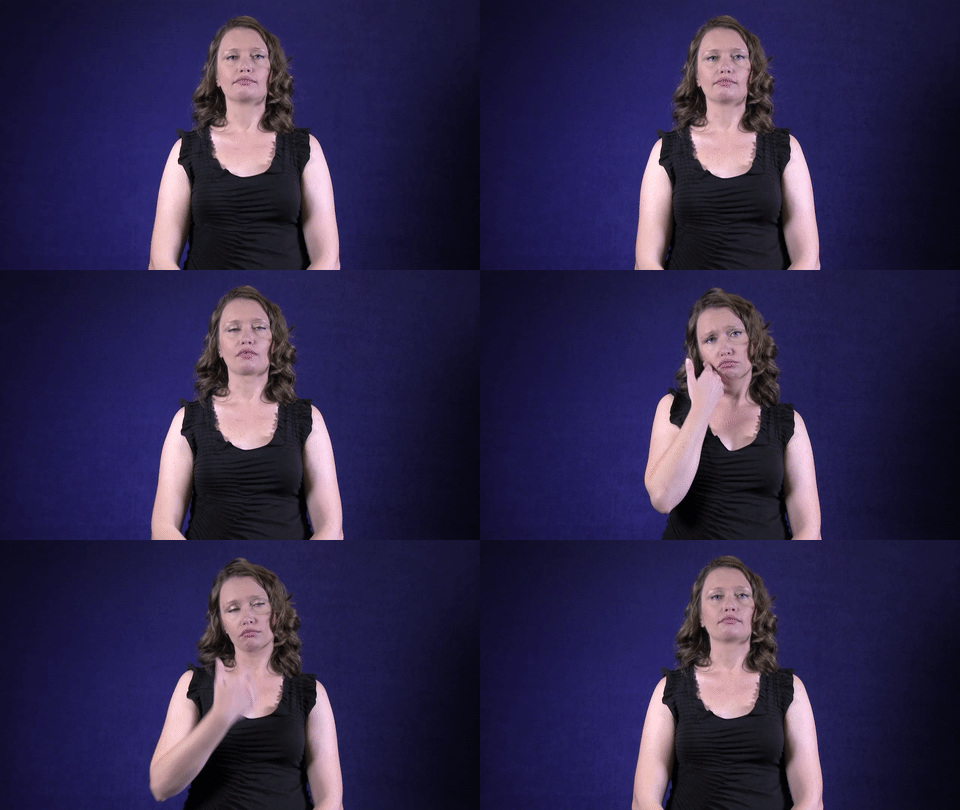
Definition: Shy or easily embarrassed.
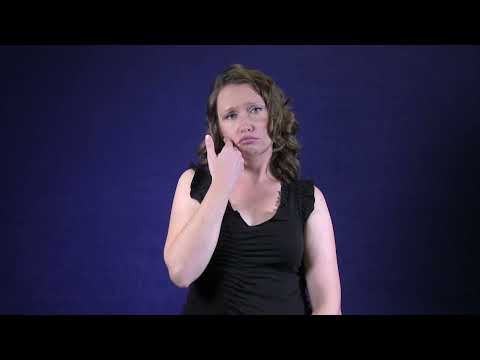
Sign for BASHFUL in ASL

Practice Activities:
To get comfortable with the sign for BASHFUL in ASL, begin by practicing it in isolation in front of a mirror. Focus on the handshape, movement, and facial expression—especially a shy smile or looking away slightly, which help convey the emotion. Repeat the sign slowly, then at a conversational pace.
Next, try using the sign in simple sentences, such as “I feel bashful” or “My dog is bashful around new people.” Practice forming these full sentences slowly at first, making sure the sign matches your facial expressions and body language. Record yourself and watch the playback to see how expressive and accurate your sign is.
Challenge yourself with a storytelling exercise. Create a short narrative about a character who feels bashful on their first day at school or when meeting someone special. Include expressions and signs to support the story, and focus on how the sign for BASHFUL in ASL fits naturally into the narrative.
For partner activities, practice role-playing situations where someone might feel bashful, like speaking in front of a group or going to a party alone. Take turns acting and signing while the other guesses the emotion being signed. This will help reinforce the visual and emotional components of the sign.
Another fun activity is drawing emotion cards with different feelings. Shuffle them and take turns selecting a card, then signing the feeling written on it. When the sign for BASHFUL in ASL comes up, focus on slowing down and using expressive body language to convey shyness.
Use real-life situations to reinforce learning. After social events or meeting new people, reflect on how you or others may have felt and describe it using ASL. Talking about these moments using the sign for BASHFUL in ASL helps deepen emotional understanding and language retention.
Cultural Context:
In Deaf culture, expressing personality traits like being bashful is often done visually, with facial expressions and body language playing a key role along with signs. When someone is shy or bashful, their demeanor is usually gentle or reserved, and the sign for bashful in ASL reflects that subtly.
The sign for bashful in ASL mimics the act of hiding one’s face or shying away from attention, just like someone might do when they feel shy. This visual representation helps portray not just the word, but the feeling behind it. It’s one of the many signs in ASL where the emotion is built into the movement .
Since American Sign Language is a visual and spatial language, the sign for bashful in ASL carries emotional context depending on how it’s performed. A softer hand movement combined with downcast eyes can intensify the “bashful” feeling, making the sign more expressive and authentic.
In social settings within the Deaf community, describing how someone feels or behaves includes not only labels like shy or reserved but detailing the context through signing. Using the appropriate emotion in the sign for bashful in ASL deepens communication and offers clarity in storytelling or descriptions.
Children and adults alike use the sign for bashful in ASL to describe themselves or others, especially when learning emotions and social behaviors. In educational environments, especially in Deaf schools or classrooms with Deaf and hard-of-hearing students, emotion-based vocabulary like bashful is taught early on .
The sign for bashful in ASL also appears in stories, conversations, and performances where characters express timidness or modesty. When actors perform in ASL, they bring the character to life using accurate expressions and the correct version of the sign for bashful in ASL, enhancing the overall narrative.
Culturally, being bashful is not necessarily seen negatively in the Deaf community. It’s just another personality trait that is valued and understood. The ability to express such internal feelings visually reflects the richness of ASL and the depth it offers in human communication.
Deaf storytelling often involves vibrant depiction of characters and emotions. Using the sign for bashful in ASL helps shape these characters and make them relatable to the audience. It shows how feelings like nervousness or modesty are shared human experiences.
The uniqueness of ASL grammar allows speakers to modify signs depending on intensity. So the sign for bashful in ASL might change slightly in performance based on how bashful someone is feeling. This dynamic element
Extended Definition:
The sign for bashful in ASL conveys the feeling of shy hesitation or embarrassment. To express this, the dominant hand is usually shaped like an open palm or a bent hand and moves across the face, often mirroring a gesture of someone blushing or avoiding eye contact. The motion can vary slightly depending on region or personal signing style, but the core idea connects directly to shyness or modesty.
When using the sign for bashful in ASL, facial expression plays a key role. A lowered gaze or a slight smile adds meaning, helping clarify that the feeling is gentle shyness rather than fear or avoidance. ASL relies as much on non-manual markers—like facial expressions—as it does on actual hand movements.
You might see the sign for bashful in ASL used in stories, songs, or conversations involving personality traits or emotional reactions. For example, someone could describe a child as bashful when meeting new people or react bashfully when receiving a compliment. This sign helps describe introverted or reserved behavior in a way that feels expressive and natural in American Sign Language.
It’s also common to see the concept of bashful paired with other signs that describe personality, like shy, nervous, or quiet. These signs can vary slightly but often show degrees of a similar emotional theme. Context helps clarify when to use the sign for bashful instead of just signing shy or reserved.
Learners may confuse the sign for bashful in ASL with signs for embarrassed or ashamed, but each sign has subtle differences in handshape, movement, and expression. Over time, practice can help you master the nuances and recognize each sign easily in conversation. Recording yourself or watching fluent signers can help refine your use of this emotion-based vocabulary.
Some people also describe a bashful demeanor using classifiers or by acting it out with body shifts and expression, especially in storytelling. Using classifiers like CL:1 (representing a person) and facial cues helps create more vivid and dynamic descriptions. These storytelling tools enrich ASL communication well beyond just isolated vocabulary words.
In ASL culture, understanding a person’s emotional tone is important. The sign for bashful in ASL helps communicate that someone might need space or time to warm up socially. It reflects respect and patience, two values often emphasized in Deaf and signing communities.
Practice this sign in different contexts, like during family introductions, character sketches, or expressive performances. Being comfortable with the sign for bashful in ASL expands your ability to discuss emotions
Synonyms: shy, timid, reserved, self-conscious, introverted
Educational resources: Find related learning materials in our course bank!
Want more? Check out some of our popular learning activities on the homepage!
Need to look up a sign? Use our highly rated dictionary: https://aslinteractive.com/best-asl-dictionary/
Follow us on tiktok: https://www.tiktok.com/@aslinteractive. More social media links at the bottom of this page!
Long-tail Keywords: What is the ASL sign for bashful, how do you sign bashful in American Sign Language, ASL sign for bashful
Categories:
tags: Emotions, Personality Traits, Describing People, Feelings, Social Interactions
Parameters
*Handshape*:
The handshape used in the sign for bashful in ASL typically involves a flat hand or slightly curved “B” handshape. The fingertips are placed on the cheek, and the hand twists slightly as it moves away from the face. ️
This sign resembles a shy gesture, gently showing hesitation or modesty through touch and motion. The handshape is essential in conveying the soft, reserved emotion behind the sign for bashful in ASL.
*Palm Orientation*:
The palm orientation for the sign for BASHFUL in ASL typically involves a flat hand with the fingers together, palm facing inward toward the side of the face. The fingertips brush gently along the cheek in a small circular motion, emphasizing a shy or modest demeanor .
In the sign for BASHFUL in ASL, the palm orientation plays a key role in expressing the emotion. Keeping the palm inward reinforces the self-conscious feeling conveyed by the sign.
*Location*:
The sign for bashful in ASL is performed near the side of the face, typically at the cheek or slightly in front of it. This facial area helps convey a sense of shyness or emotional sensitivity, key elements in expressing bashfulness.
Maintaining appropriate facial expressions while signing enhances the clarity of the sign for bashful in ASL. The location near the cheek reinforces the concept of modesty or introversion, emphasizing the emotional tone of the sign.
*Movement*:
The sign for bashful in ASL uses your dominant hand in a bent-B shape. Place the fingertips near your cheek with the palm facing in.
Gently rotate the hand forward and slightly down along the cheek, as if you’re brushing it modestly. The movement shows shyness or bashfulness and often includes a slight downward tilt of the head or a smile to reinforce the feeling. The sign for bashful in ASL visually mimics a shy or timid gesture .
*Non-Manual Signals*:
The non-manual signals for the sign for BASHFUL in ASL typically include a shy or bashful facial expression. Eyebrows are slightly raised with the head tilted down or slightly to the side, and the eyes often glance downward or away to show modesty or embarrassment.
A small, closed-mouth smile may appear to indicate timidity or innocence . These facial cues are essential for conveying the full meaning of the sign for BASHFUL in ASL in context.
*Prosody, Dominant/Non-Dominant Hand*:
The sign for BASHFUL in ASL uses the dominant hand in a bent-B handshape, touching the cheek. With a small, inward twisting motion, the hand rotates slightly while the head tilts down and to the side, often accompanied by a shy facial expression. The non-dominant hand remains at rest.
This expressive movement captures the subtle nature of the sign for bashful in ASL, often enhanced by a slight smile or lowered gaze . It’s important to use facial expressions to fully communicate the meaning of the sign for bashful in ASL.
Tips for Beginners:
When learning the sign for BASHFUL in ASL, practice the soft, subtle motion that characterizes the meaning. This sign typically involves one index finger tracing a shy, circular motion on the cheek while slightly tilting the head and averting eye contact to portray bashfulness authentically. Adding facial expression is crucial—it helps convey the emotional tone of the concept.
New learners often overlook non-manual signals such as blushing or averting the gaze. These are vital to nailing the sign for BASHFUL in ASL, as they add emotional weight and context. Try practicing in front of a mirror to ensure your body language matches your hand movements.
Be careful not to exaggerate the motion too much. A common mistake is making the movement too large or fast, which can change the tone of the sign or even make it harder to understand. The sign for BASHFUL in ASL is soft and reserved—it should look like a natural expression of shyness, not an over-the-top gesture.
When starting out, keep your elbow relaxed and focus on your cheek movement so the sign doesn’t come across as stiff. It’s a good idea to study other people using the sign in context to understand how it’s paired with facial expressions and body language.
Another good practice tip is to incorporate this sign into real conversations. Maybe practice talking about a moment when you felt bashful or use it in a storytelling setting. This helps reinforce the sign through context and muscle memory.
Above all, be patient with yourself. Signs that involve emotional nuances like the sign for BASHFUL in ASL often take a bit longer to master. But with consistent practice and attention to detail, your signing will grow more natural and expressive .
Connections to Other topics:
The sign for BASHFUL in ASL connects closely to emotional expression signs such as SHY, EMBARRASSED, and RESERVED. These signs share similar facial grammar and modest or withdrawn body language, which helps convey subtleties in meaning. The sign for BASHFUL in ASL often uses a circular motion on one cheek with a slightly turned or lowered head, expressing an internalized feeling.
This sign conceptually links to other personality traits and emotional responses. For example, when paired with signs like CHILD or GIRL, the sign for BASHFUL in ASL can describe a personality trait rather than a temporary emotion. Seeing how it interacts with other descriptive signs provides learners with insight into combining emotions and identity.
Compound expressions can also incorporate the sign for BASHFUL in ASL. In narrative storytelling, signers may combine this sign with BLUSH or FLIRT to create more context-rich meanings like “bashfully flirted” or “was shy and blushed.” Such combinations depend heavily on facial expression, which emphasizes how ASL integrates grammar through the body.
The sign for BASHFUL in ASL teaches an important concept: many signs that describe emotions are not just manual signs but involve cultural expectations of expression. This ties into broader ASL topics like classifiers and role-shifting, especially when telling stories or describing characters. Context helps determine how strongly the bashful emotion is conveyed and how it relates to other described behaviors.
Additionally, this sign can be compared to body-language heavy signs like NERVOUS or TIMID, which can be confused with it. Understanding these related signs and practicing their expressive elements helps increase fluency. The sign for BASHFUL in ASL offers a rich opportunity to explore how personality traits are communicated nonverbally in Deaf culture.
Summary:
The sign for BASHFUL in ASL uses one hand, typically the dominant hand, moving across the lower face in a shy, reserved manner. The fingertips of the curved hand brush lightly across the cheek in a downward circular or semicircular motion while the head turns slightly downward or to the side, reinforcing the sense of embarrassment or modesty.
A common non-manual signal that accompanies this sign includes a shy smile or slight head tilt, with eyes glancing downward. These facial expressions are vital to convey the full emotion behind the concept and should be integrated naturally into the sign.
The sign for BASHFUL in ASL is often compared to signs for shy, embarrassed, or timid. While there is minor variation, the essence of bashfulness involves a blend of modesty, reserved behavior, and reluctance to engage socially, which must be portrayed through both manual signs and non-manual cues.
Linguistically, this sign taps into elements of affective expression in ASL. Non-manual signals—especially facial expressions—are critical tools in how emotion and attitude are conveyed, which gives BASHFUL a strong emotional layering beyond its physical handshape.
The circular motion across the cheek helps distinguish the sign from similar ones like SHY, which may use a more direct or static motion. The gentle quality of movement is key; hesitation or a slowed pace helps reinforce the feeling of bashfulness.
The cultural dimension of the sign for BASHFUL in ASL reflects how Deaf communities value authenticity of expression. Emotional transparency, even when communicating discomfort, is valued, and the accuracy of signing bashful helps to humanize everyday interactions.
In literature using ASL, particularly in storytelling and poetry, the sign for BASHFUL in ASL is utilized often in character development. A bashful character may be introduced with this sign, accompanied by a lowered gaze and hesitant body posture.
Deaf performers often use the sign for BASHFUL in ASL during theatrical portrayals of romantic or new social encounters. The physicality of the sign, combined with other visual cues, builds a relatable and empathetic character experience.
Grammatically, bashful is typically used as an adjective. In ASL, it can appear before or after the noun depending on emphasis, or it might occur alongside verbs of feeling or behavior, such as FEEL or ACT.
The sign for BASHFUL in ASL also aligns closely with thematic signs such as NERVOUS, EMBARRASSED, or RESERVED. These signs occupy a similar emotional sphere and can help learners build vocabulary through association.
Some dialectal variations occur in the execution of the sign across regions and age groups. Younger signers may adopt more expressive facial articulations, while older signers may rely on subtler expressions paired with well-known movement schema.
From an applied linguistics standpoint, teaching the sign for BASHFUL in ASL helps students learn about how ASL handles internal states. Unlike English, where tone and word choice can suffice, ASL requires integration of facial grammar and kinesthetic subtlety.
When taught in classrooms, bashful is often contrasted with confident to help learners see the visual and grammatical opposites. This comparison strengthens memory retention because it ties abstract emotional states to concrete visual representations.
Parents who are learning ASL alongside their children find that the sign for BASHFUL in ASL becomes part of expressive routines for identifying and naming feelings. It’s particularly effective during emotional development stages in early childhood.
The emotional literacy developed through signs like bashful supports broader social-emotional learning. ASL’s visual nature allows for a multi-modal approach that increases engagement and comprehension.
In Deaf culture, bashfulness may not always carry the same connotations as in hearing culture. There’s an appreciation for direct communication, but bashfulness is still accepted as part of individual diversity, shown through shared lived experiences.
The sign serves an important role in helping create safe spaces in ASL discourse. Signers conveying bashful thoughts or experiences may use this sign as an opener to reveal vulnerability or set emotional tone.
Comparatively, the sign for BASHFUL in ASL is more intimate and bounded in space than other emotional signs. It’s directed inward and downward, showing the introverted quality of the emotion, which is especially legible to Deaf audiences.
The concept of bashfulness also appears in idiomatic ASL storytelling, often used to describe young or love-struck characters. Storylines involving animals, children, or first-time experiences regularly feature this sign.
Emoji-life representations can accompany digital mentions of bashful, like or , bringing further accessibility when code-switching between written English and ASL content on digital platforms.
Related signs may reflect varying intensities of social reticence. For example, SHY may be straightforward, while HUMBLE may require more nuanced signing contextually depending on intent.
Signers may choose between variations of the sign for BASHFUL in ASL based on their regional language habits or the perceived tone of the
Want more? Check out some of our popular learning activities!
ASL Interactive Resources
ASLInteractive YouTube Channel
Follow us on tiktok: @aslinteractive.com
Follow us on Instagram: aslinteractive
Facebook page: aslinteractive
Facebook group: aslinteractive
LInkedIn: ASL Interactive LLC
Twitter: @ASL_interactive
*Some information on this page is AI-generated. AI can make mistakes. Please check the information.


Responses