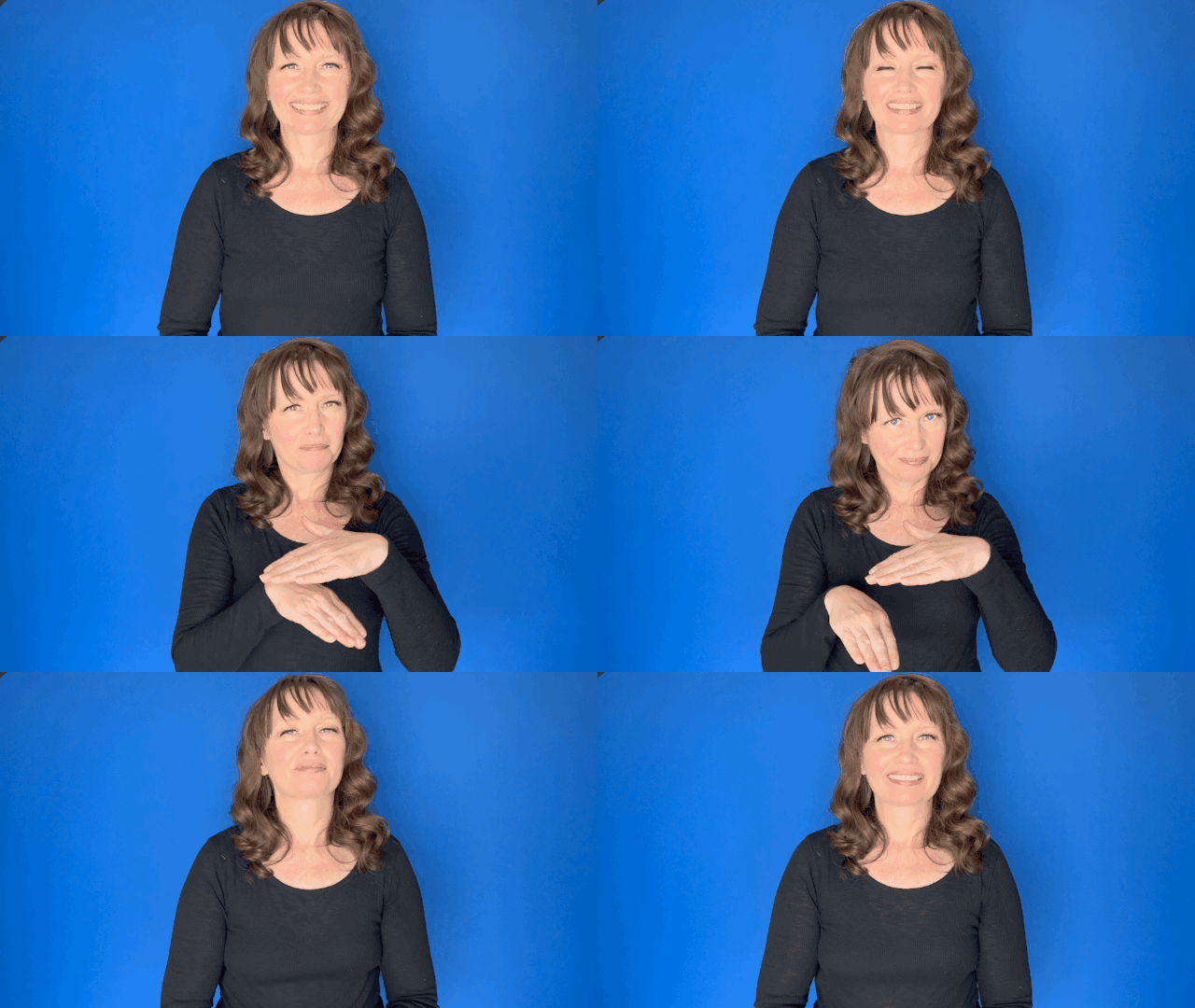
Sign for BASIC in ASL | 😐 ASL Dictionary

Definition: Simple or fundamental.

Sign for BASIC in ASL

YouTube player

Practice Activities:

Start by practicing the sign for BASIC in ASL in front of a mirror to check your handshape and movement. Repetition is key—sign it 10 to 15 times while focusing on the circular movement and palm orientation. Say the English word aloud as you sign to reinforce the connection between the written word and the sign.

Next, try using the sign for BASIC in ASL in single-word flashcard drills. Pair it with related vocabulary like SIMPLE, FOUNDATION, or FIRST to see how they compare. Create a set of flashcards where one side shows the English word and the other describes the sign. Use a timer to practice signing each word under time pressure.

Use the sign in short phrases such as “basic idea,” “basic steps,” and “basic skill.” Sign each example while speaking or mouthing the words to strengthen your receptive and expressive skills. Use mirrors or video recordings to catch any inconsistencies with your hand movements.

Write and sign 2 to 3-sentence mini-stories using the sign for BASIC in ASL. For example, “She learned the basic rules of football,” or “The teacher explained the basic plan.” Include this sign naturally in your narrative to grow more fluent with its usage in context.

During partner activities, take turns explaining a simple task like cooking rice or tying shoes, ensuring each step uses the sign for BASIC in ASL as you describe the foundational methods. Ask your partner to identify when you use the sign and give feedback on your handshape and flow.

Visualize situations at school or work where you’d say something is basic, and role-play those scenarios. Keep a list throughout the day of when you’re tempted to use the English word “basic,” then practice signing it instead to build meaningful recall.

Cultural Context:

The sign for BASIC in ASL is more than just a hand movement. It represents a core concept that’s often foundational in communication, teaching, and learning. Whether you’re supporting early language development, interpreting in a classroom, or providing accessible content, knowing the sign for BASIC in ASL can be incredibly useful.

In Deaf culture, clarity and simplicity are highly valued. The sign for BASIC in ASL captures the essence of something fundamental or essential without making it overly complicated. When a concept is basic, it means it’s something that should be easy to understand, making it a term that’s used often in both casual and formal conversations.

ASL is a visual language that reflects how Deaf people see and experience the world. Using the sign for BASIC in ASL shows a respect for that worldview by expressing ideas in ways that are direct and clear. This sign often comes up when explaining rules, language structures, or the first steps of a process.

Classroom environments that use ASL often rely on signs like BASIC to encourage comprehension and confidence. Teachers may contrast the sign for BASIC in ASL with other signs that represent more advanced topics to help students track progress. It helps learners connect with the material in a visual and kinesthetic way, which is essential to Deaf education.

It’s common to see the sign for BASIC in ASL used in group discussions, workshops, and presentations. For example, when presenters want to explain a concept using simple terms, they begin by introducing the basics. The ability to express that idea clearly helps build trust and inclusion in the conversation.

When new signers are learning the language, they often start by mastering foundational vocabulary. The sign for BASIC in ASL is one of those signs that learners pick up early. It not only builds language skills but also becomes a stepping stone to understanding more complex structures.

In social settings, Deaf people might use the sign for BASIC in ASL to describe a personality trait, idea, or even a lifestyle. For example, someone might be described as having basic preferences, meaning they enjoy simple, uncomplicated things. This cultural use shows the language’s richness and versatility.

Understanding the sign for BASIC in ASL opens doors to deeper communication within Deaf communities. It allows signers to express themselves clearly when describing the fundamental elements of a story, concept, or plan. The sign is functional, recognizable, and rooted deeply in everyday use.

Deaf creators, artists, and influencers may also use the sign for BASIC in ASL in videos, storytelling,

Extended Definition:

The sign for BASIC in ASL is a foundational term often introduced early in American Sign Language education. It captures the concept of something being simple, essential, or fundamental. This sign is especially useful in both educational and casual conversations when describing a basic idea, basic skill, or basic concept.

To express the sign for BASIC in ASL, the dominant hand circles underneath the non-dominant flat hand. The motion suggests a base or underlying foundation. This movement visually supports the meaning of the word, highlighting the essence of something being at a ground level or starting point.

Understanding how to use the sign for BASIC in ASL expands your ability to talk about beginner-level tasks, basic knowledge, or simple needs. For example, you might use this sign when discussing basic math, basic English, or basic communication skills. It’s also commonly seen in classroom settings, especially when teachers are explaining fundamental concepts to students.

ASL learners often encounter the sign for BASIC when they’re developing vocabulary around life skills, social skills, or basic instructions. It’s a helpful tool in structuring conversations around what is required at a minimum level. Whether you’re teaching ASL or just starting to learn, this sign holds a valuable place in everyday dialogues.

The sign for BASIC in ASL is also important in the workplace and professional environments. It lets people talk about basic job duties, basic requirements, or basic responsibilities. In customer service or job training settings, using this sign helps clarify expectations in a clear and efficient way, regardless of the industry.

Because the term basic can apply to so many situations, the sign for BASIC in ASL is highly versatile. It can be seen in discussions about basic human needs like food, water, or shelter. It also comes in handy when comparing simple items to more advanced ones, such as basic tools versus specialized equipment.

Young students, deaf or hearing, often use the sign for BASIC early in their ASL journeys. Teachers and parents can use it while breaking down learning objectives or when setting the foundation for new subjects. It’s especially helpful in inclusive learning environments where communication needs to be clear and easy for all participants.

In social conversations, you might also see the sign for BASIC in ASL used humorously to describe something or someone that sticks to common trends, like calling a coffee drink or fashion style basic. This adds cultural richness to the word and demonstrates how versatile signs can adapt in modern settings.

Learning the sign for BASIC in ASL encourages strong foundational communication. It’s not just about

Synonyms: simple, fundamental, elementary, essential, rudimentary

Educational resources: Find related learning materials in our course bank!

Want more? Check out some of our popular learning activities on the homepage!

Need to look up a sign? Use our highly rated dictionary: https://aslinteractive.com/best-asl-dictionary/

Follow us on tiktok: https://www.tiktok.com/@aslinteractive. More social media links at the bottom of this page!

Long-tail Keywords: what is the sign for basic in ASL, how do you sign basic in ASL, ASL sign for basic

Categories:

tags: basic in American Sign Language, ASL dictionary basic, learn basic in ASL, how to sign basic in ASL, basic ASL sign

Parameters

*Handshape*:

For the sign for BASIC in ASL, the dominant hand uses a flat B handshape, held palm-down and in a horizontal orientation. The non-dominant hand is also in a flat B handshape, but positioned palm-down below the dominant hand. The dominant hand makes a small circular motion underneath the stationary non-dominant hand, lightly brushing past it.

The handshape for the sign for BASIC in ASL emphasizes simplicity and foundational structure, aligning with the concept of something being basic or fundamental. Proper handshape and movement are essential for clear and accurate expression.

*Palm Orientation*:

For the sign for BASIC in ASL, the dominant hand forms a flat palm and moves in a circular motion under the non-dominant hand, which is held steady and also flat. The palm of the non-dominant hand faces downward, while the dominant hand’s palm faces upward as it circles below.

Palm orientation plays a key role in the sign for BASIC in ASL. Keeping both hands flat and maintaining consistent palm direction helps ensure the sign is clear and easily understood.

*Location*:

The sign for BASIC in ASL is made in the neutral space in front of the torso, slightly below chest level. Both hands are positioned away from the body, with one hand circling underneath the other to demonstrate the foundational concept behind the term.

This placement in front of the chest helps reinforce the concept at the core of the sign for BASIC in ASL. The neutral mid-torso area allows clear visibility and distinction for viewers.

*Movement*:

The sign for BASIC in ASL involves a circular motion that illustrates a foundational concept. Start with your non-dominant hand held palm down in a flat position. Place your dominant hand in the same flat shape under the non-dominant hand. Move the dominant hand in a small horizontal circle beneath the stationary hand.

This movement highlights the idea of something fundamental or underlying. The sign for BASIC in ASL conveys the core or base of something, often used to describe simple or essential ideas .

*Non-Manual Signals*:

When performing the sign for BASIC in ASL, your facial expression should remain neutral and calm, showing general understanding without strong emotion. Slight eyebrow movement may occur, indicating mild attentiveness or emphasis.

The sign for BASIC in ASL doesn’t require exaggerated non-manual signals, but maintaining eye contact and a focused, relaxed demeanor helps convey clarity. Keep your head steady or slightly tilted forward to show engagement.

*Prosody, Dominant/Non-Dominant Hand*:

The sign for BASIC in ASL uses the non-dominant hand held flat, palm down, to represent a base surface. The dominant hand circles underneath it using a flat hand shape, palm facing up, moving in a clockwise motion. This motion emphasizes the concept of foundational or beginning-level ideas. The sign for BASIC in ASL visually conveys the idea of something fundamental or introductory.

Tips for Beginners:

When learning the sign for BASIC in ASL, it’s important to focus on fluidity and smooth hand movement. This sign typically involves the dominant hand circling under the non-dominant flat hand, which stays steady in front of the body. Make sure your movements are controlled yet relaxed to convey the meaning clearly.

A common challenge when learning the sign for BASIC in ASL is maintaining the correct orientation of both hands. Beginners sometimes flatten the circling hand too much or make the circle motion too wide, which can cause confusion. Keep your dominant hand slightly curved and the circling motion tight and deliberate.

Clarity is essential, so practicing in front of a mirror can help refine movement and positioning. Record yourself signing and compare it to videos from reliable ASL resources to ensure your execution is accurate. This visual feedback loop is a great way to self-correct and improve.

Another tip is to keep your movements smooth but not rushed. Rushing can compromise clarity and may result in misunderstanding, especially for viewers not fluent in ASL. Practicing at a slow pace first, then gradually increasing your speed, can aid long-term fluency and accuracy.

Posture and facial expressions may not be essential for the sign for BASIC in ASL itself, but they do contribute overall to your ASL proficiency. Stay aware of your facial cues and neutral expressions to avoid adding unintended meanings.

Engaging with ASL signers in real-life conversations will also help solidify your understanding of the sign for BASIC in ASL and how it fits contextually among other vocabulary. Watching native signers and mimicking their rhythm and fluency is one of the best ways to advance.

Lastly, be patient with yourself. Even simple signs take practice. Consistency and repetition are key to mastering BASIC and other foundational signs in ASL.

Connections to Other topics:

The sign for BASIC in ASL is conceptually tied to foundational or beginner-level ideas, making it a good entry point to understanding how ASL conceptualizes simplicity and starting points. This ties into other signs like BEGINNER, SIMPLE, and FOUNDATION, which share overlapping meanings and often appear in educational or instructional contexts. These connections allow ASL users to communicate nuances around starting skill levels or stripped-down versions of concepts.

In compound ideas, the sign for BASIC in ASL is often combined with other idea signs, such as BASIC-KNOWLEDGE or BASIC-SKILLS. In these contexts, it modifies the idea to emphasize that something is rudimentary or elementary. For instance, when describing a BASIC-MATH class, the sign helps indicate that the course is an entry-level or foundation-level math subject, effectively setting the stage for more advanced topics later on.

It is common to see the sign for BASIC in ASL show up in educational, workplace, and even healthcare conversations. Teachers may use it to explain course levels, while job trainers often use it when discussing prerequisite knowledge. Therefore, it’s valuable to learn this sign early, as it helps build a conceptual framework for expressing complexity, progression, or simplicity.

The sign also connects well with more abstract ideas, like BASIC-NEEDS or BASIC-RIGHTS. When used in these phrases, BASIC helps to emphasize core necessities or fundamental principles. These signs are especially useful in social discussions, advocacy, and support services since they reinforce ideas of essential access or equality.

Visually, the sign for BASIC in ASL contains circular movement underneath the non-dominant hand, similar to foundational ideas revolving around central themes. This ties into how signs representing central or fundamental ideas often use space to show levels or depth. Understanding this can help learners recognize the metaphors built into ASL structure .

Summary:

The sign for BASIC in ASL reflects both a conceptual and spatial understanding. It typically starts with a dominant hand in a flat-B shape moving in a small horizontal circular motion beneath a stationary non-dominant flat hand, palm down.

This layered motion symbolizes the foundational concept—something that lies underneath or supports another idea. The sign can resemble the idea of a base or starting point upon which other structures or knowledge are built.

In ASL, signs that convey abstract ideas often draw on metaphorical spatial mappings. The sign for BASIC in ASL draws on the metaphor of foundation, where a base supports the surface resting above it.

Grammatically, BASIC functions as an adjective. It is often used to describe something in its most essential form, such as basic needs, basic rights, or basic skills.

When used in ASL, the sign for BASIC in ASL can accompany a variety of nouns, depending on context and intent. For example, a signer may combine it with signs like FOOD, SKILL, or KNOWLEDGE to describe essential categories of human experience.

This form of modular sign usage underscores ASL’s flexible syntax. Elements like facial expressions or head nods play crucial roles in specifying intensity or comparison.

Facial expressions can modify the tone of the sign. Raising the eyebrows slightly might suggest a neutral or factual statement, while a more intense expression might imply critique or emphasis.

The sign for BASIC in ASL can also function in more abstract conversational topics. It may be used to talk about minimalism, essentialism, or core philosophies in a discussion.

Semantically, BASIC is related to signs such as SIMPLE, START, and IMPORTANT, depending on the context. These signs together form a semantic field that revolves around value, foundation, and clarity.

The use of the sign varies based on context, and sometimes signers may fingerspell the word if referring to BASIC in a name or brand, like BASIC Training or BASIC Rights Watch. In such cases, clarity and emphasis determine whether to sign or fingerspell.

In cross-linguistic studies, signs like BASIC offer insight into how visual-spatial languages conceptualize abstraction. While spoken English relies on Latin-derived vocabulary, ASL creates visual metaphors rooted in space and motion.

This capacity to express layered meaning through space reflects a key feature of ASL. The layering in the sign for BASIC in ASL mirrors cognitive linguistics ideas about conceptual metaphor.

In applied linguistics, teaching the sign for BASIC in ASL opens doors to larger discussions about language typology and second-language acquisition. Students often find such signs help bridge abstract English vocabulary with ASL’s concrete imagery.

ASL learners are encouraged to deeply internalize these signs through repetition and contextual example. By associating BASIC with concepts like “core” or “foundation,” students grasp both its meaning and usage more effectively.

Culturally, the sign for BASIC in ASL highlights a recurring linguistic theme in Deaf culture: function over embellishment. Communication in the Deaf community often values efficiency and clarity, qualities that this sign encapsulates.

From a sociolinguistic standpoint, BASIC helps define what is essential in human interaction. When describing essential services or rights in community discourse, this sign can carry significant weight.

Beyond individual use, the sign finds application in educational and political conversations. In Deaf spaces, BASIC is often used to advocate for access to things like basic education or basic interpreting services.

The simplicity of the sign doesn’t mean it’s linguistically simple. Its production, orientation, and location all follow specific ASL phonological rules that learners must understand and practice.

Each ASL sign contains parameters: handshape, location, movement, palm orientation, and non-manual markers. The sign for BASIC in ASL engages a horizontal loop movement beneath a stationary base, emphasizing space-based conceptualization.

The dynamic between the hands mirrors a relationship of hierarchy—what lies beneath supports what lies above. This metaphor is consistent with other ASL signs like SUPPORT or BUILD, highlighting the language’s inherent visual logic.

The sign also illustrates the concept of layering in visual grammar, where physical placement suggests order or priority. That grammar may not exist in a literal sense in spoken languages.

The non-dominant hand plays a crucial role, serving as the reference point for the dominant hand’s motion. This is common in ASL when establishing comparisons or demonstrating relationships.

In academic discussions, researchers examining the sign for BASIC in ASL often explore how it reflects broader themes of cognition and embodiment. Hand motion isn’t arbitrary—it reflects how humans think about abstract hierarchies.

Expressing BASIC in different sentence structures also illuminates ASL grammar. For instance, it may be used as a predicate adjective, as in THE COURSE BASIC, or with classifiers to describe level or simplicity.

The sign for BASIC may carry nuanced meanings when used sarcastically, especially in intersectional spaces where minimal effort or understanding is being critiqued. Facial grammar is vital for conveying those shades of meaning.

Technology and media also play a

Want more? Check out some of our popular learning activities!

ASL Interactive Resources

ASLInteractive YouTube Channel

Follow us on tiktok: @aslinteractive.com

Follow us on Instagram: aslinteractive

Facebook page: aslinteractive

Facebook group: aslinteractive

LInkedIn: ASL Interactive LLC

Twitter: @ASL_interactive

*Some information on this page is AI-generated. AI can make mistakes. Please check the information.

Sign for BASIC in ASL

Responses