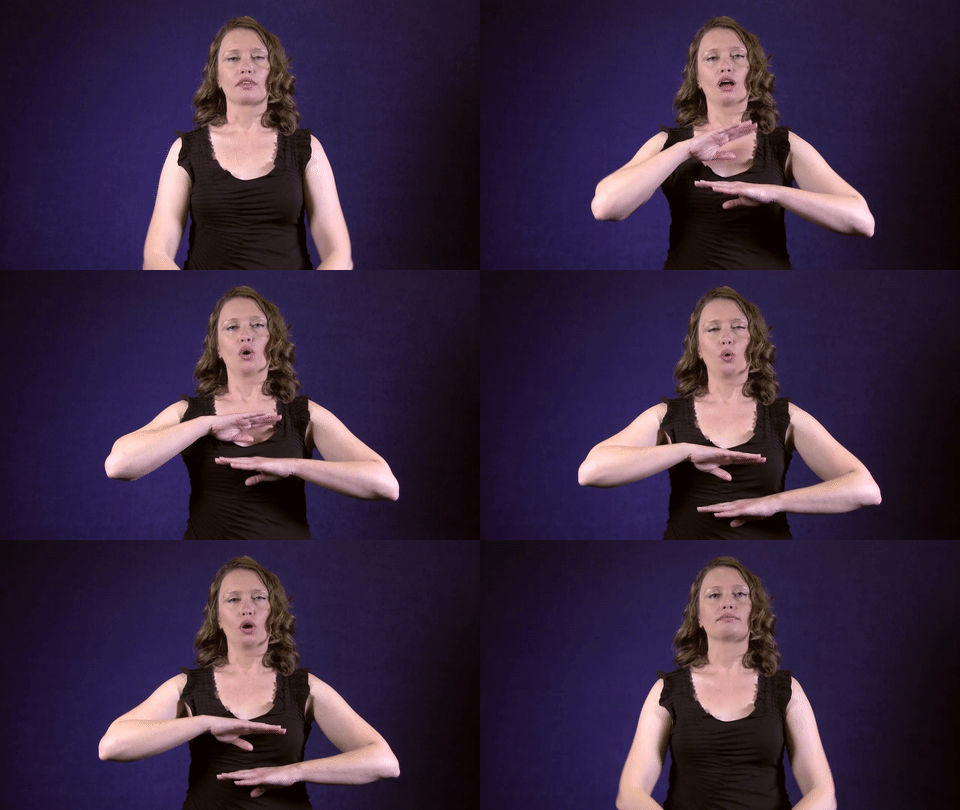
Definition: To feel a sense of relief.
Sign for BE-RELIEVED in ASL

Practice Activities:
Begin by practicing the sign for be-relieved in ASL in front of a mirror. Focus on your facial expressionâthis sign depends heavily on showing relief. Practice using a relaxed facial expression and a sigh to match the meaning of the sign. Repetition is helpful, so try signing it ten times slowly, making sure each movement is smooth and intentional.
Next, try incorporating the sign for be-relieved in ASL into simple sentences. Start with everyday phrases like âIâm so relieved,â âYou must be relieved,â or âWe were all relieved.â Say or sign the sentence out loud and then fingerspell the entire sentence to build fluency. Make sure to vary the pronouns and tenses to expand your comfort level.
Create a storytelling exercise using daily stress-reducing experiences. For example, describe a situation where you thought you lost your keys but then found them, using the sign for be-relieved in ASL to clearly express the moment of relief. Emphasize the transition from worry to comfort with clear body language and facial cues.
With a partner, role-play short skits featuring moments of stress followed by relief. For example, act out finishing an exam or hearing good news from a doctor. Practice showing the full emotional arc and using the sign for be-relieved in ASL at the right moment. Try switching roles so both partners get to sign and interpret.
Record yourself signing three sentences that include the sign for be-relieved in ASL. Watch the video back and assess your facial expressions, fluency, and clarity. Try again while focusing on smoother transitions and relevant emotion. Consistent review helps build confidence and encourages expressive accuracy.
Cultural Context:
In American Sign Language, understanding the sign for be-relieved in ASL offers more than just a literal translationâit reveals emotional and cultural depth. The sign for be-relieved in ASL captures a moment of internal release, an emotional shift that’s often visible on the face as well as through the motion of the hands.
Facial expressions play a huge role in ASL, especially with emotions like relief. When someone uses the sign for be-relieved in ASL, they usually include a sigh or relaxed expression to emphasize the feeling. Itâs not just about the hand movements, it’s about conveying a complete emotional experience.
In Deaf culture, non-manual markers like sighing, relaxed shoulders, and facial softening enhance the impact of the sign for be-relieved in ASL. These elements are crucial because ASL relies on a combination of manual signs and non-manual cues to share meaning. A flat performance wouldnât do justice to expressions like relief.
The sign for be-relieved in ASL is often seen in both everyday conversations and deeper emotional discussions. For example, when talking about a stressful day that finally ended well, this sign naturally communicates a shared emotional experience. It becomes part of the storytelling thatâs so valued in Deaf culture.
Emotional intelligence in ASL is strong, and the sign for be-relieved in ASL highlights the languageâs ability to reflect complex inner feelings. When someone finally hears good news, like a loved one arriving home safely or being accepted for a job, this sign comes into play with genuine emotion. It reflects connection, empathy, and communityâall core pieces of Deaf culture.
This sign can vary slightly from signer to signer, depending on the region or age group. However, the emotional context stays consistent. The essence of what it means to be relieved doesnât change, making the sign for be-relieved in ASL widely recognizable within Deaf spaces.
In storytelling, especially visual storytelling common in Deaf communities, the sign for be-relieved in ASL often shows up during moments of tension resolution. Whether itâs a dramatic personal anecdote or a funny tale with a happy ending, this sign helps express the emotional shift clearly and memorably. It lets the audience feel the journey, not just follow the words.
The use of the sign for be-relieved in ASL adds authenticity in interpreting or captioning emotional dialogue. ASL interpreters often use this sign in real-time conversations when translating feelings of relief during speeches, interviews, or even emotional reactions
Extended Definition:
The sign for be-relieved in ASL conveys the feeling of emotional or physical stress being lifted. In American Sign Language, this concept is often associated with a deep exhale of breath, symbolizing relaxation or the absence of tension. Understanding the sign for be-relieved in ASL helps interpreters and learners express this nuanced emotional shift clearly and accurately.
To produce the sign, use both hands in flat handshapes and place the dominant hand on top of the non-dominant hand just above the chest. With a gentle downward motion from the chest area, the sign resembles a physical sigh of relief as if a burden has been removed from the body. This visual expression reflects the internal feeling of letting go, and it fits naturally in conversations about stress, solutions, and emotional well-being.
The sign for be-relieved in ASL is commonly used in casual conversations and storytelling where a character or person experiences a resolution to a problem or escapes danger. For example, it might appear when someone explains how they felt after passing a difficult test, getting good news from a doctor, or seeing a loved one return home safely. The sign communicates a strong emotional state without needing spoken words.
This ASL sign can also be paired with expressive facial features to emphasize the level of relief. Raised eyebrows, a small smile, or a relaxed posture help reinforce the meaning. Like many ASL signs, the sign for be-relieved in ASL invites the signer to use both body language and manual signs to fully communicate the message.
It’s helpful to see this sign in motion through video examples or practice with a fluent signer. When learning the sign for be-relieved in ASL, it’s important to watch native signers to observe how body movement and timing contribute to the natural flow of the sign. Since ASL is a visual language, seeing how the sign fits into real conversations provides the best comprehension and retention.
Children and adults alike can easily learn this sign, especially because the concept of relief is universally understood. Whether you’re learning ASL for healthcare, classrooms, storytelling, or everyday interaction, knowing the sign for be-relieved in ASL enhances your emotional vocabulary. It builds empathy and precision in communication, qualities that make ASL both practical and deeply expressive.
The cultural use of this sign also sheds light on the Deaf communityâs ways of expressing emotion. In ASL, feelings are often shown with full-body communication, and this sign captures that idea well. Understanding the sign for be-relieved in ASL
Synonyms: feel at ease, find comfort, have peace of mind, feel reassured, experience relief
Educational resources: Find related learning materials in our course bank!
Want more? Check out some of our popular learning activities on the homepage!
Need to look up a sign? Use our highly rated dictionary: https://aslinteractive.com/best-asl-dictionary/
Follow us on tiktok: https://www.tiktok.com/@aslinteractive. More social media links at the bottom of this page!
Long-tail Keywords: what is the sign for be-relieved in ASL, how to sign be-relieved in American Sign Language, ASL sign for feeling relieved
Categories:
tags: emotions, feelings, reactions, verbs, telling how one is
Parameters
*Handshape*:
The handshape for the sign for BE-RELIEVED in ASL uses both hands in a flat “B” handshape . The fingers are together and extended while the thumbs rest against the sides of the palms. Hands are placed one over the other across the chest, symbolizing a sense of pressure being lifted.
In the sign for BE-RELIEVED in ASL, the dominant hand moves downward and comes to rest on top of the non-dominant hand. This action, paired with the relaxed posture of the hands, conveys a feeling of being unburdened or at ease .
*Palm Orientation*:
For the sign for BE-RELIEVED in ASL, both hands typically have palms facing downward and slightly inward toward the torso. The dominant hand moves downward and comes to rest on the back of the non-dominant hand, which remains still.
This smooth, calming gesture helps convey the emotional release tied to the sign for BE-RELIEVED in ASL . The palm orientation plays a key role in expressing this relaxed, settling movement.
*Location*:
The sign for BE-RELIEVED in ASL is typically produced around the mid-torso area, specifically at the chest. Both hands start at the chest level and move slightly downward to the stomach area, suggesting a sense of emotional release or relief.
This centralized location helps convey the internal feeling associated with the sign for BE-RELIEVED in ASL, reflecting a calming sensation in the body. The movement from chest to stomach visually represents a release of tension.
*Movement*:
Start with both open hands, palms facing down, resting on your upper chest. Move your dominant hand downward slightly, allowing it to slide gently over the top of your non-dominant hand, which remains in place. This movement should feel natural and relaxed, as though a burden is being lifted.
The sign for be-relieved in ASL conveys a sense of emotional ease. The motion emphasizes a gentle release, symbolizing relief or comfort.
*Non-Manual Signals*:
The non-manual signals for the sign for BE-RELIEVED in ASL typically include a visible release of tension in the face. The brows are relaxed, eyes may gently close or look downward, and the mouth may form a slight sigh or exhale to reflect the emotion of relief.
This facial expression enhances the meaning of the sign for BE-RELIEVED in ASL, conveying that a burden has been lifted or stress has been let go. A light head drop or small exhale can emphasize the relieved feeling .
*Prosody, Dominant/Non-Dominant Hand*:
The dominant hand is open and flat, palm facing inward, positioned on the chest. The non-dominant hand mirrors this position on the lower chest. In a smooth, downward motion, both hands lightly move away from the chest, expressing a sense of emotional release or ease.
This fluid movement captures the feeling behind the sign for be-relieved in ASL. Facial expression is also key, often showing a relaxed or content look to support the sign for be-relieved in ASL.
Tips for Beginners:
When learning the sign for BE-RELIEVED in ASL, make sure youâre clear about the emotional tone you want to convey. This sign is generally used to express a sense of calm returning after stress or worry, so match your facial expression accordinglyâthis is very important in ASL. A relaxed face with a small exhale can help reinforce the meaning of relief .
Practice the movement pattern slowly at first. The sign for BE-RELIEVED in ASL typically uses both hands and falls along the chest area, showing a downward motion that symbolizes tension leaving the body. Make sure your hands are aligned and coordinated in timing as you create the smooth, flowing movement that represents the release of stress.
Avoid making the movement too stiff or too fast. One common mistake beginners make with the sign for BE-RELIEVED in ASL is rushing through the sign, losing the expressive, calm nature the sign should communicate. Relax your shoulders as you signâit helps visually communicate relief and also keeps your body language fluid and believable.
Positioning is also key. Hands should start and finish in the correct place on the chest. Practicing in front of a mirror can help you adjust your positioning and ensure both hands are symmetrical and smoothly coordinated. Watch videos of native signers using this sign, paying close attention to not just the hands but also their body posture and facial expressions.
To solidify muscle memory, repeat the sign for BE-RELIEVED in ASL several times in context. Try using it in signs like âIâm so relieved,â or âI feel better now.â Real-life usage is the best way to build confidence, so incorporate this sign into your practice dialogues regularly.
Connections to Other topics:
The sign for BE-RELIEVED in ASL connects closely to emotional and mental state vocabulary. It often appears in conversations about stress, anxiety, or tension, and is commonly paired with facial expressions to indicate a deep release or letting go. This emotional layer links it with other signs like WORRIED, STRESSED, and CALM, forming a thematic network of mental wellness terms in ASL.
In storytelling or conversational narratives, the sign for BE-RELIEVED in ASL often follows signs like WORRY or NERVOUS to indicate a shift in feeling. This use of sequential context reflects ASLâs spatial and visual structure, helping learners understand how signs build upon one another to convey layered meaning. Itâs also helpful for interpreting and translating longer emotional arcs in signed conversations.
From a grammar point of view, the sign for BE-RELIEVED in ASL can integrate into compound or phrase signs, like FINISH + WORRY + BE-RELIEVED, especially in casual narratives. It can also appear in discussions about resultsâsuch as passing a test or receiving good newsâmaking it a practical sign for educational or medical settings. These compounded uses create a more vivid storytelling experience and help convey both action and emotional impact.
Learners should note how nonmanual signals work with the sign for BE-RELIEVED in ASLâfacial expressions typically relax, shoulders may drop, and a slight exhale is common. These elements make the sign multidimensional and show the importance of body language in ASL grammar. This reinforces connections to mood signs and bodily response signs like EXHALE or RELAX.
Understanding the sign for BE-RELIEVED in ASL encourages learners to explore how emotions are represented visually. It also supports vocabulary related to mental health, social interaction, and storytelling. Mastery of this sign deepens overall ASL fluency and cultural understanding .
Summary:
The sign for BE-RELIEVED in ASL is rich in both emotion and physicality, typically expressed with a two-handed motion that begins at the chest area. The dominant hand rests slightly above the non-dominant hand and then gently moves downward with a sense of release or letting go, representing a burden being lifted.
This motion captures the essence of the feelingâsomething heavy is now gone. It’s a deeply embodied expression, which makes it particularly powerful when combined with appropriate facial expression. The brows may raise slightly, the chest expands, and a visible exhale often accompanies the sign.
Facial expressions in ASL are crucial for conveying emotion, and in the sign for BE-RELIEVED in ASL, the facial component enhances the meaning significantly. The eyes may close for a brief moment, and the signer might even smile slightly to emphasize a personal sense of peace or release.
The signâs motion tells a narrativeâbefore releasing, something is held or shouldered. This conveys the metaphor of a burden being carried and then suddenly disappearing, which aligns closely with spoken English metaphors surrounding emotional heaviness and release.
The sign for BE-RELIEVED in ASL can be considered iconic because the movement directly reflects the physical sensation of pressure lifting from the body. This is a prime example of how ASL uses space and movement to mirror real-life experiences.
Grammatically, this sign functions as a predicate within a sentence. It can stand alone to express a state of being or work in conjunction with time indicators to show when the feeling of relief occurs.
In fluent ASL discourse, the sign for BE-RELIEVED in ASL is frequently accompanied by body shifts that reinforce subject or speaker focus. For example, when expressing that âshe was so relieved,â the signer may lean slightly toward a location in space established earlier for “she.”
It is common to see the sign modified in terms of speed and intensity. When someone is extremely relieved, the downward movement might be more pronounced or even exaggerated, while mild relief may be portrayed with a softer, slower motion.
Culturally, expressions like the sign for BE-RELIEVED in ASL resonate deeply within the Deaf community because emotion and embodiment are central to how perspective and experience are shared. This particular sign often appears in stories, narratives, and daily conversations that explore challenge and resolution.
In narratives, a signer might build tension through signs like STRESS or WORRY before using BE-RELIEVED to indicate the emotional shift. This transformation invites the audience into the emotional arc of the signer.
Related signs such as WORRY, STRESS, PRESSURE, and ANXIOUS often precede the sign for BE-RELIEVED in ASL to build context. These signs establish a buildup that makes the moment of relief more poignant.
Similarly, signs like PEACEFUL, CALM, and OKAY might follow BE-RELIEVED to show the emotional state after relief is felt. This sequence helps communicate mental and emotional transitions.
In relation to applied linguistics, the sign for BE-RELIEVED in ASL is a prime example of prosody. Prosodic features like pause, rhythm, and body grammar are used strategically to convey not only the signâs literal meaning but its emotional depth.
The handshape for the sign uses the flat B or open palm-based orientation. These open-hand configurations are often associated with openness, receptivity, and release in ASL, further reinforcing the emotional tone of the word.
This sign can be classified among affective or emotional vocabulary in ASL, a category that plays a key role in emotional literacy and communication fluency. The signâs clarity and visual impact make it accessible even to beginner signers.
In educational settings, teachers often use the sign for BE-RELIEVED in ASL to reinforce emotional vocabulary, particularly in storytelling. Incorporating signs for emotions optimizes comprehension and supports emotional intelligence development within Deaf classrooms.
A unique aspect of this sign lies in its contrastive nature. The emotional state must shift visibly before and after the use of the sign. Signers are often taught to frame BE-RELIEVED by indicating what caused the relief first.
These narrative frames can be as simple as “test finish” or “mom call back,” creating practical real-life contexts for emotion-focused vocabulary. This piques learner interest and aids in retention.
The sign also invites reflection on the bodyâs role in expressing emotional states. In ASL, language and emotion are not just spoken facial expressions; they are performed physically and spatially.
This dynamic makes the sign for BE-RELIEVED in ASL a powerful tool for social connection. When used in group settings like support groups or community meetings, it can symbolize mutual understanding and shared emotional experiences.
In interpersonal contexts, the sign often acts as a moment of empathyâone person signs BE-RELIEVED, and the viewer not only sees it but feels alongside the signer. This level of expressive
Want more? Check out some of our popular learning activities!
ASL Interactive Resources
ASLInteractive YouTube Channel
Follow us on tiktok: @aslinteractive.com
Follow us on Instagram: aslinteractive
Facebook page: aslinteractive
Facebook group: aslinteractive
LInkedIn: ASL Interactive LLC
Twitter: @ASL_interactive
*Some information on this page is AI-generated. AI can make mistakes. Please check the information.


Responses