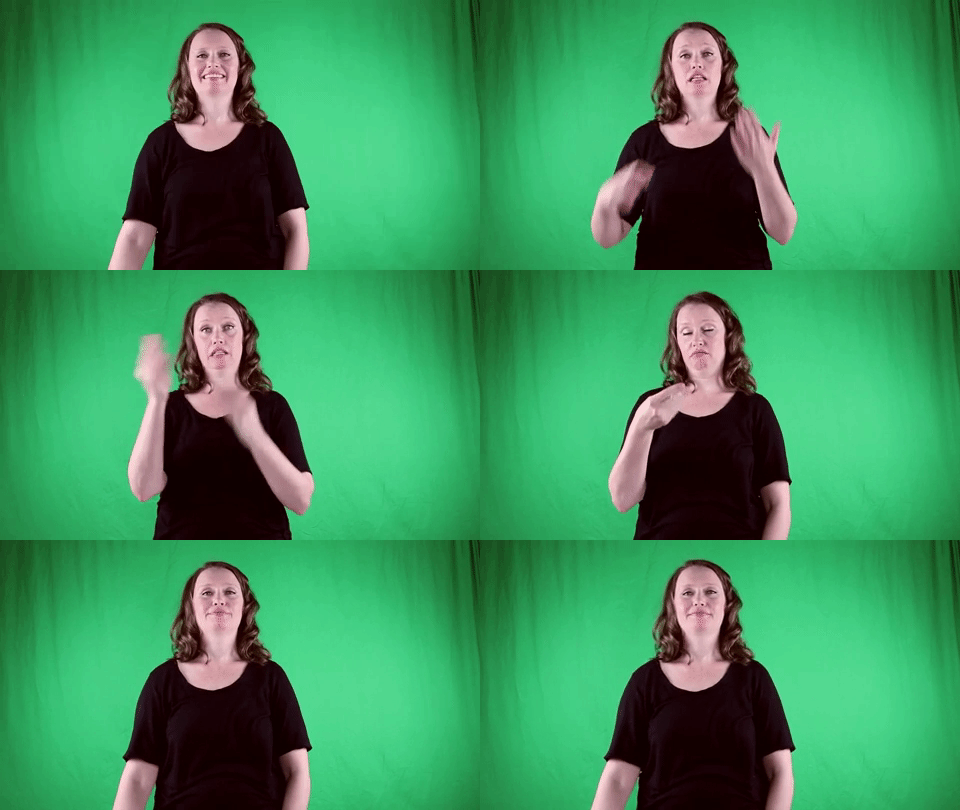
Definition: To receive a ticket for a violation.
Sign for BE-TICKETED in ASL

Practice Activities:
To practice the sign for BE-TICKETED in ASL, start by isolating the sign. Use a mirror to check your handshape and facial expressions while producing the sign clearly and accurately. Repeat the sign slowly, focusing on the motion and direction of the dominant hand. Once you’re comfortable, speed up and practice transitioning in and out of other signs.
Next, incorporate the sign into short sentences to build fluency. For example, sign: “He got ticketed for speeding,” or “I was ticketed last month.” Focus on using proper classifiers and facial grammar, especially when indicating surprise, frustration, or irritation—common emotions tied to being ticketed. Rehearsing in front of a video camera can help you refine your expression and sign clarity.
Partner up with a fellow learner or teacher. Take turns acting out quick role-plays where one person is a police officer and the other is a driver. Use the sign for BE-TICKETED in ASL during the interaction. For instance, one might sign: “You were speeding, now you are ticketed.” This helps develop conversational flow and real-world application.
Storytelling is another great way to master this sign. Create a mini-narrative about a day when someone was ticketed—maybe for parking in the wrong spot or illegal turns. Include time signs, emotions, and description classifiers to give depth to your narrative. The more you use the sign naturally within a story, the more confident you’ll become.
Use flashcards or ASL apps to quiz yourself. Mixed into categories like “legal,” “transportation,” or “negative experiences,” pull out the sign for BE-TICKETED in ASL and construct a scenario immediately. Regular varied practice will reinforce memory and help you respond fluidly in conversation.
Cultural Context:
In Deaf culture and within the American Sign Language community, understanding the sign for BE-TICKETED in ASL goes beyond just a direct translation. This sign represents an experience many are familiar with, such as receiving a parking ticket or being cited for a violation. Whether it’s a traffic ticket, an event requiring admission, or a penalty of some sort, the concept of “being ticketed” is expressed with a clear and nuanced sign in ASL.
The sign for BE-TICKETED in ASL is often used in discussions around law enforcement, traffic stops, and legal responsibilities. Signers use this expression to communicate real-life experiences, often with emotional tones attached—frustration, surprise, even humor. In a society where written documents or spoken warnings may be inaccessible for some Deaf individuals, the use of this ASL sign plays a critical role in discussing rights and consequences.
Culturally, the sign for BE-TICKETED in ASL is tied to Deaf people’s navigation through hearing-centric systems, such as ticketing authorities or court procedures. Accessibility remains a central topic in the Deaf community, especially when dealing with fines or citations that come with complex paperwork. Using the correct sign for BE-TICKETED in ASL is crucial when communicating these issues, especially within legal or advocacy contexts.
In social conversations or storytelling, the sign for BE-TICKETED in ASL may be used with expressive facial grammar to emphasize the severity or absurdity of the situation. ASL storytelling often relies on role-shifting, showing how the person received the ticket or responded to the situation. These elements help give full context and depth to the interaction, making the sign not just functional but part of a dynamic and visual narrative.
Deaf individuals, especially young learners of ASL, benefit from understanding situational signs like the sign for BE-TICKETED in ASL. It helps them prepare for real-world experiences where they may have to describe interactions with law enforcement or be aware of civil procedures. Teaching these signs supports self-advocacy and promotes better communication when explaining legal or governmental issues.
Teachers and interpreters often include the sign for BE-TICKETED in ASL when discussing driving safety, classroom lessons about the law, or during translations of public service announcements. It’s a great example of how ASL adapts to cover modern life situations. Interpreters working in legal or municipal settings also use this sign regularly, especially when interpreting police interactions or court disclosures.
Because of its
Extended Definition:
The sign for be-ticketed in ASL represents the concept of someone receiving a citation or ticket, usually from law enforcement, for a legal or traffic violation. This can refer to anything from a parking ticket to a fine for a moving violation while driving. The sign for be-ticketed in ASL involves facial expressions and body language that help convey the idea of being caught or penalized.
To produce the sign for be-ticketed in ASL, you typically start by mimicking the action of writing a ticket. This often includes a quick motion similar to scribbling on a notepad, usually near the hand or chest area. This action, combined with a facial expression showing frustration or surprise, helps clarify the context of receiving a ticket.
This sign is commonly used in conversations when someone is talking about being pulled over by a police officer or finding a ticket on their car. It can also be used in narratives or stories when detailing experiences related to traffic stops or fines. The sign for be-ticketed in ASL helps deaf and hard-of-hearing individuals clearly share life events, especially ones related to vehicles and the law.
ASL is a visual language, which means timing, movement, and expression play a key role. When showing the sign for be-ticketed in ASL, it’s important to match your facial expression with the seriousness or reaction the ticket might cause. A raised eyebrow or a shaking head can add extra meaning without needing more signs.
In the deaf community, the sign for be-ticketed in ASL is well understood, partly because it’s linked with common life experiences. Road rules, parking limits, and legal citations are a part of everyday life. Signing about past incidents involving tickets is a frequent topic, whether in casual chats or more serious discussions.
Understanding and using the sign correctly ensures accurate communication and clearer storytelling. Sometimes, to specify the kind of ticket, additional signs like “speeding,” “parking,” or “car” are added before or after the main sign. This adds context and makes it easier for others to follow the conversation.
The sign reflects ASL’s richness and capacity to incorporate real-world activities in meaningful, visual ways. Whenever discussing issues with the law or personal experiences during a drive, the sign for be-ticketed in ASL adds clarity and emotion. It creates a connection between the signer and the viewer through shared understanding.
Since legal matters and driving experiences are commonly discussed topics on social platforms and blogs, knowing the proper sign for be-ticketed in
Synonyms: Be fined, Be cited, Issued a ticket, Given a citation, Penalized
Educational resources: Find related learning materials in our course bank!
Want more? Check out some of our popular learning activities on the homepage!
Need to look up a sign? Use our highly rated dictionary: https://aslinteractive.com/best-asl-dictionary/
Follow us on tiktok: https://www.tiktok.com/@aslinteractive. More social media links at the bottom of this page!
Long-tail Keywords: what is the sign for be-ticketed in ASL, how do you sign be-ticketed in American Sign Language, ASL sign for be-ticketed
Categories:
tags: Tickets, Travel, Transportation, Events, Language Learning
Parameters
*Handshape*:
The handshape for the sign for BE-TICKETED in ASL typically involves both hands using the “flat O” handshape, resembling hands ready to pinch something between the fingers and thumb. One hand represents a ticket while the other mimics the motion of applying or attaching the ticket, often near the other hand or a body location like the chest.
This handshape emphasizes the idea of something being affixed or issued, which fits the context of the sign for BE-TICKETED in ASL . The motion and shape both support the interpretation of receiving a ticket, such as in a legal or regulatory context.
*Palm Orientation*:
The palm orientation for the sign for BE-TICKETED in ASL typically involves both hands in a flat “O” or modified “C” shape with the dominant hand mimicking the motion of giving a citation. The palms generally face each other or slightly downward, depending on regional variations.
When performing the sign for BE-TICKETED in ASL, the dominant hand faces slightly down and towards the non-dominant hand, indicating the directional nature of “giving” a ticket. This palm orientation reinforces the concept of issuing or receiving something official like a citation .
*Location*:
The sign for BE-TICKETED in ASL is typically located in the neutral space in front of the body, around chest level. This central location allows for clear visibility of the sign motion, which often includes contact or an action directed toward the palm or body, emphasizing being issued a ticket.
When demonstrating the sign for BE-TICKETED in ASL, both hands remain within a comfortable range of the upper torso. The neutral location supports the concept of getting a citation or being stopped, while keeping the motion easily viewable to the viewer.
*Movement*:
The sign for BE-TICKETED in ASL uses a quick, deliberate movement. Start with the non-dominant hand in a flat “B” shape, palm facing inward, held stationary. The dominant hand forms an “F” handshape (thumb and index touching, other fingers extended) and touches the open palm of the non-dominant hand as if placing a ticket onto it .
The movement suggests a transaction or fine being issued, echoing the concept behind the sign for BE-TICKETED in ASL. This motion is typically directed downward or slightly outward depending on the signer’s position. Repetition is sometimes used for emphasis.
*Non-Manual Signals*:
When signing the sign for BE-TICKETED in ASL, the facial expression should show mild surprise or frustration, with raised eyebrows or tight lips to reflect the unexpected or undesirable nature of receiving a ticket. A slight head shake or eye roll may also be used for emphasis, depending on context.
These non-manual signals help convey the emotional tone of the sign for BE-TICKETED in ASL and match the seriousness or annoyance often associated with the situation .
*Prosody, Dominant/Non-Dominant Hand*:
The dominant hand forms a flat B-handshape and mimics writing or placing a ticket onto the open palm of the non-dominant hand, which is held flat and steady. The motion reflects being issued a ticket, like from a police officer or for a citation.
The sign for BE-TICKETED in ASL uses directional motion to show the act happening to someone. Facial expression often shows annoyance or surprise, helping to emphasize the situation described.
Tips for Beginners:
When learning the sign for BE-TICKETED in ASL, it’s important to note that this concept usually refers to being issued a ticket, often in contexts like traffic violations or event access. The sign is typically a compound that involves the sign for “TICKET” paired with a directionality or facial expression that implies being the recipient of the ticket. Practice under the guidance of a fluent signer or using credible video resources to make sure you’re interpreting and expressing the compound accurately.
One common beginner pitfall is not using the proper facial expression to accompany the sign for BE-TICKETED in ASL. Facial grammar is key in ASL to convey the context—like surprise, frustration, or annoyance. Your handshape and movement might be correct, but without the supporting expression, your message may be unclear or misleading. Pay close attention to the expressions used by native signers and incorporate them consistently in your practice.
Another issue is forgetting the importance of directionality in the sign. In many ASL signs involving an action done to someone, palm orientation and movement direction indicate the flow of the action. With the sign for BE-TICKETED in ASL, your movement and orientation may change based on who is giving or receiving the ticket. Practicing this spatial awareness will help improve the clarity and precision of your signing.
Be sure to warm up your fingers and wrists before signing, especially as the compound sign for BE-TICKETED in ASL might involve relatively quick transitioning movements. Staying relaxed helps ensure your signs don’t appear stiff or robotic. Lastly, practice in context—use role-play or mimic real-life situations where someone might talk about being ticketed. This will solidify both your understanding and fluency over time .
sign for BE-TICKETED in ASL, ASL sign for receiving a ticket, how to sign BE-TICKETED in American Sign Language, traffic ticket in ASL, American Sign Language BE-TICKETED
Connections to Other topics:
The sign for BE-TICKETED in ASL is closely related to legal and law-enforcement vocabulary in sign language. It often involves a compound or directional verb incorporating the concept of receiving a lawful penalty, typically through a citation. This connects the sign to broader ASL concepts like LAW, POLICE, or PAY-FINE, and is often used in narratives or storytelling around traffic stops, public violations, or fines.
This sign frequently builds from the sign TICKET, which mirrors the concept of a slip of paper or citation, and merges with passive directional movement to indicate being given a ticket by someone else. This aligns with the ASL structure of showing agency and being acted upon through sign direction or facial expressions. Thus, signs like BE-ARRESTED or BE-FINED bear a similarity in the way passive participants in a legal action are visually represented.
In practical use, the sign for BE-TICKETED in ASL shows up in contexts like explaining a situation to friends or telling a story about receiving a parking or speeding ticket. It is also helpful when learning other related sign pairs or oppositions, such as NOT-TICKETED or NOT-GUILTY. This contrast builds learners’ understanding of how ASL expresses negation and consequence.
The sign connects to broad ASL grammatical structures, such as time-sequencing used in storytelling. For instance, a signer might talk about WENT-TO-STORE, then BE-TICKETED, building a natural timeline. It also ties into classifiers that show cars or actions that lead to ticketing, such as speeding or illegal turns, providing visual cues in connected conversation.
Understanding the sign for BE-TICKETED in ASL also helps in learning compound events involving legal or public behavior. It encourages seeing signs in clusters or groups rather than isolation, making it easier to discuss civic duties, public safety, or even retelling personal experiences in fluent ASL. ️ ♂️
Summary:
The sign for BE-TICKETED in ASL typically involves miming the act of receiving a ticket, such as a traffic citation. This is often shown by using the dominant hand in a flat “B” or bent “V” shape mimicking a paper being handed or slapped toward the opposite palm.
Depending on context, the palm of the non-dominant hand represents an object—commonly a car windshield, dashboard, or person’s hand. The dominant hand represents the actual ticket, moving toward the palm in a deliberate and slightly abrupt manner.
Facial expressions play a big role. A reaction of surprise or frustration enhances the meaning and elevates the clarity of the sign for BE-TICKETED in ASL. Non-manual markers reflect the attitude or seriousness of receiving a ticket.
This sign is semantically specific and used commonly in narratives involving driving, law enforcement, rules, and penalties. In ASL discourse, sequences often incorporate detailed descriptions of the event that led to being ticketed.
Grammatically, the sign for BE-TICKETED in ASL behaves like a passive verb. It emphasizes the person who received the ticket, not the issuer. The subject is often the driver or vehicle owner, constructed before the verb.
Use of indexing and classifiers expand the meaning of the event. For example, showing the car location, the cop walking over, or the moment of surprise when the ticket is discovered all provide visual narrative structure around the core sign.
The sign is closely related to other law enforcement or violation-related signs such as POLICE, PULL-OVER, COURT, FINE, and PAY. Within story frameworks, these signs are often used in sequences for rich storytelling.
Classifier use is dense when contextualizing the sign for BE-TICKETED in ASL. For instance, a car classifier can be shown driving, stopping, and then a person classifier shifts forward to represent the officer, followed by the ticketing action.
Metaphorically, the act of being ticketed can represent punishment or consequences. In Deaf cultural discussions or activist circles, the concept might even extend to metaphorical “ticketing” in terms of social or political justice.
In informal settings, the sign may be accompanied by eye rolls or shrugs to express irritation or disbelief. This layered expressiveness reflects the nuanced storytelling aspect of ASL and the cultural value placed on emotive detail.
The sign may be modified to reflect different types of ticketing: parking, speeding, or non-moving violations. The context of the story dictates which specifics get layered visually around the central sign.
In some regional variations, users may employ a quick mime of writing on a pad next to a car classifier, especially in urban centers with dense traffic enforcement. This variation offers high visibility and visual clarity.
Events like being ticketed are common in shared human experiences, making the sign for BE-TICKETED in ASL part of life storytelling conversations in Deaf culture. People use it frequently to warn others or share humorous stories.
Frequent use of this sign takes place in educational contexts as well, for example during driver’s education sessions offered in ASL or via visual instruction. It becomes part of the safety and compliance lexicon in those lessons.
Linguistically, the sign stands out due to its performative gesture qualities—it does more than symbolize a word; it creates a mini-scene. That aligns with ASL’s spatial and descriptive richness that contrasts with spoken language structures.
The subject-object action is visually represented in real space rather than strictly following a linear word sequence. This spatial grammar format underscores how ASL encodes meaning with simultaneous information transfer.
Applied linguistics observes that this kind of event-based signing enhances memory and comprehension. Learners remember signs, like the sign for BE-TICKETED in ASL, better when narrative elements and emotional responses are involved.
From a sociolinguistic viewpoint, the sign reflects conversations around civic conduct and interactions with authority. Within the Deaf community, it can spur dialogues about fair treatment and accessibility during legal processes.
Deaf drivers may have unique experiences related to ticketing due to communication challenges with law enforcement. Consequently, use of this sign sometimes carries emotional weight or stories of struggle and resilience.
In digital ASL media, like vlogs and storytelling channels, the sign for BE-TICKETED in ASL often forms part of long sequences. These stories might warn, entertain, or inform others about places with strict ticket enforcement.
When watching ASL storytelling, this sign is recognizable due to the sharp, deliberate motion and accompanying body language. It’s often followed by signs for EXPLAIN, PAY, or COURT to build narrative resolution.
There’s a performative artistry in the way this sign is used. Its visual clarity makes it one of the more dynamic signs when framed within a story arc about being caught, punished, or surprised.
In children’s education, the sign provides a means to discuss responsibility and rules. Visual storytelling around this sign can help teach consequences while keeping children engaged through
Want more? Check out some of our popular learning activities!
ASL Interactive Resources
ASLInteractive YouTube Channel
Follow us on tiktok: @aslinteractive.com
Follow us on Instagram: aslinteractive
Facebook page: aslinteractive
Facebook group: aslinteractive
LInkedIn: ASL Interactive LLC
Twitter: @ASL_interactive
*Some information on this page is AI-generated. AI can make mistakes. Please check the information.


Responses