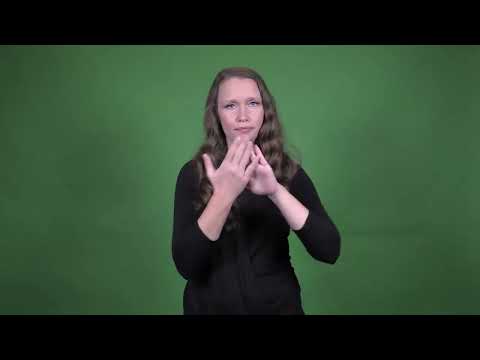
Sign for BECOME OLD in ASL | šŸ‘“šŸ¾ ASL Dictionary

Definition: To grow old.

Sign for BECOME OLD in ASL 

YouTube player

Practice Activities:

Start by practicing the sign for BECOME OLD in ASL in isolation using a mirror. Watch videos from reputable ASL resources and mimic the handshape, movement, and expression. Repeat the sign slowly at first and then gradually speed up as you become more confident. Use a video recording of yourself to compare and adjust your sign for accuracy.

Once you’re comfortable with the isolated sign, incorporate it into full sentences. Try phrases like ā€œI will become old one dayā€ or ā€œMy grandfather has become old.ā€ Practice using the sign in different tenses and contexts to build fluency. Using flashcards or apps that quiz you on vocabulary can also help reinforce your memory of the sign for BECOME OLD in ASL.

Engage in a storytelling activity where you describe the life of a person over time. Start with childhood, and then describe adulthood, finally using the sign to show the person has become old. This will help you anchor the concept in a broader timeline and create a stronger memory of the sign.

Try partner practice if possible. One person can act out basic life story prompts, and the other has to incorporate the sign for BECOME OLD in ASL at the appropriate moment. Switch roles and provide feedback on accuracy and expression. This helps reinforce both receptive and expressive skills.

For a solo practice game, pick several random life events from a list and tell a mini-story using each one, ending with the sign for BECOME OLD in ASL. Try different emotions as you sign—sorrow, joy, nostalgia—to develop expressive clarity. Use emoji cards as prompts to make your storytelling even more fun and visual.

Cultural Context:

In American Sign Language, understanding how to express age and aging goes beyond just words—it reflects values, respect, and imagery deeply tied to Deaf culture. The sign for become old in ASL is more than a literal translation. It conveys a concept that often includes honoring life experience and growth.

The sign for become old in ASL typically shows a smooth movement from youth to age, often represented by a motion from the chin downward, mimicking the growth of a beard. This sign carries not just the idea of physical aging but also maturity, wisdom, and the passing of time. In Deaf culture, age is not simply a number; it is a respected state of being.

Using the sign for become old in ASL within the community can show a wide range of meanings, depending on tone and context. It can describe someone aging naturally, indicate someone reaching a certain milestone birthday, or express a transition in life. Often, the sign is used in stories to represent generational wisdom or life experience.

Many Deaf storytellers use the sign for become old in ASL in visual narratives to share life journeys or cultural morals. The sign easily blends with facial expressions and body language, giving it more emotional and cultural depth. It becomes a part of storytelling where the audience not only sees aging but feels its significance.

The sign for become old in ASL is sometimes taught alongside phrases such as get older or age gracefully, especially in educational settings. Teaching this sign helps Deaf children understand time and change, and it often sparks conversations about aging in the Deaf community and the broader world. The sign stands as a bridge between language and real life.

When talking about elders within the Deaf community, the sign for become old in ASL is used with respect. Elders are seen not just as older individuals but as carriers of cultural knowledge and language. The sign reflects this importance by showing aging not as a decline, but as a respected transformation.

In ASL poetry and performance, the sign for become old in ASL is sometimes stylized to express sorrow, joy, memory, or nostalgia. Artists within the community use it to comment on personal growth or the passing of time. The sign becomes more than communication—it becomes expression.

Educational videos and materials also show the sign for become old in ASL as part of health and wellness discussions, especially related to aging within the Deaf population. It forms part of a broader conversation about care, access, and rights for older Deaf individuals. The visibility of this sign helps reinforce positive

Extended Definition:

The sign for become old in ASL uses a simple but meaningful movement that reflects the concept of aging or growing older. This sign combines elements that show progression through time, capturing the natural process of change from youth to age.

In American Sign Language, the sign for become old usually starts at the chin, which can represent youth or the beginning stages of life. The hand then moves downward, often with a slight change in shape or posture, indicating the passage of time and the gradual transition into old age.

Facial expressions play a key role in this sign. A neutral or slightly serious expression is often used to show respect and acknowledgment of the aging process. Some signers may choose to emphasize experience or wisdom by pausing slightly or adjusting their expression during the movement.

The sign for become old in ASL can be used in a variety of contexts where age or time is relevant. It might appear in conversations about growing older, retirement, or family generations. It’s also a respectful way to refer to someone advanced in years without using more direct or potentially offensive language.

This ASL sign is closely related to the concept of transformation. By signing become old, you are showing a transition, not just in age, but often in life roles, health, or status. The action of the sign mirrors these changes, making it both symbolic and clear for communication.

Learning how to use this sign in ASL storytelling can add depth to narratives. Whether you’re discussing a grandparent, a wise elder, or even the idea of time passing, this sign connects easily with visual storytelling. It’s a great example of how ASL uses space and movement to represent ideas that are deeply human.

ASL learners should practice the sign for become old in ASL with attention to handshape, motion, and facial expression. Mastering its use helps you describe timelines and life events with more fluency and cultural sensitivity. It’s a foundational sign for discussions about life stages and human growth.

This sign is different from signs that simply mean old or age. Become old focuses on the process, not just the end result. It draws attention to the journey of aging, which is especially important in ASL where verbs of change often include movement that reflects that transformation.

Using the sign for become old in ASL adds emotional weight and cultural nuance to conversations. From daily chats to formal presentations, it serves as an important piece of the language when talking about living, changing, and aging. Understanding its layered meaning enhances your ASL communication

Synonyms: age, grow older, get older, mature, advance in years

Educational resources: Find related learning materials in our course bank!

Want more? Check out some of our popular learning activities on the homepage!

Need to look up a sign? Use our highly rated dictionary: https://aslinteractive.com/best-asl-dictionary/

Follow us on tiktok: https://www.tiktok.com/@aslinteractive. More social media links at the bottom of this page!

Long-tail Keywords: what is the sign for become old in ASL, how do you sign become old in ASL, ASL sign for become old

Categories:

tags: becoming, aging, life milestones, verbs, actions

Parameters

*Handshape*:

The handshape for the sign for BECOME OLD in ASL begins with an open “C” hand at the chin, representing a beard or aged appearance. The fingers are curved and slightly spread apart, touching the chin lightly.

As the movement is completed, the hand transitions into an “S” handshape, symbolizing the progression of time or aging. This change in handshape is essential to communicate the concept expressed in the sign for BECOME OLD in ASL .

*Palm Orientation*:

The palm orientation for the sign for BECOME OLD in ASL begins with the dominant hand in a loose “C” shape at the chin, palm facing sideways or slightly inward. As the hand moves downward away from the chin, it gradually closes into a more complete “S” shape, symbolizing the passage of time and aging.

In the sign for BECOME OLD in ASL, this change in handshape is key, and the palm orientation remains steady during the movement. The gesture mimics a beard growing, reinforcing the concept of aging in a visual and meaningful way.

*Location*:

The location for the sign for BECOME OLD in ASL begins at the chin area. The dominant hand, formed into an ā€œSā€ handshape, starts by lightly touching the chin and then moves downward in a small arc toward the upper chest.

This location symbolizes aging from youth to old age. The downward motion from the face reflects the passage of time, reinforcing the full meaning behind the sign for BECOME OLD in ASL.

*Movement*:

The sign for BECOME OLD in ASL begins with a dominant hand in the S-handshape placed under the chin. The hand then moves slightly downward while opening into a loose five-handshape, creating a gentle, natural transition as if showing the passage of time. This movement represents the transition of someone becoming older.

The motion is fluid and straightforward, matching the concept of aging gradually. The sign for BECOME OLD in ASL uses this smooth transformation to symbolically represent the aging process from youth to old age.

*Non-Manual Signals*:

The facial expression for the sign for BECOME OLD in ASL typically shows a natural aging progression. Eyebrows may be neutral or slightly furrowed to suggest seriousness or contemplation.

Mouth movement might mimic a slight downward motion, as if imitating the sagging or wrinkling that comes with age. This expression helps visually support the meaning behind the sign for BECOME OLD in ASL and adds emotional context to the concept of aging.

*Prosody, Dominant/Non-Dominant Hand*:

The sign for BECOME OLD in ASL uses both hands to show transformation over time. Start with both hands open and palms facing each other near the chest, then smoothly move them apart while changing into fists, mimicking aging or transition. āž”ļø

The dominant and non-dominant hands work symmetrically in this sign, emphasizing the shift from youth to age. Facial expressions play a key role in reinforcing the meaning of the sign for BECOME OLD in ASL.

Tips for Beginners:

When learning the sign for BECOME OLD in ASL, beginners should focus on clarity and smooth movement. This sign typically involves a transition from the “young” or neutral age state into the concept of aging, often using the sign for “old” to end the compound. Pay close attention to handshape and facial expression, as both help convey the slow progression of aging.

One common mistake beginners make with the sign for BECOME OLD in ASL is rushing the movement or stiffening their hands. This can make the sign look jerky or unnatural. Remember that the transition in age should look gradual. Practice moving through the sign slowly and intentionally before picking up speed. Your face should reflect understanding or even a little bit of effort, similar to how one might express the feeling of change over time.

Use a mirror when practicing to track your hand movements and facial expressions. It’s easy to perform the handshape correctly but miss the expression, which is essential in the sign for BECOME OLD in ASL. Watching yourself sign also helps you avoid awkward angles or weak movements that make the sign hard to understand.

Another helpful tip is to observe fluent signers. Find videos of native ASL users or certified interpreters signing the phrase naturally. Watching how they use space and transition into the ā€œoldā€ concept can give you a clearer mental picture. Try to mimic their fluidity while keeping your own gestures comfortable and not rigid.

Lastly, practice the components of the sign individually before combining them. Mastering elements like the sign for ā€œBECOMEā€ and ā€œOLDā€ separately can give you more control. Then, when you perform the full sign for BECOME OLD in ASL, your movements will be smoother and more accurate.

Connections to Other topics:

The sign for BECOME OLD in ASL connects meaningfully with age-related concepts such as aging, elderly, and senior. In ASL, aging is often represented through signs that show gradual transformation, and the sign for BECOME OLD captures this idea by depicting physical or metaphorical change over time. It often involves movement that illustrates the passage of time and is closely linked to the signs for GROW and CHANGE.

This sign also relates to compound signs like GROW-UP and GET-OLDER, both of which may be used in storytelling or narratives about life stages. For example, in a narrative where someone is describing maturing from childhood into senior adulthood, the sign for BECOME OLD in ASL naturally fits into the sequence. It often works in tandem with facial expressions that show aging gracefully, with struggle, or with wisdom, enhancing both clarity and emotional tone.

Additionally, the sign can connect to social concepts such as retirement, assisted living, or grandparent status. When discussing family roles, such as GRANDMOTHER or GRANDFATHER, the sign for BECOME OLD in ASL helps place these characters in context, either in family trees or life histories. It allows learners to grasp how physical signs portray life events in an embodied form.

The sign for BECOME OLD in ASL can also be transitioned into expressions of time passing, such as LONG TIME or YEARS PASS. These can show progression in personal stories or transitions through lifespans. In poetic signing or storytelling, such as life retrospectives, it is common to see this sign used metaphorically to reflect emotional or personal transformation alongside physical aging.

In academic or formal ASL discussions about human development, aging populations, or end-of-life care, this sign is also relevant. It demonstrates how ASL can eloquently encapsulate complex, sensitive topics in culturally appropriate ways.

Summary:

The sign for BECOME OLD in ASL represents a meaningful progression both linguistically and culturally. It encapsulates not just the physical act of aging, but also how American Sign Language conveys time, transformation, and human experience. This sign is typically executed by starting in a neutral handshape at the chin and pulling the hand downward to gradually form into the sign for OLD, bridging a conceptual growth from youth into age.

In many contexts, the sign for BECOME OLD in ASL is used idiomatically to express the natural process of getting older rather than a sudden change. ASL often favors visual metaphors, and this concept of aging is effectively demonstrated through careful hand transitions over space. The fluid motion helps depict age not as a fixed state, but as a journey.

Culturally, aging is significant within the Deaf community as in any other. The sign for BECOME OLD in ASL reflects respect for elder members, who are often viewed as carriers of cultural wisdom and history. The sign communicates more than superficial age—it denotes maturity, experience, and richness of life.

Grammatically in ASL, time indicators often occur at the beginning of a sentence, so when using the sign for BECOME OLD in ASL, it might be preceded by signs like FUTURE or OVER-TIME, depending on the narrative. This adds temporal context to the aging process, establishing a clear frame for understanding.

When analyzing its morphology, the sign for BECOME OLD in ASL combines elements of the separate signs BECOME and OLD, which are often expressed together in a fluid compound. The sign for BECOME involves a transformation hand motion, while OLD uses a distinct chin-to-chest gesture. The resulting compound efficiently compresses meaning.

Linguistically, this sign exemplifies one of ASL’s strengths—iconicity. The sign visually matches the concept by illustrating the “lowering” or “drooping” often correlated with physical aging. It taps into the natural human perception of downward motion being linked to the concept of time passing or body decline.

Interestingly, this downward pulling motion in the sign for BECOME OLD in ASL mirrors how other signs in ASL reflect aging or time. For example, the sign YEAR involves a circular motion to indicate cycles, and the sign GROW-UP involves rising movement. In contrast, the descent in this sign marks the opposite progression.

Philosophically, the sign invites contemplation on how languages handle abstract notions like aging. Unlike spoken languages where metaphor is heard, signed languages offer metaphor through space and motion. The use of space in the sign for BECOME OLD in ASL invites a visual metaphoric experience for the viewer.

In ASL discourse, this sign can be extended metaphorically. For example, it might be used in narratives to depict change not just in people but institutions, relationships, or traditions. Interpreters might adapt the movements slightly to stress emotional or thematic tones, depending on context.

The sign for BECOME OLD in ASL also plays into broader themes of lifecycle communication in signed languages. From BIRTH to DEATH, ASL provides discrete signs for each life phase, yet many of them are connected through shared handshapes, movement patterns, or spatial references, creating cognitive links among related concepts.

Children learning ASL will often acquire simpler structural signs like AGE or OLD first. The more nuanced sign for BECOME OLD in ASL might come later as they develop a deeper understanding of temporal and transformational concepts. It’s a sign that reveals the richness possible only after foundational fluency has been developed.

From an applied linguistics standpoint, teaching the sign for BECOME OLD in ASL helps learners grasp how ASL handles aspect and time. Movement often indicates duration or gradual transition, making this sign an excellent example in curriculum designed for middle or advanced learners of ASL. It offers insights into advanced verb aspect in signed mediums.

Interpreters need to be particularly nuanced when rendering this sign across contexts. In sensitive environments like elder care, hospitals, or counseling sessions, the sign for BECOME OLD in ASL must be delivered with appropriate emotional weight. It can signify medical conditions, stages of dementia, or even metaphorical aging of systems or ideas depending on spoken equivalents.

In poetic or creative ASL expression, visual rhymes with this sign can be formed. By pairing or juxtaposing it with signs like DIE, BURN-OUT, or LEARN, performers can craft layered messages about life’s fleeting nature. The sign acts as a pivot for deeper messages, making it rich in literary and narrative potential.

The motion of the sign supports narrative pacing. In storytelling, the transition from youthful signs to the sign for BECOME OLD in ASL naturally guides the viewer’s understanding of time passing. Performers often rely on facial expression and rhythm of sign speed to underscore the emotional resonance of the story arc.

Sociolinguistically, this sign may have

Want more? Check out some of our popular learning activities!

ASL Interactive Resources

ASLInteractive YouTube Channel

Follow us on tiktok: @aslinteractive.com

Follow us on Instagram: aslinteractive

Facebook page: aslinteractive

Facebook group: aslinteractive

LInkedIn: ASL Interactive LLC

Twitter: @ASL_interactive

*Some information on this page is AI-generated. AI can make mistakes. Please check the information.

Sign for BECOME OLD in ASLĀ 
Sign for BECOME OLD in ASL 

Responses