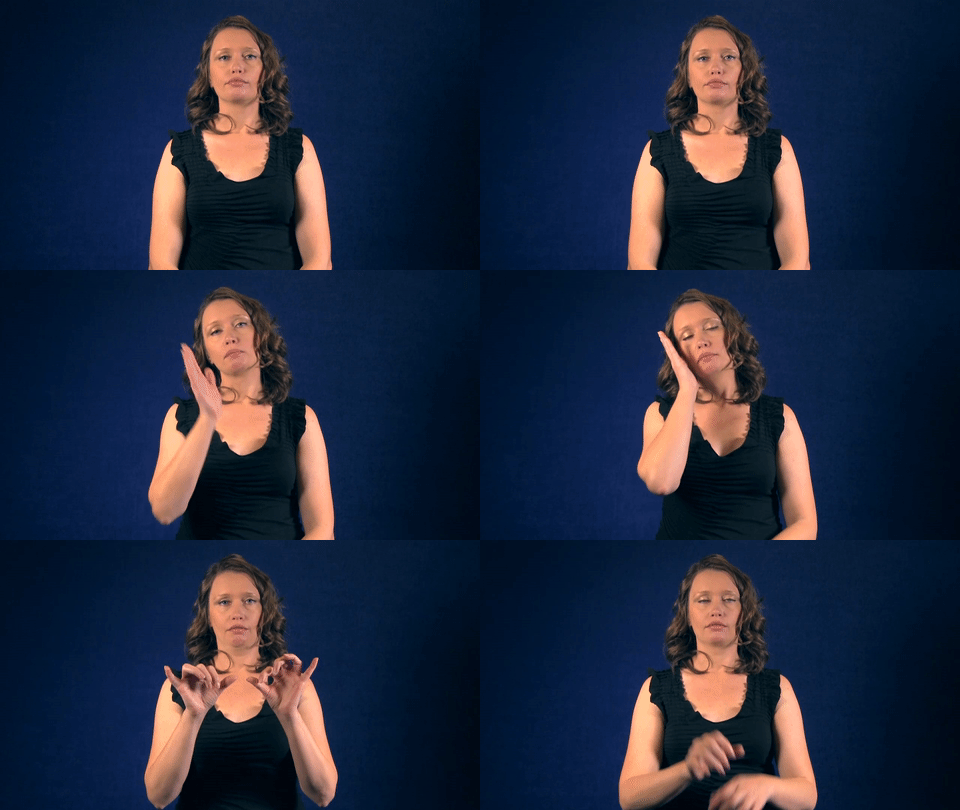
Definition: Different sizes of beds.
Sign for BED SIZES in ASL

Practice Activities:
To get comfortable with the sign for BED SIZES in ASL, start by practicing the individual base sign for BED. Use a mirror to ensure you’re using the correct handshape, movement, and facial expression. Repeat the sign slowly, then speed up as you grow more confident. Once you’re comfortable, incorporate signs like TWIN, FULL, QUEEN, and KING to complete the concept of bed sizes.
Create a list of different bed sizes and sign each one clearly, using fingerspelling if needed. For example, sign BED then fingerspell T-W-I-N or sign BED + KING depending on your learning level. Use flashcards with images of various beds and sign the correct bed size in ASL for each card. This helps reinforce the connection between images and vocabulary.
Try forming complete sentences using the sign for bed sizes in ASL. Practice with sentences such as “MY ROOM HAS FULL BED” or “I SLEEP ON TWIN BED.” This helps you understand how to use the vocabulary in everyday conversations. Add facial expressions to modify intent or context, like showing excitement about getting a bigger bed.
Pair up with another learner and practice describing dream bedrooms to each other using signs for furniture, color, and bed sizes. One person signs a sentence about their room, and the partner signs it back or responds. You can also play guessing games where one partner describes a bedroom and the other guesses the bed size.
Use storytelling to give more context. Try telling a short story about a person shopping for a bed, using the sign for bed sizes in ASL when discussing options. This allows you to work on cohesive signing, transitions, and using the sign in a narrative format. Add directional and spatial elements to show where the bed is placed, making the practice more immersive.
Cultural Context:
Understanding the sign for bed sizes in ASL is more than just learning vocabulary; it provides a window into how Deaf culture communicates practical and everyday concepts. In Deaf households, conversations about home furnishings like bed sizes are common, especially when discussing purchases, arranging furniture, or preparing guest rooms. Using the correct sign for bed sizes in ASL helps navigate these discussions clearly and respectfully.
The sign for bed sizes in ASL represents more than just objects—it reflects the importance of spatial awareness in sign language communication. ASL users often incorporate size, shape, and spatial logic into their signs. When talking about bed sizes, signers use handshapes and body movements to show differences between twin, full, queen, and king-sized beds. Understanding these signs helps create smooth conversations in ASL about household comforts and space planning ️.
In Deaf culture, using precise ASL vocabulary like the sign for bed sizes in ASL shows fluency and respect for the language. It avoids confusion when communicating measurements or shopping for furniture. Many popular ASL phrases mimic real-life physical comparisons, and bed sizes are no exception. These signs are often intuitive, tied to size perception or relational features in the signing space.
Many Deaf households in the U.S. model early ASL learning around daily routines and common topics. Knowing the sign for bed sizes in ASL is part of that foundational vocabulary when children learn household items. ASL scenes centered around bedtime or moving house regularly include references to beds and sizes, making it important to grasp the correct signs for them.
Using the correct sign for bed sizes in ASL also helps when interpreting for medical, travel, or hospitality purposes. Whether booking hotel rooms or selecting hospital beds, interpreters rely on specialized signs to communicate accurately. Bed size discussions might also come up in parenting conversations, college dorm prep, or interior design sessions—real-life moments that call for clarity in ASL.
The sign for bed sizes in ASL also features in educational settings. Teachers often include it when discussing categories of furniture, bedrooms, or home design. Given how central sleep and comfort are to health and well-being, having consistent, culturally appropriate ways to talk about beds in ASL supports meaningful classroom communication .
Social media and ASL storytelling also incorporate everyday topics like beds and room arrangements. When Deaf influencers or vloggers share room tours or move-in stories, they often include the sign for bed sizes in ASL. This makes the content more relatable to the Deaf community and reinforces
Extended Definition:
The sign for bed sizes in ASL is a practical and visual way to describe different types of beds such as twin, full, queen, and king. When using American Sign Language to talk about furniture or setting up a bedroom, knowing how to sign these specific bed sizes is incredibly useful. Each bed size can be described by combining the general sign for bed with hand shapes and movements that indicate size and dimension.
To start, the basic sign for bed involves placing both hands together, palms facing each other, and then resting your head on your hands like you’re sleeping. This is the foundation sign for bed. From this starting point, you can adjust your gestures or use facial expressions to indicate different bed sizes in ASL.
For example, a twin bed would include a smaller spacing between your hands to suggest a narrow width. A full bed would use slightly more space between the hands, while a queen or king bed would show even more width using extended arm gestures. Sometimes people will fingerspell the specific size of the bed, especially if clarity is important or if the standard size sign isn’t commonly known.
The sign for bed sizes in ASL can also include classifiers to add context. For instance, you might use flat hand classifiers to show the surface area of the bed. You can also show heights or thicknesses of mattresses depending on the conversation. If you’re talking about moving furniture or sleeping arrangements, being able to sign bed sizes correctly is essential.
It’s important to pair signs for bed sizes in ASL with appropriate non-manual signals like facial expressions to indicate size or comfort. A bed that is too small or too large can be better described by widening your eyes or exaggerating your hand space. ASL uses the whole body to give a full picture of what’s being communicated, so these visual cues add more meaning to the signs.
If you’re shopping for new furniture or discussing home decor in ASL, being familiar with the sign for bed sizes in ASL can help you communicate clearly. Whether you’re telling someone you sleep on a queen bed or asking if a room will fit a king-sized bed, ASL makes use of spatial referencing and iconic signs to make the message visual and precise.
Younger learners and ASL students can benefit from practicing these signs in context, such as in classroom lessons on the home or bedroom vocabulary. Teaching the sign for bed sizes in ASL also supports discussions around personal space, hotel rooms, or travel situations where bed arrangements are part of the conversation.
For online ASL
Synonyms: twin bed, twin size, single bed, single size, small bed
Educational resources: Find related learning materials in our course bank!
Want more? Check out some of our popular learning activities on the homepage!
Need to look up a sign? Use our highly rated dictionary: https://aslinteractive.com/best-asl-dictionary/
Follow us on tiktok: https://www.tiktok.com/@aslinteractive. More social media links at the bottom of this page!
Long-tail Keywords: what is the sign for bed sizes in ASL, how do you sign bed sizes in American Sign Language, ASL sign for different bed sizes
Categories:
tags: Housing, Objects in the Classroom, Describing Residence, Everyday Activities, Language Learning
Parameters
*Handshape*:
The handshape for the sign for BED SIZES in ASL begins with both hands in a flat “B” handshape, palms facing each other and positioned near the side of the face to show the concept of “bed.” To indicate different bed sizes like twin, queen, or king, the hands then move apart to illustrate varying widths.
This handshape stays open and relaxed while using movement and space to emphasize size differences. The sign for BED SIZES in ASL uses spatial referencing to denote how wide each type of bed is, making the concept visually clear.
*Palm Orientation*:
For the sign for BED SIZES in ASL, the palm orientation begins with both hands in a flat “B” handshape, palms facing each other and slightly inward, mimicking the width of a bed. When showing different bed sizes, the hands are often moved farther apart for queen or king size and closer together for a twin or full. The palm orientation consistently remains facing inward on both sides to clearly depict the frame or dimension of the bed. This palm positioning helps make the sign for BED SIZES in ASL visually intuitive and easy to recognize. ️
*Location*:
The sign for BED SIZES in ASL is typically produced in the neutral space in front of the torso, slightly below the chin. The sign for BED starts near the side of the head, where one mimics laying their head on a pillow with both hands, and then transitions into indicating different bed widths using the space in front of the body.
To show various bed sizes, such as twin, full, queen, or king, ASL users often incorporate classifiers or hand shapes to represent dimensions, spacing them out appropriately in front of the chest. The overall movement for the sign for BED SIZES in ASL stays within the central signing space for clarity and visibility. ️
*Movement*:
To produce the sign for BED SIZES in ASL, begin by signing BED: place both flat hands together, palms facing each other near the side of the head as if resting on a pillow. Then transition to indicating sizes by showing spatial differences. Use your hands to depict increasing lengths or widths in the air to imply different bed sizes—twin, queen, king—adjusting hand spacing accordingly.
The sign for BED SIZES in ASL may also involve a slight widening of the hands with an upward motion to represent the comparative dimensions of the beds. This combination visually conveys the variety of bed sizes by layering the basic concept of a bed with spatial modifiers. ️
*Non-Manual Signals*:
When showing the sign for BED SIZES in ASL, maintain a neutral or slightly inquisitive facial expression, especially if you are presenting the idea of comparing sizes like twin, full, queen, or king. Slightly raised eyebrows can help indicate you’re specifying categories, helping to differentiate between the various bed measurements.
Your facial expression should reflect clarity and categorization rather than emotional intensity. This supports the clear communication of the sign for BED SIZES in ASL ️. Use slight head tilts or nods when shifting between different bed sizes for added clarity.
*Prosody, Dominant/Non-Dominant Hand*:
The sign for BED SIZES in ASL combines the general sign for BED with a size or dimension indicator. The dominant hand starts flat alongside the cheek to mimic lying on a pillow, then both hands move apart horizontally to show size differences. The dominant hand typically leads this spatial movement for clarity and emphasis. This sign visually conveys varying bed widths such as twin, full, queen, or king.
When expressing the sign for BED SIZES in ASL, the dominant hand plays a key role in directing the extent of size comparison. The non-dominant hand assists in mirroring or anchoring the gesture to indicate the range. Proper use of both hands creates a clear distinction between each bed size ️.
Tips for Beginners:
When learning the sign for BED SIZES in ASL, it’s essential to first fully understand the foundational signs related to beds. Start by mastering the basic sign for “BED,” which is made by placing both hands together under your tilted head as if you are resting on a pillow. Once this concept is clear, you can modify it by fingerspelling common bed sizes like TWIN, FULL, QUEEN, KING, or CALIFORNIA KING.
A helpful tip for beginners is to take your time with fingerspelling and practice the clear, consistent formation of each letter. Speed comes with time, so avoid rushing through fingerspelled terms. The clarity of each handshape is key when using the sign for BED SIZES in ASL, especially since some of these terms aren’t represented with distinct iconic signs but are conveyed through fingerspelling.
Common pitfalls include sloppy letter formation or hand placement too low or too far from the viewer’s eye line. Keep your hands up and at chest level to make your signs visible. It also helps to mouth the word slightly (without voicing) when fingerspelling to offer context to the viewer — this is common practice in ASL.
Pay attention to facial expressions. While signing BED, your facial cues might be neutral or peaceful, evoking sleep or rest. When indicating different sizes, you can use your hands to visually expand or shrink in width just after fingerspelling the size, helping to illustrate the physical difference. This visual representation is especially useful for the sign for BED SIZES in ASL, as it makes the abstract size concept more concrete.
Consistent daily repetition and watching native signers demonstrate real-life examples will greatly help your learning. Signing in front of a mirror or recording yourself can aid in spotting any areas of improvement. The more natural your transitions and pacing between BED and the fingerspelled sizes, the more fluent your signing will become.
bed size, how to sign bed sizes in ASL, sign for full bed, sign for queen bed, sign for twin bed, sign for king bed in ASL, ASL fingerspelling for bed sizes, ASL sign for mattress sizes, sign for bed dimensions in ASL, describing bed sizes in ASL
Connections to Other topics:
The sign for BED SIZES in ASL connects closely with foundational signs like BED, BIG, SMALL, and MEASURE. These base concepts help express not only types of beds but also general measurements and comparisons between objects, which is crucial for descriptive communication in ASL. While BED is typically signed using a head-resting motion, combining it with directional signs or size modifiers allows signers to refer to specific sizes like twin, full, queen, or king.
For instance, once BED is signed, expanding into sizes can be done by signing BIG for larger beds or SMALL for more compact options. These modifier signs make the sign for BED SIZES in ASL versatile and adaptable. Fingerspelling is often incorporated for specific terms like (FS)KING or (FS)QUEEN, especially in formal discussions or when clarity is needed. This highlights ASL’s blend of conceptual signs with manual alphabet use.
This keyword phrase also has relevance when learning compound or compound-like expressions such as BEDROOM, where combining BED with ROOM conveys a new, related concept. Similarly, the concept ties into furniture vocabulary, useful in contexts like house tours, shopping, or setting up a space. Signs for MATTRESS, FRAME, or SOFT often accompany the conversation, enriching the signer’s ability to describe comfort or personal preferences.
In educational settings, explaining the sign for BED SIZES in ASL can naturally lead into discussions about spatial descriptors or measurements like WIDE, LONG, or DOUBLE. These terms have widespread application and build transferable skills for describing not only furniture but also clothing, rooms, or distances. Signers benefit from seeing the interconnected nature of descriptors in ASL, where a rich visual vocabulary helps build complex meanings from simple roots. ️
Summary:
The sign for BED SIZES in ASL combines multiple components that reflect both concrete objects and spatial relationships. The base sign for BED is commonly produced by resting the side of the dominant hand, palm inward, against the side of the head as if lying on a pillow. This sign sets the foundational concept.
To show different bed sizes, size modification comes into play. This is often expressed using classifiers to indicate spatial size or by fingerspelling size categories like TWIN, FULL, QUEEN, or KING. These versions allow signers to clarify what bed size they are referring to.
A common technique used is the depiction of bed width through the use of classifiers. Classifier handshapes like “CL:BB” denote flat, wide objects. The space between the hands can be adjusted to show how large or small the bed is.
For example, a TWIN might involve hands held close together using the “CL:BB” handshape. For a KING, hands are widened significantly to show the increased width. This visual-spatial strategy makes ASL particularly well-suited for expressing physical differences.
The sign for BED SIZES in ASL offers insights into how Deaf culture prioritizes visual-spatial logic. Rather than relying solely on fingerspelling, classifiers express conceptual depth in a more natural and intuitive way. It’s not just about names; it’s about visually representing size dimensions.
ASL syntax allows flexibility in modifying nouns like BED. This allows the signer to emphasize the size difference naturally within the flow of signing. Said differently, the syntax supports linguistic economy while maintaining clarity.
The phrase BED SIZES involves pluralization, and in ASL this can be achieved contextually rather than with a distinct sign. For example, moving the classifier handshapes slightly across space can indicate multiple beds of various sizes without adding more signs.
Grammar in ASL often relies on non-manual markers like facial expressions. When discussing BED SIZES in ASL, a knowledgeable signer might raise eyebrows to ask a question about preferred bed size or squint while inflating cheek muscles to emphasize the enormity of a KING bed.
Because some bed sizes such as CALIFORNIA KING or EXTRA LONG TWIN are less universal, signers may opt to fingerspell them first before using a classifier. This practice helps establish referents and avoids ambiguity during a signed conversation.
The sign for BED SIZES in ASL is rarely static. Context, setting, and audience determine how elaborate or simplified the signs become. For formal exchanges, fingerspelling the exact size is common. In casual conversations, people rely more on classifiers.
In real-life application, such as shopping for furniture or booking hotel rooms, the sign for BED SIZES in ASL becomes important for full comprehension. Accurate communication about size can help avoid confusion in practical settings.
Culturally, the concept of beds and their sizes may carry different meanings in Deaf spaces depending on community priorities. For example, residential schools or dormitories may have standard bed sizes, making specific size references more culturally relevant.
In child language acquisition, younger Deaf children often learn BED as a basic noun early. Later, they develop the ability to add size distinctions, using visual referencing skills and understanding classifier systems. This shows linguistic and cognitive development over time.
From a linguistic standpoint, the sign for BED SIZES in ASL is a prime example of compounding and modification. The root sign is altered with spatial markers and classifier expansions to provide additional semantic data. This layered approach mirrors morphological richness.
Applied linguistics connects this concept to studies in language teaching and interpreter training. Teaching the classifier system that underpins BED SIZES in ASL provides insight for both novice signers and professionals who must interpret varied physical descriptions.
Related signs include ROOM, SLEEP, FURNITURE, and REST. These signs often appear in proximity when discussing BED SIZES in ASL, as signers may describe sleeping arrangements, product dimensions, or interior layouts.
Interestingly, the dimensions represented through space in classifiers offer a real-time 3D model of the object being discussed. This is a unique trait of ASL and other signed languages, as spoken languages don’t provide this immersive spatial representation.
Facial expressions also help emphasize distinctions. A surprised or exaggerated expression may accompany a description of a massive bed, while a neutral or subdued expression complements mention of a smaller bed. These markers increase communicative precision.
In ASL storytelling, bed imagery can become metaphorical. A tiny bed may represent tight circumstances or lack of space, while a vast bed may symbolize wealth or comfort. So, the sign for BED SIZES in ASL isn’t limited to denotation—it also serves in connotation.
Language stylization plays a role for native or advanced signers when discussing BED SIZES in ASL. They may incorporate sweeping gestures or multi-part classifiers to enhance their descriptions. This reflects language adaptation and personality in use.
There’s significant overlap between classifiers for BED and other flat horizontal furniture, such
Want more? Check out some of our popular learning activities!
ASL Interactive Resources
ASLInteractive YouTube Channel
Follow us on tiktok: @aslinteractive.com
Follow us on Instagram: aslinteractive
Facebook page: aslinteractive
Facebook group: aslinteractive
LInkedIn: ASL Interactive LLC
Twitter: @ASL_interactive
*Some information on this page is AI-generated. AI can make mistakes. Please check the information.


Responses