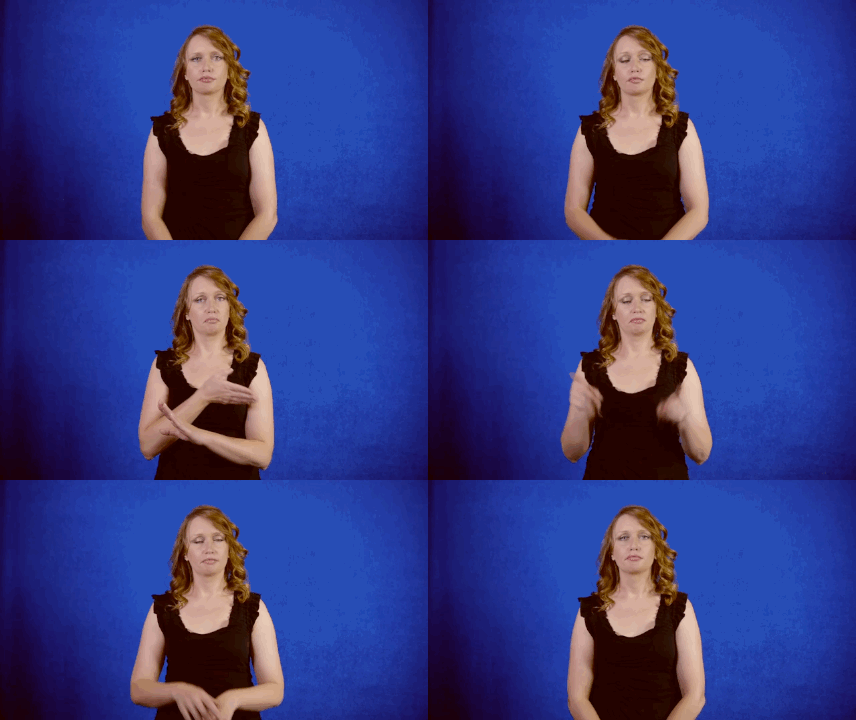
Sign for BEFORE EVENT in ASL | 📆 ASL Dictionary

Definition: An event that takes place earlier.

Sign for BEFORE EVENT in ASL

YouTube player

Practice Activities:

To practice the sign for BEFORE EVENT in ASL, start by isolating the sign for BEFORE. Form your dominant hand slightly curved and move it backward from the flat base hand, indicating something happening earlier in time. Repeat this several times in a mirror to ensure smooth, fluid motion and correct hand placement. Then sign EVENT by tapping the tips of your open F hands together in front of you, like something being marked or happening.

Combine both signs repeatedly to get used to the transition. Use a timer to sign the phrase every few seconds while maintaining clarity and speed. Practice this in front of a mirror or record yourself to check for fluidity between the two signs.

Use the sign for BEFORE EVENT in ASL in short example sentences. Sign “I ate before event” or “He left before event started.” Think about common situations where things happen in sequence, such as school, work, or social gatherings. These contexts will help solidify time sequencing in your mind and signing.

Create storytelling prompts that naturally lead into the phrase. For example, tell a story about preparing for a wedding, vacation, or party: “Before the event, I got dressed, and everyone decorated.” Use the sign for BEFORE EVENT in ASL each time the sequence demands it to reinforce the temporal concept.

Work with a partner and take turns asking and answering questions like “What did you do before the event?” or “Did you see him before the event?” Incorporate facial expressions and body shifts to also practice proper ASL grammar and non-manual markers.

Lastly, watch ASL videos or narratives that include events and try to recognize the sign for BEFORE EVENT in ASL. Pause and mimic the signing to reinforce comprehension and production.

Cultural Context:

In American Sign Language, the sign for BEFORE EVENT in ASL reflects how Deaf culture communicates time and sequence differently than the English language. Understanding this sign involves more than just vocabulary—it taps into the unique visual-spatial nature of ASL. Unlike spoken language, ASL allows for gestures and facial expressions that add layers of meaning, especially when discussing events in time.

The sign for BEFORE EVENT in ASL emphasizes the concept of time as a visual journey from one point to another. In Deaf culture, time is often conceptualized by placing signs in space to represent past, present, and future. This spatial grammar helps visually convey when something happened in relation to another event.

When using the sign for BEFORE EVENT in ASL, signers often establish a point in space that represents the current or upcoming event, then show another sign occurring before that. This is a culturally rich way to outline sequence and cause-and-effect. Facial expressions play a vital role in reinforcing whether the time reference was recent, long ago, or just prior to something.

In classroom or social settings, Deaf individuals often use the sign for BEFORE EVENT in ASL to talk about scheduling, expectations, and histories. The sign helps clarify when preparations need to occur, or highlight traditions that happen prior to well-known events like holidays or community gatherings. This builds shared understanding and strengthens group cohesion within the community.

The sign for BEFORE EVENT in ASL can also reflect emotional anticipation. When discussing significant events such as weddings, performances, or even exams, the sign can carry feelings of excitement, tension, or even nostalgia. The cultural context surrounds not only the what but also the emotional when, as deeply understood in Deaf interactions.

In storytelling, a major aspect of Deaf culture, the sign for BEFORE EVENT in ASL becomes an important narrative device. It allows the storyteller to set up context and foreshadow actions. This mirrors how chronologies are laid out as visual timelines, keeping attention on what came first and what follows.

Deaf history is passed down visually through shared experiences and personal stories. The use of the sign for BEFORE EVENT in ASL plays a key part in preserving context, ensuring that younger generations understand the sequence of changes, milestones, and struggles in their community. This makes the sign not only practical but culturally vital.

Social media in ASL also makes frequent use of the sign for BEFORE EVENT in ASL, especially in content like vlogs, event planning, and recaps of past meet-ups or milestones. It’s a go

Extended Definition:

The sign for before event in ASL is a helpful phrase when discussing a timeline of actions, especially when something is scheduled or has occurred in the past. In American Sign Language, context is crucial, and using the right sign for before event in ASL helps clarify what happened in sequential order. Whether you’re talking about a meeting, a class, or a gathering, knowing how to express “before” in relation to an event makes your communication more precise.

To sign “before event,” you typically use a directional sign that shows one hand moving past the other, symbolizing that something occurred earlier in time. This spatial representation mirrors how events unfold, helping convey a clear visual of the sequence. When you use the sign for before event in ASL, it’s commonly paired with a reference point, such as the specific event you’re talking about, to anchor the timeline.

This phrase is especially useful in narrative or instructional contexts. If you’re recalling what happened prior to a concert or preparing someone for an upcoming party, the sign for before event in ASL helps mark that lead-up time. It enables you to set the stage for a full story or give step-by-step directions in order.

You might use this ASL phrase when telling someone to arrive at a location a few minutes before a scheduled activity. For example, when coordinating plans, signing before event helps emphasize the importance of timeliness. The sign gives you an easy way to communicate that something must or did happen in advance of another occurrence.

Teachers and interpreters rely on the sign for before event in ASL to improve understanding during lessons or appointments. When breaking down procedures or describing a chronology, this sign becomes essential. It allows everyone to stay oriented within the timeline of events being discussed, whether in a classroom or a daily conversation.

Like many signs in American Sign Language, facial expressions and body language add depth to the meaning. When signing “before,” you might also slightly lean back or show a thoughtful expression to emphasize the passage of time. These non-manual cues reinforce the sign for before event in ASL and its intended use.

It’s also helpful in discussing goals, planning, or preparation. For instance, when someone wants to say what needs to happen before an interview or a big test, this sign becomes a go-to in conveying those preparatory steps. Often, the sign for before event in ASL is joined with time signs like “morning,” “yesterday,” or clock-based numbers to be more specific.

Parents use the

Synonyms: prior to the event, ahead of the event, preceding the event, in advance of the event, before the occasion

Educational resources: Find related learning materials in our course bank!

Want more? Check out some of our popular learning activities on the homepage!

Need to look up a sign? Use our highly rated dictionary: https://aslinteractive.com/best-asl-dictionary/

Follow us on tiktok: https://www.tiktok.com/@aslinteractive. More social media links at the bottom of this page!

Long-tail Keywords: what is the sign for before event in ASL, how do you sign before event in ASL, before event in sign language

Categories:

tags: Before Event, Occasions, Activities, Time, Sign Parameters

Parameters

*Handshape*:

The handshape for the sign for BEFORE EVENT in ASL uses both hands in flat “B” shapes, with the dominant hand placed behind the non-dominant. The dominant “B” hand moves backward in a quick, arcing motion, going behind the stationary non-dominant hand.

This motion helps convey the sense of something happening earlier, fitting the meaning of the sign for BEFORE EVENT in ASL. Be sure to maintain open fingers and a relaxed posture throughout the sign.

*Palm Orientation*:

For the sign for BEFORE EVENT in ASL, the dominant hand usually faces backward with the palm inward, resting near the back of the non-dominant hand, which also faces inward. The dominant hand then moves slightly backward past the non-dominant hand as if indicating something that already happened.

Palm orientation plays an essential role in conveying the timing relationship in the sign for BEFORE EVENT in ASL. Both hands are vertically oriented with palms facing the signer’s body, helping emphasize the concept of something occurring earlier.

*Location*:

The sign for BEFORE EVENT in ASL is typically produced in the neutral space directly in front of the body, slightly below the chest area. This area allows for clear visibility and ease of motion when showing the temporal relationship indicated by the sign.

For the sign for BEFORE EVENT in ASL, the dominant hand moves behind the non-dominant hand, which remains stationary, to visually convey one event occurring prior to another. The neutral space used ensures the sign is understood in context.

*Movement*:

The sign for BEFORE EVENT in ASL uses the dominant bent hand moving backward past the stationary non-dominant flat hand, palm facing the body. The motion starts with both hands close, then the dominant hand arcs smoothly backward ✋, indicating an action that occurs prior to something else.

This movement represents the concept of time moving back, which is central to the sign for BEFORE EVENT in ASL. Pairing this with facial expressions signaling sequence enhances the meaning.

*Non-Manual Signals*:

When using the sign for BEFORE EVENT in ASL, the signer often raises their eyebrows slightly while leaning their head a bit forward to indicate a transition or anticipation. The eyes may shift subtly to the side, as if referencing a point in time prior to a main occurrence.

Facial expressions help convey the relationship between two actions, enhancing the overall meaning of the sign for BEFORE EVENT in ASL. A thoughtful or reflective expression also reinforces that the event happened earlier in time.

*Prosody, Dominant/Non-Dominant Hand*:

The sign for BEFORE EVENT in ASL uses both hands, with the non-dominant hand held steady in a vertical, flat-B shape to represent a reference point in time. The dominant hand, also in a flat-B shape, starts behind the non-dominant hand and moves forward in a quick arc, as if referencing something that happened prior.

The prosodic emphasis in the sign for BEFORE EVENT in ASL helps indicate sequence and timing, with a smooth but deliberate motion of the dominant hand showing the transition from past to a focal moment. Proper facial expressions can add clarity to the temporal relationship conveyed.

Tips for Beginners:

When learning the sign for BEFORE EVENT in ASL, it’s important to focus on the movement and direction of the dominant hand as it moves away from the nondominant hand. The typical sign for “before” involves placing the nondominant hand in a vertical position, palm facing the signer, and then the dominant hand starts behind it and slides forward past it. Think of something happening “in front of” or “prior to” a point in time. Pairing this with expressive facial grammar helps clarify meaning.

A common mistake that beginners make with the sign for BEFORE EVENT in ASL is moving the hand in the wrong direction or failing to maintain orientation. Make sure the dominant hand doesn’t accidentally move in the opposite direction, as this can alter the meaning or cause confusion. Keeping both hands in proper alignment ensures the sign stays clear and recognizable.

Another useful tip is to practice with everyday examples. Think about things you do before an event—like getting dressed before a meeting or stretching before a workout. Signing these phrases regularly will build muscle memory and help you use the sign for BEFORE EVENT in ASL naturally in conversation.

Facial expressions also play a big role in ASL. When discussing a past sequence or setting up a timeline, your eyebrows should usually raise to indicate the setup phase of your thought. Including appropriate non-manual signals will help your signing appear more fluent and nuanced.

Lastly, consistency matters. Don’t rush the motion; keep it deliberate and smooth. Recording yourself or practicing with a more advanced signer can help you spot subtle errors. With steady practice and attention to detail, you’ll soon feel confident using the sign for BEFORE EVENT in ASL during conversations.

Connections to Other topics:

The sign for BEFORE EVENT in ASL connects closely to concepts of time, sequence, and planning. It often appears in narratives where events are described in chronological order. Understanding this sign can strengthen comprehension of related temporal signs such as AFTER, FUTURE, and PAST, helping learners grasp how ASL represents abstract sequences.

This sign also appears in compound constructions where contextual timing is essential, like BEFORE CLASS or BEFORE WORK. In compound signs, BEFORE EVENT combines with topic-specific terms to indicate prior actions or preparations. For example, in a story about a wedding, one might sign BEFORE EVENT combined with DRESS or DECORATE to describe set-up activities.

The sign for BEFORE EVENT in ASL shares conceptual parallels with PREPARE, PLAN, and ANTICIPATE. These connections highlight ways in which ASL visually organizes anticipation or sequencing. It reinforces the ASL principle of establishing time markers early in sentences to anchor meaning—a fundamental strategy for fluency.

In Deaf culture, temporal framing is critical because ASL relies heavily on spatial and chronological referencing. Using the sign for BEFORE EVENT in ASL correctly contributes to more culturally accurate storytelling. It sets the stage for what follows and helps the listener visualize an ordered experience.

Students can benefit from connecting this sign with question formats too, like WHEN or WHAT-HAPPEN before events. This enables richer conversational skills when asking about people’s preparation or experience. It also opens up expressive potential when telling personal anecdotes or historical events.

Additionally, the spatial aspect of this sign—often made by moving one hand away from a stationary one—relates to other directional signs in ASL. This helps learners build muscle memory and spatial reasoning, both important in mastering ASL structure. Recognizing how this motion mirrors other temporal gestures will create deeper language retention.

Summary:

The sign for BEFORE EVENT in ASL revolves around both temporal and spatial constructions in ASL grammar. It links the idea of a moment that precedes an action or time period, typically used to indicate sequences. This sign is essential when discussing storytelling, historical timelines, or giving verbal instructions in chronological order.

To produce the sign for BEFORE EVENT in ASL, you use both open hands held in front of the body, palm-in. The non-dominant hand stays steady, while the dominant hand pulls back slightly in a quick, smooth movement behind it. This backward movement captures the idea of returning or referencing the past.

Understanding the movement of the dominant hand in this sign is crucial. The gesture physically retreats, symbolically suggesting that what comes before is located further back in time. This physical metaphor for time helps give visual clarity to the sentence’s chronological structure.

ASL often utilizes spatial parameters to express temporal ideas. The sign for BEFORE EVENT in ASL aligns with these overarching principles in Deaf discourse. Using the spatial plane to represent past events is a consistent theme across many time-related signs.

Deaf culture emphasizes visual storytelling and narrative order. The sign for BEFORE EVENT in ASL supports this value by clarifying when events occurred in contrast to each other. Events are often not perceived as isolated but connected through temporal flows.

The sign for BEFORE EVENT in ASL is not just about the individual action but is frequently paired with context from the surrounding sentence. For example, it may be used in phrases such as “BEFORE EVENT, I STUDY” or “BEFORE EVENT, EAT FINISH.” These constructions depend on correct time sequencing.

Grammatically, the sign for BEFORE EVENT in ASL can act as a time marker at the beginning of a sentence. Time topics in ASL typically appear at the start due to time-topic-comment structure. This fronting helps orient the observer early and keeps narrative flow intact.

When using the sign for BEFORE EVENT in ASL, there are also subtleties in facial grammar. Slight raised eyebrows often accompany the sign if it appears as a rhetorical setup. This encourages the viewer to anticipate an explanation or detailing.

Linguistically, the sign’s structure mirrors ASL syntax rules. Keeping the time indicators separate yet prominent allows for clarity. Signed concepts become less ambiguous when temporal arrangements are physically visible on the body.

Movement and proximity in signs such as BEFORE EVENT symbolize grammatical relationships. Pulling the hand backward, toward the signer, emphasizes something already passed, a concept deeply embedded in ASL temporal representation. This shows how spatial metaphors are fundamental in the language’s grammar.

The sign for BEFORE EVENT in ASL also has related variants. You might see alternate lexicalized or initialized signs depending on region, age of signer, and context. For example, some older signers may fingerspell “BEFORE” in place of using the sign.

While regional variation exists, the commonly accepted sign for BEFORE EVENT emphasizes simplicity and universality. This helps across generations, supporting both comprehension and fluency. The use of hand dominance and directionality allows the concept to transcend semantic barriers.

Narrative sequences in ASL often use BEFORE EVENT alongside signs like AFTER, LATER, and FINISH. These signs form the bedrock of temporal logic in signed conversation. They support cognitive scaffolding and assist formatted processing of event-based information.

The use of directional movement in the sign contributes to the broader topic of time metaphor in ASL. Similar to how hearing cultures talk about “time behind us” or “looking forward,” ASL embodies this metaphor in three-dimensional space. The physical pull of the before sign is deeply intuitive within this visual-spatial language.

In applied linguistic studies, signs like BEFORE EVENT showcase how natural language grammar may diverge from spoken norms. Where English relies on linear word arrangement, ASL leverages motion, space, and facial expressions to represent both order and emphasis. This makes temporal expressions deeply elastic in ASL storytelling.

The sign for BEFORE EVENT in ASL can also be adapted for poetic or rhetorical grammar. During performances or visual vernacular storytelling, the sign may be exaggerated, modified, or transformed to match tone. It becomes more than a time marker—it turns into an artistic cue.

Usage of signs such as BEFORE EVENT in classroom settings underlines their pedagogical relevance. In bilingual Deaf education, early understanding of time concepts often features this sign. It marks the development of abstract ordering in visual cognition.

Younger ASL learners may first grasp the idea visually before applying it to broader temporal concepts. Using real-life examples, such as “BEFORE EVENT, BOOK READ,” aligns lived experience with grammatical precision. Visual metaphors accelerate the cognitive acquisition process.

In narratives that involve flashbacks or earlier action, the sign helps plot the story line. This is especially common in film translations or TV shows interpreted into ASL. Understanding where the story branches and how time shifts visually ensures clarity.

Another beautiful element about the sign for BEFORE EVENT in AS

Want more? Check out some of our popular learning activities!

ASL Interactive Resources

ASLInteractive YouTube Channel

Follow us on tiktok: @aslinteractive.com

Follow us on Instagram: aslinteractive

Facebook page: aslinteractive

Facebook group: aslinteractive

LInkedIn: ASL Interactive LLC

Twitter: @ASL_interactive

*Some information on this page is AI-generated. AI can make mistakes. Please check the information.

Sign for BEFORE EVENT in ASL

Responses