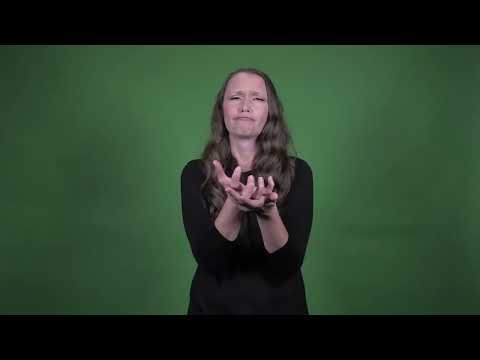
Sign for BEGGING in ASL | 🥺 ASL Dictionary

Definition: To ask earnestly for something.

Sign for BEGGING in ASL

YouTube player

Practice Activities:

Start by practicing the sign for begging in ASL in front of a mirror. Focus on the body language and facial expressions that accompany desperation or asking earnestly. This sign requires clear non-manual markers, like an earnest or pleading expression, so make sure your face matches the meaning.

Use flashcards or digital tools to review the sign regularly. Watch videos of native signers using the sign for begging in ASL to observe natural movement and rhythm. Then try mimicking the full posture and flow of the sign with appropriate emotion. Record yourself and compare your version to reference videos to refine your accuracy.

Practice fingerspelling words related to poverty or need, then sign a sentence using the sign for begging in ASL. For example, sign “The man is begging for food” or “The child is begging her mother.” Repeat these several times with different people or subjects to build fluency.

Create a short story that includes a character who is begging for something. It could be a child wanting a new toy, a person asking for help, or a pet begging for treats. Practice telling your story in ASL, emphasizing facial expressions and body language whenever you use the sign for begging in ASL.

With a partner, role-play scenes that involve one person begging and another responding. Switch roles to experience both perspectives. Examples include begging for forgiveness, begging for a second chance, or begging to borrow money. These dynamic scenarios will give you better control over using the sign expressively.

In a group setting, take turns acting out scenes using the sign for begging in ASL while others guess the context of the sign. This reinforces the emotional nuance and helps distinguish it from similar gestures used in ASL. Keep practicing until it feels natural in a variety of situations.

Cultural Context:

In American Sign Language, the sign for begging in ASL carries not just a literal meaning but also a cultural and emotional context. This sign can reflect different nuances depending on the situation, such as asking politely, pleading, or demonstrating desperation. Understanding these differences is essential for using the sign with the right emotional tone.

The sign for begging in ASL is often used to express strong emotional appeals. Whether it’s a child asking for a treat or someone seeking forgiveness, the sign captures a universal human experience. Emotions like vulnerability, sorrow, and humility can be conveyed clearly through body language, facial expressions, and the intensity of the movement.

In Deaf culture, facial expression is crucial to conveying emotions, especially when signing something as emotionally charged as the sign for begging in ASL. Without the appropriate non-manual markers, the meaning can change or be misunderstood. For example, exaggerating the sign with a sorrowful expression might show desperation, whereas a soft gesture with a hopeful face could suggest a simple request.

Context also matters when using the sign for begging in ASL. In casual situations, it can be used humorously, like when pretending to plead for an extra cookie . In more serious conversations, it can indicate earnest requests for help or compassion. The diversity of this sign’s use makes it rich in cultural meaning across different interactions within the Deaf community.

Begging is a universal act, but how it is expressed through sign language adds cultural layers. Unlike spoken language where tone communicates feeling, ASL users depend on visual elements. The sign for begging in ASL integrates gesture, facial movement, and body posture to communicate the depth of the message.

Within storytelling and theatrical performance in Deaf culture, the sign for begging in ASL is often dramatized to convey strong plot elements. Performers combine exaggerated signs with expressive acting to fully bring the audience into the scene. These performances celebrate the visual richness of ASL and its capacity to show complex human emotions.

Begging is not always meant to portray weakness; it can also reflect strength in vulnerability. The sign for begging in ASL can show a willingness to be open, to ask for help, or to express love in emotional moments. How the sign is delivered tells the story behind the request, making it unique each time it is used.

Children learning ASL quickly adopt expressive signs like the sign for begging in ASL because they can relate to the emotion behind it. Parents and teachers incorporate such signs into early education and play, helping

Extended Definition:

The sign for begging in ASL is a highly visual and expressive gesture that conveys the act of pleading or asking earnestly for something. It captures the essence of someone requesting assistance, favor, or support, usually in a humble or desperate manner. This sign is commonly used in both literal and figurative contexts, depending on the situation and tone of the conversation.

In American Sign Language, facial expressions play a big part in the sign for begging in ASL. A pleading look, raised eyebrows, and a forward head tilt often accompany the sign to add emotional depth. These non-manual signals help reinforce the intention behind the sign, making it more clear to the viewer.

The sign typically mimics the motion of hands held out as if asking or imploring. It can resemble someone holding their hands together in a praying or supplicating gesture while slightly shaking them as if trying to convince the viewer. Location and hand movement in this sign are essential and should be practiced to convey the right emotion.

The sign for begging in ASL is useful in many scenarios. It may be used when discussing situations of financial need, asking for help, or expressing a strong desire for something. It also appears in storytelling or drama sequences where a character is portrayed pleading for mercy, food, or a favor.

When teaching or learning the sign for begging in ASL, it’s important to understand the cultural context. While the gesture is universally recognizable, how and when it is used in Deaf culture may differ from how it’s used in spoken English. Respectful use of the sign includes understanding when it’s appropriate and what message it truly conveys.

Children learning ASL often enjoy the exaggerated expressions involved in the sign for begging in ASL. It becomes a fun yet emotional sign to learn, helping them connect feelings with physical gestures. Teachers often use role-play situations to help young students use the sign accurately within different contexts.

In ASL literature or performance, the sign for begging in ASL holds dramatic power. It offers performers a way to show intense emotion or desperation in their narrative. ASL poets and actors may add unique rhythm and repetition to this sign to intensify the audience’s connection to the story.

The sign has evolved slightly among different regions and users within the Deaf community. Some signers may emphasize the movement more theatrically, while others may keep it more subtle. Learning from native or fluent signers ensures accuracy, especially when emotions need to be expressed clearly.

Practicing the sign for begging in ASL

Synonyms: pleading, imploring, requesting earnestly, petitioning, asking

Educational resources: Find related learning materials in our course bank!

Want more? Check out some of our popular learning activities on the homepage!

Need to look up a sign? Use our highly rated dictionary: https://aslinteractive.com/best-asl-dictionary/

Follow us on tiktok: https://www.tiktok.com/@aslinteractive. More social media links at the bottom of this page!

Long-tail Keywords: what is the sign for begging in ASL, how do you sign begging in ASL, ASL sign for begging

Categories:

tags: begging, actions, verbs, pleas, emotions

Parameters

*Handshape*:

The handshape used in the sign for begging in ASL involves both hands in a flat “B” handshape, with fingers together and palms facing up. The hands are positioned close to the body, near the chest or abdomen area.

In the sign for begging in ASL, the hands move slightly forward and upward in a pleading motion, mimicking the act of asking or pleading with open palms. This movement helps convey the emotional tone behind the concept of begging.

*Palm Orientation*:

For the sign for begging in ASL, the palms generally face upward toward the receiver of the gesture. Both hands are extended, slightly cupped as if holding something, and are brought forward in a pleading or offering motion.

This palm orientation helps convey a sense of asking or imploring, enhancing the emotional tone of the sign for begging in ASL . The hands may also move slightly upward or be shaken subtly to show desperation or urgency.

*Location*:

The location for the sign for begging in ASL takes place in front of the torso, around mid-chest level. Both hands are positioned out in front of the body, suggesting a pleading or requesting motion. This placement helps convey the emotional and physical component of the sign for begging in ASL, emphasizing a direct and humble appeal.

The hands generally stay within the signing space close to the body to maintain the sincerity of the gesture. The location supports the visual context of someone earnestly asking for help or sustenance, helping reinforce the meaning behind the sign for begging in ASL.

*Movement*:

To perform the sign for begging in ASL, place both flat hands in front of your body, palms facing up, as if holding something. Move the hands slightly forward while wiggling the fingers upward in a pleading or hopeful motion.

This motion mimics a gesture of asking earnestly, which fits the meaning of the sign for begging in ASL. Keep the movement soft and repetitive to emphasize sincerity or desperation.

*Non-Manual Signals*:

Facial expressions play a crucial role in the sign for begging in ASL. The signer typically uses a pleading or desperate facial expression, often with raised eyebrows and slightly widened eyes to show urgency or need. Lips may be slightly puckered or pulled down, and the head might tilt slightly forward or to the side to enhance the effect.

These non-manual signals help emphasize the emotional tone of the sign for begging in ASL, reinforcing the request or urgency. The overall expression communicates not just the action, but the heartfelt emotion behind it.

*Prosody, Dominant/Non-Dominant Hand*:

The sign for begging in ASL typically uses both hands. The dominant and non-dominant hands are curved, palm up, starting near the torso and moving slightly outward with a pleading facial expression. This motion resembles the act of asking or pleading with open hands.

In the sign for begging in ASL, both hands work together smoothly, reinforcing the meaning. The movement is gentle and repetitive, often accompanied by a sad or hopeful facial expression to convey emotion.

Tips for Beginners:

When learning the sign for begging in ASL, it’s important to focus on expressive body language and facial expressions. This sign often requires a pleading or desperate look to fully convey the meaning. Practice using raised eyebrows, slightly tilted head, and a hopeful or needy expression while signing to make your message clear and authentic.

The handshape and movement for the sign for begging in ASL resemble the motion of holding out both flat hands, palms up, and moving them slightly forward in a repeated motion, as if asking for something urgently. Keep your hands relaxed and avoid stiff or robotic movement. Natural, fluid motion helps your signing look more fluent.

One common mistake beginners make with the sign for begging in ASL is neglecting emotional clarity. This sign isn’t just physical—it depends heavily on non-manual signals to communicate the feeling behind the request. Without matching your facial expression to the sign, the message can come off flat or confusing. Always pair hand movement with an appropriately needy or pleading face.

When practicing, try performing the sign in a mirror or recording yourself, so you can observe your expression and hand placement. Adjust your eyes, eyebrows, and posture as needed to reflect true desperation or request. It’s a great idea to observe fluent signers using this sign in context by watching ASL storytelling videos or interpretation clips.

Another tip is to understand the tone of the situation when using the sign for begging in ASL. In informal settings, exaggeration can be playful, but in more serious exchanges, keep your demeanor respectful and sincere. Context matters a lot in sign language. Repeating the sign too many times or overusing dramatic elements might make it look comical or inauthentic. Keep it simple, intentional, and meaningful for the best results.

sign for begging in asl, asl sign for begging, how to sign begging in asl, begging sign asl, american sign language sign for begging

Connections to Other topics:

The sign for BEGGING in ASL connects closely with signs related to pleading, requesting, or asking sincerely. It often shares movement patterns with signs like PLEASE or PRAY, emphasizing a sense of desperation or humility through body language and facial expression. This makes it an emotional sign where non-manual signals such as a pleading look or slouched posture intensify the message.

In ASL storytelling or dramatic performances, the sign for BEGGING in ASL can be combined with classifiers or directional verbs to show who is begging to whom and for what reason. For instance, combining the sign with directional ASK can show a person begging someone else directly, creating a more vivid narrative scene. These combinations are frequently used in conversations or narratives involving scenarios of poverty, need, or mercy.

The sign is also conceptually tied to other emotional signs such as WORRY, SAD, or HOPE, which often appear together in context when expressing complex interpersonal situations. For example, someone might use the sign for BEGGING in ASL alongside signs for HELP or FORGIVE, indicating deeper emotional appeals or moral requests within familial or community dynamics.

Learners can benefit from exploring the relationship between the sign for BEGGING in ASL and related request-based signs like ASK, INVITE, or OFFER. Each of these has its own nuances but overlaps in their use of intention and level of urgency. By understanding these subtle variations, signers can better choose which sign best fits a particular tone or context.

In religious contexts, the sign for BEGGING in ASL sometimes appears as part of signs that show deep spiritual yearning, tying into beseeching or praying. It merges well with signs for GOD or PRAY, conveying desperation in requests made to a higher power. Understanding these thematic connections can enhance interpretation and expression across different signing environments.

Summary:

The sign for BEGGING in ASL typically involves both hands held in a flattened “O” shape, coming together in front of the chest, extended outward and then slightly drawn inward with a pleading expression. The motion has an unmistakable sense of imploring or requesting with emotion, and facial expressions play a crucial role in conveying the intensity of the appeal.

This sign is iconic in its representation and relies heavily on context and affect; without the correct facial expression, the sign may lose its intended meaning. The brows are usually raised, with a pleading, almost desperate look that enhances the message beyond the handshape and motion.

In everyday usage, the sign for BEGGING in ASL does not necessarily imply poverty or homelessness. It can be used broadly to depict someone urgently requesting something—approval, forgiveness, help, or attention.

Compared to spoken English, where “begging” may have a strong emotional or economic connotation, ASL uses physical inflection and expression to shift those nuances. The intensity of BEGGING is shaped through body language more than by a new word.

Grammatically, the sign for BEGGING in ASL functions as a verb and aligns naturally within ASL syntax, which typically follows a topic-comment structure. For example, one might sign “MONEY I BEG” to express requesting financial help.

The morpho-syntactic structure of ASL supports inflection through movement changes and facial expression. When intensifying BEGGING, the signer might repeat the sign more quickly, or exaggerate the hand motion and facial tension.

Culturally, this sign can resonate with themes of vulnerability, humility, or emotional need. Within Deaf culture, the nuance of how a request is presented is deeply respected, and signs like BEGGING reflect a rich emotional spectrum.

The sign for BEGGING in ASL connects to other signs such as PLEASE, ASK, and WANT, but differs in emotional tone and urgency. ASK uses a more directed, specific motion, while BEGGING is more expansive and emotive.

In performance arts and storytelling within the Deaf community, BEGGING often appears in narratives to express heightened emotional states. Its physicality makes it especially poignant in visual storytelling such as ASL poetry or theater.

From a linguistic perspective, this sign exemplifies spatial and expressive use unique to signed languages. Unlike spoken language, which relies on tone, ASL uses a mix of handshape, orientation, movement, and non-manual markers like facial expression.

The sign for BEGGING in ASL may also involve a shift in signer’s posture, leaning slightly forward to represent engagement or desperation. The signer’s entire upper body often supports the emotional tone of the sign.

This use of embodiment shows how ASL relies on full-body grammar. Manual signs are only one part of communication—inflection comes from eyes, eyebrows, mouth shapes, and posture. ASL is truly multi-modal.

Learning the sign for BEGGING in ASL requires awareness of social situations where it is appropriate. In English, the word might be used metaphorically, but in ASL, the intended meaning often must be clarified through actual situational context.

Within Deaf discourse, expressing need is not seen as weak but rather as an honest expression of emotion. BEGGING as a construct in ASL can invoke empathy or dramatize severity, depending on the context and intensity of the delivery.

Theoretical concepts from applied linguistics, such as iconicity and spatial grammar, are vividly illustrated in BEGGING. The outward-inward motion gestures toward taking something in, a physical model of the metaphorical need.

Signers may adapt the sign for BEGGING in ASL when talking about animals, like a dog begging, by modifying the facial expression to be cute or exaggerated rather than serious. This shows the flexibility of ASL in tone and meaning.

Different signing communities may have regional variations in how BEGGING is signed. Some may use a one-handed version or combine it with signs like PLEASE or HELP, creating compound signs or modifying movement paths.

The sign’s flexibility also reflects how ASL evolves to include new meanings or shades of usage. For example, using BEGGING sarcastically might include an eye-roll or a playful smirk to signal exaggeration rather than sincerity.

The emotional range of BEGGING makes it a cornerstone of ASL when dealing with interpersonal dynamics. Whether it’s a child asking for a toy or someone making a heartfelt plea, the sign is emotionally resonant and impactful.

Because signs like BEGGING depend so much on affect, they highlight the importance of emotional intelligence in ASL fluency. Understanding how to use non-manual signals to adjust meaning is key to signing this word accurately.

Technology and video calls have changed how BEGGING is received in ASL. On smaller screens, facial expression might be harder to

Want more? Check out some of our popular learning activities!

ASL Interactive Resources

ASLInteractive YouTube Channel

Follow us on tiktok: @aslinteractive.com

Follow us on Instagram: aslinteractive

Facebook page: aslinteractive

Facebook group: aslinteractive

LInkedIn: ASL Interactive LLC

Twitter: @ASL_interactive

*Some information on this page is AI-generated. AI can make mistakes. Please check the information.

Sign for BEGGING in ASL

Responses