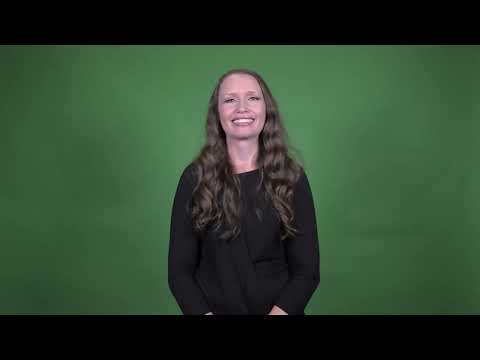
Definition: An area that is considered better.
Sign for BETTER AREA in ASL

Practice Activities:
To practice the sign for BETTER AREA in ASL, start by mastering each concept in isolation. First, practice the sign for “better” by itself in front of a mirror, noting facial expressions and hand movement accuracy. Then, do the same for “area,” making sure the sign is rounded correctly and your palm orientation is appropriate.
Next, combine the signs into short phrases. For example, sign “This is a better area” or “We moved to a better area.” Repeating these phrases aloud while signing can help reinforce muscle memory and improve fluency. Try creating five different sentences using the sign for BETTER AREA in ASL, changing subjects or contexts each time.
Use storytelling as a practice tool. Describe a neighborhood you used to live in and how your current one is a better area. Include details like parks, community, or peace and quiet. This allows for natural incorporation of the vocabulary into longer ASL narratives, focusing on expressive signing.
For partner work, sign a sentence about a location and have your partner guess what kind of area you are referring to. Take turns using facial expressions and body language to provide context. This is a great way to develop receptive skills while reinforcing production of the sign for BETTER AREA in ASL.
Use flashcards with different area types like city, suburb, forest, or beach and create comparisons using “better area.” Encourage timed drills to help build speed and confidence. For example, set a timer for two minutes and see how many accurate sentences using the keyword you can generate.
Record yourself signing a short story about moving to a better area and play it back. Watching your performance can help you identify areas for improvement in handshape or expression. This self-feedback loop is especially helpful as you build fluency with the sign for BETTER AREA in ASL.
Cultural Context:
In American Sign Language (ASL), the sign for BETTER AREA can reflect more than just a physical location. It can include emotional well-being, community growth, or an improved environment. This sign is often used in conversations where change, progress, or improvement is the focus, whether in a literal or metaphorical sense.
When using the sign for BETTER AREA in ASL, cultural context matters. ASL is deeply tied to the values and shared experiences of the Deaf community. Discussing a better area might involve access to sign language interpreters, Deaf-friendly schools, or inclusive public spaces . It often goes beyond just geography and into the realm of accessibility and equity.
The sign for BETTER AREA in ASL may be part of daily conversations about living conditions or moving. It’s common to use this sign when talking about relocating to a neighborhood that has more community resources or support for Deaf individuals. For example, someone may say they moved to a better area to be closer to a Deaf community center or ASL-friendly church.
Parents talking about school systems may use the sign for BETTER AREA in ASL to express a desire for their child to attend a Deaf school or a more supportive educational environment. The phrase captures complex social and cultural ideas like belonging, opportunity, and shared language. It represents an inherent desire not just for improved circumstances, but for culturally connected spaces.
Deaf culture highly values open communication and full participation. The concept of a better area often includes places where people can communicate freely in ASL. So, the sign for BETTER AREA in ASL might come up when talking about cities or regions known for their Deaf population or accessibility efforts.
In a broader sense, this sign also reflects hope and advocacy within the Deaf community. It’s linked to activism, where communities strive to make their spaces more inclusive through technology, education access, and visibility. When Deaf individuals describe achieving a better area, they are also talking about advancing Deaf rights and awareness .
Using the sign for BETTER AREA in ASL connects to family conversations, job opportunities, and even politics. It could be used when someone is describing why they support policies that expand accessibility or fund ASL education. Improving the world around them is a shared value, and this sign captures that energy.
Because ASL is a visual and spatial language, signs like BETTER AREA naturally involve space and direction. A signer may shift their body or use specific placement to describe the location more clearly.
Extended Definition:
The sign for BETTER AREA in ASL combines two separate concepts: BETTER and AREA. Each part needs to be signed clearly to ensure the meaning comes across accurately. This phrase is often used when comparing locations or determining which space is more desirable or improved.
To sign BETTER in ASL, use your dominant hand in a flat shape and slide it upward and outward from your chin. This movement shows improvement or preference. BODY language and facial expressions, such as raising your eyebrows or nodding, help convey positivity or approval.
The sign for AREA is made by forming the dominant hand in a flat “5” shape and making a slow circular motion in front of the torso. This motion indicates space or a region. Together, the phrase sign for BETTER AREA in ASL describes a more improved or favorable place.
This phrase commonly appears in conversations about moving, traveling, or choosing between locations. For example, someone might ask if your new apartment is in a better area. The sign for BETTER AREA in ASL would be used here to express that comparison clearly and fluently.
Context is important. If describing a nicer neighborhood, you can sign BETTER AREA with a satisfied face. If talking about safety or amenities, you might use this sign to emphasize the quality of a new place.
The phrase is also useful in formal and informal settings. Students might discuss transferring to a school in a better area. Families might talk about relocating to a community with better access to resources.
When using the sign for BETTER AREA in ASL, remember that fluid movement and expression make a big difference. If you emphasize BETTER more strongly than AREA, you show that the improvement is the main point. If you linger on AREA with a thoughtful expression, you indicate careful consideration about location.
Over time, you might see regional variations of this sign. Some Deaf communities simplify the motion or combine the signs into one fluid gesture. Understanding these slight changes can help you be more culturally aware and improve your signing interactions.
ASL is a visual language, and the sign for BETTER AREA in ASL shows this clearly. Each sign combines physical movement and facial expression to convey detailed ideas. This makes your conversations more vivid and expressive.
In educational environments, students learning ASL will often break down phrases like this to understand grammar and structure. Learning how to sign BETTER AREA helps with larger concepts like comparisons and location references. It also builds a strong vocabulary foundation.
When teaching this phrase, instructors often start with the
Synonyms: Improved area, enhanced region, optimized zone, upgraded section, refined space
Educational resources: Find related learning materials in our course bank!
Want more? Check out some of our popular learning activities on the homepage!
Need to look up a sign? Use our highly rated dictionary: https://aslinteractive.com/best-asl-dictionary/
Follow us on tiktok: https://www.tiktok.com/@aslinteractive. More social media links at the bottom of this page!
Long-tail Keywords: What is the sign for better area in ASL, How do you sign better area in ASL, Better area in American Sign Language
Categories:
tags: Improvement, Locations, Space, Comparison, Adjectives
Parameters
*Handshape*:
The handshape for the sign for BETTER AREA in ASL uses a flat hand, also called the “B” handshape, with fingers together and extended. For “better,” the fingertips of the flat hand touch the lips, then move slightly forward and upward, as if brushing away.
For “area,” the same “B” handshape works well, but the movement is circular in the space in front of the body, showing a concept of space or a location. Together, the handshapes help visually express the sign for BETTER AREA in ASL . These signs combine fluid motion and specific orientation to convey improvement and space effectively.
*Palm Orientation*:
The palm orientation for the sign for BETTER AREA in ASL involves two parts. For “better,” the dominant hand starts in a flat “B” shape with the fingers touching the lips, palm facing inward, then moves outward and slightly upward with the palm rotating to face outward. ️
For “area,” the dominant hand uses a flat palm circling over the nondominant hand or imaginary space, with the palm facing downward throughout the movement. Together, the palm orientation in the sign for BETTER AREA in ASL reflects both the improvement and spatial context.
*Location*:
The sign for BETTER AREA in ASL is produced in two parts. For the sign BETTER, the hand starts with a flat palm touching the mouth and moves outward and slightly upward, away from the face. This movement takes place in the lower part of the face area, right in front of the mouth.
The second part, AREA, is signed a few inches in front of the torso using a flat, open dominant hand, palm facing down, moving in a small circular motion. The location for AREA stays centered in the neutral signing space in front of the body. Together, the sign for BETTER AREA in ASL flows from the mouth area to the front of the torso.
*Movement*:
To perform the sign for BETTER AREA in ASL, start by placing the dominant flat hand near your mouth, palm facing in. Move the hand outward and slightly up into a thumbs-up position, representing BETTER. Then transition into AREA by using a flat dominant hand in a small circular motion over the non-dominant open palm facing up, indicating a general space.
The sign for BETTER AREA in ASL blends the gestures fluidly. Keep the motions smooth and deliberate to ensure clarity. The combination clearly shows the concept of an improved or more favorable space.
*Non-Manual Signals*:
Non-manual signals for the sign for BETTER AREA in ASL involve a subtle lift of the eyebrows to show comparison or improvement. Slight head tilt may be used to emphasize the transition from one state or location to a better one, supported by a small, satisfied smile to express positivity .
Facial expressions should remain smooth but intentional, conveying that the area mentioned is more favorable than another. These non-manual cues help support the tone and message of the sign for BETTER AREA in ASL.
*Prosody, Dominant/Non-Dominant Hand*:
For the sign for BETTER AREA in ASL, the dominant hand moves in two distinct motions. First, to sign “better,” start with a flat dominant hand touching the chin, then move it outward and slightly up from the face in a quick motion resembling a wiping gesture. For “area,” use the same hand in a flat palm shape, making a small horizontal circular motion in front of the body. The non-dominant hand remains neutral throughout. The sign for BETTER AREA in ASL uses smooth, fluid movements to convey both improvement and location.
Tips for Beginners:
When learning the sign for BETTER AREA in ASL, it’s helpful to break the phrase into two distinct concepts: “better” and “area.” Each word has its own unique sign, so practicing them individually before putting them together can enhance your fluency. The sign for “better” involves a motion that starts with the flat hand touching the lips and then moves outward and slightly up, signifying improvement. Then, “area” is signed using a flat, dominant hand that makes a circular motion with the palm facing down to show space or location.
One useful beginner tip is to focus on handshape and movement precision. Many learners confuse “better” with similar signs like “good” or “best,” so practice in front of a mirror to ensure clarity. Be sure that the hand begins at the mouth and moves away slightly upward for BETTER, rather than stopping directly in front.
For AREA, make sure your hand stays relatively flat and moves in a slow, deliberate circle. Rushing this movement can make it unclear or look like a different sign. The smoother and more controlled your motion, the easier it will be for others to understand exactly what you’re signing.
When combining signs, remember that ASL has its own grammar structure. You might sign the phrase BETTER AREA in a way that emphasizes spatial context or comparison, depending on what you’re communicating. Be open to adjusting your facial expressions too—they play a big role in indicating shades of meaning.
Repetition is key, so try forming short sentences using the sign for BETTER AREA in ASL. For example, “That park is a better area than this one.” Signing full thoughts helps you retain the signs and understand where they naturally fit.
Practice with patient conversation partners or use video ASL resources to test your understanding of the sign for BETTER AREA in ASL in real-life dialogue.
Connections to Other topics:
The sign for BETTER AREA in ASL connects to several foundational concepts such as comparatives, geographic concepts, and spatial referencing. The idea of “better” involves comparisons, which are common in ASL through sign modifications or facial expressions that enhance meaning. Signs like BETTER or BEST are often incorporated into broader contexts, supporting nuanced discussions about improvement or preference.
The AREA part of the sign links to spatial classifiers and localization, both essential elements in ASL. It helps learners understand how ASL describes physical locations using space in front of the signer. Adding BETTER to AREA creates a compound concept that can be used to discuss improved neighborhoods, upgraded spaces, or more favorable regions stylistically and effectively.
Related signs like BEST PLACE or GOOD LOCATION often appear in similar contexts and can be substituted depending on the emphasis. For example, if a signer wants to express that one zone has noticeably improved over time, they may combine the sign for CHANGE with BETTER AREA, enriching their narrative and showing development. The idea may also appear in conversations about moving or housing, where users compare two places.
This construction can be expanded further when teaching or learning signs like WORSE AREA, which uses opposite intensity indicators. Teaching these contrasts offers insight into how prefixes or modifiers shift meaning and create more expressive possibilities. It also highlights the importance of non-manual signals, like raised brows or head nods, which reinforce the comparative intent behind signs like better.
The sign for BETTER AREA in ASL also serves as a stepping stone for discussions around urban development, safety discussions, or quality of life comparisons. It helps users talk about different environments in sociological or community-based conversations. Incorporating it into educational content encourages learners to build fluency in expressing comparative, locational, and qualitative ideas.
Summary:
The sign for BETTER AREA in ASL combines concepts of improvement and spatial context. To express this idea, two separate signs are used: one for “better” and one for “area.” Each sign carries its own grammatical and cultural layers, which become amplified when combined.
To sign “better,” start by forming a flat hand (B-handshape). Place the fingertips against the chin, palm facing in, then move the hand outward and slightly upward, ending with the palm slightly angled away from the body. This gesture suggests taking something from a point of origin and elevating or enhancing it.
The sign for “area” refers to a specific physical or conceptual space. Form a flat, open hand and trace a horizontal circular shape in front of you, almost like outlining a region. The palm faces downward, creating a sense of spatial boundary or encompassing zone.
When combined to express the sign for BETTER AREA in ASL, the signs are typically sequenced: “better” followed by “area.” This communicates an improved region, suggesting that a location, situation, or condition has gotten better. The signs do not physically overlap but are conceptually linked within the phrase.
Grammatically, ASL offers flexibility with word order, relying heavily on facial expressions and body language to clarify intent. In this case, raised eyebrows and a slight nod can emphasize the comparative tone of “better.” This use of non-manual markers clarifies that it’s a description rather than an isolated term.
Context determines the nuance. For example, the sign for BETTER AREA in ASL could reference urban development, a new classroom space, or even emotional headspace. The abstract and physical layers of “area” make it versatile within both literal and metaphorical contexts.
The concept of “better” in Deaf culture often connects to advocacy for accessibility and improved standards of communication. Therefore, when using the sign for BETTER AREA in ASL, you could be invoking broader themes around inclusive spaces, which resonates deeply with community values.
Philosophically, the sign also captures transformation. The initial motion of the hand away from the chin in the “better” sign signals positive movement or evolution. This idea aligns with the goal of growth, both on an individual and societal level.
The sign for “area,” meanwhile, signifies context—crucial in ASL, where meaning often depends heavily on spatial awareness. ASL structures communication through the body—space is not just grammatical but also deeply conceptual. This plays into how area is defined visually.
In terms of applied linguistics, spatial referencing in ASL can support strong visual mapping of environments. By pointing, shifting body posture, or gauging sign placement, users can clarify the boundaries of the area being discussed. These visual cues make the conversation more immersive.
In educational fields, especially with Deaf students, the sign for BETTER AREA in ASL might be used when evaluating learning environments. Teachers and students alike use it to express preferences and improvements in classroom setups or methodologies.
The concept of comparative degree is central here. “Better” is not an absolute but a relative term. ASL conveys this not with modifiers like “more” or “less” but through expression, pacing, and slight repetition or elongation of the “better” sign if greater emphasis is needed.
Semantically, the combination of “better” and “area” lends itself to conversational discourse. It reflects human tendency to assess and critique space—be it for aesthetics, functionality, or emotional comfort. In ASL narratives, this phrase naturally occurs when someone retells a story about moving to a new neighborhood or changing jobs.
In ASL poetry and artistic performances, the phrase’s visual symmetry plays well on stage. The slight gracefulness of the “better” movement followed by the expansive “area” gesture can be danced or mimed to express transition or hope.
ASL often borrows from English idioms, yet retains its visual-gestural culture. When discussing someone’s success or emotional state, you might see the sign for BETTER AREA in ASL used even metaphorically: someone having moved on to a “better area” emotionally, not just geographically.
ASL classifiers—specific handshapes that represent categories of objects—can also support the phrase. For instance, if one previously described a messy, cramped office using a classifier, the follow-up with the sign for BETTER AREA in ASL could highlight a cleaner, more efficient one.
Facial grammar plays a huge role in clarity. When someone signs “better area” with a happy, relieved expression, it conveys affirmation. If the face shows skepticism, the same phrase could imply sarcasm or doubt about the so-called improvement.
This compound phrase fits well in casual conversation. If discussing weekend plans, someone might sign that they’re moving to a “better area” for hiking or sightseeing. The sign for BETTER AREA in ASL, like many multi-sign phrases, carries meaning as much through delivery as movement.
From
Want more? Check out some of our popular learning activities!
ASL Interactive Resources
ASLInteractive YouTube Channel
Follow us on tiktok: @aslinteractive.com
Follow us on Instagram: aslinteractive
Facebook page: aslinteractive
Facebook group: aslinteractive
LInkedIn: ASL Interactive LLC
Twitter: @ASL_interactive
*Some information on this page is AI-generated. AI can make mistakes. Please check the information.


Responses