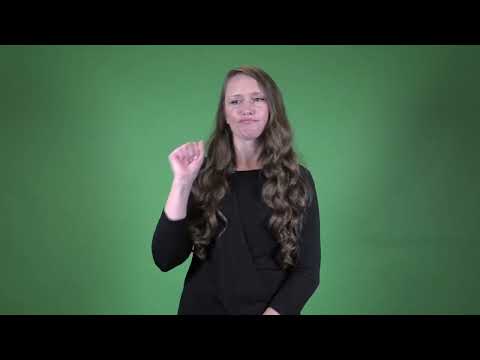
Sign for BETTER THAN OTHER PERSON in ASL | 🏆 ASL Dictionary

Definition: Idiomatic expression meaning better than or superior to another person.

Sign for BETTER THAN OTHER PERSON in ASL

YouTube player

Practice Activities:

To practice the sign for BETTER THAN OTHER PERSON in ASL, start by using a mirror to rehearse the handshape and movement consistently. Repeat the sign slowly and then gradually increase speed as you become more confident. Focus on the facial expression of comparison, which is key to conveying meaning accurately in ASL.

Create flashcards with names or drawings of people, then sign comparisons using the sign for BETTER THAN OTHER PERSON in ASL. For example, sign “my sister better than other person at math” or “he better than other person in soccer.” Practice both affirming and negating comparisons to get full use out of the concept.

Work with a partner to practice using the sign in a conversation. Take turns signing about people in your life, comparing skills, accomplishments, or traits. For instance, one might sign, “my cousin better than other person cooking,” while the other offers constructive feedback or alternatives.

Try storytelling activities where you describe a character who is better at something than others. For example, create a mini-narrative about a student who always wins spelling bees or a basketball player admired by the team. Integrating the sign for BETTER THAN OTHER PERSON in ASL into each sentence helps reinforce both usage and grammar structure.

Use role-play by pretending to be judges in a contest, such as art, dance, or baking. Watch pretend performances and then comment using the sign for BETTER THAN OTHER PERSON in ASL. This encourages spontaneous use of the sign in different contexts.

Record yourself signing multiple sentences that compare people or characters. Watch the video to spot mistakes or ask an ASL-fluent friend for feedback. Repetition and variety will build agility in producing the sign with nuance and confidence.

Cultural Context:

In American Sign Language, the sign for better than other person in ASL carries strong cultural significance. This concept is often nuanced and can vary depending on tone, body language, and context. The way you express better than other person in ASL can communicate not just facts but also attitudes and social positioning.

ASL is a visual language deeply rooted in Deaf culture. When a signer uses the sign for better than other person in ASL, they are not only communicating superiority but may also be making a social comment. This expression can highlight comparison, competition, or preference, all of which have layered meanings in the Deaf community.

Direct comparisons like better than other person in ASL aren’t always used in the same way as in spoken English. Deaf culture places a strong value on inclusion and community, so framing someone as better than another can sometimes be seen as boastful or arrogant if not expressed carefully. The way someone signs this phrase often includes facial expressions and body language to soften or intensify the message.

The sign for better than other person in ASL usually involves combining the sign for better with directional movement or pointing to individuals. This can be customized in real-time conversations to refer to specific people. It’s one reason why learning ASL through videos and interactions is crucial—seeing how the sign is used in context can help avoid misunderstandings.

In family or school settings, children may use better than other person in ASL to talk about siblings or classmates. Adults might use this sign in conversations about job performance, leadership, or personal skills. However, tone and delivery remain essential, as overt competition isn’t always culturally encouraged.

Deaf culture tends to value authenticity and equal respect for others. Using better than other person in ASL without care can come off as dismissive or overly proud. But in friendly settings, like sports or joking among friends, this phrase can be playful rather than serious.

It’s also important to note that the sign for better than other person in ASL may not have a single, fixed form. Depending on the context, a signer may use alternative phrases or signs to express the comparison while adhering to ASL grammar. Understanding these variations helps signers communicate more naturally and respectfully.

In storytelling or teaching moments, using better than other person in ASL can emphasize lessons or character differences. It’s commonly used in ASL literature and performances, where contrast between characters is important. The visual impact of the phrase is heightened through gestures, facial expressions, and context cues.

The phrase better than

Extended Definition:

The sign for better than other person in ASL expresses comparison between people, usually to show that someone is viewed as superior or more capable. This sign is used when you want to compare qualities, achievements, or characteristics between individuals in a respectful, casual, or even competitive context.

To convey the concept of better than other person in ASL, signers often use a combination of signs. Typically, it begins with the sign for BETTER, followed by a directional gesture or a sign for PERSON, depending on the sentence structure. This directional use adds clarity about who is being compared. Facial expressions are very important to emphasize the emotional tone behind the comparison.

Like many signs in ASL, the sign for better than other person in ASL can change slightly based on context. You might use different expressions or even body shifts to indicate which person you are comparing. ASL is a rich, dynamic language that uses space to show relationships between subjects and objects. ‍♀️

In everyday conversation, this sign may come up when talking about skills. For example, you might say someone is better than other person in ASL when discussing sports, work performance, or academic achievements. The sign can also be used playfully, such as joking about who is better at making coffee or telling jokes.

It’s important to use this sign thoughtfully, as comparisons can be sensitive. ASL etiquette encourages positive communication, so using the sign for better than other person in ASL should be respectful. It’s often paired with visual cues like raised eyebrows or slight head nods to soften the meaning or add context.

This sign is expressed through subtle hand movements and spatial positioning. The handshape for BETTER is often a flat hand moving away from the mouth or chin area. Then, to incorporate “other person,” the signer may shift their body or use pointing to indicate the individual being compared. These elements combine to reflect the comparative meaning.

When learning the sign for better than other person in ASL, practicing with a fluent signer or video resource helps ensure you understand the nuances. Seeing the sign in action helps you master the rhythm, facial expressions, and proper structure. Learning these cultural and grammatical details is essential for natural communication in ASL.

In storytelling or presentations, this sign is especially useful for contrasting characters. For example, you might describe how one character is better than other person in ASL based on traits like kindness, bravery, or intelligence. This makes it a valuable sign in both casual and formal AS

Synonyms: superior, more skilled, outclassing, ahead of, outperforming

Educational resources: Find related learning materials in our course bank!

Want more? Check out some of our popular learning activities on the homepage!

Need to look up a sign? Use our highly rated dictionary: https://aslinteractive.com/best-asl-dictionary/

Follow us on tiktok: https://www.tiktok.com/@aslinteractive. More social media links at the bottom of this page!

Long-tail Keywords: what is the sign for better than other person in ASL, how do you sign better than other person in American Sign Language, learn ASL sign for better than other person

Categories:

tags: better than in ASL, comparing in ASL, superiority in ASL, ASL phrases for better than, expressing comparisons in ASL

Parameters

*Handshape*:

The handshape for the sign for BETTER THAN OTHER PERSON in ASL begins in an open flat B-handshape with the dominant hand. The fingertips start by touching the chin and then move outward in a slight upward motion.

To indicate comparison, the dominant hand then transitions into an A-handshape (thumb up, fingers curled) as it moves past the non-dominant hand, also in an A-handshape, showing superiority. This motion helps convey the concept behind the sign for BETTER THAN OTHER PERSON in ASL ‍♂️.

*Palm Orientation*:

The palm orientation for the sign for BETTER THAN OTHER PERSON in ASL begins with the dominant hand in a flat “B” shape. The palm initially faces the face, then brushes upward along the chin, turning outward. During the transition to OTHER PERSON, the hand shifts into an “A” shape that moves away from the body, with the palm facing sideways. This motion shows contrast, emphasizing the meaning behind the sign for BETTER THAN OTHER PERSON in ASL .

*Location*:

The sign for BETTER THAN OTHER PERSON in ASL is produced near the lower face and chest area. It begins with the dominant hand in a flat shape moving away from the mouth, indicating “better,” and then transitions to the space in front of you, referring to another individual.

This placement helps emphasize the comparison in the sign for BETTER THAN OTHER PERSON in ASL, illustrating a directional contrast between two people. The use of space in front and to the side expresses one person being superior or preferred.

*Movement*:

To produce the sign for BETTER THAN OTHER PERSON in ASL, begin with your dominant hand in a flat “B” shape touching the underside of your chin. Move the hand outward from the chin in a slight upward arc, symbolizing “better.” Then transition into the comparative action by using a dominant “A” hand to flick over or past a non-dominant “A” hand, showing superiority over another.

The sign for BETTER THAN OTHER PERSON in ASL uses clear directional movement to emphasize comparison. Make sure the movement for “better” is smooth and confident, followed by the natural flick to show surpassing someone else . This combination adds both conceptual and grammatical layers to the phrase.

*Non-Manual Signals*:

When performing the sign for BETTER THAN OTHER PERSON in ASL, raise your eyebrows slightly to convey comparison or contrast. A subtle head tilt or shift in shoulder position may accompany the sign to emphasize superiority. Slight pursing of the lips or a confident facial expression enhances the idea of better quality or higher status. Proper non-manual signals are key to the clarity of the sign for BETTER THAN OTHER PERSON in ASL.

*Prosody, Dominant/Non-Dominant Hand*:

The sign for BETTER THAN OTHER PERSON in ASL uses the dominant hand in an open flat shape starting at the mouth and moving outward and slightly upward to indicate “better.” Then, to show “other person,” the dominant hand, in an “A” handshape, shifts outward from the body while the non-dominant hand remains neutral by the side. The sign for BETTER THAN OTHER PERSON in ASL clearly shows comparison and separation using spatial orientation. Pointing or shifting eye gaze may also be used to indicate the specific “other person” being referenced.

Tips for Beginners:

When learning the sign for BETTER THAN OTHER PERSON in ASL, it’s important to understand the concept behind the comparison. This phrase typically involves comparing qualities or abilities between two individuals, and is often conveyed using a combination of directional signs, facial expressions, and classifiers. Begin by mastering the base sign for “BETTER” and make sure your motion is clear and concise.

Use your dominant hand to sign “BETTER” by placing your flat hand near your chin and brushing it out and away. Then transition into showing a contrast between two people using spatial referencing. For example, point to the person you’re referring to as being better and then use neutral space or point to the other person you’re comparing them to. Your facial expression should suggest superiority or a comparison.

Avoid the pitfall of making the signs too subtle or too rushed. If your gestures are too close to the body or lack a clear directional difference, it will be harder for your audience to follow the comparison. Practice in front of a mirror or with a partner to get direct feedback on how clearly you’re presenting the sign for BETTER THAN OTHER PERSON in ASL.

Emphasize your non-manual markers—raised eyebrows and a shifting glance or body shift can greatly improve the clarity of your intended comparison. Think of your body as a space to organize people, placing “Person A” on one side and “Person B” on the other. Then sign “BETTER” pointing from one side to the other, using facial cues to highlight evaluation.

Remember that ASL is highly visual and conceptual. The sign for BETTER THAN OTHER PERSON in ASL isn’t just about hand movement—it’s also about how convincingly and clearly you portray the comparison. Practice visual storytelling to reinforce meaning

Connections to Other topics:

The sign for BETTER THAN OTHER PERSON in ASL connects closely to the concepts of comparison, judgment, and evaluation. In general, comparison signs such as BETTER, WORSE, or DIFFERENT involve directional movement and facial expressions to show contrast between subjects. When paired with a sign like PERSON or SOMEONE, the structure emphasizes a personal comparison, often reinforced with non-manual markers such as raised eyebrows or a tilted head.

This sign also overlaps with constructs like superlatives and subjective opinions in ASL. For example, BETTER THAN can be part of longer expressions such as BETTER THAN ME or BETTER THAN ALL, indicating personal or group comparisons. In conversations, these phrases can show rivalry, preference, or admiration, depending on context and delivery.

The sign for BETTER THAN OTHER PERSON in ASL may also lead to discussions about value, worth, or ability, often intersecting with cultural norms around praise or criticism. Related terms like SMARTER, STRONGER, or MORE TALENTED can be combined with comparative structures to expand on the concept. Learners can explore how ASL handles abstract ideas like moral superiority or skill ranking using similar constructs.

It also ties into signs expressing judgment or evaluation, such as JUDGE, CHOOSE, or FAVORITE. Using these in combination with comparison signs can help create more nuanced opinions. For example, signing I THINK SHE BETTER THAN HIM integrates opinion with comparison, showing the dynamic and expressive capacity of the language.

The sign for BETTER THAN OTHER PERSON in ASL can also be used in academic and performance contexts, like sports or school achievements. In these cases, it portrays competition or excellence. Understanding the sign’s usage in different settings helps learners grasp tone, attitude, and context-dependent meaning. ✨

Summary:

The sign for BETTER THAN OTHER PERSON in ASL combines comparison and hierarchical meaning through body language and facial expression. It uses a single motion or a sequence of signs depending on the depth or tone of the comparison being conveyed. The dominant hand moves in a way that expresses improvement or superiority, with the non-dominant hand potentially gesturing a neutral or lower status.

This concept often begins with the sign for BETTER, which is typically made by touching the fingertips of the dominant flat hand to the mouth and then moving it outward away from the face. The palm orientation generally faces downward and the motion is smooth and slightly upward to imply rising above. This movement is metaphorical, expressing gaining advantage or being ahead.

To express THAN, ASL often uses a shifting of space between two points, referencing entities in designated spatial zones. You might assign one person to the right and the other to the left. The movement toward the “better” space becomes critical to deliver the intended contrast.

OTHER PERSON can be shown using the sign for OTHER, which is done by bending the thumb in from an ‘A’ handshape and flicking it outward from the side of the chest level. PERSON is commonly indicated with the PERSON-marker, a downward parallel palm sweep from the shoulders. These signs combined project the notion of an unspecified, generalized individual.

When producing the sign for BETTER THAN OTHER PERSON in ASL, facial expression plays a powerful role. A raised eyebrow, lifted chin, or slight smile often accompanies the sign to enhance the tone of superiority or evaluative judgment. If the tone is sarcastic or playful, exaggerated expressions might be used.

Grammatically, the sign for BETTER THAN OTHER PERSON in ASL functions as a comparative structure. Comparatives in ASL are often marked spatially rather than through the use of abstract words like in English. Instead of simply saying someone is better, ASL prioritizes telling the comparison visually.

This sign has deep sociolinguistic roots in both Deaf culture and ASL grammar. Culturally, humility is often valued in Deaf communities, so using this sign might carry added context or insinuation. It may be understood not just as literal comparison, but also as a commentary on social standing or behavior.

In discussions involving hierarchies, the sign for BETTER THAN OTHER PERSON in ASL may also interface with other signs like BEST, WORSE, or EQUAL. These are often used together in narratives or comparative discussions, showing contrast without needing English syntax. This ability to show rather than describe is a defining feature of ASL structure.

The sign is often highly contextual. While it can be a descriptive sign, it may also carry evaluative weight depending on sentence framing. It’s not just about who’s better, but what criteria define “better,” whether intelligence, skill, behavior, or capability.

There are cognitive insights to be drawn from signing BETTER THAN OTHER PERSON. The linguistic encoding of superiority using hands and space requires visual conceptual mapping. This emphasizes the spatial grammar rules of ASL, which differs from linear auditory languages.

Applied linguistics research has shown that such comparative structures are learned more effectively when tied to visual domains. In learning the sign for BETTER THAN OTHER PERSON in ASL, students often practice role-shifting or classifier setups. By anchoring people or ideas in space, learners gain a better grasp of ASL’s unique visual modality.

The sign also shares kinship with academic constructs in visual semantics. In visual-gestural languages, moving from one point in space to another often conveys shift, growth, or ascendancy. This principle underlies BETTER THAN OTHER PERSON, supporting cognitive connections between physical space and relational meaning.

At a morphological level, this sign can be broken into constituent parts. The BETTER component may loosely resemble improvements or upgrades, while THAN builds on relative distinction. The OTHER PERSON portion may be completely generalized or scaled to specificity with facial markers.

This makes the sign quite flexible across contexts. For example, in casual conversation it might be used to comment on competition. In interpersonal narratives, it may reference social dynamics or perceived inequalities.

Emotionally, signing BETTER THAN OTHER PERSON in ASL can produce strong resonance. Depending on use, the sign might reflect aspiration, smugness, antagonism, motivation, or even satire. Expert signers use nuance in timing, intensity, and expression to align these emotional themes.

Comparative signs like this one become more layered in performance settings like ASL poetry or Deaf theater. When infused in rhythmic storytelling, these signs morph through size, direction, and expressiveness to craft compelling scenes. The sign may even blend with classifiers for enhanced meaning.

From a broader societal perspective, this sign invites discussion around social values and biases. In certain contexts, signing BETTER THAN OTHER PERSON can critique class, race, or education inequalities. It becomes a semiotic tool not just for grammar but for cultural critique.

In education, instructors teaching this sign usually scaffold its parts. They

Want more? Check out some of our popular learning activities!

ASL Interactive Resources

ASLInteractive YouTube Channel

Follow us on tiktok: @aslinteractive.com

Follow us on Instagram: aslinteractive

Facebook page: aslinteractive

Facebook group: aslinteractive

LInkedIn: ASL Interactive LLC

Twitter: @ASL_interactive

*Some information on this page is AI-generated. AI can make mistakes. Please check the information.

Sign for BETTER THAN OTHER PERSON in ASL

Responses