Definition: The activity of riding a bike.
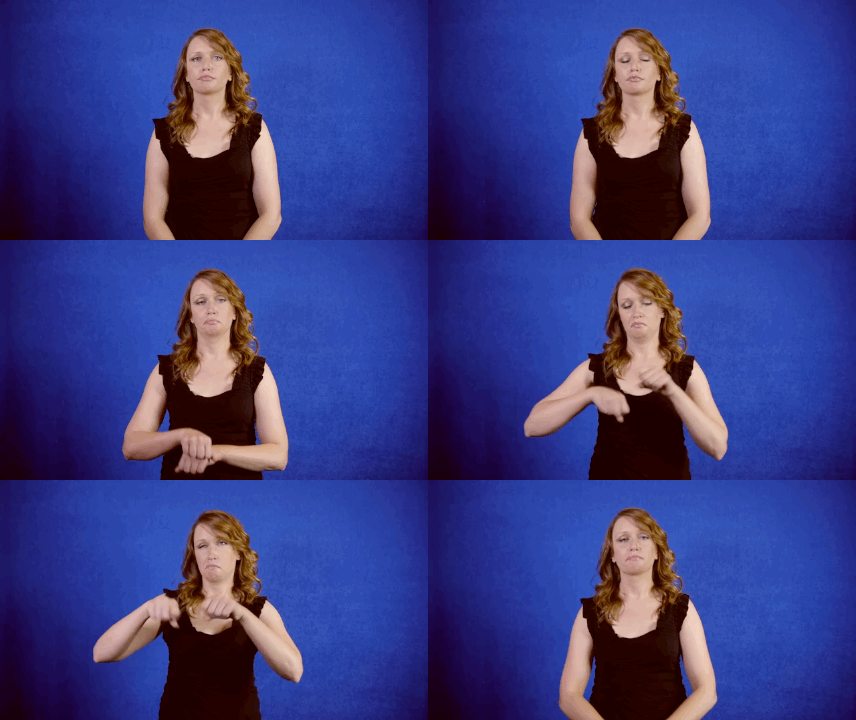
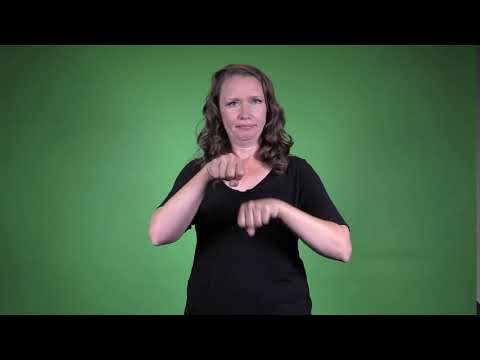
Sign for BIKING in ASL

Practice Activities:
To build comfort with the sign for BIKING in ASL, start by practicing the sign repeatedly in front of a mirror. Focus on the handshapes and motion that mimic pedaling a bicycle. This isolated repetition helps reinforce muscle memory and confidence in your signing.
Once you’re comfortable, incorporate the sign into short phrases like “I like biking” or “Do you go biking?” Practice saying these sentences out loud while signing, which aids in connecting ASL with expressive meaning. Try signing them slowly at first, then increase your speed as you gain fluency.
Use storytelling as a fun way to work on the sign for BIKING in ASL. Imagine a trip through the park or a mountain biking adventure. Narrate your experience using signs like BIKING, FAST, UPHILL, DOWNHILL, and TIRED to describe how the ride felt. This activity improves vocabulary and context use.
Partner up and role-play a conversation about weekend plans or favorite sports. Have one person ask questions and the other respond incorporating the biking sign. Conversations might include ideas like “I went biking yesterday” or “Let’s go biking next weekend.” This encourages reactive signing in real-time contexts.
Use visualization tools like drawing or watching biking videos on mute and interpreting them in ASL. Narrate what you see using phrases that include the sign for BIKING in ASL—describing speed, weather, or other bikers around. This will help you connect visual information with descriptive signing.
Finally, challenge yourself to sign a short paragraph about why you enjoy biking or a memorable biking trip. Record and review your signing to spot areas to improve handshape, clarity, or pacing. Repeating this exercise develops expressive fluency and supports deeper learning of the concept.
Cultural Context:
The sign for BIKING in ASL reflects both the physical action and cultural significance of biking in the Deaf community. Biking is a popular way to travel, exercise, and enjoy the outdoors, and the sign for BIKING in ASL captures that motion visually and effectively.
Signed communication often mirrors everyday movements, making it easier for Deaf individuals to connect language with real-world experiences. The sign for BIKING in ASL typically mimics the pedaling motion of riding a bicycle, which allows Deaf and hard of hearing individuals to easily understand and relate to the concept.
Within Deaf culture, biking is not just a form of transport—it’s also a social activity ♂️. Whether it’s group rides, community events, or environmental awareness campaigns, biking is often part of inclusive gatherings where Deaf and hearing people come together to celebrate active lifestyles. The sign for BIKING in ASL is an essential part of conversations around these activities.
Outdoor recreation is especially important in the Deaf community because visual environments support inclusion and communication. Whether on city bike lanes or mountain trails, the sign for BIKING in ASL helps facilitate clear, accessible interaction. It’s used in stories, directions, and day-to-day conversation to seamlessly incorporate biking as a common life experience.
Parents in Deaf families or those learning ASL also use the sign for BIKING in ASL to teach young children vocabulary related to daily activities. Signing about hobbies and routines helps build strong language skills while keeping communication visual and interactive. The simplicity and clarity of this sign make it a favorite among ASL learners.
Media that is Deaf-friendly, such as vlogs and children’s educational videos, often include the sign for BIKING in ASL to reflect everyday life experiences. It’s a way to connect viewers to content in a meaningful and engaging way. The visual nature of biking combined with the expressive features of ASL makes this sign both functional and fun to use .
Cultural representation in ASL also comes through in sports and competitive events. In contexts like Deaf cycling teams or outdoor club meetups, you’ll regularly see and use the sign for BIKING in ASL. It shows how inclusive language fosters participation and community connection.
The sign for BIKING in ASL is also used during safety discussions and public awareness campaigns. Whether teaching traffic rules or promoting bike helmet use, it helps convey important messages clearly. This shows how ASL plays a role not just in conversation, but in education and
Extended Definition:
The sign for biking in ASL is a visual representation of the motion and concept of riding a bicycle. This sign typically mimics the pedaling motion your feet make while riding, using both hands to depict the circular motion of the legs. It’s a clear and universally understood sign that conveys the action of biking without needing fingerspelling.
When signing biking in ASL, your hands are positioned in fists and circle forward in a motion similar to pedaling. It’s an iconic sign, which means the movement and shape of the hands resemble the actual action. Because of its direct resemblance to biking, the sign is easy to learn and remember.
Context is important when using the sign for biking in ASL. For example, you can add signs for speed, competition, or direction to specify whether you’re talking about casual bike riding, a race, or biking to a location. Biking is a common mode of transportation and exercise, so this sign is often used in everyday conversations.
If you want to talk about biking as a form of recreation, you might combine the sign for biking in ASL with other signs like fun, weekend, or outdoors. This frames the sign in a way that makes it clearer you are referring to a leisure activity. The sign for biking in ASL is highly adaptable to different types of discussions.
For children learning ASL, the sign for biking can also be part of a broader vocabulary that includes outdoor play, physical activity, and transportation. Whether describing a bike ride with friends or commuting by bike, the same sign applies, making it a versatile addition to basic ASL vocabulary.
In Deaf culture, biking is a popular activity, and the sign is used frequently in storytelling and conversation. Knowing the sign for biking in ASL helps bridge communication around important daily topics such as exercise, travel, and fun. It promotes inclusive dialogue within both Deaf and hearing communities.
This sign is also useful in educational settings where children are learning about transportation options or environmental sustainability. Teachers might use the sign for biking in ASL when talking about eco-friendly travel, encouraging students to bike instead of drive for shorter trips. It supports visual learning and active engagement.
If you’re part of the fitness world, you may come across the sign for biking in ASL in gyms or fitness classes that are inclusive for Deaf participants. The sign can be used to give directions, suggest activities, or explain routines that involve cycling. Being familiar with the sign increases accessibility in health-related contexts.
For travelers or individuals exploring
Synonyms: cycling, bicycle riding, bike riding, pedaling, road biking
Educational resources: Find related learning materials in our course bank!
Want more? Check out some of our popular learning activities on the homepage!
Need to look up a sign? Use our highly rated dictionary: https://aslinteractive.com/best-asl-dictionary/
Follow us on tiktok: https://www.tiktok.com/@aslinteractive. More social media links at the bottom of this page!
Long-tail Keywords: what is the sign for biking in ASL, how do you sign biking in American Sign Language, ASL sign for biking
Categories:
tags: transportation, activities, everyday activities, objects, sports
Parameters
*Handshape*:
The handshape used in the sign for BIKING in ASL involves forming both hands into relaxed fists, similar to the letter “S” handshape. The knuckles face downward and the fists are rotated as if pedaling an invisible bicycle.
This motion mimics the movement of gripping and turning pedals, clearly representing the concept behind the sign for BIKING in ASL. The use of “S” handshapes adds a realistic and dynamic visual to the activity being described.
*Palm Orientation*:
For the sign for BIKING in ASL, both hands are formed into loose fists to represent gripping handlebars. The palms face downward or slightly inward toward each other, mimicking a natural hand position while holding bike handles. The fists move in a circular, rotating motion forward, as if pedaling.
This palm orientation, facing down or angled, is essential for conveying the motion and meaning behind the sign for BIKING in ASL .
*Location*:
The location for the sign for BIKING in ASL is typically in front of the torso, around chest level. Both hands form fists and mimic the pedaling motion of riding a bicycle , moving in alternating circular motions forward from this central area.
This area in front of the body ensures clear visibility and natural movement for the sign for BIKING in ASL. It stays close enough to the body for control but far enough to fully show the motion.
*Movement*:
The sign for BIKING in ASL uses both hands in an “S” handshape, positioned in front of the body at chest level. The hands mimic the pedaling motion of riding a bicycle by rotating forward in alternating circles, as if turning invisible pedals.
This movement is continuous and smooth, clearly representing the action of biking. The sign for BIKING in ASL may also be done more vigorously to indicate intense cycling or fast motion .
*Non-Manual Signals*:
When performing the sign for BIKING in ASL, keep a focused and neutral facial expression to reflect a physical activity. Slightly raised eyebrows can be used to emphasize the action if asking about biking or showing interest in biking.
If expressing enjoyment or excitement, a slight smile or enthusiastic expression is appropriate. Use natural head movement to follow the motion of the hands for realism in the sign for BIKING in ASL .
*Prosody, Dominant/Non-Dominant Hand*:
The sign for BIKING in ASL uses both hands in an alternating circular motion to mimic the pedaling of a bicycle. The dominant and non-dominant hands are in loose fists and rotate forward and backward similar to pedals.
This motion uses both arms equally, emphasizing synchronization. The sign for BIKING in ASL clearly reflects the motion of actual cycling, making it iconic and easy to remember .
Tips for Beginners:
When learning the sign for BIKING in ASL, visual clarity and motion accuracy are key. The sign mimics the pedaling motion of a bicycle, usually performed with both hands held as “S” handshapes, rotating forward like turning imaginary pedals. Make sure your hands stay in front of you at a comfortable distance, and keep your motion fluid and controlled. Jerky or too-fast movements can make the sign confusing or distract from its meaning.
Start slow and mirror the motion while looking in a mirror or recording yourself. This helps you get used to the rhythm and symmetry of the movement. Consistency is more important than speed when you’re first practicing the sign for BIKING in ASL. Keep your palms facing toward your body and let your wrists do most of the rotating motion. This ensures it looks like pedaling rather than circular hand-waving, which might be misinterpreted.
Common beginner mistakes include not using both hands equally or letting one hand dominate the motion. This can throw off the fluidity of the sign and make it harder to understand. Another common error is stiff wrists or rotating the whole arms, which looks unnatural. Keep your elbows relaxed and focus on small, natural wrist rotations to convey the biking action.
Practice the sign in context by pairing it with related vocabulary like RIDE or BIKE. For example: “I like BIKING on weekends” or “Let’s go BIKING.” Repetition and everyday context will help solidify the sign in your memory. It’s also useful to watch others sign it during conversation or sign language videos to get a better sense of rhythm and flow.
Lastly, be patient and keep learning. Like riding a real bike , fluency in the sign for BIKING in ASL comes with practice and time!
Connections to Other topics:
The sign for BIKING in ASL is closely related to other transportation and movement signs, such as DRIVE, WALK, and RUN. These concepts all convey how people move through space, often using similar motion patterns of the hands to indicate direction, rhythm, or tool use. Many transportation-related signs involve classifiers that show how something moves in relation to the body, which can help both comprehension and expression.
This sign is also useful when learning or teaching about outdoor activities, as it connects with signs like EXERCISE, HIKING, and NATURE. For example, one might say “I LIKE BIKING IN NATURE” using signs for LIKE, BIKING, and NATURE together, integrating the sign for BIKING in ASL into wider conversational contexts. These activities often share classifiers that reflect the body’s motion or the rhythmic repetition associated with actions like pedaling or walking.
In compound situations, the sign for BIKING in ASL may be combined with location or time markers, forming phrases like BIKING TO SCHOOL or BIKING IN THE MORNING. These compound expressions often use directionality or sequencing to convey meaning, and this gives learners a chance to practice spatial grammar in ASL. Adding classifiers for hills or traffic can also enrich descriptions when telling stories or giving directions.
The sign also bridges discussions about types of bikes, such as MOUNTAIN BIKE or ELECTRIC BIKE, using appropriate classifiers or fingerspelling combined with the general bike movement. It can be related to safety discussions, using signs like HELMET or ACCIDENT, allowing for practical conversations around biking.
Understanding the sign for BIKING in ASL also builds awareness of how ASL handles activities involving tools or repetitive motion. This insight helps learners interpret and express a wide range of actions extending beyond biking, such as ROWING, SKIING, or MOPPING. This contributes to a broader ability to describe kinesthetic experiences.
Summary:
The sign for BIKING in ASL visually mimics the motion of pedaling a bicycle. Both hands are closed in the “S” handshape and positioned in front of the body, circling forward alternately like the movement of pedals. This replication of a familiar motion makes the concept accessible and intuitive.
This sign is generally understood among signers of all ages due to its iconic nature. The motion itself carries strong visual mnemonic support, helping learners and fluent signers alike easily recall or recognize it. It’s highly rooted in the visual-gestural modality that defines ASL.
The sign for BIKING in ASL leans towards mimetic or iconic classifications in the linguistics of sign languages. Since the sign imitates a real-world action, it serves as an example of language grounded in gestural representation rather than arbitrary symbols. This is crucial in separating ASL linguistics from spoken language grammar.
The repetitive movement of the handshapes not only mimics cycling but reinforces the manner of the activity. The speed and intensity of the movement can also emphasize whether the person is biking leisurely or strenuously. Modulation in movement provides grammatical context and richness.
This modulation capability highlights ASL’s inflectional nature, where repetition, speed, and space convey grammatical nuances. In expressing time, for instance, repeating the sign in forward space can imply regular biking, while using past space may convey it happened already. These spatial timelines are unique to signed languages.
Grammatically, the sign for BIKING in ASL functions as a verb but can contextually behave like a noun depending on sentence structure. For instance, I ENJOY BIKING uses it as a gerund, while ME GO BIKING aligns more with action. Therefore, ASL users manipulate syntax rather than relying heavily on word class complexity.
In classifiers, a person riding a bike can be represented with a “CL:1” handshape tracing a path on a conceptual map. These classifiers enrich storytelling, especially in narratives involving movement, path description, or transportation. They supplement the sign for BIKING in ASL with more detailed action or visual expansion.
From a cultural standpoint, biking holds resonance within Deaf communities for its independence and health-conscious nature. Events like Deaf cycling groups or community rides promote inclusivity and access. Signs related to recreational or sports activities thus carry significant communal value.
The lexicon around biking spans other signs linked to transportation. The sign for “BIKE” is nearly identical, though context—the verb’s use versus the noun—determines the nuance. Additionally, signs for “RIDE,” “EXERCISE,” and “TRAVEL” are often seen in phrases alongside the sign for BIKING in ASL.
As with all ASL, regional variations exist. Some communities may alter the hand position slightly or use initialized handshapes—though these versions may be influenced by Signed English. The core sign, however, remains largely iconic across dialects because of its universally accessible visual-motor pattern.
Understanding visual metaphors in signs like this offers insight into the cognitive linguistics of ASL. The brain’s ability to pair visual motion with assigned meaning enables Deaf signers to navigate communication quickly and richly. Cross-linguistic studies also credit sign languages for fostering enhanced spatial awareness in its users.
Teachers of ASL often introduce the sign for BIKING early in curriculum when covering hobbies or daily routines. The visual clarity assists in retention and sparks conversation about lifestyle and preferences. Students typically engage humorously and energetically with this type of movement-based vocabulary.
In ASL poetry or storytelling, the sign for BIKING can participate in dynamic motion-elevated narratives. Storytellers use rhythmic hand repetition and stage transitions to mimic a journey or racing sequence. This adds a layer of embodiment and aesthetic to what might otherwise be a simple verb sign.
The sign fits easily into bilingual contexts, especially in environments where Deaf students are integrated into mainstream schools. It also blends seamlessly with tactile signing for DeafBlind communities, who may adjust the placement and touch of movement to interpret the sign.
Linguistically, identifying how the sign represents a full concept reinforced by motion—versus sequential lexical creation—relates to iconicity theories in ASL phonology and morphology. The verb itself rarely undergoes significant compounding since it already contains movement component and person-agent context when needed.
Although technology-related biking such as “STATIONARY BIKE” or “MOUNTAIN BIKING” may need additional qualifiers in ASL, typically either finger spelled or modified kinetically, the sign for BIKING in ASL remains the foundational base. It exemplifies morphological modularity in signed language.
Exploring the sign’s use over time reveals how ASL also evolves. Older generations may favor slower or more deliberate rotations reflecting a different discourse pace, while younger users may add flair or sarcasm. This adaptability is a marker of ASL’s robust socio-linguistic
Want more? Check out some of our popular learning activities!
ASL Interactive Resources
ASLInteractive YouTube Channel
Follow us on tiktok: @aslinteractive.com
Follow us on Instagram: aslinteractive
Facebook page: aslinteractive
Facebook group: aslinteractive
LInkedIn: ASL Interactive LLC
Twitter: @ASL_interactive
*Some information on this page is AI-generated. AI can make mistakes. Please check the information.


Responses