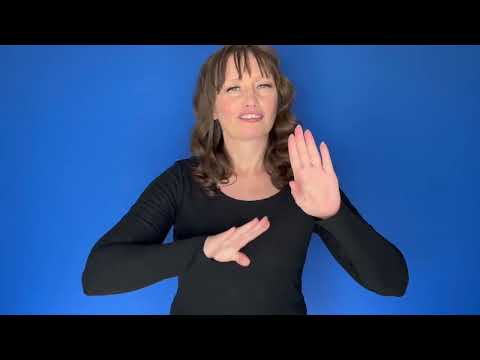
Sign for BIOLOGY in ASL | 👩‍🔬 ASL Dictionary

Definition: The study of living organisms.

Sign for BIOLOGY in ASL 

YouTube player

Practice Activities:

A great way to start practicing the sign for BIOLOGY in ASL is through isolated repetition. Use a mirror to check handshape and movement, practicing the alternating circular motion near the shoulders. Repeat the sign slowly at first, then gradually increase speed while maintaining accuracy in the B-handshape and fluidity of motion.

Next, incorporate the sign into short phrases such as “I study biology,” “Biology is fun,” or “My favorite class is biology.” Signing these simple sentences helps reinforce how the sign fits into everyday conversations. Record yourself to review your fluency and accuracy in signing full sentences using the sign for BIOLOGY in ASL.

Create flashcards with different school subjects, including biology, to practice recognizing and signing vocabulary quickly. Mix up the cards and sign each subject as fast and accurately as possible. Time yourself to improve speed and consistency.

Try using storytelling as a way to incorporate the sign for BIOLOGY in ASL in context. Create a mini-story about a science lesson or a visit to a lab. Include signs for teacher, student, science, and biology to make the story more complete. Retell the story to a friend or sign in front of a mirror.

For partner activities, take turns quizzing each other on signs for school subjects. One partner signs a subject, and the other identifies it. You can also role-play a conversation between students talking about their favorite subjects or what they learned in biology class. Include elements like “I like science,” “We studied animals,” or “My biology teacher is nice.”

Practice describing what is studied in biology using related signs such as animals, cells, nature, and environment. This helps deepen your vocabulary while solidifying your ability to use the sign for BIOLOGY in ASL naturally and fluently.

Cultural Context:

Understanding the cultural context behind the sign for biology in ASL helps deepen appreciation for the language and the Deaf community. American Sign Language reflects the values, interests, and experiences of Deaf culture, and academic subjects like biology hold an important place in education and communication.

The sign for biology in ASL is commonly used in classrooms, tutoring sessions, and casual conversations about science. It allows Deaf students to discuss scientific topics with clarity, fostering learning in the same way spoken English does for hearing students. In Deaf culture, having specific signs for academic subjects like biology ensures equal access to education .

Biology as a subject involves the study of living things — a topic that naturally sparks curiosity. The sign for biology in ASL often includes a letter-based motion, commonly integrating the letter B in a way that mimics a scientific or exploratory gesture. ASL users find it helpful when abstract concepts like biology are given distinct signs that are easy to remember and teach.

In Deaf culture, representation in STEM is growing, and more Deaf scientists and educators are emerging. The accessibility of terms like the sign for biology in ASL supports the inclusion of Deaf individuals in the sciences . This sign plays a role in breaking down communication barriers in professional and educational STEM environments.

The sign for biology in ASL can vary slightly depending on region, age, and even personal style. Despite these variations, the intention remains clear within the context of science and education. This flexibility showcases how ASL is a living language that evolves with its users and context.

Deaf students in mainstream and Deaf schools rely on signs like the one for biology in ASL to follow lessons, ask questions, and engage in group work. Having consistent signs across subjects makes it easier to build a strong foundation in academic language. Teachers and interpreters play a big role in standardizing and teaching these signs.

In the classroom, when a teacher introduces a new topic in science, the sign for biology in ASL helps set the tone and give structure to the lesson. That connection allows for better comprehension and retention. It also affirms the identity of Deaf students by giving them access to the same academic terms as their hearing peers .

Many members of the Deaf community advocate for strong science education, and signs like the one for biology in ASL support this goal. These signs are more than just translations — they are tools for access, empowerment, and participation. By using and teaching the correct signs, we contribute to a more inclusive learning environment.

When

Extended Definition:

The sign for biology in ASL is a common term used in academic and educational settings. It is especially important for Deaf students, teachers, and interpreters working in science-related fields. Knowing the correct sign helps improve comprehension and ensures accurate communication in the classroom or during discussions about science.

To produce the sign for biology in ASL, both hands are formed into the letter “B” handshape. Starting near the shoulders, the hands move in alternating small circular motions, resembling the movement of a cell or the idea of life cycles. This motion reflects the subject of biology, which focuses on living organisms and life processes.

The sign for biology in ASL is visually tied to the concept of life and movement, which aligns with the study of living things. This makes it easier to remember for students learning both the language and the subject. Teachers often pair this sign with visual aids or fingerspelling the word when introducing it to new learners.

Understanding the sign for biology in ASL is essential when discussing topics like cells, ecosystems, genetics, and physiology. It allows students in ASL-based classrooms to participate fully in science activities and discussions. It also bridges the gap between science curricula and Deaf education, ensuring that terminology is accessible to all.

The consistent use of the sign for biology in ASL also supports standardized educational content across schools and regions. As ASL continues to grow in academic use, especially in STEM, having a unified sign for core subjects like biology is important. It avoids confusion and maintains clarity when sharing resources and teaching materials.

In online ASL courses and video dictionaries, the sign for biology in ASL is demonstrated across different contexts to help learners understand usage. Seeing the sign used in sentences improves student retention and supports contextual learning. It’s a valuable part of building scientific vocabulary in ASL.

When searching for science vocabulary in American Sign Language, students and parents often begin by looking up terms like the sign for biology in ASL. Providing clear explanations and video examples helps make educational content more accessible. Visual learning is a key component of ASL instruction, and signs linked to academic subjects benefit hugely from high-quality digital resources.

Having access to the sign for biology in ASL empowers Deaf students to explore science confidently. It also aids interpreters when they translate lectures, lab instructions, or science-related videos. Interpreters often rely on accurate, topic-specific signs to maintain continuity and understanding during sessions.

The introduction of science vocabulary, including the sign for biology in ASL, usually happens

Synonyms: biology, biological science, life science, study of living organisms, natural science of life

Educational resources: Find related learning materials in our course bank!

Want more? Check out some of our popular learning activities on the homepage!

Need to look up a sign? Use our highly rated dictionary: https://aslinteractive.com/best-asl-dictionary/

Follow us on tiktok: https://www.tiktok.com/@aslinteractive. More social media links at the bottom of this page!

Long-tail Keywords: what is the sign for biology in ASL, how do you sign biology in American Sign Language, ASL sign for biology

Categories:

tags: biology in American Sign Language, ASL vocabulary for biology, learn biology terms in ASL, biology signs in ASL, American Sign Language for biology concepts

Parameters

*Handshape*:

The handshape used in the sign for BIOLOGY in ASL involves both hands forming the letter “B” from the ASL alphabet. Fingers are extended and together, with thumbs tucked across the palms. Movements typically involve a circling motion over the chest area.

Understanding the handshape is essential to correctly produce the sign for BIOLOGY in ASL. The consistent use of the “B” handshape is a visual representation emphasizing the academic or scientific context of the word.

*Palm Orientation*:

In the sign for BIOLOGY in ASL, both hands form the letter “B” with fingers together and extended. The palm orientation faces inward toward the center of the body. The hands make small alternating circular motions near the upper chest area to convey the concept.

Maintaining the inward palm orientation is crucial to properly expressing the sign for BIOLOGY in ASL. This motion mimics scientific activity related to the body and life sciences.

*Location*:

The sign for BIOLOGY in ASL is typically produced in the neutral space in front of the upper chest. This location allows for clear visibility and comfortable movement using both hands to form the sign.

When signing the word, make sure the hands remain in front of your shoulders without touching the body. The neutral zone ensures that the sign for BIOLOGY in ASL is easy to distinguish from other science-related signs.

*Movement*:

To produce the sign for BIOLOGY in ASL, form both hands into the letter B handshape. With palms facing each other and slightly in toward your body, move both hands in small alternating outward circles near the upper chest. The movement should feel like you’re stirring the air gently with each hand, back and forth in opposite directions.

The sign for BIOLOGY in ASL mimics the motion of scientific study or activity, reinforcing its connection to life sciences. Keep the movement fluid and balanced, and maintain a consistent rhythm for clarity.

*Non-Manual Signals*:

When performing the sign for BIOLOGY in ASL, keep a focused and neutral facial expression to reflect the academic and scientific nature of the term. Slight eyebrow furrowing may occur to show concentration or seriousness, especially when the sign is used in an educational context.

The non-manual signals for the sign for BIOLOGY in ASL may also include a slight forward tilt of the head, signaling engagement or explanation. No exaggerated facial expressions are typically necessary unless adding emphasis.

*Prosody, Dominant/Non-Dominant Hand*:

The sign for BIOLOGY in ASL uses both hands in the “B” handshape, with the dominant and non-dominant hands positioned near the upper chest. The hands make alternating small circular motions, mimicking the motion used in the sign for science. This bilateral motion emphasizes the field of study represented by biology. The sign for BIOLOGY in ASL visually reflects the academic nature and scientific discipline of the subject.

Tips for Beginners:

When learning the sign for BIOLOGY in ASL, it’s important to focus on both the movement and correct handshape. Use both hands in the letter B handshape and create alternating circular motions at shoulder level. This motion mimics the general sign for science but substitutes the S-handshapes with B-handshapes to represent the first letter of “biology.”

Beginners should practice making wide, clear circles with your hands to avoid any confusion with other science-related signs. Stay symmetrical with your movements, and avoid bouncing your hands or twisting your wrists, as this can make the sign unclear or sloppy. Practicing in front of a mirror can help you get the visual alignment right.

A common mistake with the sign for BIOLOGY in ASL is either using incorrect handshape (like an S instead of a B) or placing your hands too low or too high. Remember that shoulder height is key—it keeps the sign visible and properly executed. Watch out for stiff hand movements. The sign should be fluid but controlled.

If you’re new to ASL, consistency will be critical. Drill the sign daily and record yourself to compare with fluent signers. Try to pair the sign with context—use it when discussing classroom topics, school subjects, or science in conversation to improve retention.

Also, make sure your facial expression is engaged when doing the sign for BIOLOGY in ASL. A neutral or mildly interested face works best unless emphasizing interest or confusion about the subject. Over time, using expressions becomes natural in ASL to convey meaning more effectively.

Try incorporating this sign into full sentences such as “I like biology” or “Biology is hard” to get used to its flow. The more you use the sign for BIOLOGY in ASL in context, the easier it will become to recall it naturally in conversation.

Connections to Other topics:

The sign for BIOLOGY in ASL connects to a wide range of academic and scientific vocabulary, making it an essential sign for students, educators, and interpreters. Since the sign uses the initialized “B” handshape in a circular motion near the shoulder area, it follows a common pattern also seen in other science-related signs like CHEMISTRY and PHYSICS, where initial letters represent fields of study. This pattern helps ground the sign for BIOLOGY in ASL firmly within the sphere of STEM vocabulary.

This sign also frequently appears in compound signs such as MOLECULAR BIOLOGY, CELL BIOLOGY, and MARINE BIOLOGY. In these cases, the additional terms—MOLECULAR, CELL, or MARINE—are either fingerspelled or signed before integrating with the sign for BIOLOGY. These compound forms allow users to build more specific academic concepts while maintaining clarity and grammatical flow in ASL.

Because the sign for BIOLOGY in ASL is conceptually tied to the broader category of SCIENCE, it is useful to understand how it semantically relates to signs like LIFE, ORGANISM, and NATURE. These signs often show up together in educational settings or interpreted events such as high school or college science lectures. Knowing BIOLOGY also facilitates comprehension in contexts where environmental or health topics are being discussed.

The sign for BIOLOGY in ASL supports learning through visuals and classifiers, especially when discussing processes like cellular division or ecosystems. When describing a topic like the life cycle of a plant, classifiers can illustrate growth stages, while the term BIOLOGY provides the academic context. This makes the sign not just descriptive but interactive and educational.

Overall, the sign for BIOLOGY in ASL functions as a foundational term, allowing learners to expand their vocabulary quickly across science topics. It empowers communication about natural sciences and promotes accuracy in academic interpretation .

Summary:

The sign for BIOLOGY in ASL is a compound sign made up of the sign for SCIENCE along with the initialized handshape for the letter B. To produce this sign, both hands form the letter B and make simultaneous circular movements in front of the body, mimicking the motion seen in the general sign for SCIENCE. The motion usually occurs in front of the chest area, emphasizing the personal and educational significance of this field.

This structure follows a larger pattern used in ASL where academic disciplines are formed using the sign for SCIENCE as a base. The letter incorporated into the handshape helps distinguish specific fields like BIOLOGY, CHEMISTRY, or PHYSICS. These signs are intuitive once the base pattern is recognized, making them accessible to learners familiar with fingerspelling and initialized signs.

The sign for BIOLOGY in ASL parallels other terms that follow the initialized classifier format common in academic or technical core vocabulary. The B-handshape is not arbitrary; it specifically ties to the first letter of the English translation of the word. ASL often uses initialized signs for clarity, particularly in educational settings or in contexts involving translations between spoken English and signed language.

Using the circular motion common in signs denoting processes or scientific inquiry conveys the idea of investigation, research, and exploration. These are core themes embedded in the field of biology. Additionally, the body-centered location of the sign in front of the torso reflects the discipline’s focus on living organisms, particularly humans and their biological systems.

In everyday ASL discourse, the sign for BIOLOGY in ASL is frequently used in schools, colleges, and scientific contexts. Deaf students discussing their course schedules or topics from class would naturally use this sign. It serves as both a label for the discipline and a tool for engaging in more complex discussions around biology-related topics.

Because science education has historically had barriers for Deaf individuals, signs like BIOLOGY are more than just vocabulary items—they represent enhanced access to STEM learning. The continued emphasis on consistent and intuitive signs like this one has supported education equality. Interpreters, educators, and scholars in the Deaf community advocate for clearer and standardized signs for technical terms.

Linguistically, the sign for BIOLOGY in ASL draws on visual mnemonic strategies. The shape of the B-hands and the motion help etch the concept into memory, allowing learners to internalize both the motion and meaning simultaneously. It showcases how ASL is a spatial language that leverages metaphors to express abstract concepts.

From an applied linguistics standpoint, the sign’s morphological components offer insight into how new signs are constructed and adapted in ASL. Initialized signs are sometimes controversial because they are influenced by English, but they also offer efficiency when establishing standardized academic lexicons. In discussions about language purity versus utility, signs like this often come into focus.

The debate over initialized signs reveals cultural perspectives within the Deaf community. Some prefer idiomatic or more visually iconic signs rooted in ASL structure, while others appreciate the clarity and connectivity to the English lexicon that initialized signs offer. The sign for BIOLOGY in ASL is respected in educational spheres, with recognition of its utility outweighing concerns in most contexts.

Interestingly, the motion of the sign includes a rhythm that suggests ongoing action, fitting for a subject that deals with living systems and continuous processes. Similar elegant physical metaphors are present in signs like GROW, EVOLVE, or NATURE—each conveying a sense of motion, change, and development.

Sometimes, when emphasizing biology in more casual Deaf discourse, signers may accompany the sign with visual expansions or classifiers showing body systems, animals, plants, or microscopic imagery. These expansions highlight the 3D nature of ASL and its capacity for vivid storytelling and representation.

For fluent signers, the transitions into phrases like BIOLOGY CLASS, BIOLOGY BOOK, or STUDY BIOLOGY are seamless. These combinations showcase the grammatical agility of ASL and how users chain signs together efficiently with temporal and spatial leaning. Non-manual signs and body positioning further enhance clarity and nuance.

Children learning ASL in bilingual-bicultural programs are often introduced to these academic subject signs early. This equips them with vocabulary parallel to their hearing peers and helps bridge accessibility gaps. The sign for BIOLOGY in ASL thus plays a key role in foundational science education.

The importance of accessible science terminology in ASL also connects to broader inclusion in STEM. Deaf professionals working in biology-related fields depend on a well-developed lexicon to describe cellular structures, genetic codes, ecological systems, and physiological processes. While fingerspelling fills in for highly specialized terms, general subject signs lay the communicative groundwork.

Emerging interpretations of the sign for BIOLOGY in ASL may adapt as newer linguistic conventions form. Technological advancements in biology—like CRISPR, genomics, and synthetic biology—could influence how signers handle increasingly niche terms. Supplementary signs or descriptors may evolve accordingly.

In signed scientific presentations or interpreted lectures, using this sign accurately helps pace

Want more? Check out some of our popular learning activities!

ASL Interactive Resources

ASLInteractive YouTube Channel

Follow us on tiktok: @aslinteractive.com

Follow us on Instagram: aslinteractive

Facebook page: aslinteractive

Facebook group: aslinteractive

LInkedIn: ASL Interactive LLC

Twitter: @ASL_interactive

*Some information on this page is AI-generated. AI can make mistakes. Please check the information.

Sign for BIOLOGY in ASL

Responses