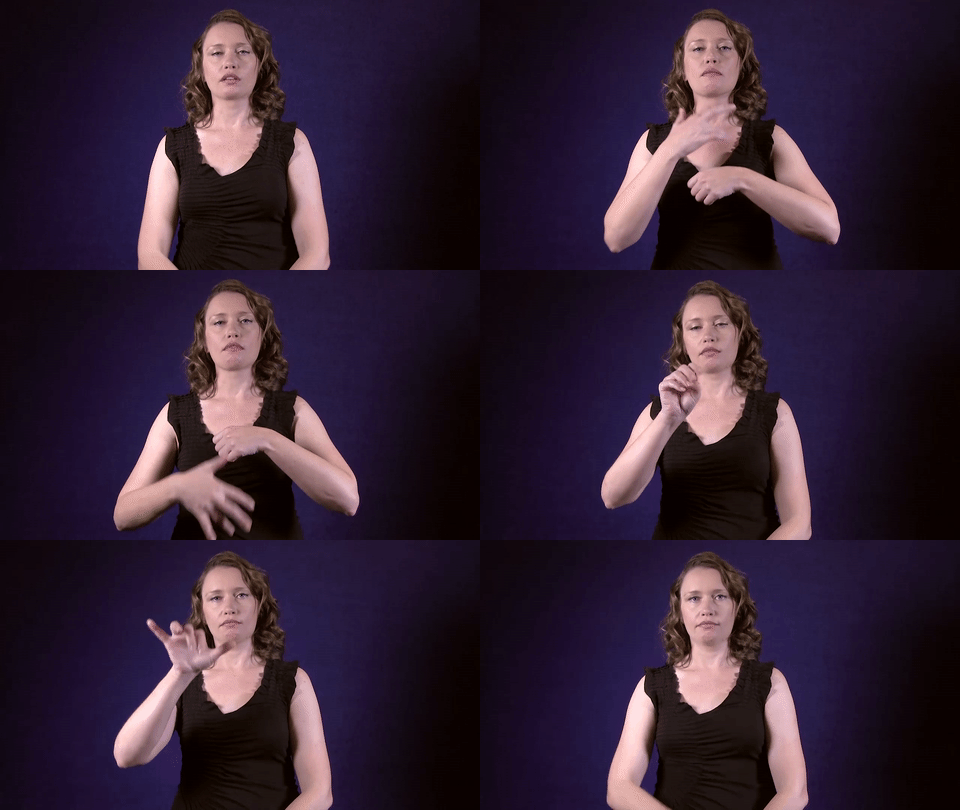
Definition: A cocktail made with tomato juice and vodka.
Sign for BLOODY MARY in ASL

Practice Activities:
To get comfortable with the sign for BLOODY MARY in ASL, start by practicing it in isolation. Stand in front of a mirror and repeat the sign slowly, checking your handshape and facial expression. Repetition builds muscle memory, so practice the sign multiple times in a row to build fluency.
After you’ve got the isolated sign down, try adding it into short phrases or questions. For example, sign “I LIKE BLOODY MARY” or “HAVE YOU EVER DRINK BLOODY MARY?” This helps reinforce vocabulary retention and prepares you to use the sign in everyday conversation.
Use flashcards to initiate quick recall of food and drink items, adding the sign for BLOODY MARY in ASL into the deck. Hold a mini quiz for yourself or a partner, seeing who can sign each item correctly under a time limit. This playful and competitive activity improves both speed and accuracy.
Create a visual recipe of a Bloody Mary using ASL vocabulary. Practice signing ingredients like tomato juice, vodka, celery, hot sauce, and then sign how to mix them. This challenges you to think through the sequence while repeatedly using the sign for BLOODY MARY in ASL throughout your explanation.
Pair up with another learner and roleplay a situation in a restaurant or brunch café. One person can act as the server asking about drink preferences, and the other can request a Bloody Mary. Switching roles will give you a well-rounded practice experience in context.
Try storytelling by sharing a memory or imagined event where a Bloody Mary was part of the scene. Include other signs like “FRIEND,” “PARTY,” “DRINK,” or “SPICY.” The more detailed your story, the more you will naturally reinforce the contextual use of the sign for BLOODY MARY in ASL .
Cultural Context:
The sign for BLOODY MARY in ASL carries more than just a literal meaning. It can refer to different cultural references depending on the context. In American culture, Bloody Mary is known as both a popular cocktail and a legendary ghost story told at sleepovers or around a campfire. When interpreting or using the sign for BLOODY MARY in ASL, it’s important to recognize which meaning is intended.
Deaf culture, like any culture, engages with mainstream stories and legends, so the ghost story version of Bloody Mary is well known. Kids and teenagers in the Deaf community also dare each other to say the name in front of a mirror, hoping to summon a ghost. When signing this in ASL, facial expressions and dramatic storytelling can really bring the scene to life. The sign for BLOODY MARY in ASL will often rely on classifiers and spooky expressions when telling the haunted version of the tale.
On the other hand, the cocktail version of Bloody Mary is equally familiar, especially within restaurant and bar settings. This version of the sign for BLOODY MARY in ASL may incorporate signs for tomato, alcohol, or other cocktail-related signs. Context makes it clear whether someone is talking about the drink or the legend. Many Deaf bartenders and bar-goers will sign the drink with iconic physical gestures for mixing or sipping to illustrate the meaning.
In visual and performance storytelling, the sign for BLOODY MARY in ASL comes alive with rich imagery. The terrifying legend often includes visuals like mirrors, blood, and candles, all signed descriptively using ASL classifiers. Facial expressions, eye gaze, and body movement help to depict the horror of encountering Bloody Mary in a mirror. In contrast, a ASL poetry performance might creatively use the sign for BLOODY MARY in ASL as a metaphor or part of a larger artistic piece.
Across online Deaf communities, memes and videos sometimes include references to Bloody Mary, using jokes, reenactments, or time-lapse effects to add humor or horror. The sign for BLOODY MARY in ASL appears in these videos and is often adapted to fit the delivery style of the signer. These videos help preserve and spread culturally specific interpretations of stories within the Deaf community.
It’s also important to consider regional sign variations. The sign for BLOODY MARY in ASL could have minor differences across states or cities. Some signs may simplify the phrase while others may draw out the meaning with extra details. Knowing your audience helps ensure communication is clear
Extended Definition:
The sign for bloody mary in ASL can vary depending on the context and whether the person is referring to the popular cocktail or the folklore figure. In American Sign Language, it’s common to use a combination of signs or fingerspelling to convey the concept, especially for proper names or culturally specific references. The meaning must be clear from the conversation or situation.
When referring to the drink, the sign for bloody mary in ASL typically involves signing drink or cocktail first, followed by fingerspelling the words bloody and mary. You might use a miming gesture of holding a glass to show it’s a beverage, which helps reinforce the idea. This method is simple and understood by most Deaf signers familiar with alcoholic beverages.
If the conversation is about the ghost legend or horror figure known as Bloody Mary, the sign is usually modified to reflect that context. Some signers will use fingerspelling again, but it’s often paired with facial expressions or dramatic gestures to convey fear or the supernatural. Cultural context is important here, as the sign needs to match the reference.
In some cases, particularly in storytelling or informal situations, the sign for bloody mary in ASL might be adapted creatively. Signers may show blood or ghost gestures and pair them with the sign for name or a feminine figure. Others might use classifier handshapes to depict a figure appearing in a mirror, mimicking the classic legend.
There is no single universal sign for bloody mary in ASL because it is a layered concept, combining elements of names, drinks, and folklore. Fingerspelling remains the default when no clear sign exists, helping maintain clarity without oversimplifying. This approach is widely accepted in the ASL community for names like this.
Some ASL dictionaries may list common variations of the sign for bloody mary in ASL, especially as it becomes more frequently used in popular culture. As with many signs, regional differences or age of the signer may also influence how it’s represented. What remains important is that the sign chosen conveys meaning clearly to the audience.
Sociolinguistics play a role too, as some signers may never use the name at all, while others, especially in entertainment or bar settings, may sign it often. The way you sign bloody mary depends heavily on the setting—whether you’re telling a ghost story or ordering a drink. Always consider your audience and choose signs appropriately.
For learners seeking to master the sign for bloody mary in ASL, video resources and Deaf community input are helpful tools. Watching
Synonyms: Bloody Mary cocktail, tomato juice cocktail, spicy vodka drink, morning pick-me-up cocktail, brunch cocktail
Educational resources: Find related learning materials in our course bank!
Want more? Check out some of our popular learning activities on the homepage!
Need to look up a sign? Use our highly rated dictionary: https://aslinteractive.com/best-asl-dictionary/
Follow us on tiktok: https://www.tiktok.com/@aslinteractive. More social media links at the bottom of this page!
Long-tail Keywords: what is the sign for bloody mary in asl, how do you sign bloody mary in american sign language, bloody mary asl sign
Categories:
tags: Halloween, Drinks, Occasions, Bloody Mary, Parties
Parameters
*Handshape*:
The handshape for the Sign for BLOODY MARY in ASL generally involves two parts: the sign for BLOODY and the fingerspelled name MARY. For BLOODY, use both hands in open-5 handshapes, brushing one hand downward across the other to suggest dripping or flowing blood. The motion is fluid and dramatic, often paired with an expressive facial gesture to emphasize intensity.
Then transition to fingerspelling MARY using the standard ASL alphabet. The Sign for BLOODY MARY in ASL blends a conceptual sign with clear lexical spelling, making it both descriptive and visually striking.
*Palm Orientation*:
The palm orientation for the sign for BLOODY MARY in ASL typically involves both hands. For the BLOODY portion, one flat hand may face downward while the fingertips of the other hand wiggle underneath, with palms facing toward the body. This mimics the visual of dripping blood.
For MARY, which is often fingerspelled, each letter M-A-R-Y is formed with the dominant hand, and the palm orientation shifts slightly with each letter. Throughout the sign for BLOODY MARY in ASL, palms stay mostly neutral or inward-facing to maintain clarity.
*Location*:
The sign for BLOODY MARY in ASL typically takes place in the neutral space in front of the upper torso, near the chest or chin area, depending on the specific depiction. If using fingerspelling for BLOODY MARY, both words are spelled out mid-air with hands positioned at chest level for clarity and visibility.
Some variations of the sign may incorporate gestures from signs like BLOOD or MARY, placed in front of the body. The sign for BLOODY MARY in ASL keeps the motion and orientation visible to the viewer, making it easier to understand and recognize.
*Movement*:
The sign for BLOODY MARY in ASL typically starts with the sign for “blood,” where the dominant hand forms a modified 5-handshape and mimics dripping from the mouth area downward like blood. Then, the name “Mary” is fingerspelled: M-A-R-Y.
This movement visually conveys the idea of the term and often uses facial expressions to intensify the imagery. Repeating the sign or using dramatic eye contact enhances the ghostly or horror-related nature of the sign for BLOODY MARY in ASL .
*Non-Manual Signals*:
When using the sign for BLOODY MARY in ASL, maintain a slightly exaggerated facial expression to convey intensity or drama, as the concept often implies something eerie or supernatural. Eyes may widen slightly and eyebrows can raise to reflect surprise or suspense.
The sign for BLOODY MARY in ASL is often accompanied by a spooky or mysterious facial gesture, especially when referencing the urban legend rather than the drink. Mouth might be slightly open or lips pressed together in tension to enhance the storytelling effect.
*Prosody, Dominant/Non-Dominant Hand*:
The sign for BLOODY MARY in ASL uses both hands to convey its meaning. The dominant hand forms a claw (like the 5 handshape slightly curved) and makes a brushing motion downward over the face, symbolizing blood. The non-dominant hand often supports the context with a gesture related to a drink, such as miming holding a glass.
The sign for BLOODY MARY in ASL may also be fingerspelled depending on context, especially when referring to the cocktail or the urban legend. Facial expressions play a key role—use intense or eerie expressions for the ghost story meaning, or a casual expression if referring to the drink .
Tips for Beginners:
When learning the sign for BLOODY MARY in ASL, it’s important to recognize that this term is primarily expressed through fingerspelling. Since it refers to a specific name—whether you’re referencing the cocktail or the folkloric figure—it is usually fingerspelled as B-L-O-O-D-Y M-A-R-Y. As such, beginners should focus on achieving clear, fluid fingerspelling rather than looking for a single motion or gesture.
To start, practice each letter individually and then work on blending them together smoothly. Repetition is key . Maintaining a steady rhythm while fingerspelling the sign for BLOODY MARY in ASL helps with memorization and builds muscle memory. Watch your hand and try to stay consistent with your palm orientation—facing out toward the viewer or slightly tilted, which is the standard for most fingerspelled words.
A common pitfall is rushing through the letters, which can make the sign unreadable. Beginners often slur the transition between Y and M; slowing down slightly at that junction can improve clarity. Be sure to fully form each letter, especially the M and R, which require precise finger placement ✋.
Facial expressions add to the meaning in ASL. If referring to the folklore figure, incorporate a slightly dramatic or eerie facial expression to convey context. If referring to the drink, a cheerful or neutral expression might be more suitable. This level of expression makes the sign for BLOODY MARY in ASL far more dynamic and communicative.
Lastly, record yourself practicing and compare your signs with reliable visual resources. This helps catch any errors that might hinder understanding. Immersing yourself through practice and feedback will speed up your progress and help ensure your version of the sign for BLOODY MARY in ASL is clear, natural, and context-appropriate.
Connections to Other topics:
The sign for BLOODY MARY in ASL connects to multiple concepts, both from vocabulary related to beverages and representations of cultural references. Since BLOODY and MARY are often signed separately or fingerspelled in combination, this phrase also ties into compound naming conventions, especially when referencing proper nouns or brand names. In many contexts, BLOODY can be signed by combining BLOOD and a descriptive gesture if needed, while MARY is typically fingerspelled or signed depending on context—especially if referring to the horror figure rather than the cocktail.
This sign demonstrates how ASL handles multi-word noun phrases, particularly unique combinations like drink names. Other cocktail names such as “whiskey,” “martini,” and “margarita” are usually fingerspelled or described using classifiers for glasses and drink types. The use of classifiers, especially for cups or glasses, is also relevant when signing the sign for BLOODY MARY in ASL, as it is commonly served in a tall glass which may reinforce context through visual gesture.
Additionally, this sign illustrates the versatility of fingerspelling in ASL when native signs are unavailable. Similar to other famous names or branded concepts—like “Big Mac,” “Starbucks,” or “Coca-Cola”—the sign for BLOODY MARY in ASL may involve a blend of fingerspelling and visual description, depending on whether the user is referencing the drink or the folklore figure. Learners can benefit from understanding that many proper nouns in ASL begin as fingerspelled terms and later evolve into initialized or stylized signs over time with increased usage.
The sign also offers a gateway into discussions about storytelling in ASL. When referencing the urban legend of Bloody Mary, classifiers, facial expressions, and body shifts become instrumental in building suspense or reenacting her appearance. These narrative elements reinforce the richness of ASL as a visual-spatial language, helping reinforce the multifaceted applications of the sign for BLOODY MARY in ASL.
Summary:
The sign for BLOODY MARY in ASL is typically expressed through fingerspelling, reflecting its status as a proper noun and culturally specific phrase. Since it refers both to a cocktail and a folkloric figure, context determines whether the signer chooses to clarify further through facial expressions or additional signs.
Fingerspelling B-L-O-O-D-Y M-A-R-Y is the clearest and most accepted way to communicate the phrase. When referencing the drink, signers may supplement the fingerspelling with the sign for DRINK or ALCOHOL, indicating that the discussion is about the cocktail , not the urban legend.
In casual usage, especially among young or culturally aware signers, the sign for BLOODY MARY in ASL might be supported with narrative signs or exaggerated facial expressions to reflect humor or spookiness. This is particularly common when describing the folklore character during Halloween or ghost storytelling sessions.
Fingerspelling proper nouns like BLOODY MARY conforms to ASL grammar principles where culturally specific or trademarked names are not altered into concept signs unless widely adopted. This honors the language’s structure while maintaining linguistic integrity.
Some signers add context using descriptive classifiers. For the cocktail, they might mime stirring a drink or adding ingredients, which visually supports the fingerspelled sign. For the ghost or horror imagery, signers might use classifiers showing shadows, mirrors, or scary faces.
The folk character version of BLOODY MARY in ASL may be presented with stylized movements. Instead of just fingerspelling, signers sometimes frame the scary narrative using signs like MIRROR, LIGHTS, or SCREAM depending on the story context .
When interpreted in horror stories, the sign for BLOODY MARY in ASL often becomes part of a larger narrative arc. The signer incorporates affective facial expressions and expressive body language to dramatize the tale, aligning with ASL’s visual storytelling tradition.
In terms of syntax, BLOODY MARY functions as a subject or object depending on sentence structure. For example, one might sign BLOODY MARY (fs), APPEAR, MIRROR, SCREAM to convey the sequence of frightening events in a story.
ASL classifiers increase the elasticity of communicating the concept. For storytelling, classifiers such as people-shaped handshapes or location-specific handspace use can portray BLOODY MARY appearing in a mirror or creeping behind someone.
Cultural knowledge plays a big role when using or interpreting the sign for BLOODY MARY in ASL. A signer must assess the receiver’s familiarity with American pop culture or cocktail references to determine if clarification is needed.
The sign for BLOODY MARY in ASL reflects an intersection of linguistic borrowing and cultural specificity. Fingerspelling acts as a bridge between visual language and English lexical items that have no conceptual match in ASL.
For native ASL users, especially those immersed in Deaf culture, the fingerspelled version may spark creative language use. They might stylize the spelling in storytelling contexts with tempo, hand tension, or expression changes to evoke the mood.
From a sociolinguistic standpoint, the sign for BLOODY MARY in ASL demonstrates how signed languages handle foreign or culturally bound concepts. Fingerspelling helps preserve the original name while allowing creative versatility around it.
Applied linguistics reveals how the sign is adapted in different settings. In educational settings, instructors may teach the sign as part of a unit on drinks or legends, explaining its dual meaning and how to elaborate for clarity.
In interpreting, the sign for BLOODY MARY in ASL requires contextual wisdom. Is the speaker referring to a brunch cocktail or telling a spine-chilling ghost legend? Interpreters adjust accordingly, using environmental cues and supplemental signs.
Iconicity does not dominate the sign for BLOODY MARY in ASL because fingerspelling relies on English orthography rather than visual resemblance. However, iconicity can augment a narrative if classifiers are included, mimicking shadows or mirror reflections.
Discussions of haunted folklore often lean into ASL’s strength as a visual language. By framing the phrase with signs like MIRROR, GHOST, or DARK-ROOM, the signer builds atmosphere, and BLOODY MARY becomes a chilling highlight of the tale.
Within bar or restaurant contexts, the sign for BLOODY MARY in ASL will usually be followed by the sign for ORDER or WANT-DRINK. These contextual signs help the receiver understand the user’s intention, particularly in noisy or dimly lit venues.
Some signers abbreviate fingerspelling through a fast rendition when speaking casually. For instance, fluent signers may spell BLOODY MARY with slightly blurred handshapes in conversational pace while relying on context for disambiguation.
For storytelling competitions or ASL poetry involving horror themes, performers may integrate the fingerspelled BLOODY MARY into rhythmic signing. Middle school and high school Deaf education programs often incorporate legends like this into classroom drama.
ASL poetry
Want more? Check out some of our popular learning activities!
ASL Interactive Resources
ASLInteractive YouTube Channel
Follow us on tiktok: @aslinteractive.com
Follow us on Instagram: aslinteractive
Facebook page: aslinteractive
Facebook group: aslinteractive
LInkedIn: ASL Interactive LLC
Twitter: @ASL_interactive
*Some information on this page is AI-generated. AI can make mistakes. Please check the information.


Responses