Sign for BOAT in ASL | 🚤 ASL Dictionary

Definition: A vessel for traveling on water.

Sign for BOAT in ASL

YouTube player

Practice Activities:

To begin practicing the sign for BOAT in ASL, start with some simple repetition exercises. Stand in front of a mirror and produce the sign for BOAT in ASL multiple times, focusing on the shape and movement of your hands. This will help build muscle memory and increase confidence using the sign correctly.

Next, practice using the sign in short phrases. Try phrases like “I ride a boat,” “The boat is big,” or “She is on a boat.” This helps you get comfortable placing the sign within basic ASL sentence structure. Record yourself and compare it with videos from fluent signers to check for accuracy.

For storytelling practice, describe a trip involving a boat. You can talk about going fishing, sailing, or taking a vacation. Include other signs about travel, water, or weather to give more context and make the sign for BOAT in ASL part of a natural conversation. Retell your story to a friend or teacher for feedback.

Use flashcards with transportation-related images to quiz yourself or a peer. When the image of a boat appears, quickly sign the correct word. Speed drills like this help with recall under pressure and improve fluency. Try including variations like canoe, yacht, or ferry, and fingerspell the names of specific types when needed.

Pair up with another learner and take turns asking yes or no questions using the sign for BOAT in ASL. For example, “Do you have a boat?” or “Have you ever seen a boat race?” Pay attention to facial expressions and non-manual signals while responding.

Finally, watch ASL stories or vlogs that include transportation themes. See how native signers incorporate the sign for BOAT in ASL into their narratives. Take notes and try to imitate their sign choices and rhythm in your own practice.

Cultural Context:

In American Sign Language, the sign for BOAT holds more than just a literal meaning. It also connects to cultural and regional aspects of the Deaf community, particularly those living near coastal areas or places with rivers, lakes, and frequent water activities. Understanding the sign for BOAT in ASL goes beyond learning vocabulary—it includes recognizing how signs relate to life experiences within the Deaf community.

The sign for BOAT in ASL is often used when talking about travel, leisure, or even work connected to water environments. For Deaf individuals who live in areas where boating is a regular activity, the sign is often used in everyday conversations. It can show up during conversations about fishing trips, vacations by the sea, or jobs that involve ferries or maritime work.

Like many signs in ASL, the sign for BOAT is iconic and visually resembles the shape or motion of a real boat. This iconic quality makes it easy for individuals new to ASL to understand and remember the motion. It also reflects how ASL often uses visual and spatial features to convey meaning, giving learners a deeper appreciation for the language as a rich visual system.

Deaf culture values shared experiences, and talking about boating, cruising, or trips on canoes can often be a conversational icebreaker at Deaf social gatherings. The use of the sign for BOAT in ASL during storytelling adds excitement and clear visualization. Many stories within the community use nature or outdoor activities as central themes, where this sign becomes part of a larger narrative.

In Deaf schools and events like Deaf camps or retreats, the topic of boats and water activities comes up often. Because of this, the sign for BOAT in ASL is frequently learned early by children who grow up in signing environments. Teachers and adults use it to talk about safety, fun, and nature, making it both an educational and social sign.

Regional differences also sometimes influence how the sign for BOAT in ASL is used or signed. In some areas, people may use a slightly different variation depending on local influences or combining it with other signs such as fishing, sailing, or swimming. This flexibility showcases the regional richness within ASL and how the language naturally adapts to community needs.

The sign for BOAT in ASL also appears in educational videos, children’s ASL books, and learning apps. Its usage is a friendly and familiar way for students to explore topics related to nature, geography, and travel from a visual-linguistic perspective. For native and second-language users of ASL

Extended Definition:

The sign for BOAT in ASL is a visual representation of a boat floating on water, and it’s often used in conversations related to travel, water, transportation, and recreational activities. In American Sign Language, signs are typically based on how things look or function, and the sign for BOAT is no exception.

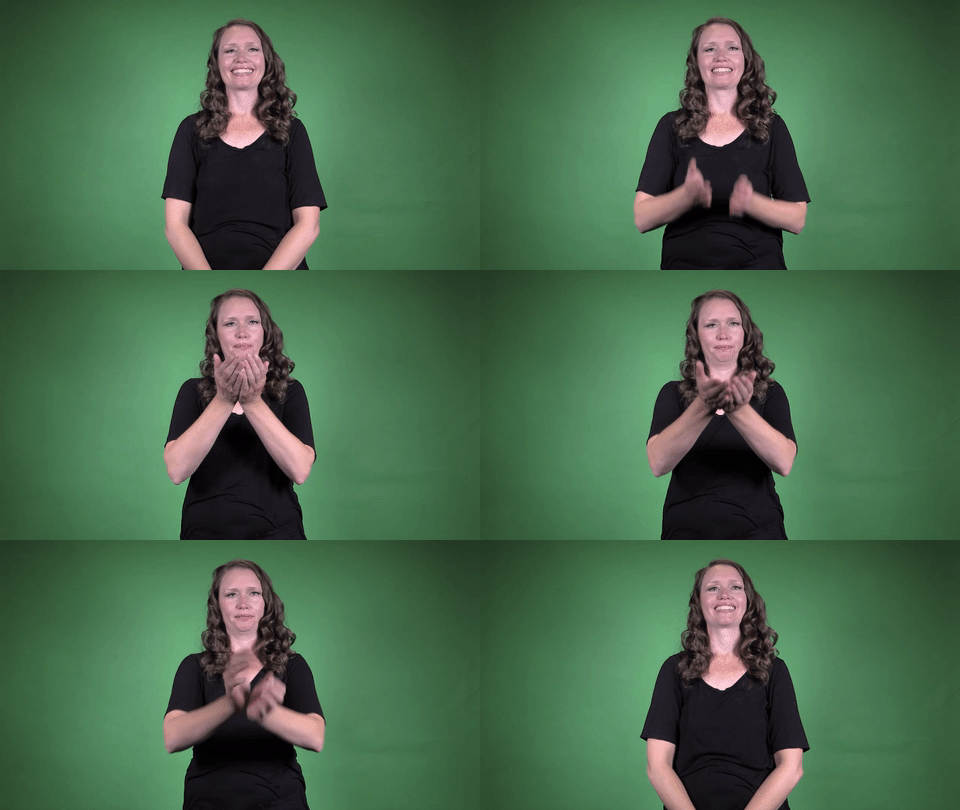
To produce the sign for BOAT in ASL, both hands are cupped together, palms facing up, and moved forward in a slight bobbing motion. This mimics the shape and gentle movement of a boat gliding on water. The motion is fluid and helps reinforce the image of a floating vessel.

This sign is used frequently when talking about boats, ships, or any form of watercraft. It’s also essential when discussing vacation plans, stories involving the sea, or experiences like sailing, fishing, or ferry rides. Kids might also use the sign for BOAT in ASL when referencing toys or pretend water adventures .

It’s helpful to associate the sign with real-world contexts to remember it better. If someone is telling a story about going to the lake or boarding a cruise ship, the sign gives a strong visual that enhances communication. Like many ASL signs, context plays a big role in how signs are interpreted.

In variations, depending on the type of boat being described, additional signs may follow the general boat sign. For example, a fishing sign might be added to indicate a fishing boat, or the sign for big could be included to show the size of the vessel. These additions enrich the base sign and give it more meaning during conversations ⛵.

Learning the sign for BOAT in ASL is especially useful for students, interpreters, educators, and parents teaching children. Being able to recognize and produce signs for common objects helps build fluency and comfort in everyday interactions. It’s also a good example of how ASL translates the concept of movement and shape into language.

The handshape and motion of the sign remain largely consistent across various ASL dialects, making it a reliable and widely understood sign. In storytelling or classroom settings, using the sign for BOAT in ASL adds a dynamic visual that keeps attention focused and enhances memory retention.

If you’re just starting to learn American Sign Language, beginning with common nouns like boat can help grasp the structure of the language. These visual signs make it easier to build a strong foundation. The sign for BOAT is often taught in early ASL classes and is featured prominently in children’s ASL

Synonyms: vessel, ship, craft, schooner, yacht

Educational resources: Find related learning materials in our course bank!

Want more? Check out some of our popular learning activities on the homepage!

Need to look up a sign? Use our highly rated dictionary: https://aslinteractive.com/best-asl-dictionary/

Follow us on tiktok: https://www.tiktok.com/@aslinteractive. More social media links at the bottom of this page!

Long-tail Keywords: what is the ASL sign for boat, how do you sign boat in American Sign Language, learn how to sign boat in ASL

Categories:

tags: Transportation, Water activities, Vehicles, Travel, Objects

Parameters

*Handshape*:

The handshape used in the sign for BOAT in ASL involves both hands forming a slightly cupped shape, as if outlining the sides of a small boat. The fingertips of both hands touch, and the thumbs are also in contact, creating an open oval space.

This cupped handshape visually represents the hull of a boat. The hands gently rock forward to indicate movement on water, reinforcing the imagery in the sign for BOAT in ASL.

*Palm Orientation*:

In the sign for BOAT in ASL, both hands are cupped with palms facing slightly upward and fingers pointing forward. The hands come together to form the shape of a small boat or vessel.

The palms maintain a steady upward orientation throughout the motion, gently rocking forward as if floating on water . The sign for BOAT in ASL uses this palm orientation to visually mimic the natural position of a boat on water.

*Location*:

The sign for BOAT in ASL is typically made in the neutral space in front of the torso, slightly below chest level. Hands are formed into cupped shapes, as if outlining the hull of a small boat, and then move forward slightly in unison.

This location allows clear visibility for the curved handshape and the motion that represents a floating vessel. The sign for BOAT in ASL uses subtle movement that resembles a boat on water, staying close to the body’s center. ️

*Movement*:

Both hands are cupped together, palms facing up, forming the shape of a small boat. Starting at chest level, the hands gently move forward a few inches in a slight bouncing motion, mimicking the way a boat might move on water.

The sign for BOAT in ASL is smooth and rhythmic, often used to symbolize water travel. This natural movement helps clearly convey the meaning behind the sign for BOAT in ASL .

*Non-Manual Signals*:

When using the sign for BOAT in ASL, the facial expression should remain neutral or indicate calmness, resembling how one might feel during a gentle boat ride. Relaxed eyes and a slight forward head tilt can help reinforce the image of a boat gliding on water .

To enhance the clarity of the sign for BOAT in ASL, you may also slightly purse your lips or show a mild puff of cheeks as if acknowledging the shape or motion of a vessel on water. Avoid exaggerated emotions unless context suggests urgency or excitement.

*Prosody, Dominant/Non-Dominant Hand*:

The sign for BOAT in ASL uses both hands, typically in a cupped shape, with the fingertips of each hand touching to form the outline of a small boat. The hands move outward slightly in a gentle rocking motion, mimicking the motion of a boat on water.

In the sign for BOAT in ASL, both hands are used equally without a dominant or non-dominant distinction. The movement and handshape together convey the concept effectively.

Tips for Beginners:

When you’re learning the sign for BOAT in ASL, one of the first things to focus on is handshape. Use both hands to create a bowl or cup shape, then move them forward slightly as if you are illustrating a small boat riding over waves. Keeping your hands symmetrical and relaxed is key to conveying the correct concept.

Make sure your hand motion is smooth and natural. Sudden or jerky movements can confuse the meaning. The motion should be gentle, just like the way a boat sails or rocks in water. Practicing in front of a mirror can help you refine the rhythm and placement of your hands.

Facial expressions can enhance your use of the sign for BOAT in ASL. A calm or neutral face works well unless you’re adding emotion like excitement or fear, depending on context. In narrative stories, adding non-manual markers like head tilts or slight body shifts can give your sign more depth.

One common mistake beginners make is exaggerating the hand movement too much, which may lead to misunderstanding. The sign for BOAT in ASL is meant to be simple and visually relatable. Over-embellishing or altering the handshape can lead to miscommunication or your sign being misread as something else.

Practicing the sign in context can be very effective. Try using the sign while naming types of water transportation or locations like lake, river, or ocean. This helps reinforce vocabulary and gives your practice a real-world application .

Consistency is crucial. You may see slight variations depending on the region or community, but staying true to standard usage ensures better understanding across various conversations. Pay attention to native signers and imitate their flow and timing to improve your fluency with the sign for BOAT in ASL.

Connections to Other topics:

The sign for BOAT in ASL connects closely with signs that depict modes of transportation or travel on water. It is related to visual-spatial classifiers, specifically CL:3 or modified handshapes that represent vehicles in space. This connection helps learners transition to other transport-related signs such as SHIP, CRUISE, FERRY, or CANOE, each of which adds nuance or scale to the base concept of boat.

A useful expansion of the sign for BOAT in ASL is when discussing compound signs in contexts like BOAT TRIP, where the sign for TRIP combines with BOAT to express the idea of a journey taken on a boat. Additionally, the phrase GO-ON-BOAT might make use of directional verbs combined with the base sign to imply movement or departure. These compound constructions help learners move from static vocabulary to more fluid, sentence-level stage communication.

The sign also links naturally with weather-related signs such as STORM, RAIN, and WIND when discussing maritime travel. For instance, describing a BOAT during a STORM offers a situational context that reinforces both signs. This type of storytelling or narrative connection strengthens spatial grammar and time sequencing skills used in ASL.

The sign for BOAT in ASL also encourages discussion of scale and size. By modifying the sign, one can describe tiny boats like a KAYAK or large ones like a CRUISE SHIP. These modifications help learners understand how ASL uses visual-spatial features to describe actual characteristics, a core concept in classifier usage.

Further connections exist with occupational signs like FISHERMAN or SAILOR, where the boat is an essential part of the job. When used in dialogue or storytelling, the sign often appears alongside tools or actions like FISH, ROW, or DRIVE, expanding vocabulary and contextual understanding.

Summary:

The sign for BOAT in ASL resembles the physical shape and cradling motion of a small boat floating on water. To perform this sign, both hands come together in front of the body, palms facing upward, fingers touching as if forming the hull or base of a small vessel. The hands move slightly upward and forward in a gentle, bobbing motion, mimicking a boat rocking or moving on waves.

The movement is key to conveying the nature of a boat—soft, rounded, and buoyant. This iconicity is typical in many ASL signs, helping create a visual and tactile representation of the concept. The rounded shape made by the hands is what gives the sign for BOAT in ASL its meaning and clarity.

In terms of grammatical usage, the sign for BOAT in ASL functions as a noun and often appears within contexts related to travel, transportation, water-based activities, or storytelling. When used in narrative signing, it can be expanded upon with classifiers or directional verbs to indicate movement, speed, or interaction with other objects.

A common classifier associated with the sign is CL:3, which uses the index, middle, and thumb extended on one hand to represent vehicles, including boats. When placed in spatial referencing, this classifier can show where the boat is located, how it moves, or what it interacts with in a scene. This provides depth and dynamism to the sign.

There are also more specific boat types that might be indicated by fingerspelling, like (FS)YACHT or (FS)CANOE. These more precise labels would begin with the general sign for BOAT in ASL, then modified or clarified by fingerspelling or additional contextual details. This shows how ASL accommodates both general and specific vocabulary.

The sign for BOAT in ASL shares some visual overlap with signs for SHIP or FERRY, depending on regional variations or context. Some signers may use slight differences in size or exaggerated motion to indicate a larger vessel or more formal mode of transportation across water. As with many signs in ASL, context, facial expressions, and classifiers guide the clarity of the message.

From a cultural perspective, water travel is symbolically rich and diverse. For members of the Deaf community living in coastal cities or with maritime heritage, the sign for BOAT in ASL may appear in local storytelling, fishing-related discussions, or childhood experiences. These personal or cultural connections add layers of meaning that deepen the sign’s resonance beyond a simple transport term.

ASL is a spatial-visual language, so signs often reflect real-world shapes and movement. The sign for BOAT in ASL respects this by directly modeling the concept’s physical characteristics. This reinforces ASL’s strong visual-conceptual mapping that enhances shared understanding.

In ASL education, the sign for BOAT is often one of the early transportation-related signs introduced to learners. Its iconic nature and simplicity make it easy to remember and demonstrate. Students quickly grasp its visual link to the concept of water navigation.

The sign also connects to broader themes such as journeying, exploration, and the sea. In storytelling or poetic forms in ASL, signs like BOAT serve as metaphors, representing emotional voyages, changes, or life’s transitions. This aligns with similar symbolic use in spoken English or other languages.

Linguistically, the sign’s morphology is simple: it consists of a symmetrical handshape, curved orientation, and a single-direction movement. It is a primary sign, unlike complex signs which are combinations of simpler base signs. However, it forms a base for more expansive ideas through the use of classifiers and directional movements.

Within applied linguistics, the sign for BOAT in ASL showcases how visual semantics function. The manual construction employs cognitive metaphor, where the hands lean on familiar imagery to convey meaning. This helps both Deaf signers and hearing learners connect the sign’s form to its intended referent.

Regional accents in ASL can affect how the sign is done. Some areas may demonstrate faster or more emphatic movement, or a deeper cup in the handshape. These variations are subtle and generally do not affect comprehension but reveal the dialect richness of ASL.

In conversations concerning environmental issues, boating safety, or leisure, the sign for BOAT in ASL becomes part of larger discourse. Deaf advocacy about accessible maritime services or water recreation includes this sign as a tool in dialogues, campaigns, and educational materials.

The cultural relevance of the sign is reflected in the language’s expansion around sea travel—including related signs like WATER, OCEAN, LAKE, SHIP, and LIFE-VEST. These build around the core idea of BOAT and allow nuanced descriptions of aquatic environments or activities. Together, they compose a semantic field in ASL around water-based ideas.

In expressive ASL literature, such as poetry or performance, a signer might invent an altered or rhythmic version of the BOAT sign for emotional impact. For example, slowing the motion, exaggerating the

Want more? Check out some of our popular learning activities!

ASL Interactive Resources

ASLInteractive YouTube Channel

Follow us on tiktok: @aslinteractive.com

Follow us on Instagram: aslinteractive

Facebook page: aslinteractive

Facebook group: aslinteractive

LInkedIn: ASL Interactive LLC

Twitter: @ASL_interactive

*Some information on this page is AI-generated. AI can make mistakes. Please check the information.

Sign for BOAT in ASL

Responses