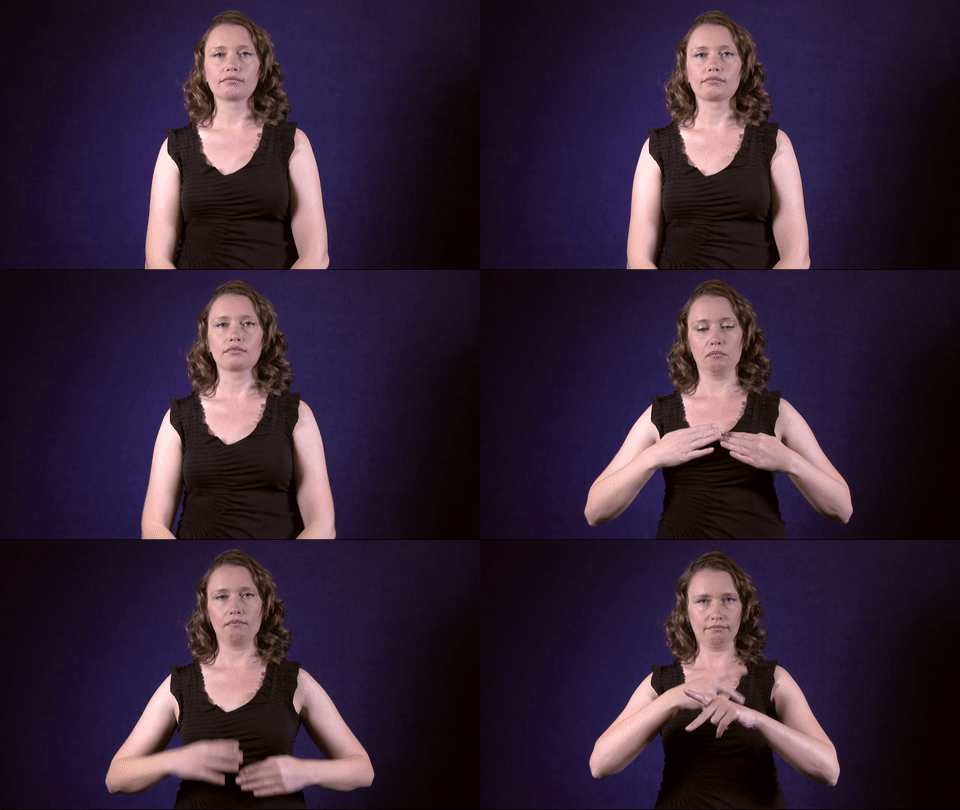
Definition: The general shape or form of a body.
Sign for BODY TYPE in ASL

Practice Activities:
Start by practicing the sign for BODY TYPE in ASL in front of a mirror. Focus on the handshape, movement, and placement to ensure accuracy. Repeat the sign multiple times slowly, and then increase speed while keeping clarity. Alternate your practice by using your dominant and non-dominant hand if you’re comfortable switching.
Create flashcards with different body types written in English on one side and try to sign them using the sign for BODYTYPE in ASL followed by descriptive adjectives like tall, short, slim, muscular, or curvy. This helps reinforce how the sign fits into more descriptive contexts. Pair it with common descriptions, such as “He has a strong BODY TYPE” or “Her BODY TYPE is athletic” and sign these as full sentences.
Use video recording to practice storytelling. Describe fictional characters and include elements like facial expressions, body classifiers, and the sign for BODY TYPE in ASL. For example, you can describe a superhero’s physical appearance or talk about a famous athlete and their build. Then rewatch to correct your fluency and expressiveness.
Try a matching game with a partner. One person signs a sentence with a specific body type while the other tries to write down or sign the correct corresponding adjective. Then switch roles. This activity strengthens receptive skills and expands vocabulary related to physical description.
Engage in a describing activity where you look at pictures of various people and sign observations using the sign for BODY TYPE in ASL. You can add signs for height, weight, gender, and muscle tone to build more detailed sentences. Make it fun by guessing celebrities based on signed descriptions.
End with a creative challenge: invent three unique characters. For each one, sign an introduction that includes their name, age, and BODY TYPE. Think about how classifiers can enhance each description. This will help bridge vocabulary, fluency, and creative signing.
Cultural Context:
In American Sign Language (ASL), the sign for BODY TYPE in ASL connects deeply with cultural values around identity, expression, and respect. The way people talk about body types in Deaf culture emphasizes inclusivity and individuality, reflecting a broader goal of self-expression through sign language.
Deaf spaces often highlight physical presence and visual language, making the concept of body type culturally relevant. The sign for BODY TYPE in ASL acknowledges how physical traits are viewed and respected within the community where visual diversity is always present and important.
Unlike spoken languages where tone or word choice might soften descriptions, ASL uses facial expressions and body movements to communicate nuance. This makes the sign for BODY TYPE in ASL more than a simple label—it becomes a meaningful, descriptive way to discuss someone’s physical features with respect and accuracy.
In the Deaf community, discussing body type doesn’t carry the same criticism or bias that might be more common in hearing cultures. The sign for BODY TYPE in ASL helps reinforce positive and neutral conversations around physical appearance. It’s a way to describe, not judge.
Using the sign for BODY TYPE in ASL supports communication that centers on acceptance and clarity. Since much of ASL conversation also relies on visual cues, understanding and accurately using this sign contributes to deeper connections. It helps both Deaf and hearing signers talk in respectful, descriptive ways.
ASL prioritizes clear visual communication, and the sign for BODY TYPE in ASL fits naturally into conversations about identity and self. When learning about physical descriptions, this sign helps children and adults alike to speak positively and confidently.
In Deaf education and social groups, talking about one’s body type with signs builds language fluency and personal confidence. The sign for BODY TYPE in ASL provides the vocabulary needed to foster these discussions in respectful environments, both in classrooms and social settings.
Media representation in the Deaf world often includes a variety of body shapes and sizes. The sign for BODY TYPE in ASL empowers those in the community to describe and celebrate these differences, emphasizing empowerment instead of stigmatization.
Signers who are new to ASL may find that learning the sign for BODY TYPE in ASL opens doors to conversations around wellness, clothing, activities, and community roles. Being able to express physical features respectfully can enrich everyday dialogue and deepen understanding.
Because ASL is deeply connected to visual identity, the concept of body type has cultural weight. The sign for BODY TYPE in ASL respects this significance while encouraging people to see diversity as natural and beautiful. It strengthens
Extended Definition:
The sign for BODY TYPE in ASL represents the concept of physical build, shape, or structure of a person’s body. This sign is used when discussing someone’s figure, frame, or body composition in both casual and formal conversations. Whether talking about health, fashion, or personality descriptions, this sign offers a way to describe physical traits respectfully and visually.
In American Sign Language, the sign for BODY TYPE combines motion and handshape to express the idea of form or build. The signer typically uses a gesture referencing the body to indicate shape or structure. While the actual sign may vary slightly depending on region or context, the meaning remains clear and consistent among Deaf and signing communities.
When using the sign for BODY TYPE in ASL, it helps to consider the context and tone. ASL relies not just on signs but also on facial expressions and body posture to convey meaning. Describing someone’s body type in a positive and neutral way is important for maintaining respectful communication within the Deaf community.
This ASL sign is often used in conversations about fitness, custom clothing, or self-image. For example, someone might describe their own body type or ask about someone else’s when discussing workout goals or suitable clothing fits. In these contexts, the sign for BODY TYPE in ASL becomes a functional and common part of everyday conversations.
Using this sign may also come up in medical or healthcare discussions where body composition affects health or treatment plans. Health professionals who are fluent in ASL might use the sign for BODYTYPE to explain BMI, muscle mass, or other physical indicators during appointments. Understanding and using this sign can enhance accessibility for Deaf patients and clients.
ASL is a visual language, and the sign for BODY TYPE visually mimics the idea of different body shapes. It is often accompanied by specific adjectives or classifiers to add more detail, like slim, broad, athletic, or curvy. These additions help give a more accurate description during the conversation.
The sign for BODY TYPE in ASL is also useful in educational settings, such as health classes or body-positive workshops focused on self-awareness and inclusivity. Teachers and presenters might use it to describe diverse body shapes represented within a group or visual material. This sign promotes a more inclusive learning experience by providing a way to discuss body diversity in ASL.
In social media videos and presentations interpreted in ASL, the sign for BODY TYPE is often included when talking about beauty standards, fashion advice, or diet culture. Influencers and educators who use ASL include this sign
Synonyms: build, shape, physique, form, frame
Educational resources: Find related learning materials in our course bank!
Want more? Check out some of our popular learning activities on the homepage!
Need to look up a sign? Use our highly rated dictionary: https://aslinteractive.com/best-asl-dictionary/
Follow us on tiktok: https://www.tiktok.com/@aslinteractive. More social media links at the bottom of this page!
Long-tail Keywords: what is the sign for body type in ASL, how do you sign body type in ASL, ASL sign for body type
Categories:
tags: Body, Appearance, Language Learning, Describing Characteristics, Sign Parameters
Parameters
*Handshape*:
The handshape used in the sign for BODY TYPE in ASL typically begins with both hands in open “B” handshapes, palms facing inward, showing the general contour of the torso. The hands can move downward slightly along the sides of the body to visually describe body structure.
In some variations of the sign for BODY TYPE in ASL, different handshapes may be added to indicate a specific build or size, such as showing muscularity or slenderness. This visual representation helps convey physical characteristics clearly and contextually.
*Palm Orientation*:
In the sign for BODY TYPE in ASL, the palm orientation typically starts with both hands open and facing inward toward the torso. This orientation aligns with the shape and outline of the body, helping convey the concept visually.
As you move your hands downward or trace the body outline, the palms stay facing inward. The sign for BODY TYPE in ASL uses inward-facing palms to emphasize the physical form being described.
*Location*:
The sign for BODY TYPE in ASL is typically made at the upper torso area, with movements traced along the body to indicate physical shape or form. It often begins at the chest or shoulders and moves downward, reflecting the outline of a person’s build.
When using the sign for BODY TYPE in ASL, the location centers around the trunk of the body, making it easy to pair with signs for physical traits or self-descriptions. Keep the hands close to the body without extending far into space.
*Movement*:
To perform the sign for BODY TYPE in ASL, start by placing both open hands, palms facing your torso, about shoulder width apart. Move your hands down alongside your upper body in a curved path, as if outlining the shape or form of a body.
This visual tracing motion helps communicate the idea of physical shape or form, which aligns with the concept of body type. The sign for BODY TYPE in ASL may slightly shift depending on context, but this movement captures the general meaning effectively.
*Non-Manual Signals*:
Facial expressions are key when showing the sign for BODY TYPE in ASL. Use a neutral or descriptive facial expression that matches the body type being discussed, such as slightly puffed cheeks for a fuller figure or a tightened mouth for a thinner frame.
Eye gaze should focus slightly downward or across the torso area, reflecting the subject of body shape. Appropriate non-manual markers help the viewer understand whether the sign for BODY TYPE in ASL is descriptive, comparative, or part of a broader explanation.
*Prosody, Dominant/Non-Dominant Hand*:
The sign for BODY TYPE in ASL typically uses both hands. The dominant hand and non-dominant hand form open B-handshapes, starting near the upper chest and tracing down the sides of the torso to outline the shape of a body.
This movement visually emphasizes body structure, perfect for conveying the concept in the sign for BODY TYPE in ASL. Facial expression and body posture help express specific types or traits being described.
Tips for Beginners:
Learning the sign for BODY TYPE in ASL can help you describe yourself and others in a respectful, inclusive way. The concept of body type might involve a combination of signs such as BODY and TYPE or CATEGORY, or even rely on descriptive classifiers to convey specific physical characteristics. When starting out, practice the individual signs first to build comfort with handshape and movement before combining them naturally.
Take note that the sign for BODY involves a closed-5 hand moving down the center of the torso, showing the general body area. For TYPE, you’ll typically use an “F” handshape from both hands that twist slightly as they meet, showing categorization or style. When you use the sign for BODYTYPE in ASL, avoid rushing through it. Make sure each sign is deliberate and flows smoothly—especially important when transitioning into whatever classifiers or descriptors you add to indicate the specific type.
Many beginners have trouble with clarity because they don’t fully form the handshapes, especially the “F” used in TYPE. Always keep your fingers clearly in place and avoid floppy or loose hand movements. Use a mirror or record yourself on video to check that your handshapes and placements are accurate.
Another key to mastering the sign for BODY TYPE in ASL is using facial expressions and body language to enhance the descriptive part. For instance, showing whether someone is tall and slim vs. short and muscular often requires more than just signing BODY + TYPE. Use appropriate size and shape classifiers, and make the shape visually evident with your hands.
Context is important in any ASL conversation. The sign for BODY TYPE in ASL may be followed by more descriptive signs or classifiers depending on what you’re trying to say. Watch fluent signers and notice how they smoothly incorporate this sign into broader descriptions. Practice with expressive variation and keep a respectful tone in both sign and facial expression.
Connections to Other topics:
The sign for BODY TYPE in ASL connects closely with other signs that describe physical appearance, identity, and self-concept. It often pairs well with signs like BODY, SHAPE, SIZE, and DESCRIPTION. Understanding how to describe people accurately and respectfully in ASL depends on combining these individual signs to express more nuanced meanings.
In conversations about health, fitness, or fashion, the sign for BODY TYPE in ASL might be used with signs such as EXERCISE, DIET, or CLOTHES. These combinations can help illustrate how BODY TYPE influences clothing choices or wellness goals. For example, a signer may indicate their BODY TYPE before expressing preferences in shopping or personal care.
The sign also connects with cultural topics in the Deaf community, where appropriate visual descriptors are important. Describing someone’s BODY TYPE respectfully aligns with ASL’s value of using visual cues for identification without judgment. Signs for THIN, MUSCULAR, STOCKY, or SLIM often appear in combination with the sign for BODY TYPE in ASL to extend the idea into specific categories.
Learners may encounter the sign for BODYTYPE in discussions of body image, diversity, or inclusion in educational or social justice contexts. This promotes awareness of how ASL can convey both literal and socially meaningful concepts. It can also link to signs like BEAUTIFUL, DIFFERENT, or STRUGGLE in conversations around body positivity.
For more advanced signers, the sign frequently appears as part of larger narratives or descriptive storytelling. In this context, its use might shift subtly depending on the character or message being conveyed. Understanding the role of classifiers in shaping BODY TYPE concepts also supports deeper fluency, allowing for dynamic and expressive descriptions.
By connecting to broader vocabulary around health, fashion, identity, and acceptance, the sign for BODY TYPE in ASL provides learners with essential tools for communication and cultural sensitivity.
Summary:
The sign for BODY TYPE in ASL incorporates descriptive classifiers and non-manual markers to indicate different physical forms. It’s not usually represented with a single fixed sign but instead constructed using a combination of signs such as BODY followed by descriptive classifiers like size, shape, and proportion indicators.
To sign BODY, you typically use two flat B-handshapes. They lightly touch the upper chest and then the stomach to convey the idea of the human body. From there, you incorporate descriptors to build on the concept of a specific body type.
Classifier constructions, known as CLs in ASL linguistics, come into play right after the sign BODY. These classifiers are shaped and moved to represent the physical characteristics of a person’s form. For example, puffed cheeks and rounded handshapes may show a large body type while slim, tapered handshapes with tightened posture can imply a slender form.
The sign for BODY TYPE in ASL is not set in stone because ASL is highly visual-spatial and contextual. This means the language relies heavily on the signer’s intent and descriptive accuracy rather than rigid vocabulary. The approach for BODY TYPE will vary depending on context, just as the actual term varies culturally and socially.
Cultural attitudes toward body image impact how the concept of BODY TYPE is signed in ASL. Because the Deaf community emphasizes visual clarity and representation, signs for BODY TYPE often prioritize physical accuracy over euphemism. This can feel more direct than spoken language but aligns with Deaf culture’s valuing of transparency.
Gender considerations may also influence the sign. For example, when describing traditionally masculine or feminine body types, signers may incorporate gestures that reflect those cultural norms. These encompass wider shoulders for masc-presenting bodies or curvier outlines for femme-presenting ones.
Non-manual signals such as mouth movements, posture, and facial expressions give additional meaning to the same sign. A sign for BODY TYPE that shows exaggerated curves paired with puffed cheeks might signal comedic or affectionate exaggeration. On the other hand, a neutral face might indicate merely a physical description without emotional tone.
Signs related to BODY TYPE in ASL often include ones like FAT, THIN, TALL, SHORT, and STRONG. These signs offer flexibility in customizing a message about physical appearance. While signing BODY TYPE, you can attach these related signs to add layers of description.
ASL grammar places adjectives after the noun. So BODY comes first, then descriptive classifiers or adjectives follow to illustrate the type. This linguistic structure guides how signers convey BODY TYPE naturally within a full sentence.
An example would look like: BODY, then classify with your hands to show small frame, followed by the sign for SHORT. This would give the equivalent meaning of “short, petite body type” in English but structured in ASL syntax.
The evolution of the sign for BODY TYPE in ASL coincides with body-positivity movements. While older sign forms might have leaned into stereotypical depictions, modern signers take greater care in being inclusive and sensitive. This broadens the descriptive range, allowing signers to represent body diversity without negative bias.
Size often intersects with expressions of identity in ASL, especially within the LGBTQ+ Deaf community. Signs of BODY TYPE sometimes include indications of non-binary or gender-diverse forms using subtle variances like posture or body outline classifiers. These nuances reflect the intersectional identity that ASL allows speakers to embrace visually.
In Deaf art and storytelling, BODY TYPE in ASL becomes even more expressive. Visual poetry in ASL may highlight bodytype by combining rhythmic hand movement, body orientation, and expressive classifiers. This level of performance shows how bodily form becomes symbolic and literal at once in sign language.
Educational contexts also shape how students learn to sign about BODY TYPE in ASL. Teaching involves showing how to pair descriptive classifiers with core signs like BODY. Students are guided through understanding how space and physicality can be used to map dimensions.
Deafspaces, where architecture and the Deaf body intersect, further highlight the importance of BODY TYPE in ASL discourse. For example, building design includes allowances for broader or narrower bodies and these considerations show up in spatial references between signers.
Applied linguistics links the sign for BODY TYPE in ASL to discussions about embodiment in language. Because ASL directly maps communication onto the body, it’s uniquely equipped to discuss bodytypes. Analysis of BODY TYPE signs yields insight into how the body is both the tool and topic of communication.
In signed storytelling or informal conversation, the sign for BODY TYPE in ASL may be expanded with dramatized movement. A signer might lean back, tighten shoulders, or mimic gait styles to enhance the depiction of a body type. These embellishments enrich communication through performance.
Community narratives around fatness, thinness, recovery from eating disorders, or body acceptance all affect how signs for BODY TYPE in ASL are interpreted. Signers learn to navigate personal, social, and symbolic meanings simultaneously while describing themselves or others.
Physically describing oneself using ASL
Want more? Check out some of our popular learning activities!
ASL Interactive Resources
ASLInteractive YouTube Channel
Follow us on tiktok: @aslinteractive.com
Follow us on Instagram: aslinteractive
Facebook page: aslinteractive
Facebook group: aslinteractive
LInkedIn: ASL Interactive LLC
Twitter: @ASL_interactive
*Some information on this page is AI-generated. AI can make mistakes. Please check the information.


Responses