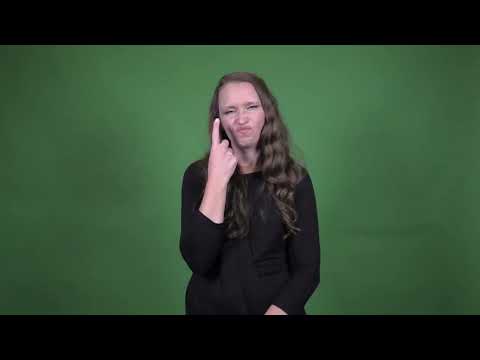
Definition: Wanting something new due to boredom.
Sign for BORED WANT NEW in ASL

Practice Activities:
To build confidence with the sign for BORED WANT NEW in ASL, start by practicing each sign individually in front of a mirror. Focus on your facial expressions, especially for BORED, which uses a clear display of disinterest or irritation. Repeat the full phrase slowly, then at conversational speed, checking your handshape and movement each time.
Create flashcards with each of the signs in the phrase and shuffle them to create different combinations. This will help you recognize each one individually while staying familiar with their sequence in the sign for BORED WANT NEW in ASL. Try signing the phrase while watching a silent video and imagining the people in the video are tired or uninterested, reinforcing your understanding of context.
Use example sentences such as: “I am bored. I want something new.” or “School is boring, I want a new activity.” These simple phrases offer real-life contexts to practice the sign for BORED WANT NEW in ASL. Video record your practice and review your signing for accuracy in facial expression and timing.
Set up a role-play activity with a partner where you describe being stuck inside on a rainy day. Use the signs BORED, WANT, and NEW to show your feelings and what you’re hoping for. Challenge your partner to continue the dialogue using different activities or situations that match the mood. You can take turns acting and interpreting.
Create a short story about a character whose routine becomes too predictable. In your story, use the sign for BORED WANT NEW in ASL during key moments where the character expresses a need for change. Practicing storytelling with emotions gives you the opportunity to layer your signing with expressive elements and natural flow.
End each practice session by fingerspelling a new activity or item the character could want and then describing it using the full phrase. This reinforces everyday relevancy and expands vocabulary.
Cultural Context:
In Deaf culture, expressing emotions and desires through American Sign Language is essential for clear and meaningful communication. The sign for BORED WANT NEW in ASL captures a common feeling many experience—boredom and a craving for something fresh. This phrase is especially important in social settings, classrooms, and even online conversations where expressing dissatisfaction in a visual language helps convey genuine emotions instantly.
When someone uses the sign for BORED WANT NEW in ASL, they are not just conveying boredom. They are also showing a desire for change or something more stimulating. In American Sign Language, combining feelings with wants gives depth to the message. Deaf signers often use this phrase to indicate they are tired of the current activity and ready for something different.
In the Deaf community, it’s common to be direct and expressive. That’s why the sign for BORED WANT NEW in ASL is so frequently used. Whether talking about being bored with a TV show, an event, or even just the day’s routine, signers use this phrase to communicate a need for something different in a visually expressive way.
This phrase isn’t limited to casual use; it can be part of classroom instruction or storytelling. Teachers in Deaf education settings may use the sign for BORED WANT NEW in ASL when discussing emotions or discussing how to advocate for change. It’s also commonly used by children and teens who want to express their feelings in a quick and clear way.
Pop culture and social media have broadened the use of the sign for BORED WANT NEW in ASL. With platforms like TikTok and YouTube, Deaf and hearing creators alike use this sign to share skits, reactions, or vlogs that reflect their mood. It has become a socially accepted and even playful way to show personality through signed language.
In daily interaction, the phrase helps avoid awkwardness and encourages transparent communication. The sign for BORED WANT NEW in ASL allows friends and family members to understand someone’s emotional state quickly. This strengthens relationships and helps avoid misunderstandings in both formal and casual settings.
Language access is important in inclusive environments. That’s why understanding signs like BORED WANT NEW in ASL supports inclusivity, especially in mixed Deaf and hearing groups. When everyone can visually recognize signs of emotion and desire, it bridges communication gaps that otherwise separate communities.
Culturally, using expressive phrases like the sign for BORED WANT NEW in ASL also showcases the richness of American Sign Language. ASL is not just a direct translation of English.
Extended Definition:
The sign for BORED WANT NEW in ASL combines several concepts to express a feeling many people experience when they’re tired of routine and crave something different. This phrase reflects the emotional state of being uninterested and the desire for something fresh. In American Sign Language, complex ideas are often broken down into simpler signs that are strung together to communicate more nuanced meanings.
In this phrase, the sign for BORED generally starts by pointing your index finger to the side of your nose and twisting it slightly. This sign mimics the idea of being tired or uninterested in what’s around you. As with many ASL signs, facial expression plays a crucial role — a bored expression helps emphasize the feeling behind the word and adds depth to communication.
Immediately following is the sign for WANT. This sign is made by holding your hands out in front of you, palms up, and pulling them back slightly toward your body with a grabbing motion. This sign gives the sense of desire or longing, which helps convey the personal emotional state following the sign for BORED. When used together, these two signs demonstrate the mental state of being dissatisfied and looking for a change.
The last sign in the phrase is NEW, which involves cupping one hand and using the other hand’s fingertips to scoop into the palm, as though bringing something fresh into view. In this context, NEW acts as the goal or aspiration — a desire for a novel experience or situation. When used alongside BORED and WANT, it completes the message of seeking something different to escape monotony.
When you sign BORED WANT NEW in ASL, these three ideas are strung together fluidly. ASL follows its own unique grammar, so the order and expression may be different from English, yet the message is clear through context and non-manual markers like facial expressions. This phrase can be used casually to express dissatisfaction with a routine day, or in deeper conversations about life changes, such as changing jobs or trying new experiences.
Learners of ASL often find that combining multiple signs to express a single emotion or thought opens up more expressive possibilities. The sign for BORED WANT NEW in ASL shows how effectively the language captures complex emotional states without long explanations. Instead, the signer’s hands, body language, and facial expressions do the work together.
This expression is common among ASL users and can be used across various contexts: storytelling, chatting with friends, or in educational settings. Understanding how to use the sign for BORED WANT NEW in ASL
Synonyms: bored, uninterested, disinterested, indifferent, apathetic
Educational resources: Find related learning materials in our course bank!
Want more? Check out some of our popular learning activities on the homepage!
Need to look up a sign? Use our highly rated dictionary: https://aslinteractive.com/best-asl-dictionary/
Follow us on tiktok: https://www.tiktok.com/@aslinteractive. More social media links at the bottom of this page!
Long-tail Keywords: what is the sign for bored want new in ASL, how do you sign bored want new in ASL, ASL sign for bored want new
Categories:
tags: emotions, feelings, desires, everyday activities, language learning
Parameters
*Handshape*:
The handshape used in the sign for BORED WANT NEW in ASL varies slightly for each sign. For BORED, the dominant hand uses an index finger handshape, touching and twisting on the side of the nose to convey the feeling of boredom. WANT uses both hands in a relaxed claw shape, palms up, then pulled toward the body.
For NEW, one hand forms a flat base while the other scoops upward with a curved palm like a soft cupped hand. The handshapes work together to show the full meaning in the sign for BORED WANT NEW in ASL, with expressive motions and accurate palm orientation playing a key role.
*Palm Orientation*:
For the sign for BORED, the index finger of your dominant hand is extended and touches the side of your nose, with the palm facing inward toward your face. For WANT, both hands are open with palms facing up, then curl fingers slightly as if pulling something toward your body. In the sign for NEW, one hand scoops from the palm of the base hand, which is held flat and upward-facing. Each sign in the sign for BORED WANT NEW in ASL has a specific palm orientation that conveys clear meaning.
*Location*:
The location for the sign for BORED WANT NEW in ASL involves different areas on the body. BORED is signed near the side of the nose, using the index finger to twist slightly to indicate disinterest. WANT is centered in front of the chest, with both hands open and pulling toward the body. NEW is signed near the non-dominant palm, brushing the dominant hand upward across the open palm to show receiving something fresh or unfamiliar. These signs are each placed clearly in the signing space between the chest and face.
*Movement*:
To perform the sign for BORED WANT NEW in ASL, start with the BORED sign by placing your index finger near your nose and twisting it slightly. This movement reflects disinterest or a sense of being tired of something. Follow with the WANT sign by holding both hands open, palms facing up, and then pulling them slightly toward yourself with curved fingers.
Complete the phrase with the NEW sign: place your dominant cupped hand into the palm of your non-dominant hand, as if scooping something new up. The sequence of movements for the sign for BORED WANT NEW in ASL clearly communicates a desire for something fresh or different out of boredom ➡️ ✨.
*Non-Manual Signals*:
When using the sign for BORED WANT NEW in ASL, your non-manual signals play a key role in expressing the mood and intensity. Show a disinterested or tired facial expression during BORED by slightly narrowing the eyes and turning the head.
For WANT, lean slightly forward with raised eyebrows to show desire. When signing NEW, a hopeful or curious expression enhances the message. These non-manual cues support the clarity and emotion behind the sign for BORED WANT NEW in ASL ✨.
*Prosody, Dominant/Non-Dominant Hand*:
The sign for BORED WANT NEW in ASL involves distinct hand movements for each concept. For BORED, the dominant hand is in an index finger shape and twists near the side of the nose, indicating disinterest. WANT uses both hands, palms up, pulling slightly inward toward the body to show desire. NEW is signed by scooping the dominant hand upward into the non-dominant bent hand, like introducing something fresh or different.
The dominant hand plays a key role in all three signs in the sign for BORED WANT NEW in ASL. Each sign is fluid yet clearly separated, with natural prosody that reflects emotional engagement. Facial expressions enhance meaning—BORED has a frowning or uninterested face, WANT shows desire, and NEW suggests excitement or interest .
Tips for Beginners:
When learning the sign for BORED WANT NEW in ASL, it’s helpful to break down each sign individually, then practice them together smoothly. BORED is signed by placing your index finger against the side of your nose and twisting it slightly. The expression you use is just as important—make sure to show a tired or uninterested face to match the meaning.
For the sign WANT, place both open hands in front of you with palms facing up, then pull them slightly back toward your body, curling your fingers as if you’re grasping something. Avoid making a full fist—keep it loose and natural. The motion should be quick but not rushed. Clarity in handshape is key to confident signing.
The sign for NEW is made by sliding one curved hand under the other open flat hand, as if scooping up something new. The motion looks like presenting something just discovered. Make sure the top hand stays stable and flat while the bottom hand moves. Precision here helps make the meaning clear instantly.
When combining the signs for the full phrase, keep your signing space consistent and make sure your transitions are smooth. Facial expression plays a big role in signing the phrase naturally. Show disinterest during BORED, intent during WANT, and a subtle spark of interest when signing NEW.
A common mistake with the sign for BORED is placing the finger against the mouth rather than the nose—make sure you’re touching the side of the nose for clarity. Practice in front of a mirror to check your expressions and positioning. To master the sign for BORED WANT NEW in ASL, sign slow and deliberately first, then build speed. Repetition, expressive signing, and real-life practice will cement your understanding. Use every opportunity to apply the sign for BORED WANT NEW in ASL during casual conversations or practice sessions with peers.
Sign for BORED WANT NEW in ASL, sign for bored in ASL, sign for want in ASL, sign for new in ASL
Connections to Other topics:
The sign for BORED WANT NEW in ASL brings together three individual signs that express internal state, desire, and preference for change. BORED connects to facial expressions in ASL, as the sign relies not just on the finger movement from the nose outward, but also a disengaged or uninterested facial expression. It’s a strong example of how ASL incorporates facial grammar to enhance meaning.
WANT is a foundational verb in ASL that often connects with other verbs or concepts to form desire-based phrases. For example, adding FOOD to WANT creates the expression WANT FOOD, which is frequently used in everyday conversations. The WANT sign opens a wealth of opportunities for learning how verbs interact with nouns in ASL to form coherent discourse.
NEW signals change or replacement, and it shares conceptual ties with signs like CLEAN or START—both of which carry a sense of beginning or refreshment. For example, NEW combined with JOB forms NEW JOB, which uses a similar sweeping hand motion to convey the idea of something fresh or recently acquired. When placed together as BORED WANT NEW, this phrase expresses a human need for variety or novelty, which is highly relevant in casual and conversational ASL usage.
The sign for BORED WANT NEW in ASL can also be broken into chunks that recur in other compound forms. BORED can be used with SCHOOL to express BORED WITH SCHOOL, while WANT meshes easily with items like MOVIE or MUSIC, illuminating how desires are expressed fluidly in ASL. NEW often precedes concepts like PHONE or CAR, expressing acquisition or change.
Understanding the sign for BORED WANT NEW in ASL helps learners see how emotions, desires, and adjectives work in tandem in ASL syntax. It’s a perfect phrase for practicing expressive non-manual signals, such as eye gaze and head nodding. This phrase builds a strong foundation for conversations about preferences, changes, and emotional states in daily interaction.
Summary:
The sign for BORED WANT NEW in ASL combines concepts that reflect emotion, desire, and novelty. Each sign contributes unique grammar and prosody to convey a context-rich message. When produced together, these signs mirror how Deaf people may naturally express restlessness or a desire for change.
The sign for BORED is performed by using the dominant hand in an index finger shape, touching the side of the nose, then moving slightly outward. The facial expression plays a huge role; the signer’s face often shows a lack of interest, disengagement, or irritation. This emotional nuance is deeply embedded in the expression of the sign.
In grammatical usage, BORED tends to be placed early in a sentence when signed in ASL. ASL follows a topic-comment structure, so this fits naturally. Depending on the context, this sign may also appear alongside other emotion signs or visual modifiers communicated through the face and body.
WANT is signed with open hands, palms facing upward, then curving the fingers inward like pulling something toward the body. The motion signals desire or craving for something not yet acquired. This sign is often used in tandem with objects, actions, or abstract concepts.
Facial expression complements the sign WANT by intensifying the degree of desire. A person might widen their eyes or lean forward as if yearning for something specific. This visual component makes the sign richer and clearer to the viewer.
The sign for NEW uses both hands. The non-dominant hand stays flat and palm-up, while the dominant hand, also flat, scoops upward from the palm. The motion represents adding something new or introducing a change into one’s experience.
When signing NEW, the body posture can subtly shift to reflect excitement or anticipation. The facial expression might accompany it with a soft smile or hopeful eyes. The combination of all aspects builds a vivid narrative for the observer.
The full phrase sign for BORED WANT NEW in ASL requires a refined understanding of emotion, intent, and grammar. It begins with expressing dissatisfaction (BORED), then moves to indicating a desire (WANT), and ends with requesting a replacement or change (NEW). Used together, these signs reflect an emotional journey.
Giving that ASL is a visual language, how smoothly one transitions from BORED to WANT to NEW matters. Cohesion is created by facial expressions, tempo, and spatial use. The rhythm and clarity affect how well a viewer understands both the literal and emotional message.
In Deaf culture, this phrase might arise in casual conversations about routine, relationships, or media. It speaks to the shared human experience of desiring something fresh in times of monotony. This shared context builds rapport and connection in social settings.
The sign for BORED WANT NEW in ASL also exists within the realm of expressive storytelling. ASL narratives often include emotions as pivot points before transitions. For instance, during a visual story, a signer may communicate “bored of the same weekend,” followed by expressions of craving a “new adventure.”
This curated sequence can also be used in drama and Deaf performance art. The emotive potential of these signs allows actors to convey internal states vividly onstage. Their nuanced delivery becomes part of storytelling that transcends spoken language.
From a linguistic perspective, all three signs belong to different semantic fields: emotion, desire, and novelty. However, their coordination creates a self-contained message that ABR (action, behavior, reaction) linguistics can analyze. These signs reveal shifts in valence from negative to positive.
The sign for BORED involves more than a handshape; it positions signs in space to illustrate psychological states. Linguists often focus on how ASL expresses subjective experiences, and this phrase is a prime example of mapping emotion onto the physical body. The head tilts, brows shift, and eyes often narrow.
WANT is a high-frequency verb in ASL, often appearing in everyday language and education. It supports a wide range of sentence structures and collocations. When followed by NEW, it informs the receiver that something currently present is unsatisfactory.
NEW as a sign aligns with concepts of change, openness, and progression. When signed after BORED and WANT, it points toward a resolution to dissatisfaction. This combination mirrors the syntax of many English phrases but uses ASL-specific grammar, spatial expressions, and facial emotions.
Many related signs can expand the contextual reach of the phrase sign for BORED WANT NEW in ASL. For instance, signs like TIRED, SAME-OLD, or NOTHING-TO-DO can support or replace BORED depending on the situation. Similarly, CRAVE, NEED, or HOPE can replace WANT for nuanced expression.
In ASL instruction, particularly for intermediate learners, this phrase offers a strong template for teaching sentence fluency and emotional layering. Teachers often use it to illustrate how personal expression depends on more than exact translations. It embodies how meaning builds cumulatively, not just sign-for-sign.
Applied linguistics connects to this sign phrase via technology and translation sciences. Caption
Want more? Check out some of our popular learning activities!
ASL Interactive Resources
ASLInteractive YouTube Channel
Follow us on tiktok: @aslinteractive.com
Follow us on Instagram: aslinteractive
Facebook page: aslinteractive
Facebook group: aslinteractive
LInkedIn: ASL Interactive LLC
Twitter: @ASL_interactive
*Some information on this page is AI-generated. AI can make mistakes. Please check the information.


Responses