Sign for BORN ARRIVED 2 in ASL | 🤱 ASL Dictionary

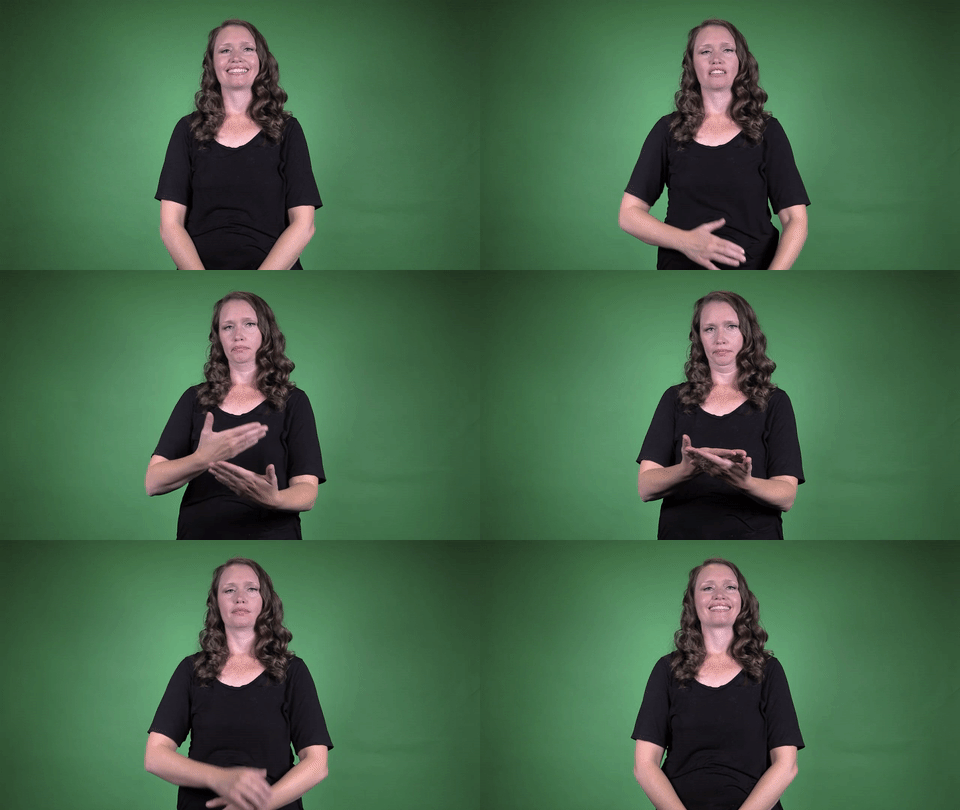
Definition: Arrived through birth v2.

Sign for BORN ARRIVED 2 in ASL

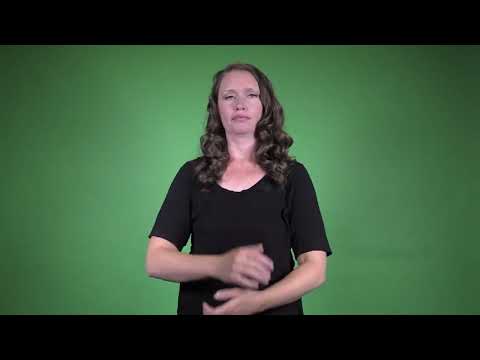
YouTube player

Practice Activities:

To begin practicing the sign for BORN ARRIVED 2 in ASL, start by isolating the sign. Stand in front of a mirror and repeatedly perform the sign, ensuring your handshape, movement, and facial expression match the proper usage. Practice the motion smoothly so it becomes more natural with repetition.

Next, use the sign in simple sentences describing life events. For example, try signing phrases like “My brother BORN ARRIVED 2 April” or “Baby BORN ARRIVED 2 hospital.” Use photographs or drawings of babies and families as visual prompts to create new sentences using the sign. This helps simulate real-life scenarios and improves recall.

Work with a practice partner and take turns telling each other about family members or friends who were born recently. Have them respond by identifying time and place details in ASL. If practicing in a classroom, set up role-plays where one person acts as a nurse or family member announcing the birth of a child.

Try storytelling exercises by creating short personal stories about your own birth or births in the family using the sign for BORN ARRIVED 2 in ASL. Visualize settings like hospitals or homes and incorporate other relevant signs like MOTHER, FATHER, DOCTOR, or DATE. This will allow language learners to solidify understanding of timeline and context.

Create flashcards with birth-related scenarios and play a charades-style game where students pick a card and act out the event, using the keyword sign in context. For added challenge, set a time limit for signing each phrase correctly.

When watching vlogs or narratives in ASL about family life or personal history, pause and observe how the sign for BORN ARRIVED 2 in ASL is used. Mimic the signer’s flow to build fluency and confidence in natural language use.

Cultural Context:

The sign for BORN ARRIVED 2 in ASL offers insight into how Deaf culture expresses concepts related to birth, arrival, and origin. This specific version highlights a unique visual approach that reflects not just a literal meaning, but a deeper cultural interpretation rooted in American Sign Language. Signs for concepts like born or arrived may vary depending on the context, region, or community norms. This variation reflects the rich diversity and creativity found in ASL usage across the United States.

Deaf culture places strong emphasis on visual storytelling, and the sign for BORN ARRIVED 2 in ASL demonstrates this value. It is not simply about the motion of being born or arriving but includes facial expressions, body posture, and sign movement that convey emotional tone or contextual meaning. This makes the sign a powerful tool for narrative expression during conversations, storytelling, or even when sharing personal experiences.

In Deaf communities, storytelling is a cornerstone of communication and education. Signs like the sign for BORN ARRIVED 2 in ASL carry meanings that may go beyond English translations. For example, this sign could represent a literal birth or arrival, but also a figurative beginning—like arriving into a new role, stage of life, or identity. These nuances make ASL a deeply expressive language with multiple layers of meaning for a single concept.

When teaching ASL, educators and native signers often emphasize the cultural context behind certain signs. The sign for BORN ARRIVED 2 in ASL helps learners understand that signing is not just a substitution for English words. It reflects values, shared experiences, and generational knowledge passed along within the Deaf community. Gaining fluency in ASL involves more than mastering vocabulary—it demands cultural fluency as well.

The importance of the sign for BORN ARRIVED 2 in ASL is further evident during events like Deaf history presentations, introductions, or when telling one’s life story. Sharing a birthplace, arrival time, or origin is often expressed with this sign. It connects individuals to their community and helps express identity. ‍

This sign is also commonly used during introductions in ASL storytelling or narratives about family history. When someone signs about when or where someone “was born” or “came into the world,” the sign for BORN ARRIVED 2 in ASL might be the go-to variant depending on context and region. It shows the signer’s connection to traditional ASL usage and reflects linguistic choices influenced by cultural nuances.

Face-to-face

Extended Definition:

The sign for BORN ARRIVED 2 in ASL is a variation of the sign used to express the concept of being born or arriving, particularly in narratives or descriptive contexts. This version tends to emphasize the action or event of arrival, often when referring to birth or the beginning of someone’s presence in a location or story. It combines hand movements that reflect the transition or motion involved in being born or arriving somewhere.

In everyday American Sign Language, the sign for BORN ARRIVED 2 in ASL helps provide nuance when storytelling or explaining life events. It can be used to describe a baby being born, a person arriving at a destination, or even a symbolic arrival, like someone entering a situation or phase of life. This version gives the signer a visually descriptive way to express deeper layers of meaning.

The handshape for this sign often uses one hand as a base, representing the surface or the place of arrival, while the other hand moves underneath or forward to suggest emergence. This adds an expressive element to the sign that visually mimics the idea of being born or coming into view. Facial expressions and body posture are also important parts of executing the sign clearly and meaningfully.

Because American Sign Language is highly visual and context-sensitive, signs like BORN ARRIVED 2 in ASL are especially useful in stories, conversations, and explanations where the speaker wants to be vivid or dramatic. For example, it might be used in narratives that describe a significant moment such as the birth of a family member or arriving in a new country. Interpreters might also use this variation to clarify tone when translating between English and ASL.

Children learning sign language can benefit from seeing this sign used in context, especially in books and videos that tell stories using ASL. The movement and expression involved help young learners connect language with meaning in ways that support memory and engagement. Teachers and caregivers often use the sign for BORN ARRIVED 2 in ASL when introducing vocabulary related to family, travel, or seasons.

While one standard sign exists for born or arrive, this version helps create a stronger visual image and may vary slightly between regions or communities. Regional and generational differences can influence how this sign appears, though the basic components remain recognizable. Deaf culture encourages flexibility in expression, and signs like this play an important role in sharing personal experiences.

Using the sign for BORN ARRIVED 2 in ASL in social media posts or storytelling videos can capture attention and add emotional depth. Content creators who use

Synonyms: born, delivered, entered, came into being, brought into the world

Educational resources: Find related learning materials in our course bank!

Want more? Check out some of our popular learning activities on the homepage!

Need to look up a sign? Use our highly rated dictionary: https://aslinteractive.com/best-asl-dictionary/

Follow us on tiktok: https://www.tiktok.com/@aslinteractive. More social media links at the bottom of this page!

Long-tail Keywords: what is the sign for born arrived in ASL, how do you sign born arrived in ASL, ASL sign for born arrived

Categories:

tags: Family, Occasions, Life milestones, Birth, Relationships

Parameters

*Handshape*:

The handshape for the Sign for BORN ARRIVED 2 in ASL involves one hand forming a flat “B” shape, palm facing up, positioned horizontally to represent a surface like the ground. The other hand uses a flat “B” handshape as well, held palm down, and moves down past the stationary hand as if emerging or arriving underneath it.

This sign visually represents the concept of birth or arrival from one place to another. The consistent use of flat “B” handshapes helps convey the directionality and motion essential to the Sign for BORN ARRIVED 2 in ASL .

*Palm Orientation*:

For the sign for BORN ARRIVED 2 in ASL, the dominant hand typically begins palm facing up, while the non-dominant hand is palm facing down, representing a flat surface. As the sign is executed, the dominant hand moves palm-upward under the non-dominant hand to simulate the concept of being born or arriving.

This palm orientation enhances the meaning in the sign for BORN ARRIVED 2 in ASL by visually representing movement from one place to another, emphasizing emergence or entry. The upward-facing dominant hand plays a critical role in expressing directionality and intent within the concept.

*Location*:

The sign for BORN ARRIVED 2 in ASL takes place primarily in front of the torso, approximately at waist to mid-chest height. The dominant hand moves from the non-dominant side toward the body, simulating an action of arrival or emergence.

This location allows the sign for BORN ARRIVED 2 in ASL to effectively convey the concept of something coming into existence or entering a space. The movement and hand positioning stay close to the core of the body, helping maintain clarity and visibility.

*Movement*:

The sign for BORN ARRIVED 2 in ASL begins with the dominant flat hand, palm facing up, positioned under the non-dominant flat hand, which acts like a barrier or surface. The dominant hand then moves forward and underneath the non-dominant hand, mimicking the action of arriving or being born from beneath something.

This movement visually represents emergence or arrival. The sign for BORN ARRIVED 2 in ASL captures the concept of being born into the world or arriving from another place with smooth, natural motion.

*Non-Manual Signals*:

The non-manual signals for the sign for BORN ARRIVED 2 in ASL include a calm and neutral facial expression, reflecting a matter-of-fact tone. Slight head movement downward or forward may accompany the sign to indicate arrival or transition.

Eyebrows remain neutral or slightly lowered to emphasize the past nature of the event. The overall facial demeanor should remain consistent to support clarity and accuracy when using the sign for BORN ARRIVED 2 in ASL ➡️ .

*Prosody, Dominant/Non-Dominant Hand*:

The dominant hand is flat and palm-up, while the non-dominant hand is also flat, palm-down, held horizontally. For the sign for BORN ARRIVED 2 in ASL, the dominant hand starts underneath the non-dominant hand and slides forward, passing under it and out. This fluid motion represents something emerging or arriving.

The movement and hand positioning in the sign for BORN ARRIVED 2 in ASL can also suggest the idea of birth or arrival into a new space or context. Keep eye contact and neutral facial expressions for clarity and emphasis.

Tips for Beginners:

When learning the sign for BORN ARRIVED 2 in ASL, it’s important to focus on the directionality of the movement. This particular variation involves placing your dominant hand palm-down and sliding it under the non-dominant hand, which is held flat and palm-down as well. The movement should feel smooth and somewhat symbolic of arriving through or being born into a place or situation, which gives it a nuanced meaning distinct from the base signs “born” and “arrived.”

Begin practicing the sign slowly while facing a mirror to ensure the motion is fluid and natural. A common mistake is to raise the dominant hand too high or to bend the wrist unnaturally, which disrupts the visual clarity of the sign. To avoid confusion, keep both hands relaxed and make sure the palm orientation and handshape are consistent with standard ASL structure.

Facial expressions matter a lot when expressing the sign for BORN ARRIVED 2 in ASL, especially when used in storytelling or recounting past experiences. A soft expression or a slight nod may accompany the sign to add emotional context. Don’t undervalue this element—it enhances the meaning and shows conversational fluency

Another helpful tip is to watch multiple native signers and see how they incorporate signs like this in context. The sign for BORN ARRIVED 2 in ASL may be used in various narratives, so noticing subtle differences in execution can deepen your understanding. Join an online ASL community or attend meetups to see the sign in live use. Repetition in natural dialogue will help reinforce accuracy.

Lastly, always prioritize clarity over speed. While it might be tempting to sign quickly, taking the time to execute the movements properly ensures you’re understood and respectful of ASL grammar and structure.

Connections to Other topics:

The sign for BORN ARRIVED 2 in ASL connects easily to concepts dealing with life events, transitions, and arrivals. In ASL, sequences showing progression or movement such as someone being born or arriving are often expressed with directional or spatial verbs. This sign is contextually tied to storytelling or narrative structures, especially when recounting personal histories or cultural backgrounds.

This sign shares elements with signs like BIRTH, ARRIVE, and COME, so it provides a useful building block for forming more complex expressions involving origins or beginnings. For example, when combined with country or city signs, the sign for BORN ARRIVED 2 in ASL can describe someone’s birthplace in clear, concise ASL syntax. It can also be used in timelines to explain a person’s life milestones.

A related expression includes signs like GROW-UP where a signer might sequence being born, arriving at a place, and growing up there. This use highlights the temporal relationship between events in a person’s life, and the transition from one stage to another, reinforcing spatial grammar in ASL. These sequences can be anchored in specific shoulder shifts or placements in signing space.

This sign also connects with educational topics such as family genealogy, immigration stories, or medical contexts such as childbirth. In multilingual or multicultural settings, the sign for BORN ARRIVED 2 in ASL can illustrate one’s cross-cultural journey, especially when paired with other identity-related signs like HOME, COUNTRY, or CULTURE.

Learners may find value incorporating this sign into compound signs, like BORN-here or BORN-elsewhere, giving nuance to descriptions of origin. Because of its versatility and its foundational nature in biographical narratives, the sign for BORN ARRIVED 2 in ASL serves as an essential part of communication across contexts, reinforcing both physical and metaphorical concepts of entry and beginning .

Summary:

The sign for BORN ARRIVED 2 in ASL is a nuanced and situational expression that combines elements of time, movement, and contextual storytelling. It integrates space-based grammar that visually shows a subject transitioning from one state to another. This version specifically indicates a more detailed or stylistic variation of the base concept.

To produce the sign for BORN ARRIVED 2 in ASL, begin with the non-dominant hand held flat, palm up, representing a surface like the earth or a platform. The dominant hand then moves palm-down, fingertips first, sweeping underneath the non-dominant hand and emerging on the other side. This arc suggests emergence or coming into being.

The movement in this version feels more illustrative, often adding a slight curvature or modified facial expression. Some signers modify the movement to extend slightly forward, emphasizing the act of entering or arriving in a more expressive manner. It’s not just about being born but about the manner in which one crosses the threshold into existence.

This variation may be used in storytelling or poetry to emphasize arrival or transformation. In these contexts, it adds aesthetic value, enriching the visual storytelling potential of ASL. The sign for BORN ARRIVED 2 in ASL thus becomes poetic, layered with emotional or symbolic resonance.

Culturally, the concept of being born or arriving is deeply rooted in identity. In Deaf culture, “being born-D” (Deaf) carries significant meaning. This version of the sign could symbolize not just physical birth but also awakening, like being born into awareness or community.

The classifier-function of this sign also aligns with ASL’s spatial grammatical system. It uses motion within three-dimensional space to describe past movement, making it compatible with tense structures and timeline references. Its orientation and motion narrate a past event, fitting naturally into ASL’s time-topic-comment structure.

In terms of grammar, the sign fits within declarative statements as well as narrative sequences. It can be used to say things like “I was born in Florida” or to tell a biographical story. With slight changes to the accompanying facial expressions and body posture, it adapts to questioning tones or emphatic declarations.

When compared to the base sign BORN or ARRIVED, this variant showcases a deliberate stylistic flourish. While the core idea remains consistent, the addition seen in the sign for BORN ARRIVED 2 in ASL may convey more specific or dramatic context. Its usage depends on the signer’s intent and the conversational framework.

This form is particularly effective in theatrical or cinematic ASL. Due to its visual dynamism, it lends itself well to performances or public speeches where emotional depth and visual intrigue are central. Fluid, creative signers often use this to emphasize personal evolution or life-changing events.

Interestingly, children exposed to native ASL speakers often experiment with these variations early. Their natural acquisition of expressive fluency includes intuition for when to use a more amplified or stylized sign like BORN ARRIVED 2. This points to ASL’s rich morphophonemic features.

Linguistically, the sign incorporates both directional and non-manual markers. Eyebrows, eye gaze, and mouth morphemes often accompany the sign to reinforce clarity or emotional flavor. In spoken language terms, it’s the equivalent of vocal intonation, giving the sign vivid texture.

The sign’s transition path under the non-dominant hand implies emergence or appearance from a hidden place. This motif mirrors many metaphysical and symbolic themes. It can even take on humorous, dramatic, or spiritual connotations depending on the narrative lens.

In connection with broader ASL morphology, the sign fits within a family of “path movement” verbs. These signs demonstrate emergence, arrival, or transition. They are fundamental in illustrating changes in state or position, essential for effective storytelling in ASL.

The sign for BORN ARRIVED 2 in ASL may appear in dialogue about ancestry, heritage, or significant moments like graduation or discovery. It’s not limited to physical birth. Instead, it’s a flexible visual metaphor for stepping into a new phase or awareness.

When used in narratives involving Deaf identity, it highlights cultural roots. For example, describing the birth of a child into a Deaf family uses gestures like this to emphasize community connection and pride. It’s a powerful way to mark beginning and origin stories.

Applied linguistics research in ASL shows that variations like BORN ARRIVED 2 increase comprehension in multi-modal communication. These signs can carry extra layers of meaning not possible in single-word spoken counterparts. That makes them essential to nuanced subject matter.

Teachers and interpreters may choose this version to reflect deeper or context-driven meanings in literature or religious texts. In such cases, the choice of the variant expresses deliberate stylistic choice, not merely lexical substitution. It’s a visual idiom as much as a literal statement.

In the interpretive arts, the sign’s fluidity makes it ideal for ASL poetry. Conveying the fluid arc of life or

Want more? Check out some of our popular learning activities!

ASL Interactive Resources

ASLInteractive YouTube Channel

Follow us on tiktok: @aslinteractive.com

Follow us on Instagram: aslinteractive

Facebook page: aslinteractive

Facebook group: aslinteractive

LInkedIn: ASL Interactive LLC

Twitter: @ASL_interactive

*Some information on this page is AI-generated. AI can make mistakes. Please check the information.

Sign for BORN ARRIVED 2 in ASL

Responses