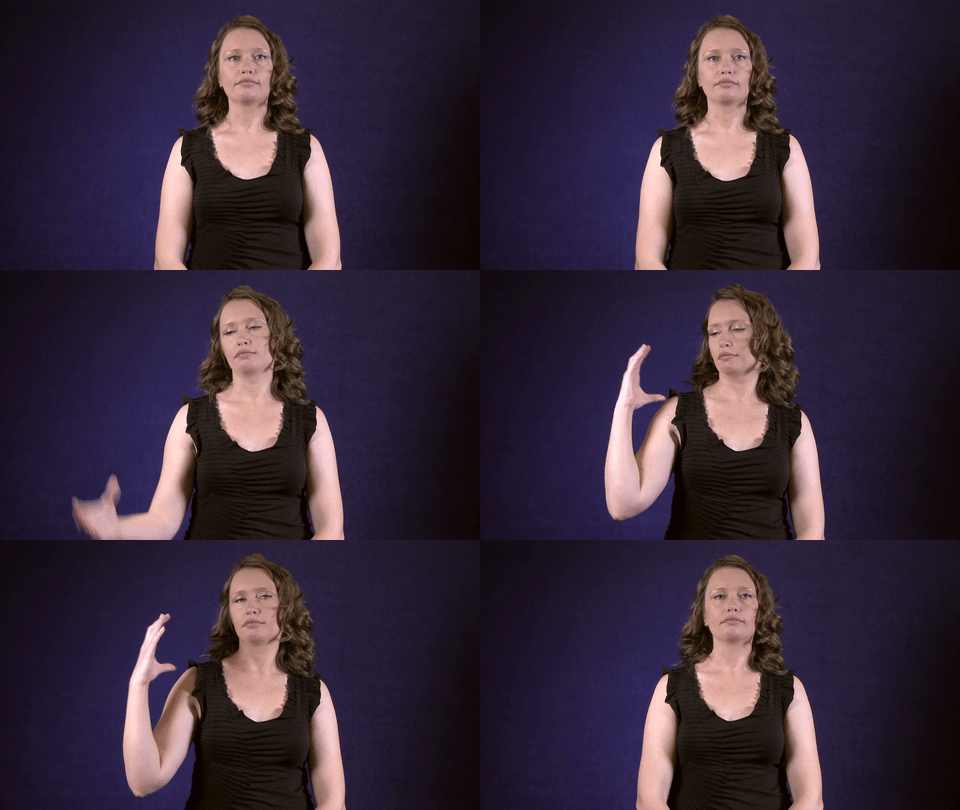
Definition: A person in charge.
Sign for BOSS in ASL

Practice Activities:
To build fluency with the sign for BOSS in ASL, start by practicing the sign in front of a mirror. Focus on the correct handshape and movement—touching your dominant hand, shaped like a claw, once to the shoulder near the neck area. Repeat this motion until it feels natural and fluid. Use a timer to practice the sign for BOSS in ASL in rapid succession for 30-second intervals.
Next, try using the sign in common workplace phrases. For example, you can sign sentences like “My boss is nice,” “The boss is in a meeting,” or “I will call the boss later.” Record yourself and review your signing to check for accuracy in facial expressions and body posture. Watch ASL videos or vlogs that use the sign for BOSS in ASL to see how fluent signers incorporate it within conversations.
For partner practice, role-play workplace scenarios. One person can play the employee and the other the boss. Create dialogues that allow for repeated use of the sign for BOSS in ASL, such as discussing schedules, giving feedback, or organizing meetings. This repetition in context will help reinforce both vocabulary and expressive clarity.
Use a storytelling prompt like, “Describe your first job and what your boss was like.” This exercise lets you include multiple signs such as WORK, RESPONSIBILITY, and BOSS, while also practicing sequencing of ideas in ASL. You could also watch scenes from TV shows or movies about office settings and retell the events using ASL signs, incorporating the sign for BOSS in ASL where relevant.
Finally, label objects or create flashcards with work-related vocabulary to expand your context. By consciously integrating the sign for BOSS in ASL into these daily practice routines, you’ll build both confidence and precision in your expressive signing skills.
Cultural Context:
In Deaf culture, the sign for boss in ASL carries more than just its direct meaning. It reflects not only workplace dynamics but also respect, authority, and social hierarchies within the Deaf community and beyond. When using the sign for boss in ASL, signers are conveying more than a job title—they’re acknowledging someone’s leadership role.
ASL is deeply rooted in facial expressions and body language, and the sign for boss in ASL may be accompanied by subtle changes in expression depending on context. A stern face can show strict authority, while a smile might convey admiration or respect. These nuances are essential in correctly communicating meaning in American Sign Language.
Deaf professionals often use the sign for boss in ASL in office settings, during meetings, or when identifying a supervisor. This sign is part of everyday conversations, helping Deaf employees navigate workplace hierarchies. Knowing how to sign “boss” correctly can be key to effective communication on the job.
Young signers may also use the sign for boss in ASL when playing work-themed games or talking about parents playfully taking charge. The concept of authority is often introduced early in life, and signs like “boss” help build a foundation for understanding social roles. Signing “boss” becomes part of language development and everyday interactions.
The sign for boss in ASL reflects the cultural value placed on mutual respect and clearly defined roles. In leadership within the Deaf community, whether in education, nonprofits, or Deaf-owned businesses, the sign is frequently used to describe community leaders or heads of organizations. It signifies more than employment—it’s about leadership and accountability.
When using the sign for boss in ASL, it’s not unusual to see signers modify their expressions depending on tone or situation. For example, if someone is speaking negatively about a strict manager, their face will reflect that disapproval while producing the sign. This rich, expressive nature of ASL helps give deeper meaning to even simple signs like “boss.”
The popularity of the term boss in both spoken and signed language carries over from media and pop culture. Whether referring to a celebrity, a powerful CEO, or even someone being admired for their confidence, ASL users have adapted the sign for boss in these contexts as well. The flexibility of the language allows the same sign to appear in various settings with slightly altered meanings.
In Deaf events, classrooms, and storytelling, the sign for boss in ASL can symbolize an antagonist or a dominant character. Signers might use exaggerated gestures to put emphasis on
Extended Definition:
The sign for boss in ASL is a clear and expressive gesture used to indicate someone who holds a position of authority or leadership. In American Sign Language, conveying roles like a manager or supervisor involves not only handshape and location but also non-manual signals like facial expressions. These elements help show respect, seriousness, or even sarcasm depending on the context.
To produce the sign for boss in ASL, use a “claw” handshape and tap it on the top of your shoulder. This sign is typically made with your dominant hand, and the motion should be firm yet brief. It’s a commonly used sign in workplace conversations, especially when discussing hierarchy or navigating employment settings.
The shoulder area is symbolic in ASL for responsibility or burden, which aligns with the idea of a boss as someone who carries or assigns responsibilities. When you talk about your boss, the sign can be paired with other signs such as “work,” “manager,” or “angry” to create precise and expressive sentences. Proper use of facial expressions adds depth to the sign and ensures your meaning is clear.
The sign for boss in ASL might slightly vary depending on regional dialects or personal style, but the basic form stays consistent. In more casual settings, the sign might be exaggerated for humor or emphasis, while in professional contexts, it tends to be more controlled and respectful.
When teaching or learning the sign for boss in ASL, visual examples and live demonstration are highly effective. Watching native signers use the sign in everyday conversation will help learners better understand its social nuances. Context is everything in ASL, so seeing the sign used in real-life scenarios strengthens comprehension.
In Deaf culture, the concept of a boss may be expressed with additional signs based on the nature of the relationship. For instance, if a boss has a known personality trait like being supportive or strict, those signs might be layered into the conversation. This adaptability reveals the richness and flexibility of ASL grammar.
As with many signs, the meaning of boss in ASL extends beyond the workplace. It can refer to someone in charge of a volunteer project, a group leader, or even a parent depending on the sentence structure. ASL thrives on context and visual storytelling, enhancing every sign’s impact.
The sign for boss in ASL is a basic yet powerful tool in workplace vocabulary, helping bridge communication between Deaf employees and hearing colleagues. For inclusive communication, learning job-related signs like this one promotes a more accessible and respectful environment.
When practicing the
Synonyms: leader, chief, supervisor, manager, head
Educational resources: Find related learning materials in our course bank!
Want more? Check out some of our popular learning activities on the homepage!
Need to look up a sign? Use our highly rated dictionary: https://aslinteractive.com/best-asl-dictionary/
Follow us on tiktok: https://www.tiktok.com/@aslinteractive. More social media links at the bottom of this page!
Long-tail Keywords: what is the sign for boss in asl, how do you sign boss in asl, asl sign for boss
Categories:
tags: Boss, Employment Status, Commands, People, Relationships
Parameters
*Handshape*:
The handshape for the sign for BOSS in ASL uses a dominant hand in a claw shape, similar to the “claw 5” handshape . The fingers are spread and slightly curved, resembling the hand gripping an object or symbolizing authority.
To perform the sign for BOSS in ASL, the clawed hand taps the upper shoulder of the same side twice. This gesture suggests someone in charge or a position of power.
*Palm Orientation*:
For the sign for BOSS in ASL, the dominant hand takes the shape of a clawed “5” and gently taps the top of the shoulder. The palm orientation is angled inward, facing toward the body.
This palm orientation helps emphasize the authoritative position suggested by the sign for BOSS in ASL. The slight curve of the fingers with the palm angled inward reinforces the concept of leadership or someone in charge.
*Location*:
The location for the sign for BOSS in ASL is at the top of the shoulder, typically on the dominant side. The dominant hand forms a claw shape and gently taps the shoulder area near the base of the neck.
When signing the sign for BOSS in ASL, keep your posture upright and clear to ensure visibility. This location near the upper torso helps convey the idea of authority or leadership associated with the word.
*Movement*:
To perform the sign for BOSS in ASL, begin by forming your dominant hand into a claw shape, as if gripping an object. Lightly tap the shoulder on the same side of your body with the tips of your clawed fingers, usually tapping once or twice.
The movement is subtle and purposeful, reflecting authority. The sign for BOSS in ASL conveys someone in charge or a figure of leadership through this composed gesture.
*Non-Manual Signals*:
When using the sign for BOSS in ASL, the facial expression should convey authority or assertiveness. Slightly raised eyebrows, steady eye contact, and a confident or serious mouth posture help show the commanding presence of a boss.
The non-manual signals support the meaning of the sign for BOSS in ASL by emphasizing leadership or control. Leaning forward slightly or tilting the head can also reinforce the dominant tone of the message.
*Prosody, Dominant/Non-Dominant Hand*:
The sign for BOSS in ASL uses the dominant hand shaped like a claw (curved fingers), tapping the shoulder near the base of the neck. The non-dominant hand does not move or participate. The motion is firm but not aggressive, showing authority or leadership.
When using the sign for BOSS in ASL, facial expression is important—often a serious or neutral look. This prosodic detail helps convey the respect or status typically associated with a boss.
Tips for Beginners:
When learning the sign for BOSS in ASL, start by observing the handshape carefully. It uses a clawed “C” hand that taps once or twice on the shoulder—typically the dominant shoulder. Ensuring the proper handshape and contact with the shoulder is key to making the sign clear and recognizable to native signers.
One beginner mistake is using an open palm or a flat hand. This can confuse the meaning or cause someone to misunderstand you entirely. Focus on curling your fingers slightly to form the correct claw-like shape, and maintain a firm but gentle tap on the shoulder—not too aggressive or too loose.
Practice the motion in a mirror to adjust your accuracy. Clarity in facial expressions is also important, especially in professional or hierarchical contexts where the sign for BOSS in ASL might carry authority or status. A focused or neutral expression is often appropriate.
Don’t rush the sign. It should be deliberate and match the flow of the rest of your conversation. Trying to hurry through may result in slurring the movement or using the wrong location on the body, both of which reduce understanding.
If you’re unsure about your production of the sign for BOSS in ASL, compare it with videos from reliable ASL sources like certified Deaf interpreters. You can slow videos down or watch frame-by-frame for more detailed analysis.
Try incorporating the sign into mock conversations, especially in workplace or leadership-related topics. This builds context that reinforces memory and fluency. Repetition is helpful, but relevance in usage will lock in your understanding more quickly.
Finally, remember that consistency is key. Making the sign accurately over time will help you sign with more confidence. Keep refining your movements and don’t hesitate to ask Deaf friends or teachers for feedback.
Connections to Other topics:
The sign for BOSS in ASL connects closely with signs that depict hierarchy, authority, and occupational roles within a community or workplace. It typically involves a gesture that conveys leadership or superior status, and it’s commonly paired in narratives that describe management or company structures. This sign is frequently used in tandem with signs like MANAGER, SUPERVISOR, or EMPLOYEE to indicate relationships in professional settings.
There are compound signs that incorporate the sign for BOSS in ASL to express specific contexts, such as SCHOOL BOSS, which may refer to a principal, or WORK BOSS to indicate a manager. These combinations help learners deepen their understanding of how concepts can be layered for clarity and relevance. Signs such as CEO and DIRECTOR often incorporate elements from the sign for BOSS or mimic its structure to reinforce the concept of leadership.
The sign’s connection to other person-centric signs like TEACHER and COACH show how ASL represents authority figures across different disciplines. While BOSS may imply workplace role, other signs share physical similarities to indicate control or responsibility. Learners can benefit by recognizing these commonalities to more easily memorize and interpret unfamiliar signs.
Understanding the sign for BOSS in ASL also introduces the broader concept of workplace discourse within ASL conversations. It appears often in stories about jobs, team dynamics, and even in jokes involving someone’s boss, making it an important sign for both casual and formal contexts. It may also appear with non-manual markers (facial expressions) that convey the speaker’s attitude toward that boss, ranging from respect to frustration.
Additionally, its abstract meaning can extend beyond the workplace, appearing in contexts like referring to someone as “the boss” in a household or group. In these cases, the sign retains its central connotation of authority or primary decision-maker. This flexibility makes the sign for BOSS in ASL an essential part of vocabulary for anyone aiming to engage in broader ASL communication.
Summary:
The sign for BOSS in ASL is performed by bringing the dominant hand into a claw shape and tapping it once or twice on the shoulder, typically the dominant side. This small but deliberate motion suggests the idea of authority resting on the shoulders, quite literally. It’s a visual metaphor turned into motion.
The sign is iconic in the sense that it represents a role of hierarchical significance. In ASL, the body is often used symbolically to refer to societal structures, and in this case, the shoulder holds the weight of responsibility and leadership. That subtle tap implies command and accountability.
When discussing the sign for BOSS in ASL, it’s important to differentiate authoritative power from aggression or control. The ASL cultural lens often includes subtle distinctions in visual cues that reflect attitude and status. The facial expression paired with the sign can either soften or exaggerate its meaning.
If you perform this sign with a friendly face, the implication is of a kind, fair manager. A more stern expression might suggest a more serious or demanding figure. These non-manual markers are essential to conveying the right tone and intention in ASL.
The word “boss” in English carries shades of meaning, from supervisor to leader to tyrant. The sign for BOSS in ASL represents the neutral concept of a superior, but culturally, Deaf communities often contextualize it based on interpersonal dynamics. That’s why this sign’s meaning can be adapted through additional signs or expressions.
In ASL grammar, the sign for BOSS can be used as a noun and sometimes as part of a larger classifier structure. For instance, when telling a story or describing working conditions, one might use role-shifting to compare the boss’s actions to the employee’s. This brings the storytelling to life.
If the signer wants to emphasize “my boss,” they may tap the shoulder and then sign MY. Or, they can lead with MY and follow with the sign, depending on the sentence’s rhythm and emphasis. ASL syntax is fluid and allows for such rearrangement depending on focus and mood.
Other signs related to the sign for BOSS in ASL include MANAGER, EMPLOYER, and AUTHORITY. These provide nuanced alternatives when “boss” doesn’t quite fit. The visual grammar of ASL requires selecting a sign that matches the specific kind of leadership or role.
The sign for MANAGER, for example, uses the sign for CONTROL to communicate someone who supervises the organizational details. Whereas BOSS focuses on hierarchical power, MANAGER focuses on function or task-oriented leadership. This distinction allows for more precise communication.
ASL’s use of space around the body helps to set up contrasting roles. You could place the boss character on one side of your signing space and the employee on the other, then shift your body and expression to show interaction or attitude. This spatial narrative deepens understanding.
The sign for BOSS in ASL also gets used outside traditional workplace contexts. It might describe a teacher, a team captain, or someone acting bossy. This fluidity of use shows the richness of cultural adaptation in ASL.
Culturally, Deaf communities have their own interpretations of leadership. A “boss” in the Deaf community may be viewed positively or skeptically depending on values like collaboration, respect for Deaf culture, and language access. So the sign for BOSS in ASL also reflects these layered perspectives.
You’ll also find the sign for BOSS used in storytelling genres such as Deaf theater and humor. In skits and personal narratives, BOSS often plays the foil, symbolizing rules or obstacles. Through exaggerated movement, facial expressions, and timing, the storyteller portrays BOSS with flair.
In applied linguistics, the sign for BOSS in ASL is a useful example of iconicity aligned with metaphor. From a semiotic standpoint, tapping the shoulder links bodily experience with abstract power. This supports embodied cognition theory in signed language communication.
Understanding the sign morphologically, BOSS doesn’t include inflections or derivations within itself but is part of sign compounds or phrasal units. For example, a phrase like STRICT BOSS involves combining adjectives with the base noun sign. This shows ASL’s reliance on juxtaposition and contextual blending.
The sociolinguistic variation of the sign can appear in regional differences. While the basic sign remains consistent, some signers may add emphasis or variation in movement to match their local styles or influence from other sign languages. Sign languages evolve, just like spoken ones.
Learning the sign for BOSS in ASL opens conversations about power and structure. In interpreting work, recognizing tone and context is crucial. Interpreters must match their rendition of BOSS with the appropriate facial markup to convey the speaker’s or signer’s intended attitude.
The sign is also relevant in job interviews, work environments, and educational contexts where authority matters. Mastering the sign for BOSS in ASL equips users to navigate these situations clearly and respectfully. It also signals cultural fluency, not
Want more? Check out some of our popular learning activities!
ASL Interactive Resources
ASLInteractive YouTube Channel
Follow us on tiktok: @aslinteractive.com
Follow us on Instagram: aslinteractive
Facebook page: aslinteractive
Facebook group: aslinteractive
LInkedIn: ASL Interactive LLC
Twitter: @ASL_interactive
*Some information on this page is AI-generated. AI can make mistakes. Please check the information.


Responses