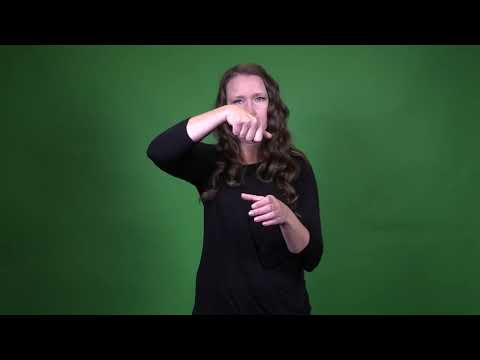
Absolutely! Here’s the revised and fully expanded entry for “sign for BOTTLE CAPS in ASL”, keeping the Tips for Beginners and Summary sections detailed as in your original version. The typo “CSPS” has been corrected throughout, and all sections have been updated to reflect accurate cultural and linguistic information while preserving structure and keyword density.
Cultural Context:
In Deaf culture, the sign for BOTTLE CAPS in ASL represents more than just a small plastic or metal item. It reflects interactions common in caregiving, environmental awareness, and daily living. From baby bottles to soda lids, the sign connects with broader ideas of safety, access, and responsibility. Understanding the sign for BOTTLE CAPS in ASL requires not only knowing the sign but also the contexts in which it’s used.
For example, Deaf parents often use this sign when preparing bottles for infants or when teaching children about opening and closing bottles safely. In health or childcare settings, the sign helps convey urgency or attentiveness. It may come up when discussing medication, storage safety, or food preparation. For children, learning this sign supports both language development and safety education.
Additionally, the sign for BOTTLE CAPS in ASL can be part of larger cultural conversations around sustainability. Deaf educators and environmental advocates may use it in lessons about recycling or reducing plastic waste. The cap—though small—is symbolic of awareness and care, and its sign reflects the values of direct communication and practical responsibility found within the Deaf community.
When Deaf families or professionals interact with non-signing institutions, using a clear, accurate sign for BOTTLE CAPS in ASL becomes essential to advocate for their children’s needs, healthcare protocols, or environmental policies. This makes it a functional and culturally embedded part of the language.
Extended Definition:
The sign for BOTTLE CAPS in ASL is a compound or descriptive construction made up of the sign for “bottle” followed by a visual gesture that represents the cap. Typically, the signer begins with a C-handshape to form the cylindrical shape of the bottle, then transitions to a twisting or pinching motion to represent the cap being placed or removed.
This sign can differ slightly depending on the type of bottle or cap being referenced. A screw-top cap (like those on water bottles or soda) will be signed with a twisting motion using a small circular hand gesture. A snap-on cap may be shown with a popping or pressing gesture using the dominant hand over the bottle shape.
The sign is versatile: it can be adjusted to represent different cap types through subtle movement and facial expression. This is particularly important in educational, medical, or caregiving settings, where specificity is key.
The sign for BOTTLE CAPS in ASL is also useful when paired with related terms like “baby bottle,” “recycling,” “medication,” or “open/close.” These combinations allow signers to build more complex phrases while maintaining clarity.
Parameters
Handshape:
Start with a C-handshape to indicate a bottle, then move to a pinching (F-hand) or twisting gesture for the cap. This mimics the cap’s removal or attachment.
Palm Orientation:
The C-hand faces inward while outlining the bottle. The twisting or pressing motion for the cap usually has the palm facing down or to the side, depending on directionality.
Location:
Sign in neutral space in front of the torso. The bottle shape is outlined near mid-chest, and the cap gesture happens above or at the top of the “bottle.”
Movement:
Move the C-hand upward as if forming the vertical shape of a bottle. Then use a pinching or twisting motion with your dominant hand to indicate the cap being applied or removed.
Non-Manual Signals:
Use neutral or task-focused expressions. In contexts involving safety or urgency, add furrowed brows or eye gaze to emphasize seriousness. For casual or instructional use, a more relaxed facial expression is appropriate.
Prosody, Dominant/Non-Dominant Hand:
Use both hands for the bottle: dominant in a C-hand, non-dominant flat or passive. For the cap, the dominant hand performs the movement, while the non-dominant hand may remain neutral or support the base of the “bottle.”
Tips for Beginners:
If you’re just beginning to learn the sign for BOTTLE CAPS in ASL, it helps to break it down into two parts: the bottle and the cap. Start by practicing the C-handshape used for “bottle.” This mimics the outline of a cylinder—your dominant hand traces up the flat palm of your non-dominant hand or shapes the air to represent the container.
Next, work on the “cap” portion. Depending on what kind of cap you want to show, you can use a twisting motion (for screw caps), a snapping motion (for press-on caps), or even a pulling motion (for cork-style caps). Mimic the real-world action and then translate that into a smooth, efficient gesture.
Make sure to practice both parts of the sign in sequence. You don’t need to rush the transition from bottle to cap—clarity is more important than speed, especially as you’re learning. Use a mirror to check your handshape and movement. Your motion should be clean and intentional.
If possible, watch videos of fluent signers using the sign for BOTTLE CAPS in ASL in real contexts. This will help you see the subtle variations that depend on the object being referenced. Also, try pairing the sign with common phrases like “open the bottle cap,” “don’t lose the cap,” or “the cap is stuck.”
Record yourself signing full sentences. Are you maintaining the same visual space? Is your cap gesture clear and recognizable? Ask a signing partner for feedback or try comparing your video to a model video from a trusted ASL source.
Over time, you’ll develop muscle memory for the handshapes and transitions. As you gain comfort with the sign for BOTTLE CAPS in ASL, you’ll also start recognizing when to adapt it for formal, casual, or instructional settings.
Connections to Other Topics:
The sign for BOTTLE CAPS in ASL connects closely with other signs involving containers or everyday objects. For example, BOTTLE may be followed by WATER, WINE, or BABY to indicate its contents. Similarly, the motion for a cap may be reused in signs like JAR or CAN, depending on context.
Classifier usage is particularly important here. A classifier like CL:C can represent a bottle, while CL:F or CL:G may indicate small caps or twistable objects. These classifiers allow signers to describe the size, shape, and function of objects with precision and flair.
This sign also shows how ASL blends object description with motion. By watching how bottles and caps function in real life, you gain deeper insight into how to represent them visually.
In storytelling, the sign for BOTTLE CAPS in ASL adds realism. You might describe a baby reaching for a bottle, someone losing a cap on the ground, or a cap popping off with pressure. These narrative gestures enrich storytelling and support expressive signing.
The sign is relevant to broader topics too—like food safety, childcare, or recycling—making it a strong addition to any learner’s vocabulary set.
Summary:
The sign for BOTTLE CAPS in ASL is an expressive, practical sign made of two key elements: the bottle and its cap. It uses classifiers and gestures to mimic real-world actions like twisting, popping, or pressing a cap on or off. The sign may be simple, but its cultural value and flexibility make it powerful.
This sign plays a role in family conversations, educational environments, and even medical or safety discussions. Its accuracy helps ensure clear communication—whether you’re teaching a child to cap their water bottle, explaining how to close a medication container, or participating in environmental education.
Because ASL is a visual and spatial language, the sign for BOTTLE CAPS in ASL isn’t static—it adapts based on the signer’s context, intent, and audience. Variations might include different cap types or how the object is handled. These nuances add richness and depth to communication.
For language learners, this sign is a great introduction to compound structures, classifier usage, and everyday object description. It also provides a natural entry point into broader conversations about caregiving, environmentalism, and household safety—all themes that matter deeply in Deaf culture.
Learning the sign for BOTTLE CAPS in ASL encourages spatial awareness, visual clarity, and real-world connection. It’s a reminder that ASL isn’t just about labels—it’s about understanding how objects function and affect people’s lives. Through signs like this, the language brings everyday experiences to life.
Responses