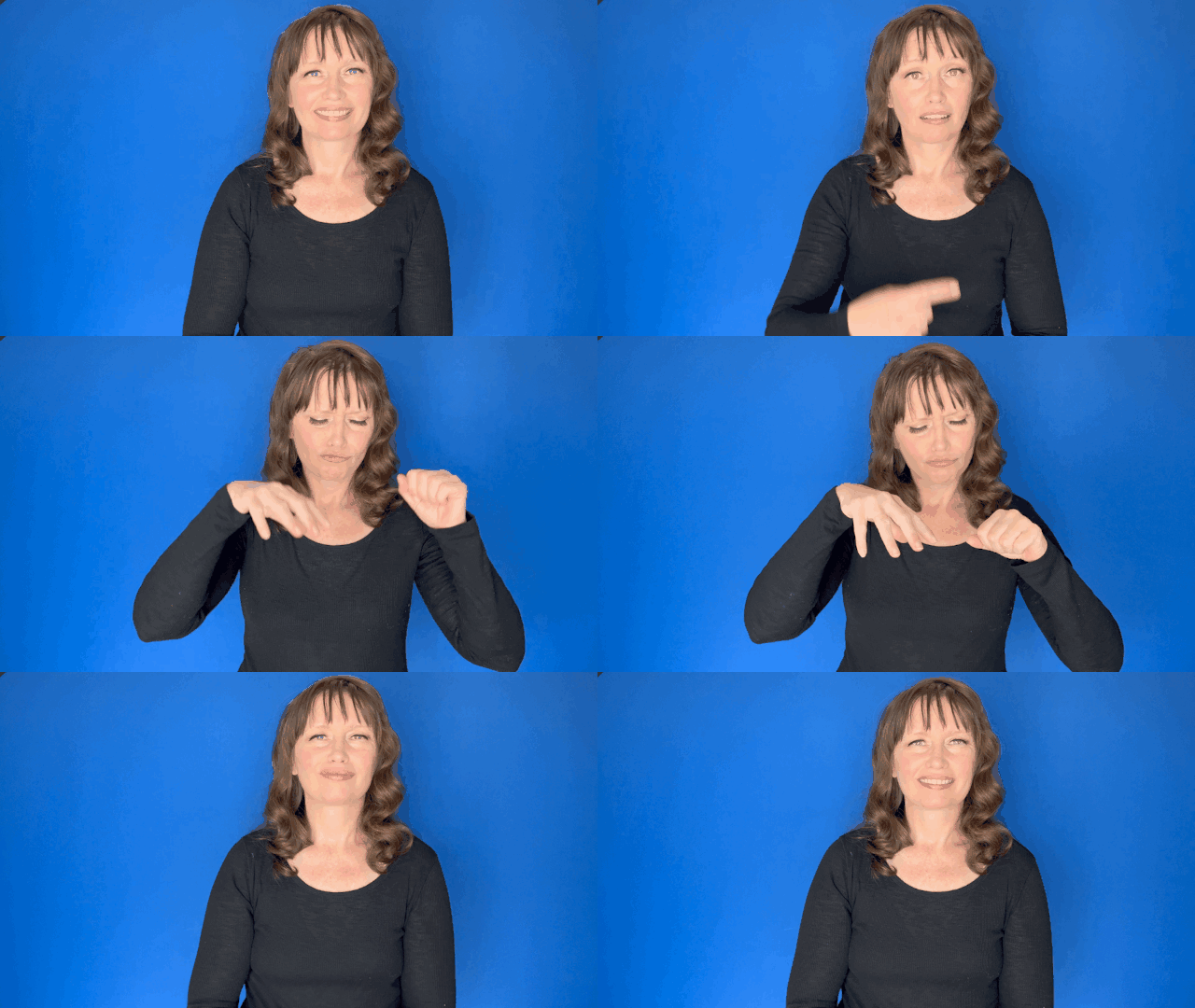
Definition: To generate ideas through discussion.
Sign for BRAINSTORM in ASL

Practice Activities:
To build familiarity with the sign for BRAINSTORM in ASL, begin by practicing it in isolation using a mirror. Repeatedly sign the term while observing your facial expressions and hand movements to ensure accuracy and fluid motion. Try signing it at different speeds to build confidence and control.
Once comfortable with the isolated sign, incorporate it into simple sentences. Use phrases such as “We need to brainstorm,” “Let’s have a brainstorm session,” or “I like to brainstorm before writing.” Practice signing each sentence aloud, paying attention to natural pauses and facial expressions to match the context.
Storytelling is another effective method to practice the sign for BRAINSTORM in ASL. Try telling a short story about a group of students coming up with ideas for a school project. Include the sign whenever you reference the moment people are trying to think creatively or share thoughts as a group.
Engage a partner in a role-play activity where one person suggests a problem, and the other responds using the sign for BRAINSTORM in ASL and offers creative solutions. For example, pretend you’re planning a party and brainstorm game ideas or food choices. This helps reinforce context usage and builds conversational confidence.
Flashcard drills are helpful too. Mix the sign for BRAINSTORM in ASL with other related academic or creative terms like THINK, IDEA, or GROUP. Sign one after the other in random order to improve recall and fluidity.
Create sentence chains with other signs that show process or planning. For instance, sign THINK, BRAINSTORM, PLAN, and DECIDE. This repetition not only strengthens sign memory but also teaches logical narrative flow. Use emojis in your practice materials to support recall through imagery.
Cultural Context:
The sign for BRAINSTORM in ASL is a creative and conceptually rich expression that reflects both the visual language and the cultural values of the Deaf community. In American Sign Language, concepts are often represented through imagery and metaphor, and the sign for BRAINSTORM captures the idea of thoughts rapidly forming and connecting, much like a mental storm.
In Deaf culture, expressive signs like the sign for BRAINSTORM in ASL are appreciated for their clarity and vivid visualization. Communication in ASL goes beyond direct translation of spoken English—it embodies expression, intent, and cultural resonance. When signing brainstorming sessions, Deaf individuals often emphasize collaboration and visual flow, which aligns naturally with how ASL communicates ideas.
The sign for BRAINSTORM in ASL represents a burst of ideas or solutions, and it’s typically used in educational or group settings. Teachers, students, and interpreters might use this sign in classroom discussions, workshops, or collaborative projects. Since brainstorming involves generating ideas quickly, the sign visually mimics the flow and energy of this mental process.
Understanding the sign for BRAINSTORM in ASL also highlights the Deaf community’s value of visual learning and shared input. Group brainstorming is an inclusive activity in Deaf culture, where every participant contributes using ASL. This promotes interaction that is heavily based on eye contact, facial expressions, and hand movement, all essential elements in ASL communication.
When learning the sign for BRAINSTORM in ASL, it’s helpful to understand how Deaf individuals perceive mental processes as visual phenomena. Rather than internal thoughts, brainstorming is projected outward in signing space using hand motions that show active thought. This visual representation is not only linguistically accurate but also deeply tied to cultural communication styles.
Deaf creators, educators, and professionals frequently use the sign for BRAINSTORM in ASL in meetings and strategy development. Because ASL is a visual and conceptual language, brainstorming is often more dynamic, with signs flowing from one concept to another in an organic and engaging way. ️ This flow mirrors the fast-paced, spontaneous nature of brainstorming sessions.
In ASL storytelling and performances, the concept of brainstorming is sometimes illustrated to show a moment of inspiration or problem-solving. The sign for BRAINSTORM in ASL effectively bridges abstract thinking with concrete expression, making it ideal for performance art and Deaf theatre. Creativity is a key value in both ASL and Deaf culture, and this sign captures that beautifully.
When
Extended Definition:
The sign for brainstorm in ASL represents the visual and expressive nature of idea generation. Instead of a single static gesture, this sign mimics the mental action of thoughts forming or colliding in the brain. It captures the spontaneous and energetic vibe of brainstorming sessions, where creativity flows freely and rapidly.
In American Sign Language, the sign for brainstorm is often conceptual rather than literal. Signers use facial expressions and movement to emphasize the intensity and speed of the thought process. It’s common to incorporate the sign for brain, then add gestures that show ideas connecting or expanding — much like a storm of thoughts.
This type of conceptual sign is dynamic, allowing for variation depending on the context and intensity of the conversation. For example, during casual conversations, the sign may be simplified. In more expressive or dramatic storytelling, the sign for brainstorm in ASL can include more exaggerated facial expressions and multiple movements to show an explosion of creativity.
Facial expression plays a major role in delivering the right meaning in ASL. When using the sign for brainstorm, a focused or intense look helps convey mental activity. Small changes in eye movement or eyebrow position can shift the meaning from casual thinking to a full-blown creative storm.
The concept of brainstorm can also be modified to fit different subjects. In classroom settings, students and teachers may use the sign while working together on group activities. In business environments, Deaf professionals use the sign for brainstorm in ASL during meetings to show a collaborative thought process.
This sign is also useful in educational content about creative thinking, planning, or problem-solving. Videos, interactive lessons, and social media posts use the sign to represent teamwork and innovation. Because it is conceptually rich, the sign fits well in environments that promote imagination and collective intelligence.
There isn’t one universal way to show brainstorm, as regional and individual variations exist. Some signers may prefer a two-handed version that emphasizes the collision of ideas, while others stick to a one-handed sign close to the forehead. Despite the differences, the core meaning of the sign remains centered around mental activity and creative thought.
Understanding the sign for brainstorm in ASL can improve both expressive and receptive skills. It helps signers convey abstract ideas more naturally, making conversations feel more engaging. Learning how to adjust this sign for various scenarios adds depth and fluidity to ASL communication.
This sign is especially popular with educators, performers, and content creators in the Deaf community. The ability to sign brainstorm allows people to express their creative process more accurately. Whether it
Synonyms: brainstorm, ideate, think tank, generate ideas, mind map
Educational resources: Find related learning materials in our course bank!
Want more? Check out some of our popular learning activities on the homepage!
Need to look up a sign? Use our highly rated dictionary: https://aslinteractive.com/best-asl-dictionary/
Follow us on tiktok: https://www.tiktok.com/@aslinteractive. More social media links at the bottom of this page!
Long-tail Keywords: what is the sign for brainstorm in asl, how do you sign brainstorm in asl, asl sign for brainstorm
Categories:
tags: brainstorm in American Sign Language, how to sign brainstorm in ASL, brainstorm ASL meaning, ASL sign for brainstorming, learning brainstorm in ASL
Parameters
*Handshape*:
The handshape for the sign for BRAINSTORM in ASL typically begins with both hands using the “5” handshape, where the fingers are spread apart and relaxed. The fingers are not stiff, and the thumbs stick out slightly, maintaining a natural open position ️.
During the sign for BRAINSTORM in ASL, the hands are held near the temples or forehead and flick outward several times as if representing ideas bursting from the mind. Each flick outward continues using the “5” handshape, reflecting a flow of thoughts or a flurry of ideas.
*Palm Orientation*:
For the sign for BRAINSTORM in ASL, the palm orientation typically involves both hands open and facing each other or angled slightly downward, depending on the variation used. The hands are usually positioned near the sides of the head, with fingers spread as if representing an explosion of ideas .
During the execution of the sign for BRAINSTORM in ASL, the palms may stay mostly outward or inward depending on emphasis but generally remain in a neutral vertical position to convey the flow of thoughts clearly. This orientation helps visually represent the idea of thoughts bursting or storming out of the mind.
*Location*:
The sign for BRAINSTORM in ASL is typically done near the forehead, representing the brain or thought area. The hands begin close to the side of the head, often around temple level, showing that the ideas originate from the mind.
This location emphasizes the mental activity involved in brainstorming. Keeping the movement close to the head helps contextualize the sign for BRAINSTORM in ASL as being related to cognitive or creative thought processes.
*Movement*:
To show the sign for BRAINSTORM in ASL, begin by holding both hands near the sides of your forehead in loose clawed 5-handshapes. With quick, alternating movements, flick the fingers outward and away from your head as though representing ideas shooting out rapidly from your brain .
This motion is repeated a few times to emphasize the sudden burst or storm of thoughts. The sign for BRAINSTORM in ASL visually mimics the spontaneous and creative flow of ideas, making it ideal for describing intense thinking or collaboration sessions.
*Non-Manual Signals*:
When using the sign for BRAINSTORM in ASL, the signer often shows an intense and thoughtful facial expression . The brows are slightly knit together, and the eyes may look upward as if visualizing ideas forming in the mind. The mouth may be slightly open or pressed together in concentration. These non-manual signals enhance the visual meaning of the sign for BRAINSTORM in ASL, showing mental activity or creative thinking.
*Prosody, Dominant/Non-Dominant Hand*:
The dominant hand is typically in the 5-handshape, positioned near the forehead, simulating the area of the brain. It opens and closes rapidly, with fingers tapping or fluttering outward slightly to express the idea of mental explosions or an outpouring of ideas, mimicking a storm of thoughts. The non-dominant hand may remain still or mirror the motion slightly, depending on regional variants.
This expressive gesture in the sign for brainstorm in ASL captures the dynamic energy of thinking intensively. Facial expressions showing focus or intensity often accompany the sign for brainstorm in ASL to emphasize the mental effort involved.
Tips for Beginners:
When learning the sign for BRAINSTORM in ASL, one helpful tip is to begin by understanding the visual metaphor behind the sign. Typically, this sign uses the concept of multiple ideas bouncing or exploding from the head, mimicking how thoughts are generated quickly during a brainstorming session. Use both index fingers near the temples and mimic short, quick outward movements to represent ideas sparking from the brain.
Beginners should practice the sign in front of a mirror to check hand placement, movement, and facial expressions. Facial expression is key—an inquisitive or thoughtful look helps convey the meaning of actively thinking or generating ideas. Make sure your movements are deliberate and not too fast; clarity matters more than speed when learning new signs.
It’s important to avoid common mistakes like confusing the sign for BRAINSTORM in ASL with signs for THINK or IDEA. These signs are similar but have distinct movements and meanings, so observing the difference can help avoid miscommunication. Watching native signers or using reliable video dictionaries can provide solid reference points.
For better retention, try connecting the sign with real-life situations. Use it during group activities where ideas are exchanged or while teaching concepts related to creative projects. Repetition in context helps turn a passive vocabulary word into an active sign you can recall easily.
Another useful technique is to pair the sign for BRAINSTORM in ASL with other related signs such as DISCUSS, THINK, or PLAN. This helps in forming more complex thoughts and sentences, building communicative fluency. Practicing full sentences also makes the sign more meaningful and improves your overall signing rhythm.
Remember to stay relaxed in your hands and body. Signing under tension often leads to robotic or awkward movements. The more natural you are, the more confident and clear your signing will be.
Connections to Other topics:
The sign for BRAINSTORM in ASL connects closely with signs related to thinking, ideas, and cognitive processes. It shares visual and conceptual similarities with signs like THINK, IDEA, and MIND, often using similar handshapes near the forehead to symbolize mental activity. This supports a deeper understanding of how ASL expresses abstract thought through visual-spatial representations.
In compound expressions, the sign for BRAINSTORM in ASL may appear with signs like DISCUSS, PLAN, or GROUP, especially in educational or business contexts. For example, combining GROUP and BRAINSTORM can structure a narrative about brainstorming during a group meeting, showing how individual signs come together to illustrate complex ideas. These sign combinations help communicate processes rather than isolated concepts.
This sign also relates to creative and problem-solving terminology in ASL. For instance, the sign for SOLVE or CREATE is often used alongside BRAINSTORM to describe different stages of thinking. When preparing for collaborative situations like project planning or design thinking, these associated signs offer learners nuanced ways to describe mental activities.
From a grammatical perspective, the sign for BRAINSTORM in ASL may be modified with facial expressions and directional movements to indicate intensity or quantity—emphasizing a small idea versus a flood of creative thoughts . This shows how non-manual markers enrich the meaning, emphasizing the dynamic nature of mental exploration.
The sign’s context-driven variations make it ideal for teaching classifier use and abstract representation, especially with metaphors like “storm” suggesting a flurry of ideas. This demonstrates how ASL draws on visual metaphors that tap into the broader cognitive and cultural understanding shared by signers. The sign for BRAINSTORM in ASL thus functions as both a vocabulary term and a tool for building more complex narrative and conceptual skills.
Summary:
The sign for BRAINSTORM in ASL is an expressive and visual representation of rapid idea generation. It captures the mental flurry of thoughts with gestures that typically show movement outward from the head, often using fluttering fingers.
There are variations in how people perform the sign for BRAINSTORM in ASL, depending on regional differences or personal style. A common version uses both hands starting near the forehead and then wiggling the fingers outward, symbolizing multiple ideas springing from the mind.
This sign highlights one of ASL’s strengths—its ability to embody abstract concepts visually. Abstract ideas like thinking creatively or problem-solving are elegantly transformed into kinetic, visible actions in sign language.
The concept of brainstorming is deeply tied to educational and collaborative settings. In these spaces, the sign for BRAINSTORM in ASL allows Deaf individuals to fully participate in group ideation sessions, ensuring access and inclusion.
Grammatically, the sign for BRAINSTORM in ASL functions similarly to a verb or noun depending on context. For example, you can use it in the sentence, “Let’s brainstorm,” or “The brainstorm helped,” with slight shifts in timing and facial expressions to clarify meaning.
ASL users often pair or follow this sign with related cognitive signs like THINK, IDEA, PLAN, or GROUP-THINK. This grouping helps structure complex discussions or explain collective processes of innovation.
In applied linguistics, the sign for BRAINSTORM in ASL offers insights into how metaphor is used in visual languages. Here, thoughts are conceptualized as particles or flashes, escaping the head—drawing directly from metaphoric models common even in spoken languages.
Language researchers note that signs like BRAINSTORM contribute to understanding spatial metaphor in signed languages. The external movement shows how thought is mapped onto space, giving watchers a mental map of the process.
In classroom interpretations, interpreters often modify the rhythm, direction, or scope of the sign to reflect emphasis. For example, a highly energized brainstorming session may prompt more expansive gestures or repeated motion for clarity and tone.
The sign’s visual richness makes it ideal for use in academic contexts, business meetings, and therapy sessions. Whenever the notion of collective or individual idea generation is discussed, the sign becomes a powerful communicative tool.
Teachers in Deaf schools use the sign for BRAINSTORM in ASL to encourage creativity and free thinking. It becomes more than a simple label—it fosters the idea that everyone has valuable thoughts to share.
In discourse, the sign is often accompanied by raised eyebrows or an intense facial expression. This non-manual marker suggests engagement, focus, and elicits participation from others in the group.
The historical roots of signs like BRAINSTORM trace to the evolution of ASL as a language borrowing both physical metaphor and cognitive models. This sign reveals how new concepts are integrated visually as society and academia evolve.
In the workplace, the sign makes collaborating more accessible. In meetings where Deaf and hearing colleagues collaborate, the sign for BRAINSTORM in ASL ensures that all members contribute ideas on equal footing.
Linguists studying the morphology of ASL find interest in how compound ideas are visually constructed. The blend of BRAIN and STORM metaphorically, through motion and finger use, is one such example of visual compounding.
Facial grammar plays a huge role in strengthening the sign’s meaning. A serious or determined look can imply deep, intense thinking, while a lighter expression might suggest casual, creative thought.
Students studying interpretation must learn to recognize variations of the sign based on context. In formal settings, the sign may use precise gestures, while in informal conversations, it may be more relaxed and fluid.
Learning the sign for BRAINSTORM in ASL helps expand expressive ability for learners. Abstract thinking, so essential to human function, becomes easier to articulate in a new modality.
This sign interacts well with other visual metaphors—like LIGHTBULB for IDEA or THINK-TOGETHER for collaboration. These combinations allow for detailed storytelling or explanation of group dynamics.
In Deaf culture, collaborative thinking has deep importance. The sign for BRAINSTORM in ASL reflects values of shared perspective, inclusive learning, and collective voice, often emphasized in Deaf pedagogy.
When translating speeches or lectures into ASL, interpreters often use the sign to capture transitions into creative or planning phases. It marks the shift from routine thought to inventive contribution.
The sign also functions as a narrative anchor in ASL poetry or storytelling. It may represent the moment a character has an epiphany or when chaos of thought resolves into clarity.
ASL poetry has used cloudburst variations of the sign to mimic unpredictability in thought or emotion. BRAINSTORM thus merges cognitive states with environmental imagery, a hallmark of ASL’s expressive range.
Emergent interpreters can initially find the sign challenging if they’ve never visualized thought in physical space. But as fluency develops, the sign becomes second-nature, even
Want more? Check out some of our popular learning activities!
ASL Interactive Resources
ASLInteractive YouTube Channel
Follow us on tiktok: @aslinteractive.com
Follow us on Instagram: aslinteractive
Facebook page: aslinteractive
Facebook group: aslinteractive
LInkedIn: ASL Interactive LLC
Twitter: @ASL_interactive
*Some information on this page is AI-generated. AI can make mistakes. Please check the information.


Responses