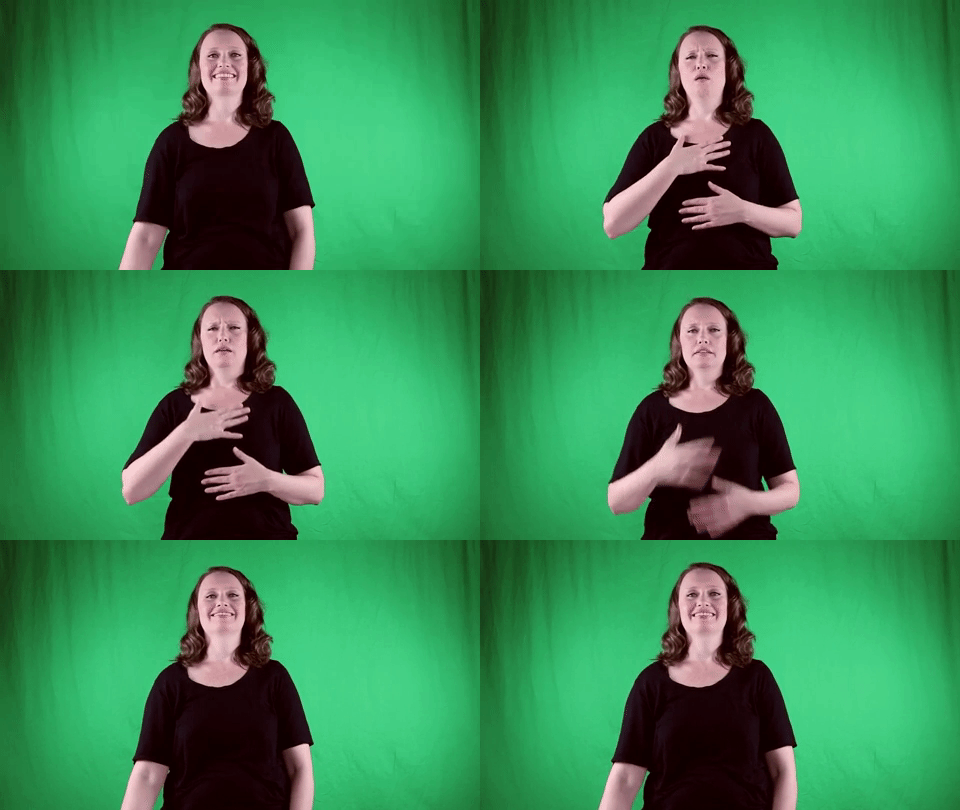
Sign for BREATHE WITH DIFFICULTY in ASL | 😮‍💨 ASL Dictionary

Definition: To struggle with breathing.

Sign for BREATHE WITH DIFFICULTY in ASL 

YouTube player

Practice Activities:

Start practicing the sign for BREATHE WITH DIFFICULTY in ASL by isolating the movement and facial expression. Use a mirror to watch yourself imitate the gasping or strained breath expression that complements the sign. Practice the handshape and body movement together slowly, making sure your tension is visible.

Once you’ve practiced the sign alone, use it in short phrases like “I breathe with difficulty” or “He breathe with difficulty after running.” Repeat these sentences aloud in ASL, using expressive non-manual markers like furrowed brows and raised shoulders to enhance the meaning. These details are important for expressing the struggle implied by the sign for BREATHE WITH DIFFICULTY in ASL.

Try storytelling prompts to build fluency. Create a short narrative about a person climbing stairs or being in smoke where they breathe with difficulty. Include other relevant signs like COUGH, TIRED, or NEED-ASTHMA-INHALER. Practicing how this sign fits into a broader context helps you internalize its usage.

For partner practice, take turns telling each other about situations when you breathe with difficulty. One partner describes a realistic scenario while the other guesses or repeats using the correct sign. You can also role-play emergency situations, such as pantomiming a hike or exercise scene that leads to trouble breathing.

Use a signing journal to reflect on when you’ve seen someone breathe with difficulty, either in real life or movies. Translate one of those moments into ASL by thinking through how you’d present it entirely in visual language. Record yourself signing and review it for clarity and emotional accuracy.

Practice at varying speeds, slowing down to correct form and speeding up to improve fluidity. Engaging in daily repetition with intention supports long-term retention and helps deepen your familiarity with how to naturally use the sign for BREATHE WITH DIFFICULTY in ASL.

Cultural Context:

In American Sign Language, understanding how to express complex physical sensations is crucial for clear communication. One such expression is the sign for breathe with difficulty in ASL, which carries more than just a literal meaning. Within the Deaf community, this sign often relates to health, emotion, and context-sensitive situations.

The sign for breathe with difficulty in ASL isn’t only used in medical or emergency settings. It’s also commonly used to describe emotional experiences, such as feeling overwhelmed, anxious, or panicked. This is especially important in storytelling, where facial expressions and body language support the meaning of the sign.

In Deaf culture, the ability to describe physical conditions through accurate signs helps individuals advocate for themselves in medical environments. When someone uses the sign for breathe with difficulty in ASL, it clearly conveys a serious concern, giving providers vital information quickly. The use of this sign shows the power of ASL in urgent situations.

Facial expressions and body tense are vital in expressing the sign for breathe with difficulty in ASL. The struggle to inhale or exhale is shown not only through handshapes but also through the face and upper body. This cultural emphasis on visual detail emphasizes how ASL signs offer multi-layered meaning.

Children growing up in Deaf families learn these signs early on, especially those used to describe physical discomfort. The sign for breathe with difficulty in ASL helps teach young signers how to express distress in ways that adults will understand. This nurtures a sense of safety and emotional literacy from a young age.

In social settings, the sign for breathe with difficulty in ASL might be used during storytelling or re-telling of stressful events. It helps to add authenticity and brings the experience to life for the audience. It’s more than a medical sign—it’s storytelling language.

Cultural norms in the Deaf community place a high value on being able to communicate clearly about health and feeling unwell. The sign for breathe with difficulty in ASL fulfills this need by offering a precise, respectful, and context-aware way to communicate serious issues. This fosters trust and mutual understanding within the community.

Another important aspect is how interpreters use the sign for breathe with difficulty in ASL during translating services. Accuracy and attention to detail in this sign are critical, as it can alert medical staff to a life-threatening emergency. Proper signing can literally save lives, making this sign one of the more essential in health-related interpreting.

ASL is a rich language with deep cultural significance, and signs like breathe with difficulty carry emotional

Extended Definition:

The sign for breathe with difficulty in ASL conveys the physical struggle or restriction related to difficult breathing. This can refer to symptoms experienced during respiratory distress, a panic attack, or underlying health conditions like asthma. The sign typically incorporates facial expressions and body language to emphasize the sense of strain.

In American Sign Language, signs related to medical or health conditions often rely on clear visual cues. When signing breathe with difficulty in ASL, the signer might show short, shallow breaths with a tightened chest movement. The hands may mimic the chest rising and falling unevenly, combined with facial tension to show discomfort.

Facial expression is a crucial part of this sign. Without the proper non-manual signals, the meaning can be unclear or even misunderstood. To accurately convey breathe with difficulty in ASL, emphasis is placed on showing the effort or struggle to inhale and exhale.

This sign is useful in medical, emergency, and everyday settings where communicating a health issue quickly is important. Whether the person has difficulty breathing due to exertion, emotion, or illness, this ASL sign allows for quick and clear communication with Deaf or Hard-of-Hearing individuals.

Understanding how to sign breathe with difficulty in ASL is also helpful for interpreters working in hospitals or clinics. Medical staff and caregivers who learn this sign can better support patients who use ASL. It is especially important in high-stress or emergency situations when someone might not be able to use spoken language.

Like all ASL signs, context is essential. Depending on the cause of the breathing difficulty, the sign might be adapted slightly. For example, someone signing about difficulty breathing due to panic might include stress or anxiety in their facial expression along with rapid, shallow chest movement.

When teaching the sign for breathe with difficulty in ASL, instructors often explain the importance of depicting the effort visually. Slower or more subdued gestures might be misunderstood, so learners are encouraged to practice with intention. Repetition and observation help build fluency in signs like this one, which are more expressive and dynamic.

Parents and educators of Deaf children may use this sign to help teach them how to describe their feelings or symptoms. Kids learning to communicate health issues or emotions can use breathe with difficulty in ASL to explain when they are overwhelmed or unwell. This improves their ability to advocate for themselves in various situations.

Online resources for learning ASL often include videos and visual explanations to help people grasp how body language complements hand shapes. Watching skilled signers demonstrate breathe with difficulty in ASL

Synonyms: wheeze, pant, gasp, struggle for air, choke

Educational resources: Find related learning materials in our course bank!

Want more? Check out some of our popular learning activities on the homepage!

Need to look up a sign? Use our highly rated dictionary: https://aslinteractive.com/best-asl-dictionary/

Follow us on tiktok: https://www.tiktok.com/@aslinteractive. More social media links at the bottom of this page!

Long-tail Keywords: what is the sign for breathe with difficulty in ASL, how do you sign breathe with difficulty in American Sign Language, ASL sign for breathe with difficulty

Categories:

tags: health, breathing, medical, symptoms, wellness

Parameters

*Handshape*:

The handshape for the sign for BREATHE WITH DIFFICULTY in ASL typically uses two open “5” handshapes. These are positioned near the chest with palms facing in toward the body. Both hands mimic a restricted breathing motion by moving slowly forward and slightly outward, often combined with a tense or strained facial expression to reflect effort or shortness of breath.

In the sign for BREATHE WITH DIFFICULTY in ASL, the open hands emphasize a labored breathing process. The fingers should remain relaxed but spread apart slightly, creating a visual sense of resistance or obstruction as the hands move. This handshape effectively conveys physical struggle in the act of breathing.

*Palm Orientation*:

For the sign for BREATHE WITH DIFFICULTY in ASL, the palm orientation varies to convey the struggle associated with breathing. Both hands typically start with palms facing the body near the chest area, resembling the standard sign for “breathe.” As the sign progresses, the palms may subtly shift their angle—facing slightly upward or outward—to reflect labored or heavy breathing.

This slight change in palm orientation enhances the depiction of difficulty. Facial expressions such as squinting or grimacing often accompany the sign for BREATHE WITH DIFFICULTY in ASL to reinforce the emotional or physical effort.

*Location*:

The sign for BREATHE WITH DIFFICULTY in ASL is typically located in the upper chest area, slightly below the shoulders and above the sternum. Hands hover near the center of the chest to represent restrictive or labored breathing.

This sign is articulated near the torso to emphasize the physical sensation of struggling to breathe. The location helps convey the meaning behind the sign for BREATHE WITH DIFFICULTY in ASL, linking it to the body’s respiratory system.

*Movement*:

The sign for BREATHE WITH DIFFICULTY in ASL involves showing labored or strained breathing through deliberate and tensed motions. Start with both open hands, palm inward, placed near the chest, and move them slightly outward as if demonstrating the expansion of the lungs. Add tension by curling the fingers slightly or tightening the arms and shoulders.

Facial expression plays a key role—display discomfort or struggle . This enhances the intensity of the movement, showing that breathing is not smooth. The sign for BREATHE WITH DIFFICULTY in ASL typically conveys strained respiration by slowing the movement and adding resistance with the hands.

*Non-Manual Signals*:

When using the sign for BREATHE WITH DIFFICULTY in ASL, the signer typically uses facial expressions to show discomfort or strain. The eyebrows may be furrowed with the eyes slightly squinted, and the mouth might show tension or mimic panting ‍ , reflecting effortful breathing.

A slight forward lean of the body and tensed upper body posture can enhance the sense of restricted breathing. These non-manual signals help convey the seriousness behind the sign for BREATHE WITH DIFFICULTY in ASL.

*Prosody, Dominant/Non-Dominant Hand*:

The sign for BREATHE WITH DIFFICULTY in ASL typically uses both hands. The dominant hand, often in a bent or clawed 5-shape, moves near the chest as though mimicking labored breathing. The non-dominant hand supports this motion by mimicking short, interrupted breaths. Facial expression reflects distress or discomfort, enhancing the prosody of the sign.

To show the sign for BREATHE WITH DIFFICULTY in ASL, the movement should feel constrained or resistant. Both hands can pulse slightly to reflect difficulty, and body posture often leans forward, emphasizing the struggle to breathe ‍ .

Tips for Beginners:

When learning the sign for BREATHE WITH DIFFICULTY in ASL, begin by mastering the signs for “breathe” and “difficulty” separately. The sign for “breathe” typically involves alternating movements of the hands on the chest to mimic the rhythm of inhaling and exhaling. For “difficulty,” handshapes often describe an obstruction or something being hard, made with facial expressions that indicate effort or struggle. Combining these signs clearly and fluently creates the appropriate context.

A key tip is to emphasize your facial expressions—they’re essential for showing the struggle involved in breathing. ASL heavily relies on non-manual signals to convey meaning. Without a frustrated or strained expression, the sign for BREATHE WITH DIFFICULTY in ASL may come across as simply “breathe” or “hard task” rather than a respiratory issue. Practice using your brows, nose, and mouth to indicate discomfort or exertion.

Don’t rush through the signs. Slowing down the movement slightly while showing tension in the hands can help communicate the labored nature of breathing. Keep your chest and shoulders involved in the movement to bring attention to the physical location of the difficulty. Small body movements like slight hunching or tensing up can add realism to your sign and increase clarity.

Many beginners forget to coordinate hand movement with facial cues. Avoid robotic signing and instead think of embodying the struggle to breathe. Watch ASL videos or consult with fluent signers to see how they sign phrases like the sign for BREATHE WITH DIFFICULTY in ASL in a more conversational and natural way. Repetition while watching yourself in a mirror can help build muscle memory and assure accurate body alignment.

If you’re unclear, don’t hesitate to ask a Deaf signer for feedback. ASL is a visual language, and clarity is essential—context can change meaning. Regular practice will help you remember and improve your confidence in using the sign for BREATHE WITH DIFFICULTY in ASL properly.

Connections to Other topics:

The sign for BREATHE WITH DIFFICULTY in ASL connects closely with the broader category of signs describing physical states or health issues. It often incorporates components of the signs for BREATHE or BREATHING and DIFFICULT, using modified movement or facial expressions to convey the added strain or abnormality of the action. This connection allows users to build a nuanced vocabulary around respiratory issues.

This sign is frequently associated with other health-related expressions such as COUGH, CHOKE, ASTHMA, and PAIN. These signs can be combined or used in sequence to give a clearer picture of a person’s physical condition, such as describing someone having an asthma attack or struggling during exercise. Facial grammar and non-manual signals play a major role in emphasizing the severity of the difficulty.

The sign for BREATHE WITH DIFFICULTY in ASL also links to emotional or situational expressions like NERVOUS, ANXIOUS, or PANIC, where labored breathing might be a symptom. In these contexts, the sign can be adapted slightly to match the emotional tone, using increased movement or tension. This flexibility helps convey both physical and psychological states effectively in ASL narratives or conversation.

Learners will also encounter this sign in medical or emergency contexts, where specificity is important. Compounding the base sign for BREATHE WITH DIFFICULTY with HEALTH, DOCTOR, or HOSPITAL can create phrases essential for describing patient needs. Increased fluency with this sign supports effective communication in both daily and crisis situations.

Finally, the expressive elements of the sign highlight how ASL relies heavily on context and visual storytelling. Understanding and using the sign for BREATHE WITH DIFFICULTY in ASL enhances broader skills in depicting experiences, whether conveying symptoms to professionals or expressing intense emotion to a friend. This sign enriches the learner’s ability to describe human conditions with clarity and empathy.

Summary:

The sign for BREATHE WITH DIFFICULTY in ASL conveys a critical health concept, often associated with respiratory distress, panic, illness, or exhaustion. This sign usually combines the base concept of “breathe” with physical indicators of struggle, tension, or obstruction in the chest or lungs. The expressive aspects of the sign, particularly facial grimacing or furrowed brows, are vital for conveying severity.

To form the sign for BREATHE WITH DIFFICULTY in ASL, you start with the bilateral open hands positioned over the center of the chest, palms flat, simulating the normal breathing motion by rhythmically moving in and out. To show difficulty, you add a visual interruption—tightened body posture, a jerky or obstructed movement of the hands, and facial expressions showing strain. Some signers may infuse the motion with a slowed pace and visible tension in the shoulders and neck.

Facial expressions are essential in the sign for BREATHE WITH DIFFICULTY in ASL. A signer’s mouth may mimic gasping or may be tightly closed, with the eyebrows drawing together. These elements effectually turn the general sign for “breathe” into a highly contextualized, emotionally charged visual message. This demonstrates ASL’s heavy reliance on non-manual markers for clarity.

Grammatically, the sign for BREATHE WITH DIFFICULTY in ASL is typically used as a verb phrase within a broader sentence structure. It can follow or precede subjects depending on the emphasis required. In narrative ASL, it often appears mid-description during storytelling to show physical struggle or to highlight sudden health concerns.

The physicality of the sign supports iconicity—the idea that the sign visually represents the concept it conveys. ASL signs often rely on this type of visual metaphor, which makes them intuitive for visual learners. With the sign for BREATHE WITH DIFFICULTY in ASL, the struggle is physically depicted, enhancing the emotional and interpretative depth in storytelling.

This sign can be an essential component in healthcare interpreting. For Deaf patients, clearly communicating symptoms like labored breathing is key to receiving accurate diagnosis and treatment. The sign for BREATHE WITH DIFFICULTY in ASL serves an urgent functional purpose in emergency contexts, ensuring there is no miscommunication over critical symptoms.

In applied linguistics, the sign touches on classifiers and spatial referencing. While the base “breathe” uses symmetrical movements near the chest, the difficulty aspect introduces asymmetry or disrupts expected fluidity. This visual breakdown aligns with how ASL uses space and movement congruently with internal states.

The sign connects closely to others about health conditions. Signs like COUGH, ASTHMA, CHOKING, and CAN’T BREATHE may be used in conjunction. When combined, these form a lexicon of respiratory expressions for precision. It’s common to see the sign for BREATHE WITH DIFFICULTY in ASL paired with context-setting time markers or cause-indicating classifiers.

It holds cultural weight in the Deaf community, particularly through stories involving personal or community health experiences. In vlogs or visual narratives, Deaf individuals often emotionally portray moments of medical emergency or physical hardship using this sign. This connects lived experience to linguistic expression in a powerful and accessible way.

Linguists studying ASL morphology can observe how the sign modifies an existing base verb. “Breathe” alone is a neutral physiological behavior, but layering expressive components constructs a clear shift in meaning. This kind of modification highlights how ASL morphology differs from English, relying more on spatial and kinetic alterations than affixation.

The sign for BREATHE WITH DIFFICULTY in ASL also has strong associations with depiction. Signers naturally depict the physiological sensation of restriction rather than simply “naming” it. In doing so, the Deaf community powerfully visualizes what might otherwise be invisible suffering.

In conversations or narratives involving panic attacks or high stress, the sign may appear along with signs for ANXIETY, STRESS, or COLLAPSE. Context helps refine the meaning—making ASL a context-driven language. A clear agreement between surrounding signs and the non-manual features brings full clarity to the concept.

In story-based translation work, such as interpreting a dramatic scene from a film, the sign for BREATHE WITH DIFFICULTY in ASL becomes part of conveying action as well as inner emotional states. Interpreters must calibrate intensity based on tone, pacing, and character expression—mirroring this through the exact execution and modulation of the sign.

The sign is powerful in educational spaces as well. Teachers working in health sciences at Deaf institutions often use the sign during lessons on the respiratory system. It helps students visually understand how lungs function and what to look for during respiratory distress.

When paired with temporal indicators like NOW, SUDDENLY, or FOR A WHILE, the meaning locks into more specific grammatical frames. This

Want more? Check out some of our popular learning activities!

ASL Interactive Resources

ASLInteractive YouTube Channel

Follow us on tiktok: @aslinteractive.com

Follow us on Instagram: aslinteractive

Facebook page: aslinteractive

Facebook group: aslinteractive

LInkedIn: ASL Interactive LLC

Twitter: @ASL_interactive

*Some information on this page is AI-generated. AI can make mistakes. Please check the information.

Sign for BREATHE WITH DIFFICULTY in ASL 

Responses