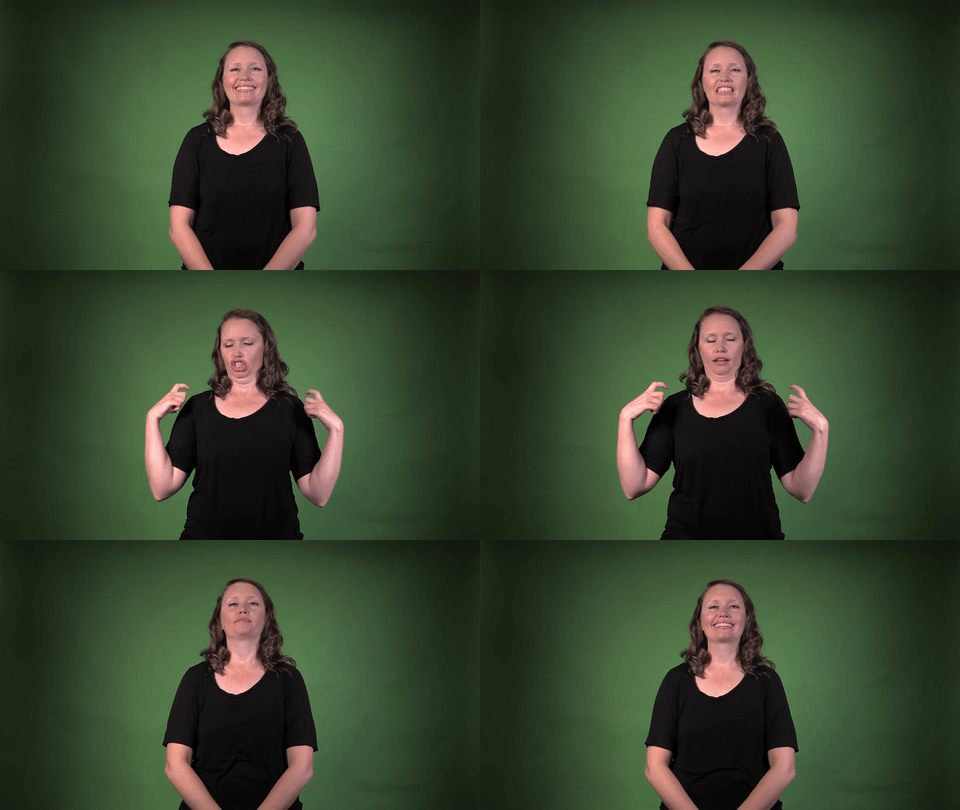
Definition: Having wide shoulders.
Sign for BROAD SHOULDERS in ASL

Practice Activities:
To practice the sign for BROAD SHOULDERS in ASL, begin by signing in front of a mirror. Observe your posture and arm movement to ensure clarity. Repeat the sign multiple times in isolation, focusing on handshape, placement, and movement direction across your upper torso. This helps build muscle memory and fluency.
Create a list of physical characteristics and try signing descriptions using the sign for BROAD SHOULDERS in ASL along with other descriptive signs like tall, short, or strong. For example, describe a character as “tall, has broad shoulders, and wears a red shirt.” This reinforces the sign in useful contexts and helps learners link it to real-life use.
Write five simple sentences about people or characters who have broad shoulders. Then practice signing each sentence. For instance: “My dad has broad shoulders,” or “That athlete has broad shoulders.” Record yourself and review for accuracy with the sign’s size and positioning.
Role-play activities are effective with partners. One person describes a person using several physical traits including the sign for BROAD SHOULDERS in ASL, and the partner guesses who it is. This builds visual description skills and encourages quick sign recognition and response.
Storytelling is another great method. Choose a favorite story or movie and describe a character featured in it. Focus on their physical description and include the sign for BROAD SHOULDERS in ASL when describing strong or hefty characters. Incorporate other supporting signs for a fuller narrative.
Play a game of signed charades using action figures, dolls, or images of people with different bodies. Learners can describe each figure using the appropriate signs. Encourage them to express size and proportion using facial expressions as well, which are essential in conveying meaning effectively.
Finish by reviewing and reflecting on usage. Identify when the sign would naturally come up in conversations and plan how to include it in daily signing practice.
Cultural Context:
In American Sign Language, describing physical features like broad shoulders is both visual and expressive. The sign for broad shoulders in ASL uses body language to fully capture the characteristic, making it easy to recognize and understand.
Deaf culture highly values visual clarity, so when describing someone with broad shoulders, the sign for broad shoulders in ASL often includes widened arms or gesturing to indicate width across the upper body. This kind of descriptive signing is common in narratives, especially when describing people or giving physical descriptions in stories.
The sign for broad shoulders in ASL may vary slightly depending on the context or region, but it generally involves using both hands to show the width of the shoulders. Signing this clearly helps paint a vivid image for the viewer, staying true to ASL’s visual-spatial grammar.
In daily conversations, when someone is described as strong, athletic, or having a solid build, the sign for broad shoulders in ASL often appears. It’s one of the ways the community integrates body description into identity and storytelling.
Within Deaf storytelling and performance, physical traits stand out as key elements. The sign for broad shoulders in ASL becomes part of describing a character, enhancing narratives with physical detail exaggerated through facial expressions and gestures. ♂️
Using the sign for broad shoulders in ASL connects not just to language but also to cultural communication. When describing people in ASL, it’s not just about words—it’s about showing, representing, and visually delivering meaning. This alignment with the Deaf community’s values reinforces how important descriptive signs like this are.
ASL learners are encouraged to observe how the sign for broad shoulders in ASL is used in real contexts. Watching native signers helps you understand how body movement and space are essential in this kind of sign.
There’s also a social layer to the sign for broad shoulders in ASL. Just as spoken languages carry cultural nuances in how they describe people, ASL signs include those subtleties, whether positive, observational, or sometimes humorous. It’s a reminder of ASL’s richness and depth.
In conversations, when appearance comes up, native signers include the sign for broad shoulders in ASL naturally and fluidly. It blends easily into daily communication about appearance, athleticism, or even clothing fit.
For those creating interpreters’ glossaries or teaching materials, including the sign for broad shoulders in ASL ensures learners grasp how ASL reflects physical traits. These kinds of signs build a more complete and culturally respectful understanding of the language
Extended Definition:
The sign for broad shoulders in ASL is a descriptive sign often used when referring to someone with a physically wide upper body. It is commonly used in both casual conversation and more descriptive contexts, such as when explaining someone’s appearance.
To produce the sign for broad shoulders in ASL, you typically mimic the physical width by holding your hands near your shoulders and moving them slightly outward to emphasize the breadth. The movement and facial expression can enhance the meaning, giving it a more vivid and accurate depiction of how broad the shoulders are.
This sign uses classifier-like movements to visually represent the space taken up by broad shoulders. While it is not a specific ASL vocabulary word in a traditional sense, it is highly recognizable among Deaf and signing communities as part of descriptive signing.
When describing people in stories or during introductions, the sign for broad shoulders in ASL can help create a visual image of the individual. It’s useful for artists, fitness instructors, or anyone talking about body structure in a clear, visual language.
ASL is a spatial language, so many physical traits are shown through body movement and visual gestures. This makes the sign for broad shoulders in ASL an excellent example of how ASL conveys detailed information quickly and naturally.
Context is important when using this sign. It can be modified depending on how broad the shoulders are, or how noticeable the feature needs to be in the conversation.
Facial expressions play a key role in modifying the meaning when using this sign. A subtle look might suggest slightly broad shoulders, while a more exaggerated facial expression will emphasize a highly muscular or wide frame.
The sign for broad shoulders in ASL can be used in combination with other physical descriptors. For example, you might use it alongside signs for tall, strong, or muscular to paint a clearer overall picture of a person.
In storytelling, signers use this sign to bring characters to life. Especially in ASL narratives, physical characteristics like broad shoulders help portray strength or athleticism based on the visual storytelling tradition of signing.
This specific sign works well to describe both real individuals and fictional characters. It shows the versatility of ASL when talking about physical appearances comfortably and naturally.
People learning ASL often ask about how to describe attributes like size and shape. The sign for broad shoulders in ASL is one of the more visually intuitive signs, making it useful for beginners and advanced signers alike.
Whether you’re discussing a bodybuilder, a character in a novel, or a friend who is easy to spot in a crowd, this
Synonyms: wide shoulders, broad-backed, broad-chested, powerful shoulders, large shoulders
Educational resources: Find related learning materials in our course bank!
Want more? Check out some of our popular learning activities on the homepage!
Need to look up a sign? Use our highly rated dictionary: https://aslinteractive.com/best-asl-dictionary/
Follow us on tiktok: https://www.tiktok.com/@aslinteractive. More social media links at the bottom of this page!
Long-tail Keywords: what is the sign for broad shoulders in ASL, how do you sign broad shoulders in ASL, ASL sign for broad shoulders
Categories:
tags: appearance, body parts, description, sign parameters, people
Parameters
*Handshape*:
The handshape for the sign for BROAD SHOULDERS in ASL uses both hands in a bent “B” shape . The fingers are held together and extended outward from the body, starting near the shoulders.
To show the sign for BROAD SHOULDERS in ASL, the hands make a brief outward movement from the shoulders to demonstrate width. The bent “B” handshape helps visually represent the broadness or breadth of the shoulders.
*Palm Orientation*:
The palm orientation for the sign for BROAD SHOULDERS in ASL typically involves both hands in a curved “C” handshape with palms facing down and slightly inward toward the body. The motion starts near the upper chest or shoulder area and moves slightly outward to indicate width.
This orientation visually emphasizes the broad width across the shoulders. Using the correct palm orientation is essential for accurately showing the sign for BROAD SHOULDERS in ASL ♂️.
*Location*:
The sign for BROAD SHOULDERS in ASL is located at the upper sides of the torso, near the deltoid area. Both hands are typically placed near or slightly above the shoulders, emphasizing the upper body’s width.
This area helps visually reflect the broadness depicted in the sign for BROAD SHOULDERS in ASL, as the movement and placement of the hands express physical size. The sign takes place in the neutral space just off the shoulder line for clear visibility.
*Movement*:
Start with both hands in a bent “B” handshape, palms facing down, positioned near each shoulder. Move your hands outward from each shoulder in a slight arc, away from the body, as if outlining the expanse of broad shoulders. The movement should be firm yet smooth, suggesting width and strength.
The sign for broad shoulders in ASL emphasizes the wide upper body shape. Repeat the sign once for clarity if needed, especially when describing someone’s physical build ♂️. This motion effectively communicates the concept behind the sign for broad shoulders in ASL.
*Non-Manual Signals*:
The non-manual signals for the sign for BROAD SHOULDERS in ASL typically include a slight raising of the eyebrows to emphasize the descriptive nature of the sign. You may also see puffed cheeks or a widened mouth to show the size or strength implied by “broad.”
Posture plays a role too—shoulders may be slightly arched back or expanded to visually suggest the meaning. These facial expressions and body shifts help clarify the sign for BROAD SHOULDERS in ASL .
*Prosody, Dominant/Non-Dominant Hand*:
The sign for BROAD SHOULDERS in ASL uses both hands in a modified C or bent handshape. Start near each side of the upper chest or shoulder area. Move the hands outward slightly, mimicking the width of broad shoulders.
This sign incorporates both hands equally with a symmetrical movement. There is no dominant or non-dominant hand distinction, making it a balanced sign used to visually describe body shape. The sign for BROAD SHOULDERS in ASL clearly emphasizes width and physical presence.
Tips for Beginners:
When learning the sign for BROAD SHOULDERS in ASL, it’s important to focus on body placement and the width of your movement. This sign uses a classifier to show the expanse of the shoulders, typically by moving your hands outward from the top of the shoulders to indicate width. Be sure to keep your hands open and flat, with fingers extended but relaxed, and aim to display the size visually and naturally.
Beginners often make the mistake of either not moving their hands wide enough or over-exaggerating the size. Both extremes can cause confusion. Start by practicing in front of a mirror to get a better idea of what your body shape and hand positions communicate. This visual self-check can help you balance clarity and consistency.
Facial expressions also help convey the right message with the sign for BROAD SHOULDERS in ASL. Subtle head nods and raised eyebrows can emphasize a descriptive tone, especially if you’re comparing body types. ASL is a very visual language, and your body language adds meaning beyond just your hands. Don’t forget to use both hands at the same level for symmetry in signing.
Another great tip is to practice this sign in context. Try describing people or characters known for their strong build and insert the sign for BROAD SHOULDERS in ASL naturally within full ASL sentences. It’s far more effective than drilling the term in isolation.
Lastly, always watch native signers perform this sign and replicate their movements. Pay attention to hand shape, size of the movement, and facial expression. Frequent repetition and feedback from fluent signers or teachers will help you gain fluency and avoid common mistakes like uneven hand spacing or neutral facial expressions. With commitment, you’ll master the nuances of the sign for BROAD SHOULDERS in ASL .
Connections to Other topics:
The sign for BROAD SHOULDERS in ASL connects closely to descriptive body language and spatial referencing, which are essential tools in American Sign Language. This sign typically uses classifiers and body depiction, making it relevant when learning signs related to anatomy, posture, or physical characteristics. By highlighting the width of the upper torso, it allows for comparisons and contrasts with broader or more compact builds in other descriptions.
Understanding the sign for BROAD SHOULDERS in ASL also enhances comprehension of compound signs that describe physical appearance or strength, such as muscular, athletic, or heavyset. It can be used with signs like STRONG or MUSCULAR to describe bodybuilders or athletes in casual and narrative contexts. These compound phrases are key in visual storytelling, providing rich and clear imagery.
This sign is also linked to identity and self-description. In storytelling or introductions, someone may use the sign for BROAD SHOULDERS in ASL to describe themselves or another person, especially when physical traits are relevant, such as in recounting an event or distinguishing between characters. The visual nature of ASL allows for this type of detailed description without the need for excessive words.
The sign fits naturally with classifiers and directional movement. For example, when describing someone walking with broad shoulders, the signer may integrate body shifting and shoulder movement to create a vivid picture. Signs like TALL, STRONG, and MALE can be naturally combined with the sign for BROAD SHOULDERS in ASL, enhancing narrative flow and character description.
Additionally, this sign connects with broader ASL themes such as non-manual signals and facial expressions. Raising eyebrows or puffing the cheeks subtly emphasizes the size and presence conveyed by this sign. It plays a powerful role in distinguishing individuals in a crowd or emphasizing confidence and physical dominance in expressive signing.
Summary:
The sign for BROAD SHOULDERS in ASL is a descriptive, iconic sign that demonstrates the physical dimension of width across the shoulders. It typically involves both hands held in a “C” or curved flat handshape, starting near the top of the shoulders and moving outward slightly to emphasize breadth.
This sign closely mimics the visual impression of someone with broad shoulder width, aligning ASL’s emphasis on visual-spatial grammar. It’s a typical example of how the language conveys size and shape through spatial elaboration, which is key in classifier usage and iconic representation.
Descriptive signs like the sign for BROAD SHOULDERS in ASL showcase how ASL can be used to describe physical attributes naturally and efficiently. Rather than using a list of adjectives, ASL conveys descriptive richness visually and quickly, reflecting competence in spatial awareness.
The grammatical structure when using this sign can appear in context as an adjective or part of a predicate. For example, in the sentence structure “HE BROAD-SHOULDERS,” the sign functions similarly to an adjective but visually incorporates the concept.
This sign is useful when describing someone’s physique, often in discussions around athleticism, strength, or attractiveness. As such, it’s common in conversation about appearance or during storytelling where physical features help build vivid characters.
In Deaf culture, signs that talk about physical attributes, like the sign for BROAD SHOULDERS in ASL, are more normalized and accepted than in some hearing contexts. The directness of such signs is culturally appropriate and expected rather than considered impolite.
There is no separate sign for the concept of masculinity or strength built into this sign, but users may use it in tandem with other signs like STRONG or MANLY to emphasize a particular masculine ideal. This semantic layering contributes to the richness of ASL expression.
In ASL linguistics, this compound-type sign presents as partially iconic and partially classifier-like. The use of curved hands to illustrate shoulder width functions symbolically and spatially, making it an interesting case for classifiers and descriptive signs in research.
Some variations of the sign may involve a brief pause before the initial movement or more exaggerated expansion depending on how broad the person is described to be. ASL often includes this kind of intensity modulation, making it highly effective for capturing nuance.
The sign for BROAD SHOULDERS in ASL can also be modified to indicate emphasis—slowing down the motion or exaggerating the arc creates a stronger impression. These subtle changes fall under prosodic elements in ASL, which are visual cues similar to intonation in spoken languages.
Deaf performers, poets, and storytellers often use such visual signs creatively in their expression. When describing characters with strong physical presence, the sign for BROAD SHOULDERS in ASL contributes to visual storytelling grammar.
In sports contexts or conversations around physical training, this sign appears frequently. The sign communicates immediately the kind of body type under discussion and does not require additional signs unless elaboration is necessary.
This sign can be paired with height signs or signs like TALL, HEAVY, or MUSCULAR to present a more complete description of a person’s build. The layering of physical attribute signs showcases the visual and spatial nuance available within ASL.
In conversations about fashion, particularly clothing fit or appearance, the sign for BROAD SHOULDERS in ASL can emerge. It may be used to explain why a certain shirt fits tightly, or how someone’s shape affects their clothing preferences.
Children learning ASL are often quick to grasp such descriptive signs because they’re visually motivated and memorable. The intuitive link between physical visual size and hand movement makes signs like this highly teachable.
In an applied linguistics context, this sign is a potent example of how ASL utilizes embodiment in its syntax and semantics. The user’s own body becomes part of the linguistic environment, grounding meaning literally in physical space.
Classifier constructions sometimes extend from signs like this, where C-handshapes may shift into broader descriptions, mapping out the upper torso or giving more information about a person’s shape or posture. This shows how classifiers evolve from lexical signs into more complex structures.
From a sociolinguistic viewpoint, the sign for BROAD SHOULDERS in ASL offers insight into how body ideals can be communicated, challenged, or reinforced visually. Just as in spoken language, ASL users navigate identity and representation using signs that depict physical characteristics.
In narrative ASL, such as storytelling, this sign often builds character imagery without needing many additional signs. The power of effective visual literature in ASL lies in such rich sign choices that invoke immediate and vivid mental pictures.
Technologically, avatar creation or AI might use this type of sign for teaching descriptions of people in ASL educational platforms. As animation methods improve, accurately replicating descriptive, spatial signs like the sign for BROAD SHOULDERS in ASL becomes more important.
In translation settings, especially from English to ASL, interpreters may use this sign when interpreting phrases like “broad-shouldered man” or “
Want more? Check out some of our popular learning activities!
ASL Interactive Resources
ASLInteractive YouTube Channel
Follow us on tiktok: @aslinteractive.com
Follow us on Instagram: aslinteractive
Facebook page: aslinteractive
Facebook group: aslinteractive
LInkedIn: ASL Interactive LLC
Twitter: @ASL_interactive
*Some information on this page is AI-generated. AI can make mistakes. Please check the information.


Responses